
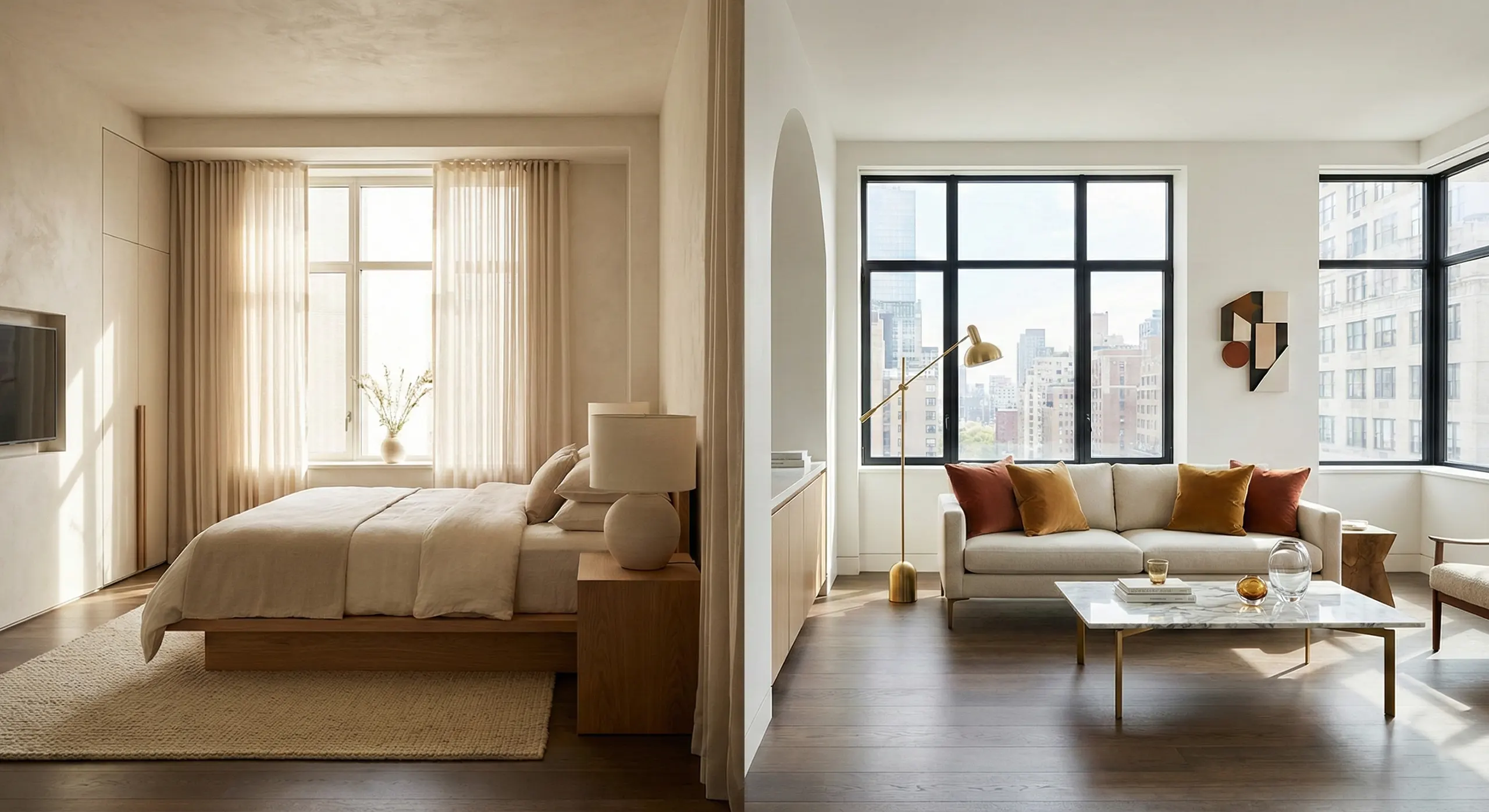
Harmonizing Space: The Complete Guide to Feng Shui Interior Design and Decorating
What is feng shui interior design?
Feng shui originated in ancient China, where “feng” means wind and “shui” means water. Applied to interiors, it’s the practice of arranging buildings, objects, and space to create a sense of harmony and balance. It’s less a superstition than a system built on long observation of how people respond to their surroundings, working from the premise that our environment shapes our energy, mood, and sense of possibility. The aim is to optimize the flow of qi, the life force energy, so that a home supports the health, prosperity, and relationships of the people living in it.
The philosophy: qi, yin, and yang
Qi is the invisible energy understood to move through everything, and in a home you want it to meander gently, the way a slow river does, rather than rushing straight through in a way that feels agitating or settling into stagnant pockets in forgotten corners. Yin and yang describe the complementary halves of that energy. Yin is passive, soft, and quiet, which is what you want in a bedroom, while yang is active, bright, and social, better suited to living rooms and home offices. Good design holds the two in dynamic balance rather than letting either dominate the whole home.
Pillar 1: The five elements
Wood, fire, earth, metal, and water are treated as the building blocks of the physical world, and a well-balanced room draws on all of them without letting any one take over.
Wood represents growth, vitality, and new beginnings, and it comes through in plants, green tones, wooden furniture, and tall columnar shapes. Fire stands for passion, energy, and visibility, expressed through lighting, candles, reds and oranges, and triangular forms. Earth is the grounding element, associated with stability and nourishment, and it appears in earth tones like beige and sand, square shapes, ceramics, and solid, heavy furniture. Metal carries logic, clarity, and precision, showing up in metallic finishes, greys and whites, round shapes, and stone. Water represents wisdom, serenity, and emotional depth, and it’s evoked through mirrors, glass, water features, blacks and dark blues, and wavy forms.
Pillar 2: The bagua map
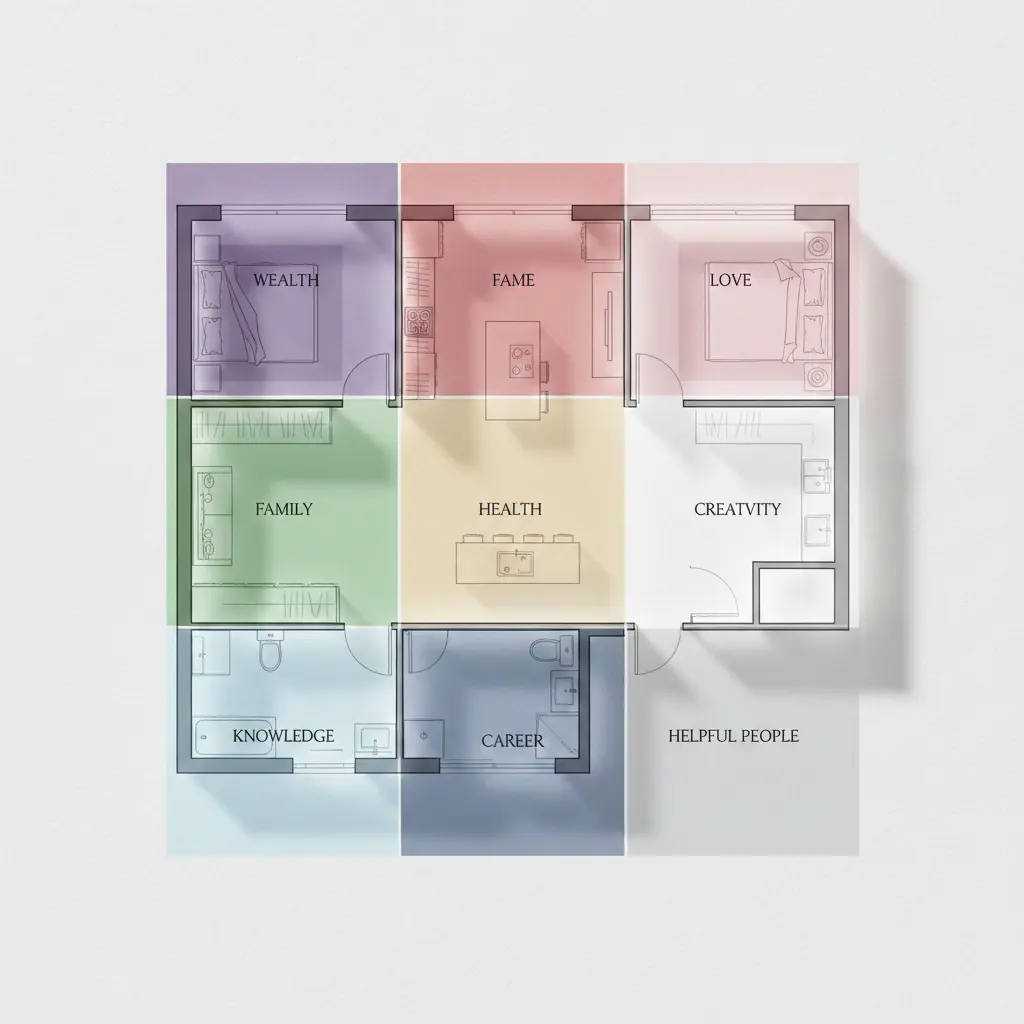
The bagua is the core tool for mapping the energy of a home, dividing any space, whether a whole apartment or a single room, into nine zones that each correspond to a different area of life.
To use it, picture a three-by-three grid laid over your floor plan and always align the bottom row with the wall containing the main entrance to the room or the home. That single orientation rule is what makes everything else fall into place.
Reading from the entrance wall inward, the front row holds knowledge and wisdom on the left, an earth zone; career and life path in the center, governed by water; and helpful people and travel on the right, a metal zone. The middle row runs from family and community on the left, a wood zone, through health at the very center of the plan, which belongs to earth, out to creativity and children on the right under metal. The back row, furthest from the door, carries wealth and abundance on the left as a wood zone, fame and reputation in the center under fire, and love and marriage on the right, another earth zone.
| Wealth & Abundance (Wood) Rear Left | Fame & Reputation (Fire) Rear Center | Love & Marriage (Earth) Rear Right |
| Family & Community (Wood) Middle Left | Health (Earth) Center | Creativity & Children (Metal) Middle Right |
| Knowledge & Wisdom (Earth) Front Left (Entrance) | Career & Life Path (Water) Front Center (Entrance) | Helpful People & Travel (Metal) Front Right (Entrance) |
Color by element
Once you’ve identified the zones, color becomes the simplest way to strengthen the energy of a particular area. Greens, teals, and browns carry wood energy and suit the family and wealth zones, encouraging a feeling of growth and healing. Reds, oranges, and purples belong to fire and work best in the fame area, where you want energy and visibility. Beiges, sands, and yellows express earth and its sense of stability and nurture, which makes them well suited to the health, knowledge, and love zones. Whites, greys, and golds carry metal’s clarity and precision, at home in the creativity and helpful people areas. Blacks and deep blues represent water, flow, and wisdom, and they naturally reinforce the career zone at the front of the plan.
| Element | Best Colors | Mood / Effect | Ideal Bagua Areas |
|---|---|---|---|
| Wood | Green, Teal, Brown | Growth, Healing | Family, Wealth |
| Fire | Red, Orange, Purple | Passion, Energy | Fame |
| Earth | Beige, Sand, Yellow | Stability, Nurturing | Health, Knowledge, Love |
| Metal | White, Grey, Gold | Clarity, Precision | Creativity, Helpful People |
| Water | Black, Dark Blue | Flow, Wisdom | Career |
Universal principles
A handful of rules apply almost everywhere. The commanding position is the most important of them: key pieces of furniture, meaning the bed, the desk, and the stove, should sit where you can see the door without being directly in line with it, which produces a quiet psychological sense of security and control. Clutter matters just as much, since accumulated stuff interrupts the flow of energy through a room, and a chaotic space tends to produce a chaotic mind. Pathways should stay genuinely clear, because if you find yourself edging around furniture to cross a room, the qi is blocked in exactly the same place your body is. And it helps to build in some verticality, using shapes and lines that draw the eye upward to lift the feeling of the space.
Room by room
The living room
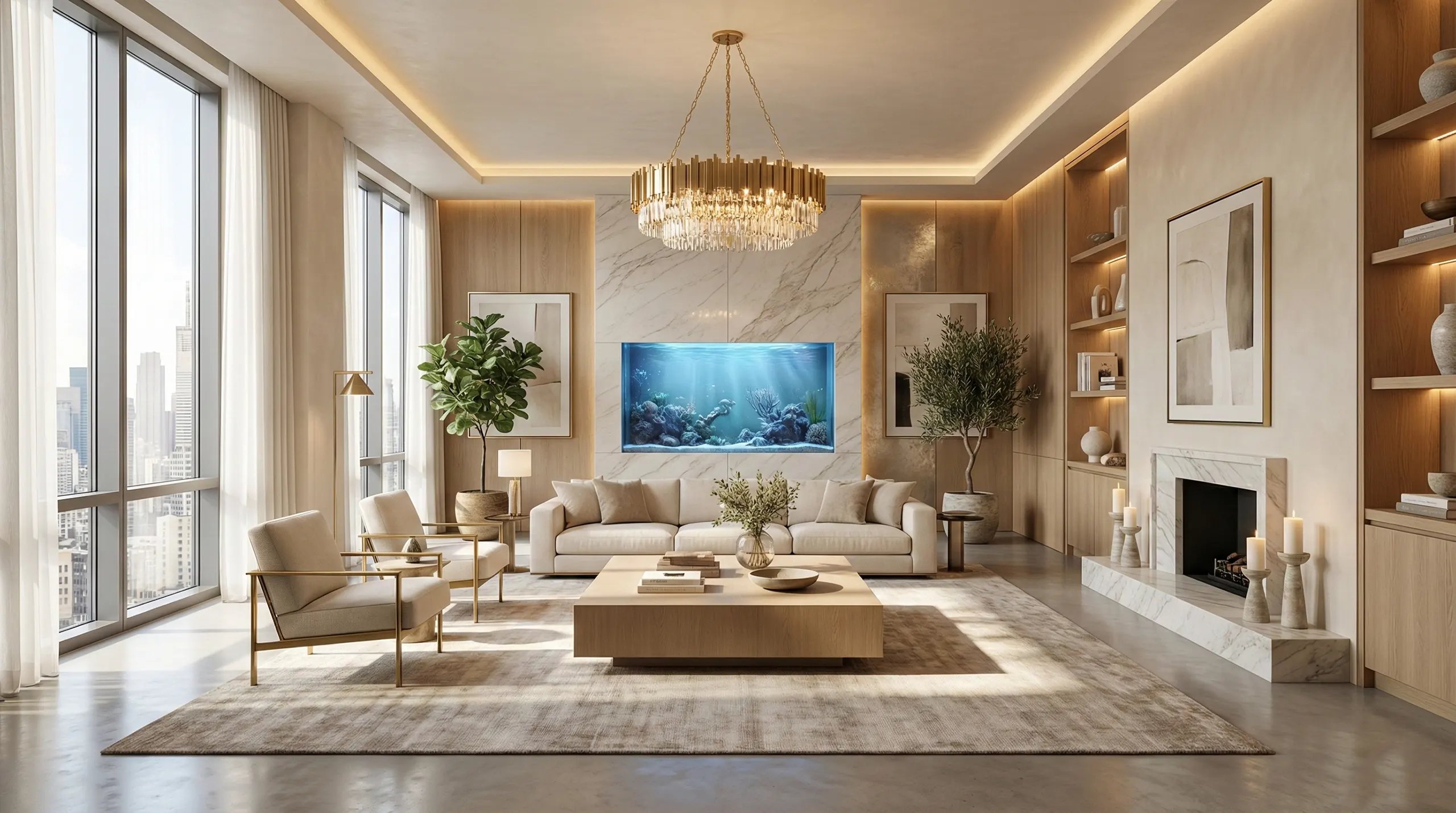
The living room is a yang space, so arrange the seating to encourage conversation rather than pointing everything at a screen. Avoid turning the back of the sofa toward the entrance, and where the room allows, float the furniture away from the walls so energy can circulate behind it. A fireplace or a piece of art makes a better anchor for the room than the television, and layering overhead, floor, and table lighting keeps the corners from going dead.
The bedroom
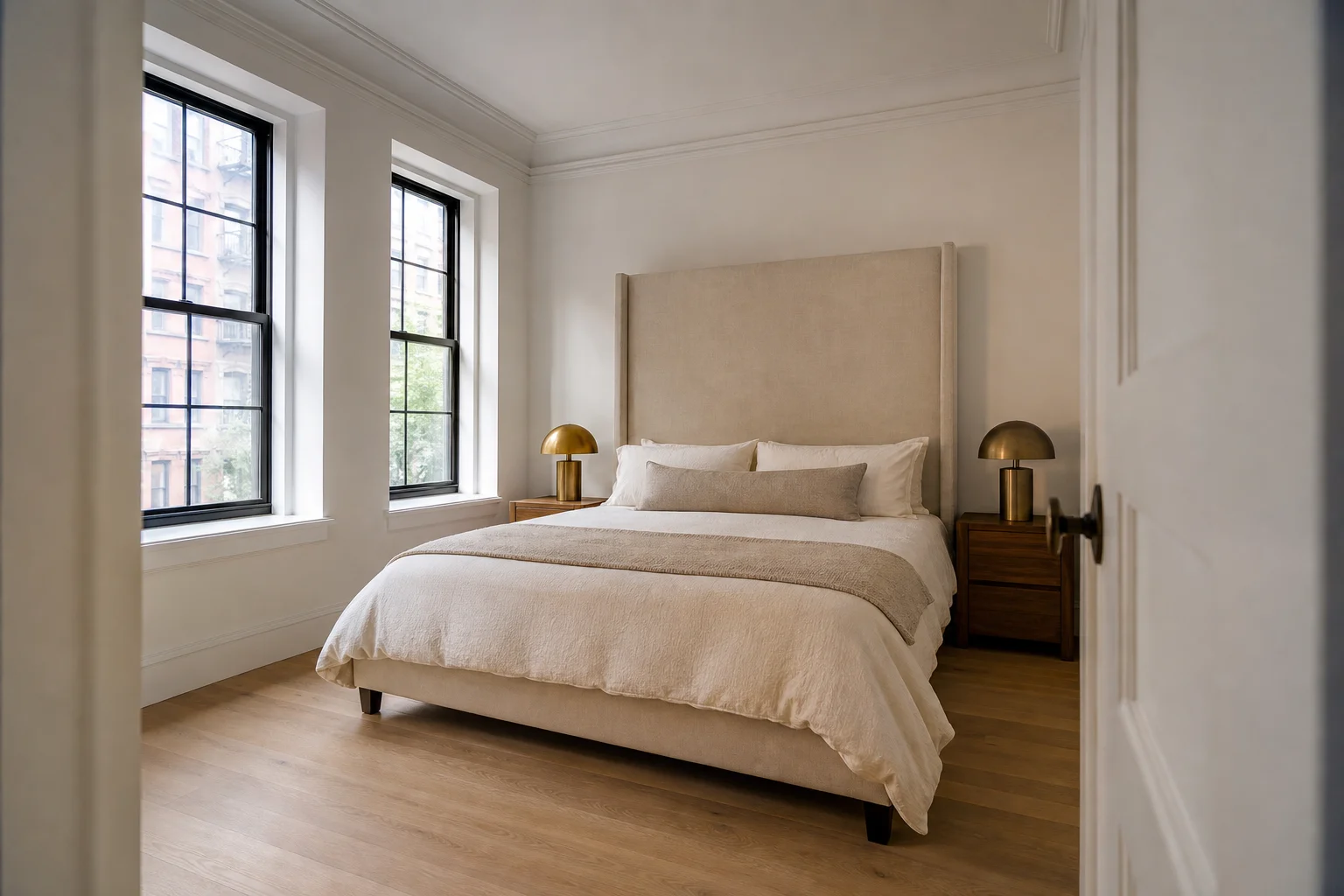
The bedroom is a yin space, and the bed should sit in the commanding position with a solid headboard against a wall. Large mirrors facing the bed are best avoided, since they bounce energy around the room in a way that can disturb sleep, and it’s worth keeping the space under the bed clear rather than using it for storage, so that energy can move freely while you rest.
The kitchen
The kitchen governs both health and wealth, and the stove sits at the center of it, traditionally representing prosperity, which is reason enough to keep it clean and in good working order. Ideally you shouldn’t be able to see the front door while standing at the stove. Feng shui also treats the stove’s fire and the sink and refrigerator’s water as opposing elements, and one common piece of advice is to place a rug between them to bridge the two. Don’t do that in a New York kitchen. A rug positioned near a stove is a genuine fire hazard and runs against fire safety practice, and in a co-op or condo it can create real liability. Bridge the elements with something safer instead, such as a wooden cutting board, a small potted herb on the counter, or green tones worked into the backsplash or accessories, all of which introduce wood energy without putting fabric near an ignition source.
Adapting feng shui to a Manhattan apartment
Most feng shui guidance assumes a flexibility that New York apartments simply don’t offer. Co-op and pre-war layouts come with fixed window placements, radiator covers eating into usable wall length, load-bearing walls that can’t move, doorways in inconvenient spots, and bedrooms where a genuine commanding position for the bed may not physically exist. That’s a constraint to work within rather than a reason to abandon the principles.
When a bed can’t face the door directly, the usual adaptation is to position it so you can see the door with a small turn of the head, or to place a mirror where it reflects the doorway without facing the bed straight on, which restores the sense of awareness that the commanding position is really about. A desk that can’t be angled toward the door benefits from the same approach. Where a radiator cover blocks the ideal wall, treat it as a surface to work with, since a solid cover topped with a lamp or a plant can anchor a corner rather than deaden it. And when the plumbing core dictates where the kitchen and bathroom sit, which it almost always does in a co-op, the practical move is to balance those fixed wet zones with elements elsewhere in the plan rather than fighting the building.
It’s also worth remembering that anything structural – moving a wall, relocating plumbing, or changing a doorway to improve flow – requires board approval and DOB permits in most Manhattan buildings. The good news is that the majority of feng shui adjustments are about placement, light, color, and clearing space, none of which need anyone’s permission.
Where to start
If you’re new to this, begin by decluttering, removing anything broken or genuinely unused. Then move your bed and desk toward the commanding position as far as the room allows. Repair what’s damaged, particularly squeaky doors and leaking taps, since a leaking tap is traditionally read as leaking wealth. In a New York apartment there’s a more immediate reason to act on that one: a persistent leak can damage the unit below yours, and most co-op and condo bylaws require residents to report plumbing issues to building management promptly, both because the building may be responsible for repairs inside the walls and because delay tends to shift liability onto the resident who ignored it. From there, add a plant or a lamp to whichever corner sits darkest, and make the entrance welcoming with a cheerful doormat and a front door that opens fully without obstruction.
Applied thoughtfully, feng shui becomes a genuinely useful tool for turning an apartment into a home that supports the people in it, producing spaces that feel as good as they look.
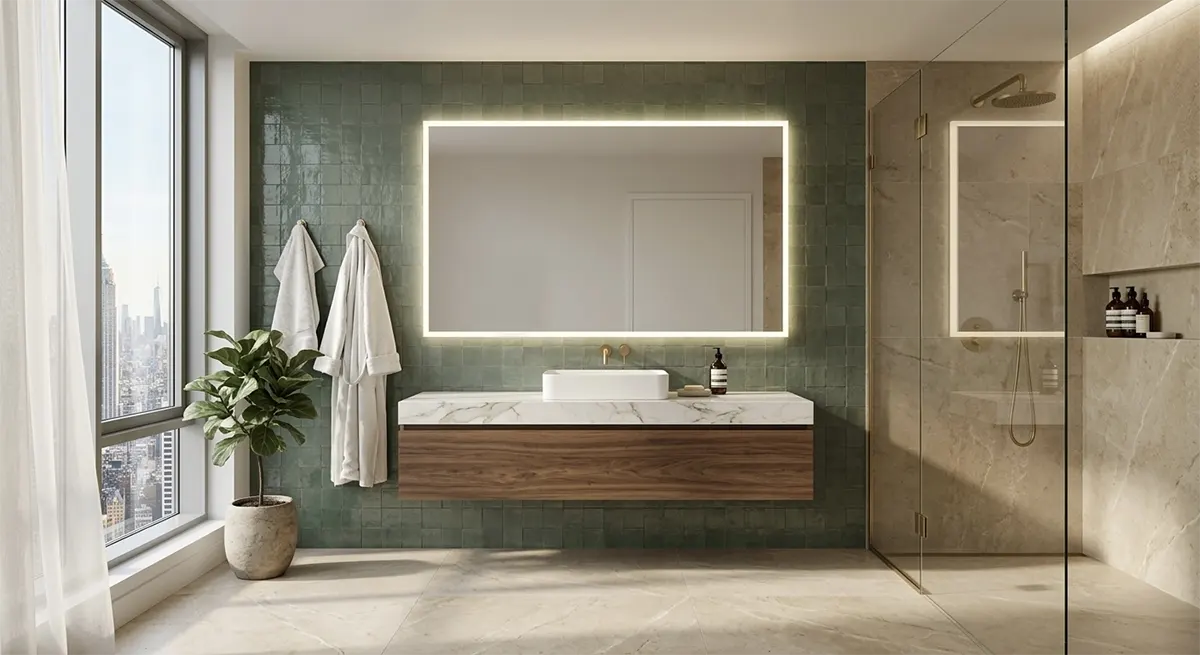
Elevating the Daily Routine: Shower Design That Actually Works
A shower is one of the most intensively used areas in any bathroom, which means its design has to so

The Ultimate Guide to Bathroom Color Schemes: From Classic Neutrals to Bold Palettes
Choosing a bathroom color is closer to an architectural decision than a decorating one. Light, mater
Your Bedroom Has the Wrong Energy
On a gut renovation in Yorkville, the couple kept the bed under a window and both said they woke up