
Who Is Responsible for Repairs in a Co-op: You or the Building?
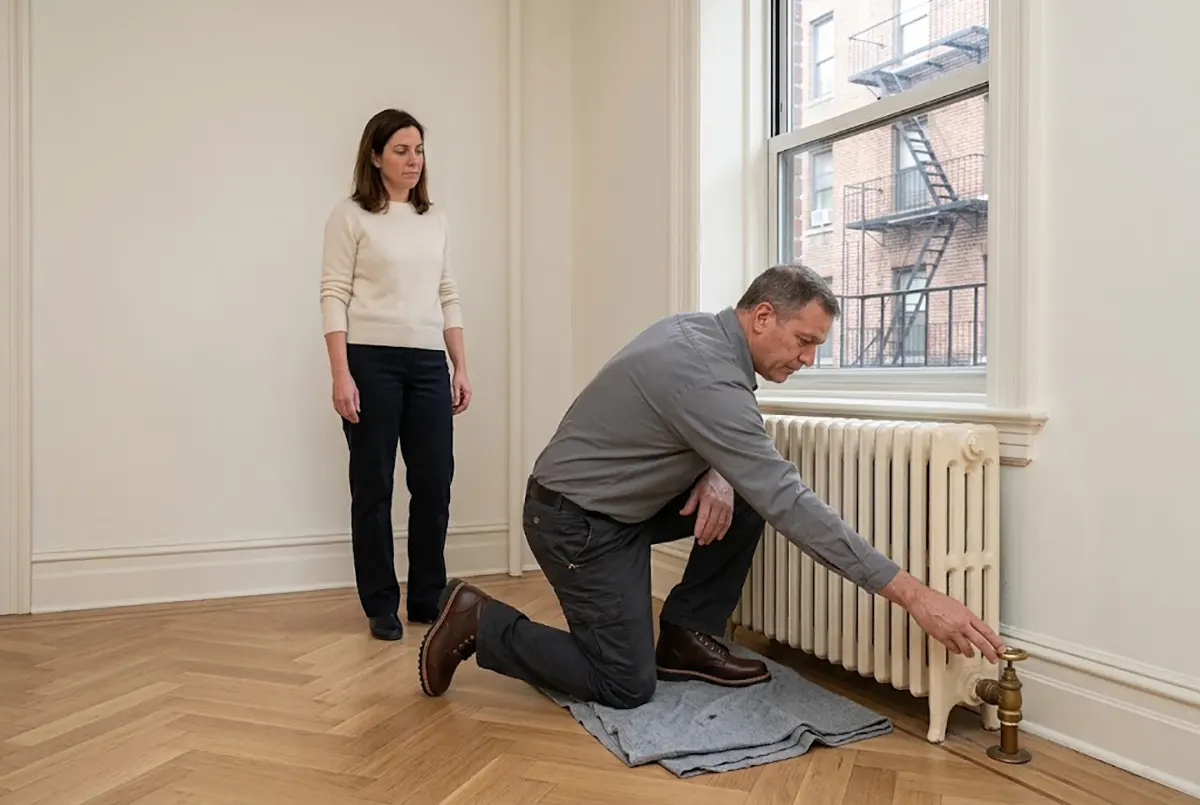
The radiator in your bedroom has been dripping for a week. You can call a plumber tomorrow and pay for it yourself, or you can send one email to the managing agent and find out whose repair it is. Which of those is right depends on a document most shareholders have never read past the first page.
Here is the rule that decides it, where the line actually falls on the things that break most often, the two situations that move a building repair onto your bill, and what to do before you hire anyone.
Your lease, not the city
Nothing in the building code or in city law splits repairs between a co-op and its shareholders. The split comes from your proprietary lease, the contract that came with your shares, and leases differ from building to building. Two neighbors on the same block can get opposite answers about the same window.
Most leases are built on the same idea, usually described as walls in. The building looks after its structure and the systems that serve everyone: the roof, the facade, the risers that run floor to floor, the boiler, the elevator. You look after what is inside your apartment and serves only you.
Underneath all of it sits one thing the lease cannot shrink. A co-op is a landlord, and under New York’s warranty of habitability it has to keep the apartment livable, whatever the lease says about who pays for what. It is the backstop when a building is slow about a condition that makes the place unlivable, and at that point you are talking to a lawyer rather than arranging a repair.
Where the line actually falls
The pattern below is what most Manhattan leases say. Your own lease is the authority, and it is worth reading the repair clause once while nothing is broken.
| Item | Usually the building | Usually you |
|---|---|---|
| Windows | Sash, frame and glass | Nothing, in most leases |
| Radiators | The riser feeding them | The radiator and its valve |
| Pipes | Risers running between floors | Branch pipes inside your walls, serving only you |
| Electrical | Service to the apartment panel | Panel, wiring, outlets and fixtures inside |
| Floors and ceilings | The structural slab | Finish floor, plaster ceiling, paint |
| Entry door | The door and its hardware, in many leases | Any lock you added yourself |
| Kitchen and bathroom fixtures | Nothing | All of it |
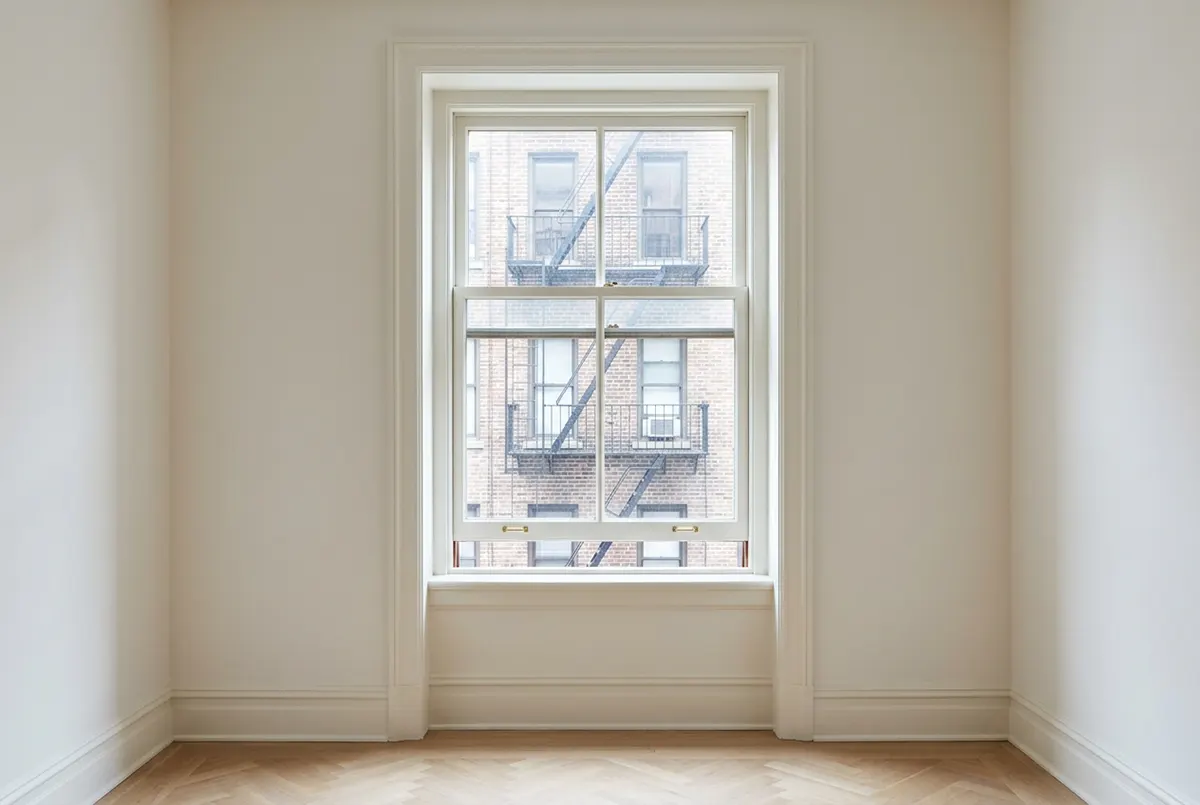
Windows are the usual surprise. In most co-ops the window is the building’s, frame and glass, because it is part of the facade. Radiators go the other way: the steam riser is the building’s, the radiator sitting on your floor is yours.
Pipes: the part everyone argues about
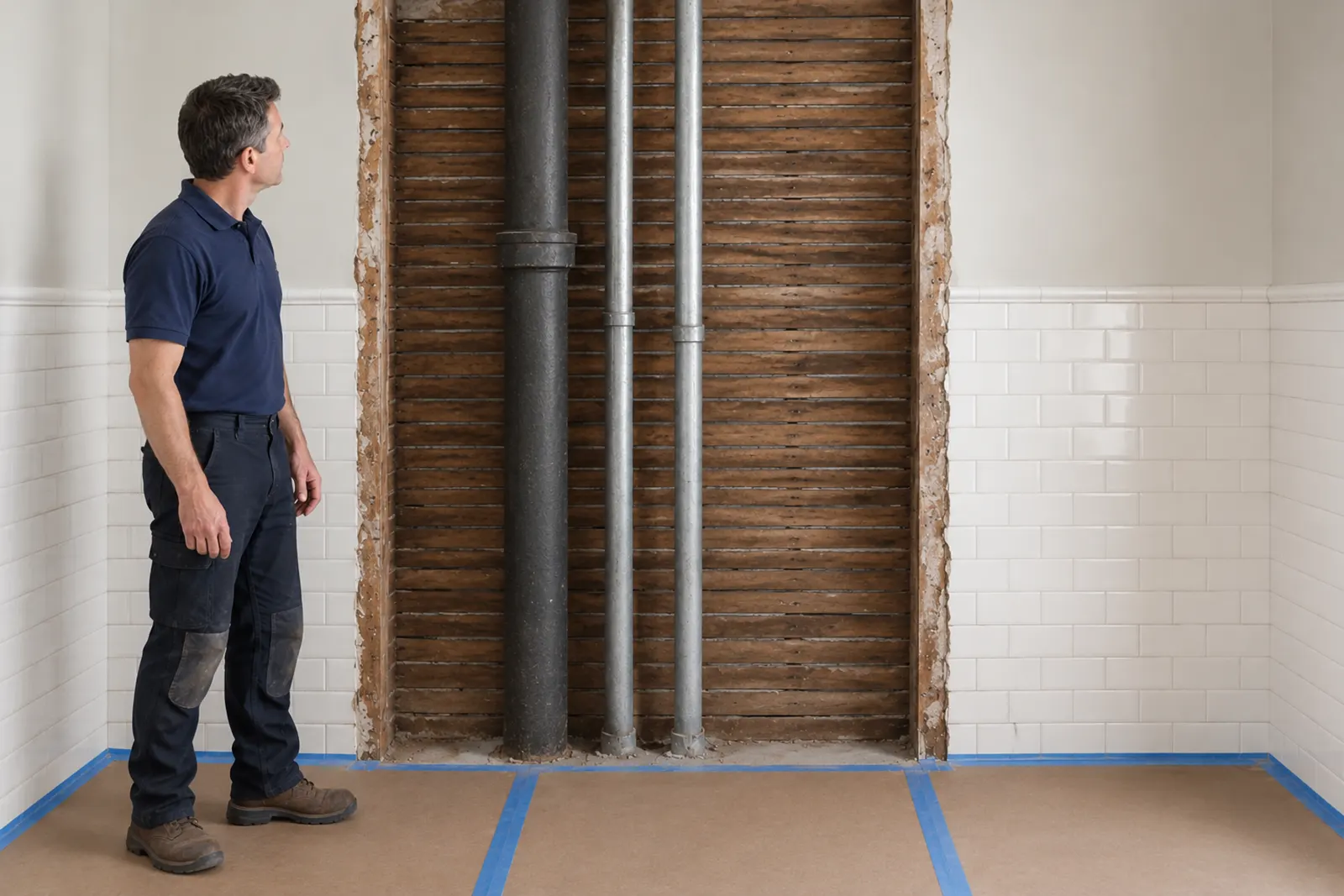
A leak is the most common fight in a co-op, and the rule is simpler than the argument. The riser, the vertical pipe that runs through every apartment on the line, is the building’s. The branch pipe that leaves it and serves only your sink is yours, even where it sits inside a wall.
That is why the first job when a pipe leaks is to find out which pipe it is, and why the wall should be opened by the building’s own plumber. If it turns out to be a riser, the building opened its own wall and pays to close it. If your contractor opens it first, you have paid for the opening, the repair and the closing, and you have an argument instead of a receipt.
Two things that move a repair onto your bill
The first is damage you caused. If your dishwasher hose fails and water reaches the apartment below, the repair downstairs is yours and your insurer’s, however much of it happens behind the building’s walls.
The second is anything that was installed later. Leases commonly say the building does not have to maintain or repair what a shareholder put in, and that often extends to what a previous owner put in. A renovated bathroom, a replaced window unit, custom doors: the building did not install them, and once there is a signed alteration agreement attached to the apartment, the obligation sits with the apartment rather than with the person who did the work.
That is why the alteration history is worth asking for before you buy. Get copies of the signed alteration agreements for the apartment from the managing agent, and read what they say you are taking on; we went through the clauses in co-op renovation agreements and the clauses that cost you money. It is one request, it costs nothing, and it tells you which of the previous owner’s changes become yours to maintain.
In a condo the words change, the logic does not
A condo has no proprietary lease. Its bylaws define the unit and the common elements, and the boundary is usually the inside surface of the perimeter walls, floors and ceilings. Everything inside that boundary is yours; the structure, the facade, the roof and the shared systems are common elements the association maintains. Windows are the common difference: in a condo they are more often the unit owner’s problem than they are in a co-op, which is one of the first things to look up in your own bylaws.
Before you hire anyone
When something breaks, the order matters more than the argument.
- Write to the managing agent the day you notice it, describe what you see, and attach photographs. A dated email is the record that everything later rests on.
- Ask in that email whose repair the building considers it, and ask for the answer in writing.
- Let the building send its own super or plumber to look first, especially when a wall has to be opened.
- Only then bring in your own contractor, for the part that is actually yours.
A board is not trying to trip you up. Managing agents answer this question several times a week, and most of them will tell you right away which side of the wall a problem is on. What costs owners money is the reverse order: the contractor comes first, the wall is open, the bill is written, and only then does anyone ask whose pipe it was.
Buying to Renovate: What to Look for Before You Sign
In New York City, buying to renovate is as exciting as it is risky. A pre-war apartment full of char

One Renovation, Two Perspectives: How Designers and Builders See the Same Space Differently.
Every renovation begins with a floor plan and two professionals standing over it. They are looking a

The Art of Patience: Why Great Renovations Take Time
We live in a culture obsessed with speed, trained by one-click purchases, next-day deliveries, and i