

The Art of Patience: Why Great Renovations Take Time
We live in a culture obsessed with speed, trained by one-click purchases, next-day deliveries, and instant everything to believe that fast is the same as efficient. Some things resist acceleration, though, and they tend to be the ones that matter most. Architecture is one of them.
In high-end construction, alignment can’t be rushed, craftsmanship can’t be fast-tracked, and time can’t be compressed without giving up the one thing you’re actually paying for, which is permanence. At Hoppler Design and Build, we treat patience less as a delay and more as a tool. Here’s why real luxury takes the time it takes.

The illusion of the 3-month renovation
In New York, every client has heard the siren song at some point: we can finish this in three months. It sounds wonderful, and it’s usually either untrue or, worse, technically true at a cost you’ll pay for later. Fast work has a way of hiding unfinished systems. Walls close up before inspections pass, subfloors go unleveled because the schedule didn’t allow for it, and the home looks flawless on move-in day only to start failing a few months in, with squeaking floors, peeling paint, and cracking grout. Every week saved by rushing tends to come back as a repair bill down the line, because luxury is ultimately defined by the absence of compromise.
The rhythm of the build
A renovation moves less like a sprint and more like a symphony, where every project follows a natural rhythm and skipping a beat causes the whole composition to fall apart. This isn’t inefficiency so much as respect for what the materials and the technical work genuinely require.
| Process | Requirement | Consequence of Rushing |
|---|---|---|
| Plaster | Full cure time | Bubbling paint and surface delamination later |
| Wood Flooring | Acclimate on site to the room’s humidity before installation | Warps, cups, and opens structural gaps once it’s down |
| Systems | Tested and verified before the walls close over them | A leak or electrical fault becomes an expensive excavation rather than a quick fix |
The invisible craftsmanship
The most important patience is the kind clients rarely see: the days spent waiting for concrete to reach full compressive strength, custom millwork resting in climate-controlled storage, or imported stone working its way through customs. From the outside, this can look like nothing is happening. From where we sit, it’s the architecture breathing.
Customs timing deserves its own mention, because for Manhattan projects it’s one of the most underestimated variables in the whole schedule. Rare materials ordered from Italy or Turkey, a particular marble, a specific hand-glazed tile, don’t simply arrive when promised. They clear inspection on the port’s timeline, not yours, and a shipment held for documentation or additional review can push a project’s critical path by weeks with no warning. A serious builder plans for that possibility rather than being surprised by it, ordering long-lead materials early and building the uncertainty into the sequence from the start. To keep momentum, we run parallel processes wherever the build allows, so that while the floors acclimate we’re integrating the lighting, and this orchestration is much of what separates a renovation that still looks right in fifty years from one that looks tired in five.
Speed builds spaces, time builds stories
There’s a psychological dimension to all of this as well. Rushed schedules push clients toward impulse decisions, while time tends to create clarity. It lets you sit with samples at different hours of the day, watch how a material behaves under changing light, and refine your vision before it’s locked into place. The slower the build, within reason, the clearer the result tends to become.

Time as a material
In genuine luxury construction, time functions as a material as tangible as stone or brass, and you can feel it in the finished work: the depth of hand-applied plaster, the softness of a banister sanded six times over, the precise alignment of custom cabinetry. We build the way watchmakers do, aiming not to be the fastest but to deliver the last renovation you’ll ever need.
In an industry built on selling immediacy, choosing patience is close to a radical act. Time isn’t what slows a project down; it’s what gives a finished home its soul. Let the plaster dry. The result tends to be worth the wait.
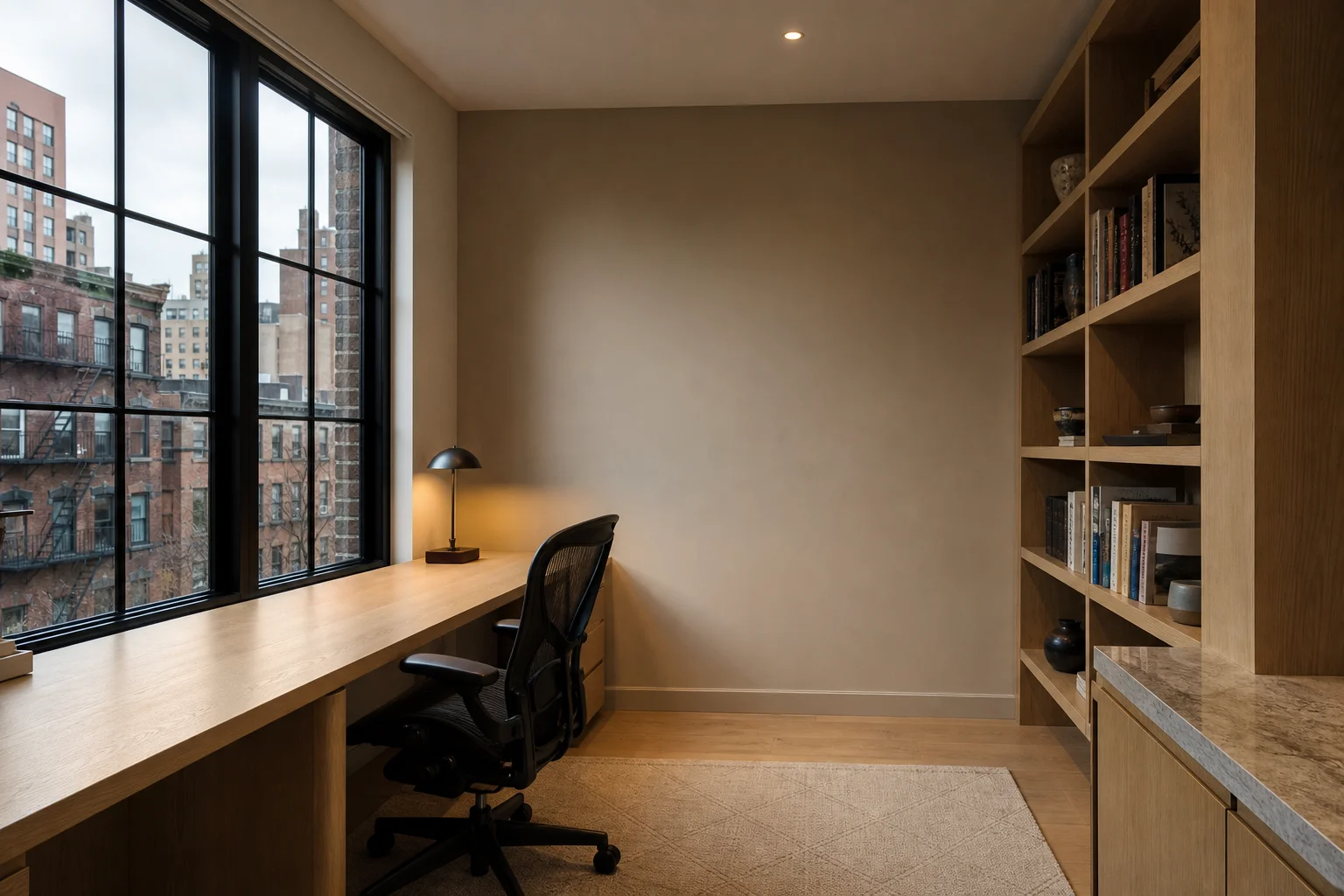
A Home Office That Fits a Small NYC Apartment
Fitting a real home office into a New York apartment usually means carving it from a corner, a wide

Soundproofing Apartments: Real Technical Solutions That Work
Living in a building with shared slabs and party walls means accepting that sound travels in ways it
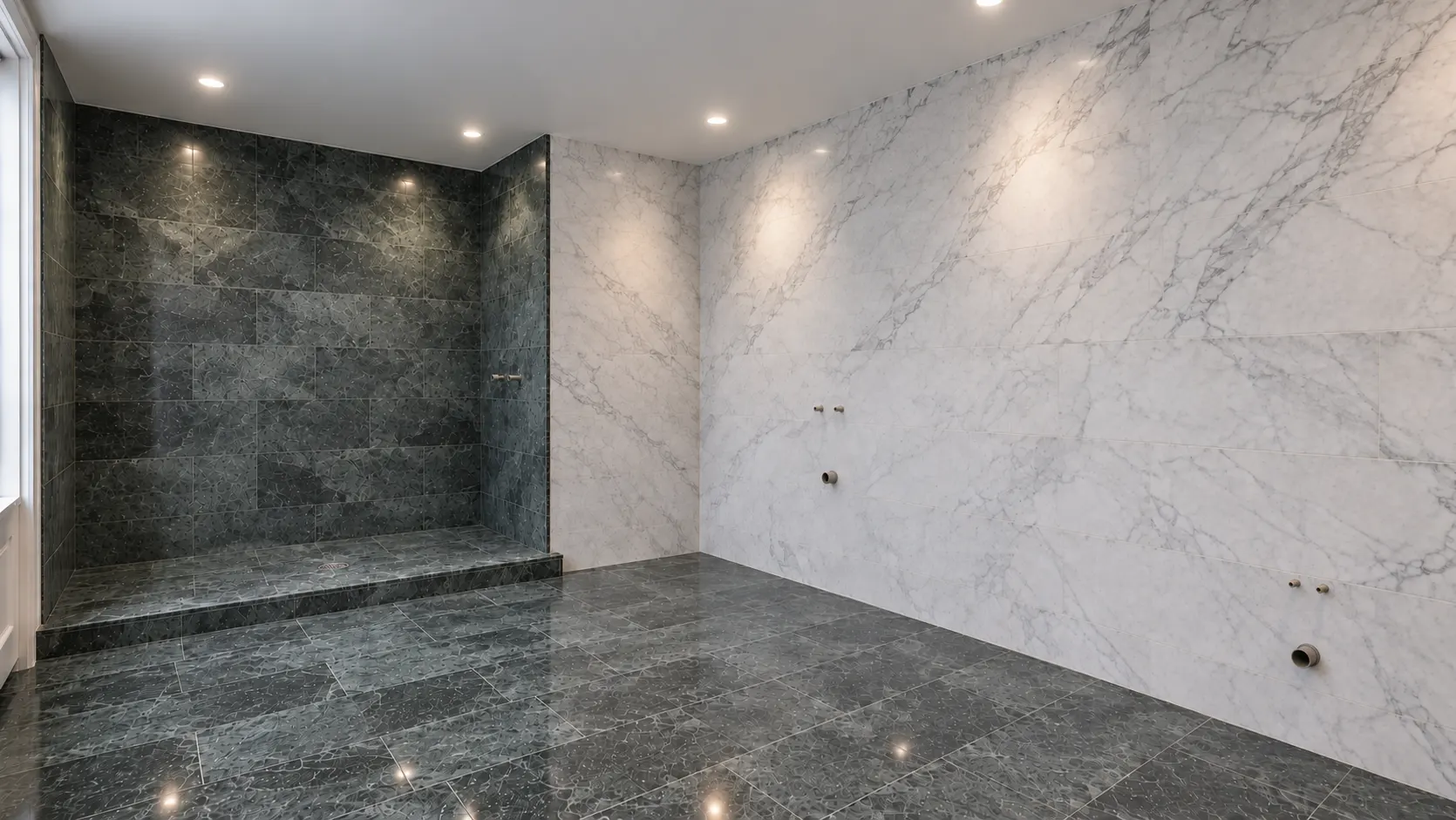
Why the Bathroom Is Always Finished Last
Somewhere near the end of an apartment renovation there is a week when the bathroom looks finished a