
Can You Live in Your Apartment During a Renovation?
Almost every owner asks this before the contract is signed: can we just stay in the apartment while the work happens? In a house the answer usually depends on how many floors you have. In a Manhattan apartment it comes down to two rooms and one door.
The two rooms are the kitchen and the bathroom. The door is your front door, the only way in, which means every trade, every sheet of plywood and every bag of debris passes through the space you live in. Here is how to tell which kind of project you have, what it takes to stay, and what moving out actually buys you.
Your building has already set the hours
Before you decide anything, look at the work hours in your building’s alteration agreement. Most co-ops and condos allow construction on weekdays only, commonly from 9 a.m. to 5 p.m., with nothing on weekends or holidays. The city’s noise rules are wider, 7 a.m. to 6 p.m. on weekdays, but your building’s window is the one that governs.
That schedule is the strongest argument for staying. Your apartment is a jobsite during office hours and yours again in the evening, and nobody drills at 7 a.m. on a Saturday. It is also why apartment projects run longer than the same work in a house: a crew with a 35-hour week needs more weeks.
The bathroom decides it
If you have one bathroom and it is being redone, plan to be somewhere else for part of the job. There is no toilet in the apartment from the day the old one comes out until the new one is connected and the floor under it is finished, and that gap is usually several days, longer if tile and waterproofing are involved.
Two things make it shorter. Ask the contractor to leave the existing toilet in use until the last possible day, which is often possible when the work starts with the tub or the walls. And ask for the new toilet to be set as soon as the floor allows, even if the rest of the room is unfinished. With a second bathroom, none of this applies, and a bathroom renovation is one of the easiest projects to live through.
A kitchen renovation takes weeks, and you can live through it
A kitchen is out of service for weeks, but nothing about it makes the apartment unusable. What it takes is a temporary kitchen set up before demolition starts, not after.
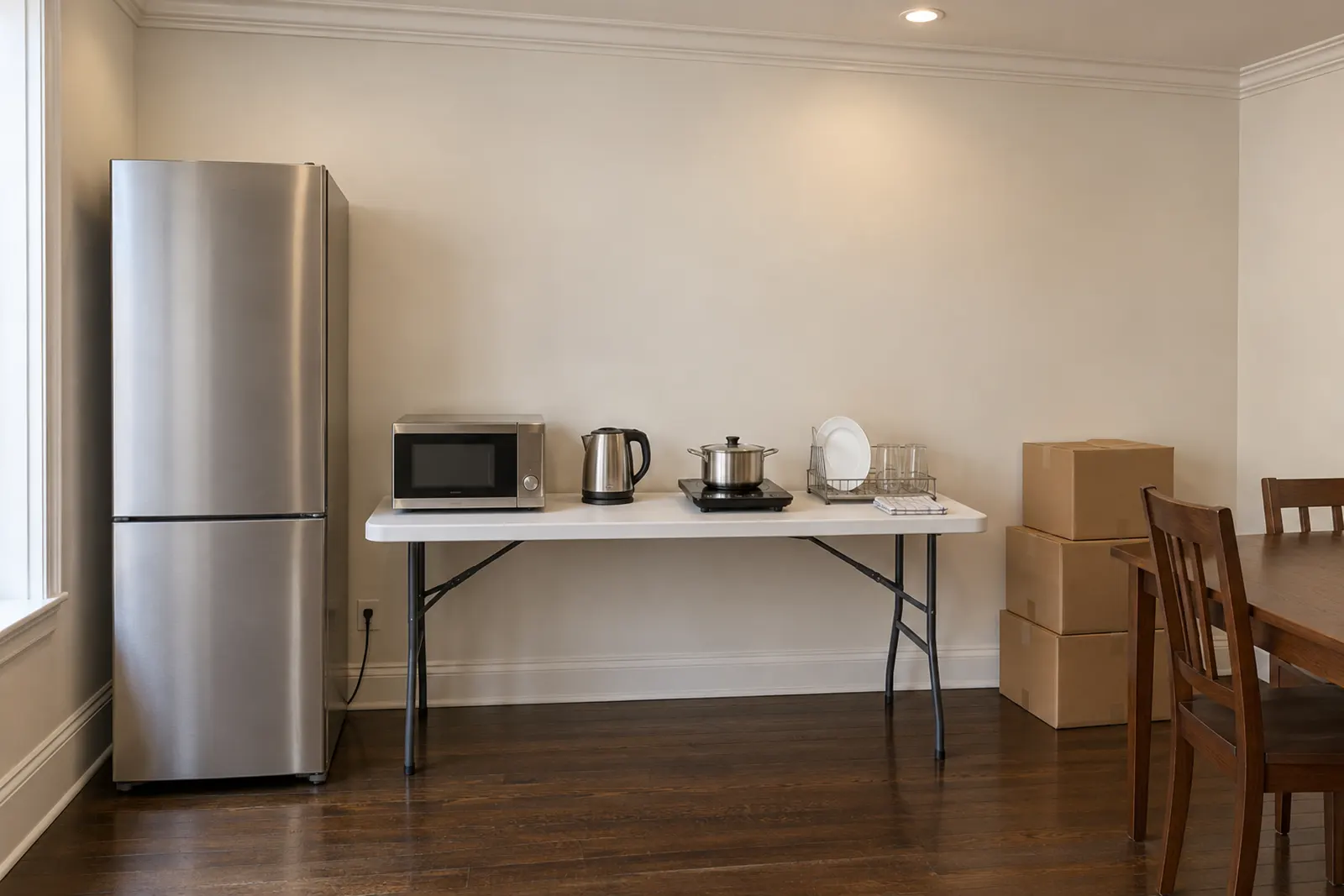
- The refrigerator moved to another room, on a circuit that will carry it.
- A microwave, a kettle and a single induction burner on a folding table.
- Water from the bathroom sink, so the temporary kitchen goes in the room closest to it.
- Everything you are not using packed and out of the apartment, because storage boxes in a small apartment eat the space you were counting on.
- A real line in the budget for takeout, which for two people over six weeks is not a small number.
Dust is the part people underestimate
Noise stops at five. Dust does not, and in an apartment with one entrance it has an easy path into every room you are still living in. Good containment is specific work that belongs in the bid:
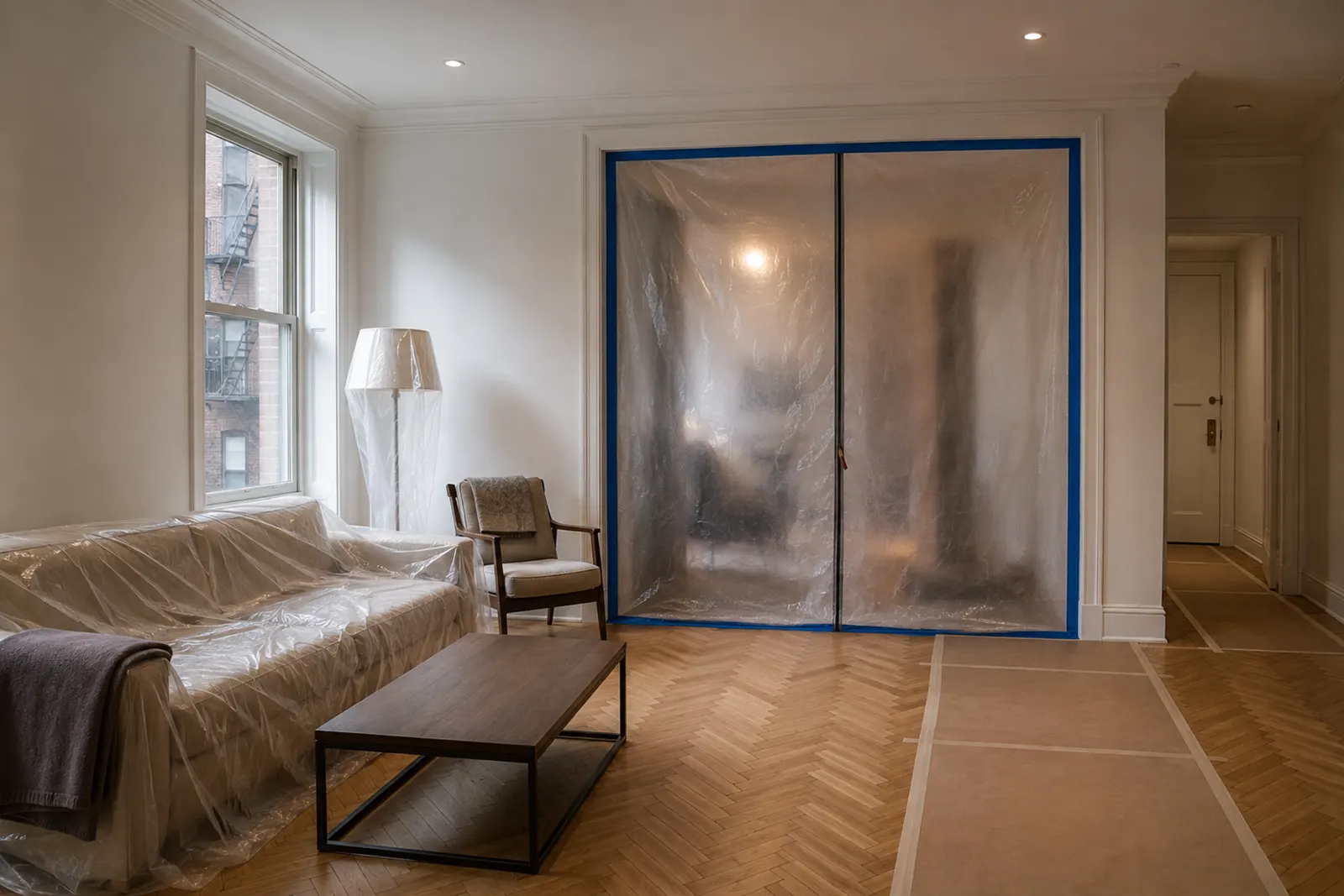
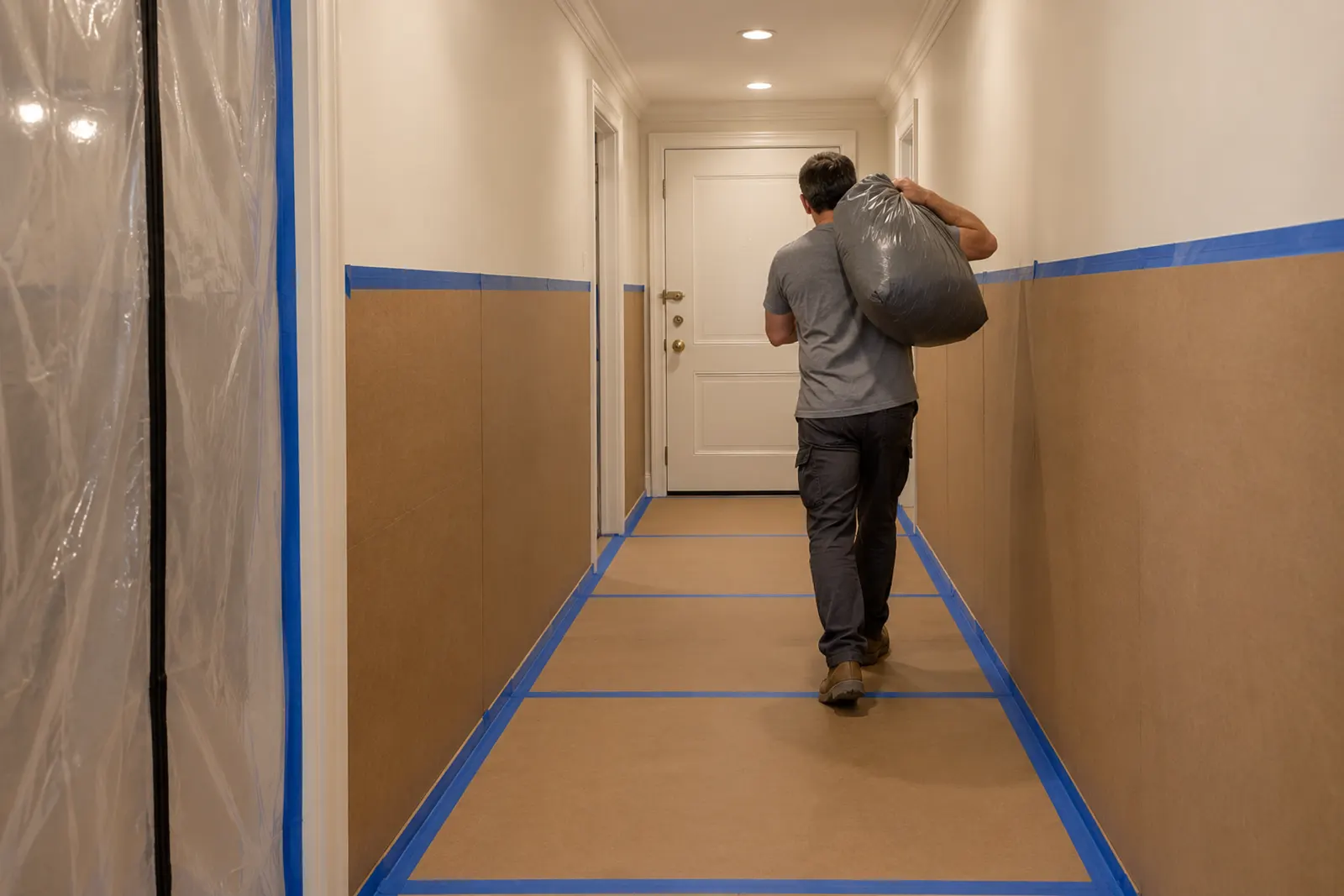
- A sealed barrier at the work zone with a zippered door, fixed to floor, ceiling and both walls, not sheeting taped across a doorway.
- Any vent or air grille inside the work zone covered, so the building’s ventilation does not carry dust around the apartment.
- Floor protection on the whole route the trades walk, from the service elevator to the work zone, not only inside it.
- Daily cleanup written into the contract, and a professional clean at the end.
Ask how dust will be handled before you sign. A contractor who describes this without being prompted is telling you how the rest of the job will run.
When staying is not an option
Some work rules itself out. A gut renovation leaves you without water, power or a kitchen for long stretches, and the trades cannot work at full speed with a household inside. Those projects go faster and cost less when the apartment is empty.
The other case is about health rather than comfort. Paint in a building from before 1978 is presumed to contain lead, and pipe insulation, floor tile and similar materials in a pre-war apartment can contain asbestos. Both are handled by certified contractors under sealed conditions, and while that work is going on, children and pregnant women should not be in the apartment at all. The American Academy of Pediatrics is blunt about it: they return after the work is finished and the place has been cleaned and checked. In a pre-war building, ask early which phases involve lead or asbestos, because those are the weeks you need to be out.
What each choice costs
Staying is cheaper on paper. There is no second rent and no hotel, and you are there to answer the questions that come up daily, which prevents the small mistakes that cost real money later.
What staying costs is time and normal life. Trades work around your furniture and your schedule, cleaning happens every day instead of once, and a project that would take eight weeks in an empty apartment can take ten. Add takeout, a storage unit for the furniture that has nowhere to go, and weeks of sleeping next to a sealed doorway.
Moving out costs money in one line: short-term rent or a sublet, plus moving and storage. It buys back speed, because several trades can work at once, and it removes the phases that are genuinely hard to live with.
The middle path is what most apartment owners end up doing. Stay for the long quiet stretches, and be somewhere else for demolition, for lead or asbestos work, and for the days the only bathroom is out. Two weeks in a sublet is a very different number from three months.
Decide before the schedule is written
This decision belongs in the planning stage, alongside the board approval package, not in week three when the dust starts. Tell your contractor early whether you are staying. If you are, the schedule gets built around a working bathroom, a temporary kitchen and a clean path to the door, and the price should reflect that work. If you are not, the schedule gets built for speed. Both are normal ways to run an apartment renovation. The expensive version is deciding halfway through.

Bathroom Clearances: The Legal Minimum and What Works
Bathroom dimensions are one of the few parts of a renovation where the code gives you hard numbers r

Design Decisions That Help Apartments Sell Faster
Selling an apartment quickly and at a premium is rarely accidental. In competitive urban markets suc
Why the Hood Over Your Range Does Nothing
Fish on Thursday, and on Friday morning the hallway still knows about it. The film on the cabinet do