

Co-op and Condo Renovation Rules: Navigating Building Board Approvals in NYC
Living in a New York City co-op or condo means your renovation has to clear two separate hurdles. City permits are only the legal baseline. The harder test is your building’s board, whose requirements can make or break a project before a single wall comes down.
Boards exist because one owner’s construction affects everyone else in the building. Getting ahead of board requirements, rather than treating them as a formality, is what keeps a renovation on schedule and on budget.
Why board approval matters
A building’s alteration agreement is a legally binding contract, not procedural paperwork. Boards use it to protect the building’s structural integrity and to limit disruption to other residents during construction. That oversight also shields the building corporation from liability if something goes wrong.
The approval process and timeline
Before getting into the individual requirements, it helps to see the sequence you will actually move through.
- Submission. Architectural plans, insurance certificates, the signed alteration agreement, and the security deposit go to the managing agent.
- Management review. The management company checks the submission for completeness and requests anything missing or improperly formatted.
- Architect review. The building’s retained architect reviews the plans for technical compliance, structural safety, and adherence to building rules.
- Revisions. Your architect updates drawings or clarifies scope based on that feedback.
- Final approval. The building accepts the revised plans and issues written authorization to proceed.
- DOB attestation. Since February 2026, when a co-op or condo unit owner files in DOB NOW, the board is automatically added to the job as a stakeholder and a board representative must attest that the filing was authorized. Your city application waits on that action, which industry sources put at another 2 to 4 weeks.
- Scheduling. Set a start date with management that fits the permitted working hours and avoids any blackout period.
On timing, condo approvals generally run faster than co-op approvals, often 1 to 3 weeks against 4 to 8 weeks for a co-op. The single biggest variable is meeting frequency. Where a board convenes monthly, a submission that arrives the week after a meeting waits until the next one, and a round of revisions can push you into a third cycle. Complex or structural scope extends it further, particularly where the building’s engineer is brought in.
Build buffer into the schedule around this phase specifically, because it is the part you cannot accelerate by spending more.
Understanding alteration agreements
The alteration agreement is the foundational document of your project. It spells out what work is permitted, the restrictions that apply, and the financial consequences of violating the agreed terms.

These agreements require detailed architectural plans prepared by licensed professionals, and they set the working hours. The city’s Noise Code permits construction from 7:00 AM to 6:00 PM on weekdays; buildings narrow that further, commonly to something around 9:00 AM to 5:00 PM. Saturday work is permitted in some buildings with advance notice and occasionally a fee, while Sundays and holidays are prohibited in nearly every building with a formal alteration process. The hours that govern your project are the ones in your own agreement.
Some buildings, concentrated among older co-ops, also impose blackout periods when construction stops entirely, most often over the summer between Memorial Day and Labor Day or around major winter holidays. It is not a widespread practice, but where it exists it removes an entire quarter from the calendar, so confirm it before building a schedule.
The agreement also sets noise restrictions for demolition and power tools, and the security deposit the building holds against damage to common areas. Deposits of $5,000 to $20,000 are typical, running higher in premium buildings and for full gut renovations. There is no market-wide standard figure, and the number that applies to you is the one written into your agreement.
Review your building’s standard alteration agreement before finalizing your design. Building-specific restrictions can require design changes that are far easier to accommodate during planning than after construction has begun.
The board review package
The board review is the milestone where you present your plans to representatives who hold the power to approve, modify, or reject the project. Passing it depends on a comprehensive package: existing and proposed architectural plans, contractor credentials, and a detailed project timeline.

Board members and reviewing architects will scrutinize your logistical planning as closely as your design. They expect actionable strategies for noise mitigation, dust containment, and elevator usage for material delivery and debris removal. Be prepared to answer how you will handle complications that extend the timeline or require plan modifications, because a package that anticipates those questions moves faster than one that waits to be asked.
Insurance requirements and contractor qualifications
Insurance requirements and contractor vetting are where boards are least flexible, and the reasons are financial rather than bureaucratic. Discovering a coverage gap after approval delays construction and requires policy modifications that take time to arrange.
Your contractor needs workers’ compensation and commercial general liability, and the limits vary more than most owners expect. A common base structure is $1 million per occurrence with a $2 million aggregate. Many Manhattan buildings, particularly premium co-ops and any project involving structural work, set their own minimum at $2 million per occurrence and require umbrella coverage on top, with $3 million to $5 million appearing regularly on larger projects. Both structures are in active use, and the figure that governs your project is the one in your building’s agreement rather than any published norm.
The building, management company, and board also have to be named as additional insured parties, and that endorsement has to be attached to the policy rather than merely listed on the certificate. Working with firms that have a track record in occupied residential buildings is the most reliable way through these requirements, since they arrive already carrying the coverage the buildings ask for.
Co-ops versus condos
Co-ops and condos operate under different ownership structures, and that difference drives how strict the renovation rules are.
Co-op renovations
In a co-op you own shares in a corporation rather than the physical unit. Because the board carries a fiduciary responsibility for the building’s structural integrity and financial stability, its oversight is correspondingly tight. Boards enforce detailed rules on materials, working hours, and layouts that push against wet-over-dry limits, and they can decline a proposal without stating a reason.
Condo renovations
In a condo you own the physical unit, which brings more latitude. Condo boards still regulate safety, noise, and building systems, but their oversight is generally lighter than a co-op’s, and the guidelines usually allow a faster path through approval. Approval is still required; it simply tends to arrive sooner and with fewer conditions attached.
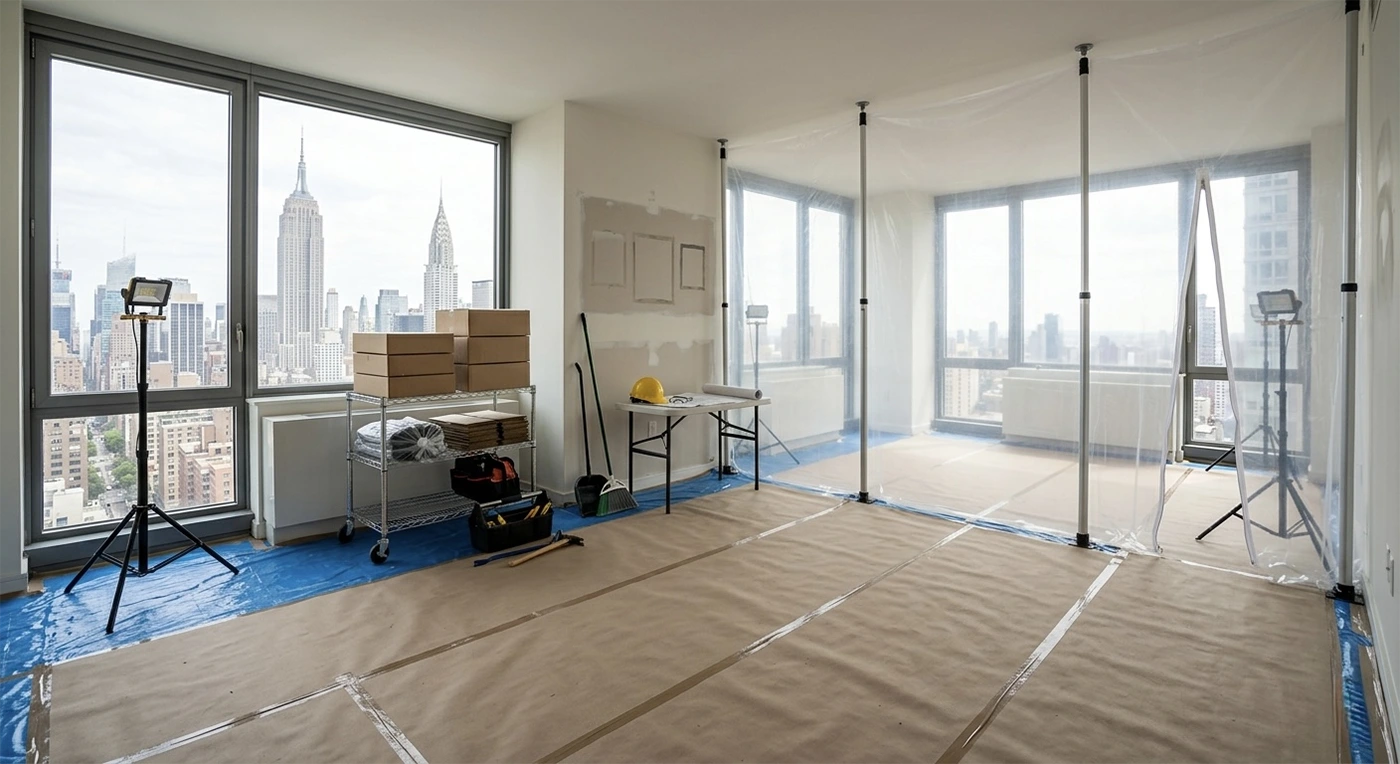
Demolition Rules in NYC Apartments: What Is Allowed
Most people planning a renovation in New York City underestimate how tightly the city controls what
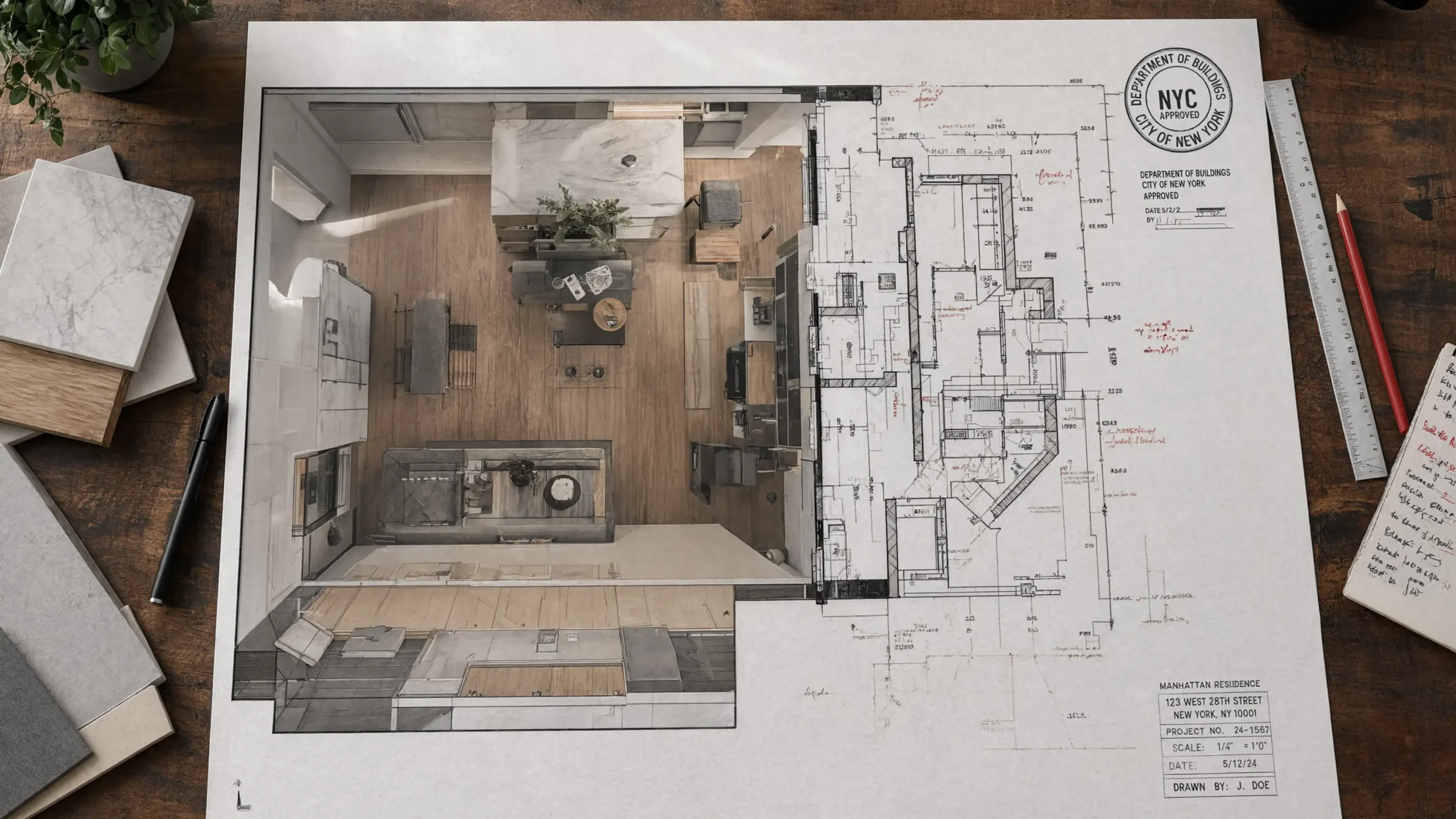
Blueprints, Codes, and Compliance: What Every NYC Renovation Needs Before It Begins
Before the first wall comes down or the new floors are ordered, there are invisible rules that deter

DIY or Hire a Pro? A Guide to Making Smart Renovation Decisions
The appeal of DIY renovation is real. There’s something genuinely satisfying about improving y