

Cracking the NYC Permit Code: Your Step-by-Step Guide to DOB Approvals
Navigating New York City’s Department of Buildings is genuinely complicated, and the consequences of getting it wrong are expensive. Stop Work Orders, fines, and requirements to open up completed work for inspection can double a project’s cost and timeline. Understanding how the system works before breaking ground is one of the more valuable things a homeowner can do.
The DOB process exists to verify that construction work meets safety standards and building codes that protect occupants and neighbors alike. Structural integrity, electrical and plumbing compliance, zoning adherence, and landmark restrictions all fall within its scope. The paperwork is real and the timelines can be frustrating, but the approvals provide legal protection that unpermitted work cannot.

Understanding What Requires DOB Approval
The first step is determining what type of work actually requires a permit, because not all renovation activities do, and the cost of guessing wrong tends to surface at the worst possible moment.
Work that typically does not require a DOB permit includes painting, basic fixture swaps, and straightforward flooring replacement. Homeowners in co-ops should note, though, that DOB permits and building board requirements are two separate processes. Replacing flooring in a co-op apartment generally does not require a DOB permit, but it almost always requires board notification and must comply with the building’s acoustic standards, typically a minimum IIC rating specified in the proprietary lease or house rules. These are building-level requirements that exist independently of the DOB, and skipping them creates problems at resale and with neighbors regardless of permit status.

Work that requires official DOB approval includes structural changes of any kind, electrical work beyond simple fixture replacements, plumbing modifications, and changes to building occupancy.
Several categories cause consistent confusion. Moving a non-load-bearing wall, adding a bathroom exhaust fan, or installing under-cabinet lighting all sit in territory where requirements are not always obvious. When the scope of work is unclear, consulting with the DOB directly or working with a licensed professional who knows current requirements is the right approach. Assumptions in this area are costly.
Landmarks Preservation Commission: A Separate Process
For a significant portion of Manhattan’s residential stock, DOB approval is not the only regulatory hurdle. Buildings located within New York City’s historic districts, or individually landmarked properties, also fall under the jurisdiction of the Landmarks Preservation Commission. The LPC review process is entirely separate from DOB filing, and one approval does not substitute for the other.
Manhattan has a high concentration of historic districts, including the Upper West Side, Upper East Side, Greenwich Village, SoHo, Tribeca, and Carnegie Hill, among others. Owners in these districts who plan exterior work, changes to windows, facade alterations, or in some cases interior work in architecturally significant spaces need LPC approval before filing with the DOB. The LPC timeline adds to the overall project schedule and must be factored in from the start. Working with professionals familiar with LPC submissions matters here, since the documentation requirements and review criteria differ from standard DOB applications.
Required Documentation and Licensed Professionals
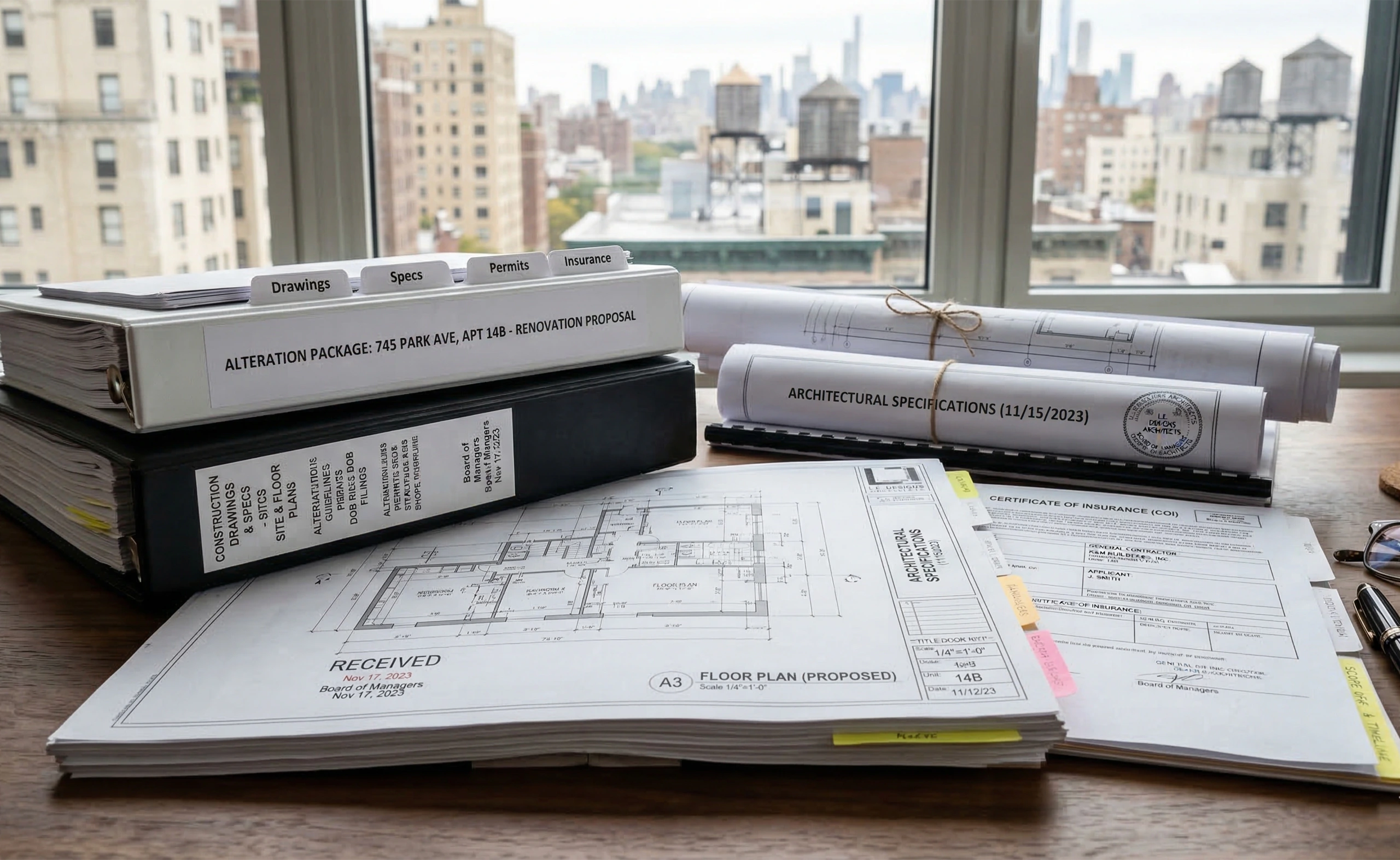
For any project involving structural changes, layout modifications, or utility work, the DOB requires detailed plans prepared and signed by licensed professionals. The exact requirements depend on scope, but typically include architectural drawings showing existing and proposed conditions, structural calculations where walls, beams, or loads are affected, mechanical, electrical, and plumbing plans for utility changes, energy and building code compliance documentation, and zoning or landmark approvals where applicable.
A Registered Architect is required for most projects involving layout changes, walls, or significant design modifications. A Professional Engineer is required for structural, mechanical, or complex technical scopes. A Licensed Contractor must be listed for permit pulling and is responsible for performing the work in accordance with approved plans. Purely cosmetic work may not require any of the above, but anything touching structure, plumbing, electrical systems, or layout does.
Permit Timeline: What to Expect
NYC building permits can take anywhere from a few weeks to several months depending on project complexity and whether additional reviews are involved. Straightforward interior applications typically run ten to twenty business days. Complex projects involving structural work or landmark buildings run forty or more business days. Revisions requested by the DOB add time on top of that, depending on how quickly the project team can resubmit corrected plans.
The most practical approach to timeline management is building permit processing time into the construction schedule from the beginning rather than treating it as a formality that will resolve itself. Materials should be ordered only after permit approval. Comprehensive documentation submitted upfront reduces the likelihood of revision requests, which are one of the most common sources of delay, and flexibility in the schedule for potential plan corrections is a reasonable precaution on any project of meaningful scope.
The DOB’s Professional Certification program can shorten review time for eligible projects, allowing qualified architects to self-certify code compliance rather than waiting for plan examiner review. Scheduling consultations with plan examiners to resolve open questions before or during the review process is another way to reduce back-and-forth. Neither method guarantees faster approval, but both reduce the probability of avoidable delays. Expedited filing shortens review time; it does not change the approval standard, since every project must still meet applicable safety, zoning, and code requirements regardless of how the application is processed.
Common Pitfalls and How to Avoid Them
Starting work before permits are approved is the single most expensive mistake a homeowner can make. It triggers Stop Work Orders, fines, and in many cases requirements to expose completed work for inspection. Projects that take this shortcut routinely end up costing more and taking longer than they would have with proper approvals in place.
Incomplete applications waste time without advancing anything. Plans that do not accurately reflect existing building conditions create inspection problems that require expensive corrections. Working without licensed professionals on projects that require them virtually guarantees rejection. And underestimating how changes ripple through building systems is a consistent source of scope expansion, since a seemingly simple modification may trigger required updates to ventilation, electrical infrastructure, or structural support that were not part of the original plan.
The straightforward way to avoid most of these problems is to work with professionals who have real experience with DOB filings, build adequate time and budget into the project from the start, and treat the approval process as part of the project rather than a preliminary obstacle to get past.

DIY or Hire a Pro? A Guide to Making Smart Renovation Decisions
The appeal of DIY renovation is real. There’s something genuinely satisfying about improving y
The Full NYC Renovation Approval Process: From Concept to Final Sign-Off
One of the most common misconceptions in city renovations is that construction time equals project t

ALT-1 vs ALT-2 Filings in NYC: What Actually Applies to Your Apartment?
Most apartment owners planning a renovation in New York City fall into one of two camps. The first g