
Furniture Placement Rules Designers Use in Open Layouts
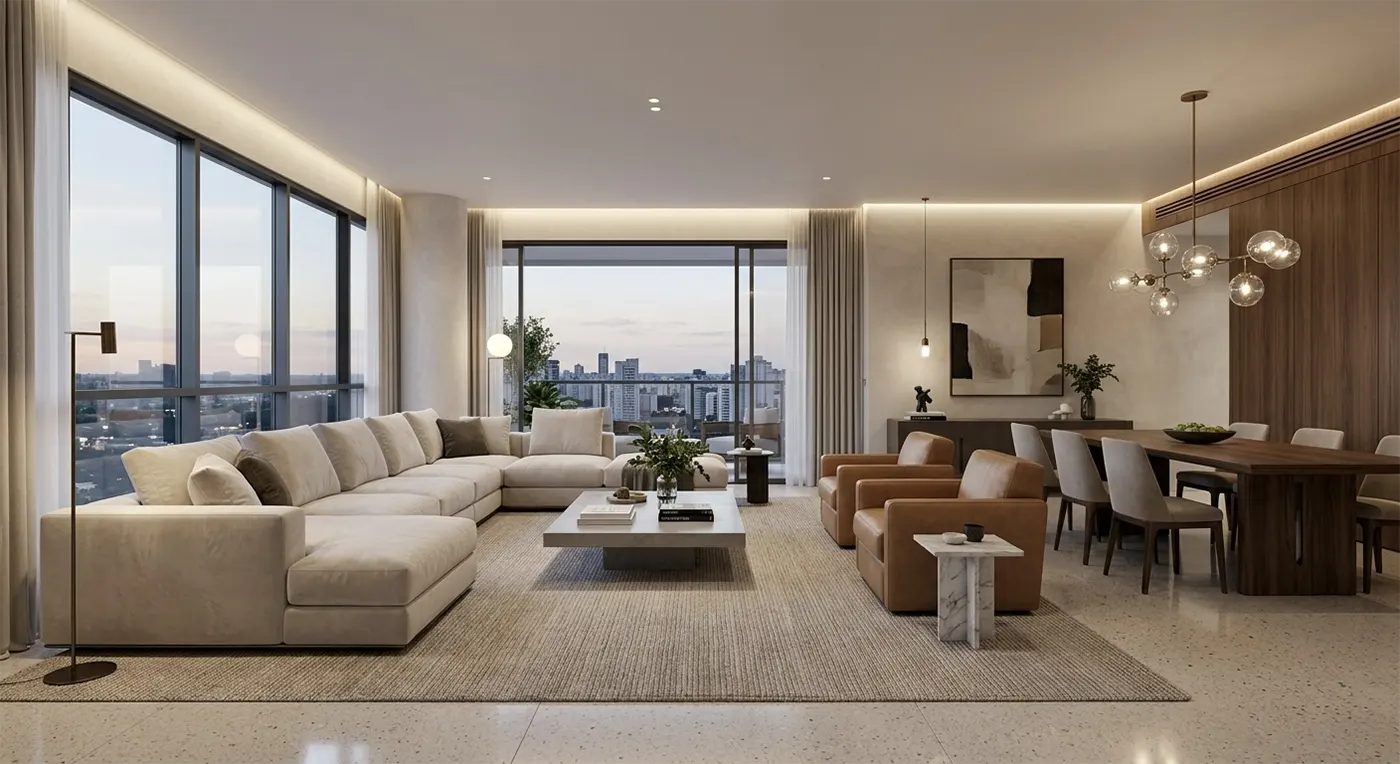
The open layout is one of the most requested outcomes in Manhattan apartment renovations, and one of the most frequently mishandled. Removing walls between a kitchen, dining area, and living room creates the visual expansion and flexibility that owners want, but it also removes the architectural structure that tells furniture where to go. Without walls, the only things defining how a space functions are the objects placed within it. That responsibility falls entirely to layout, and layout is a discipline with its own logic.
In a city where a 900-square-foot one-bedroom is often described as generous, and where the living, dining, and kitchen areas are frequently one continuous room, furniture placement functions as spatial architecture rather than decoration. How you arrange what you own determines how the space functions, how it feels to move through, and whether it comes across as a considered environment or a showroom with too many pieces crowded into one room.
How Furniture Replaces Architecture
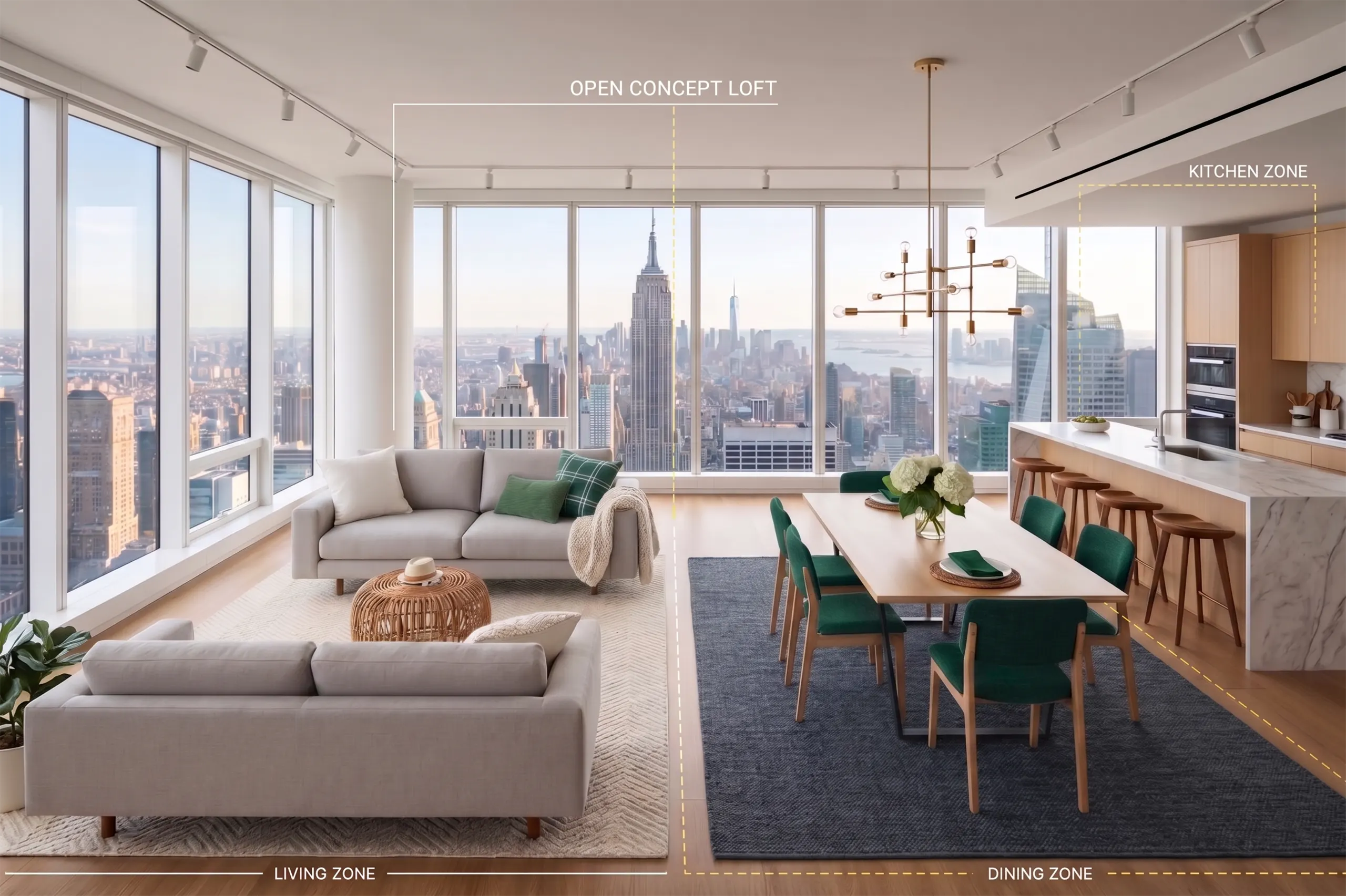
A wall does three things simultaneously: it defines space, creates privacy, and provides surfaces for doors, windows, and lighting. When a wall is removed to create an open concept apartment layout, none of those functions disappear. They simply need to be performed by something else.
Removing that wall is also a scope decision, not only a design one. In a co-op or condo, taking down any wall — load-bearing or not — falls under the building’s alteration agreement, which means board approval before a permit is filed. That approval is not a formality. Many alteration agreements prohibit modification of bearing walls outright, regardless of what an engineer could design, and where the work is not banned by the document a board can still decline. In a co-op that decision is generally final and arrives without an explanation.
A registered design professional determines whether a wall carries structural load, but that determination establishes what is structurally possible, not what the building will permit. The two questions are separate, and the second one is answered by the managing agent and the board rather than by the drawings.
For a furniture plan, this has one practical consequence worth stating plainly: do not design a layout — or buy a sectional sized for one — around a wall that has not yet been approved for removal. Confirm what is actually coming out before committing to what fills the space afterward.
Furniture is what performs the work the wall used to do. A well-placed sofa defines the boundary of the living zone as clearly as a partition would. A dining table with appropriate overhead lighting signals a distinct area of purpose. A kitchen island, when designed as a transitional element rather than purely a cooking surface, mediates between the kitchen program and the living zone with the same spatial effect a low wall would have.
That island is often plumbed — a sink, a dishwasher, sometimes a prep faucet — not just a furniture-scale counter. Where that plumbing can sit is set by the building’s wet-over-dry rule, which in most co-ops and condos keeps wet fixtures within the kitchen’s original footprint over the apartment below. That footprint, not the furniture plan, decides how far the island can shift toward the dining zone, and by extension how much room the dining table actually has to work with.
The critical difference between furniture placement in a closed floor plan and furniture placement in an open plan is that in the latter, every piece is visible from every other zone simultaneously. There’s no wall to hide what’s behind it. Every arrangement decision is made in the context of every other decision, and the room is read as a whole rather than in parts.
Core Rules Designers Apply
Anchor Each Zone Before Furnishing It
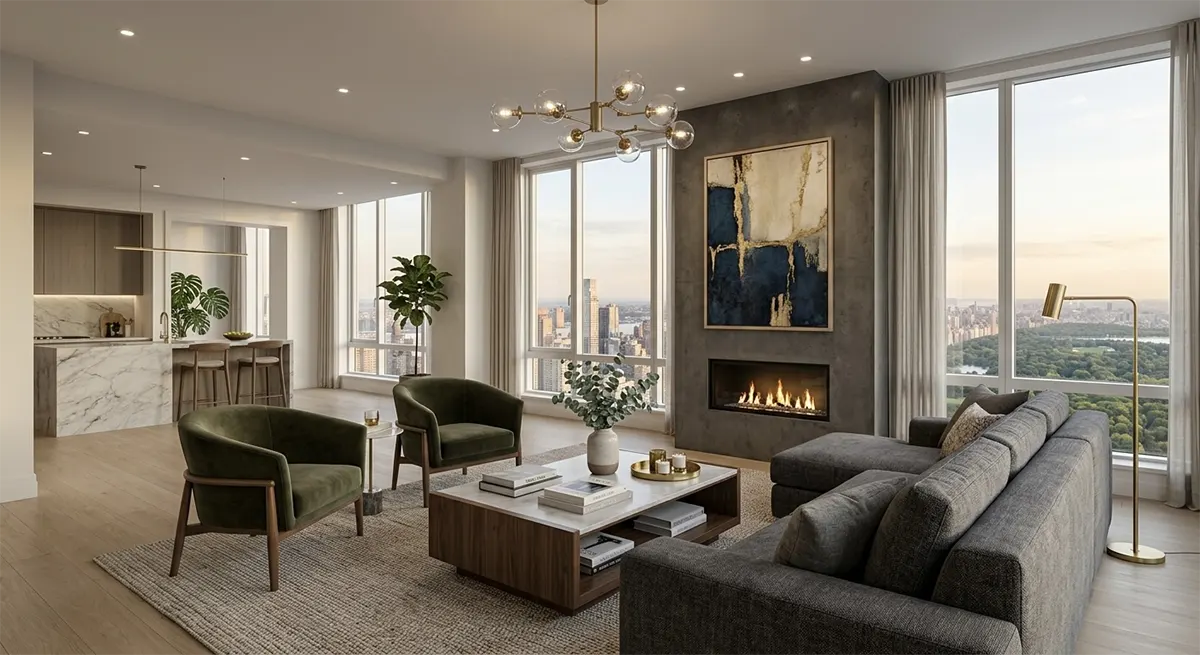
Every distinct area within an open layout needs an anchor: a single large piece or combination of pieces that establishes the zone’s center of gravity. In a living area, the sofa is almost always the anchor. In a dining area, the table anchors, and the rug beneath it reinforces the boundary. In a kitchen that opens to a living space, the island often serves this role. The anchor for each zone gets identified before any other piece is selected. When the anchor is wrong in scale or position, everything placed around it will feel unresolved regardless of its individual quality.
Define Zones with Rugs, Not Room Dividers
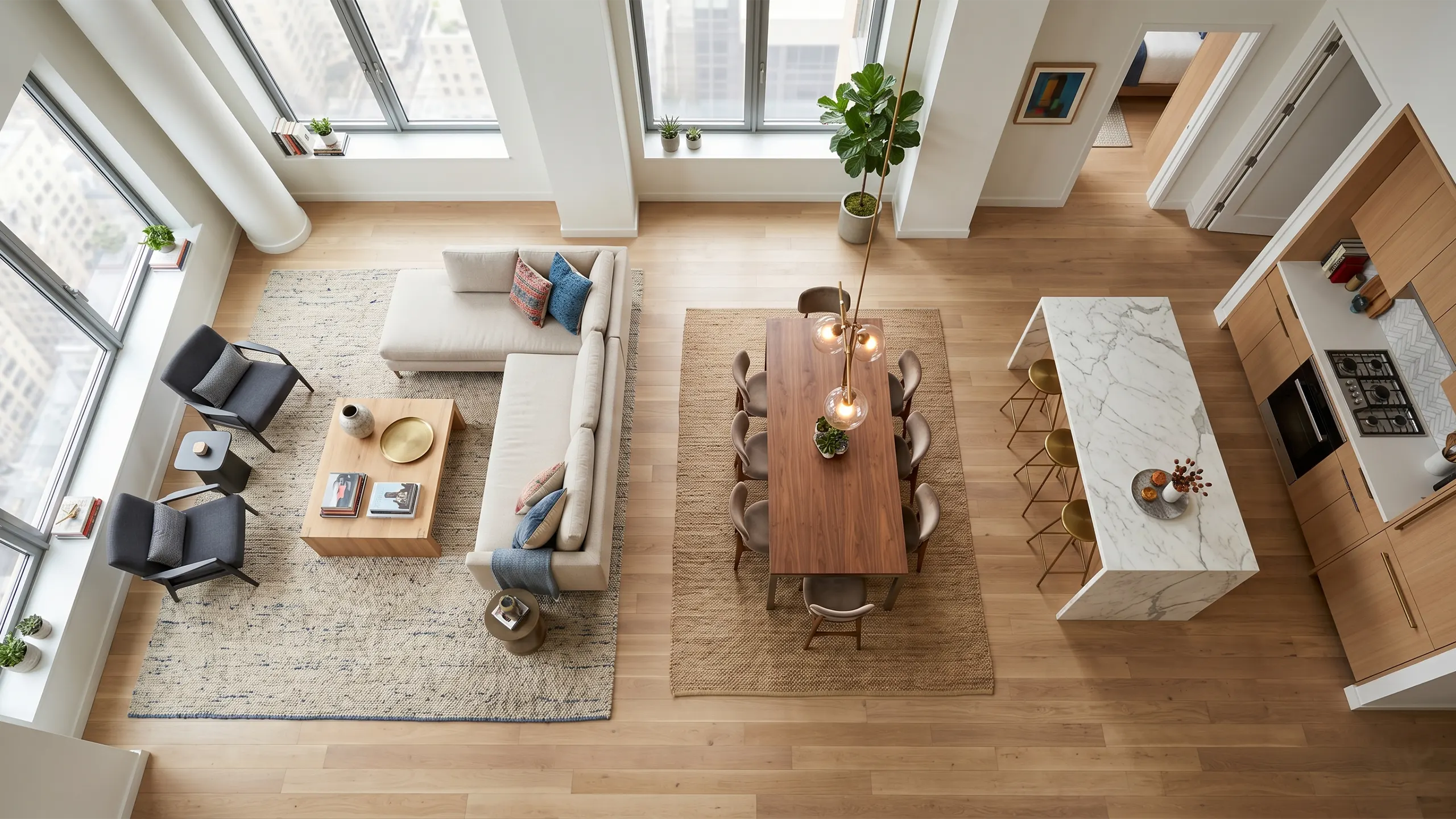
In an open plan furniture arrangement, a rug is a boundary marker as much as it is a surface treatment. A rug under the seating arrangement tells the eye where the living room is. A separate rug under the dining table tells the eye where the dining area is. When both rugs are correctly scaled to their respective zones, the eye reads two distinct areas within what is technically one room. When a single rug covers the entire space or when rugs are undersized, the zoning logic collapses regardless of what furniture sits on top of it. In a Manhattan apartment where the living and dining areas might share thirty feet of linear space, this distinction is not subtle.
Respect Circulation Paths with Specific Clearances
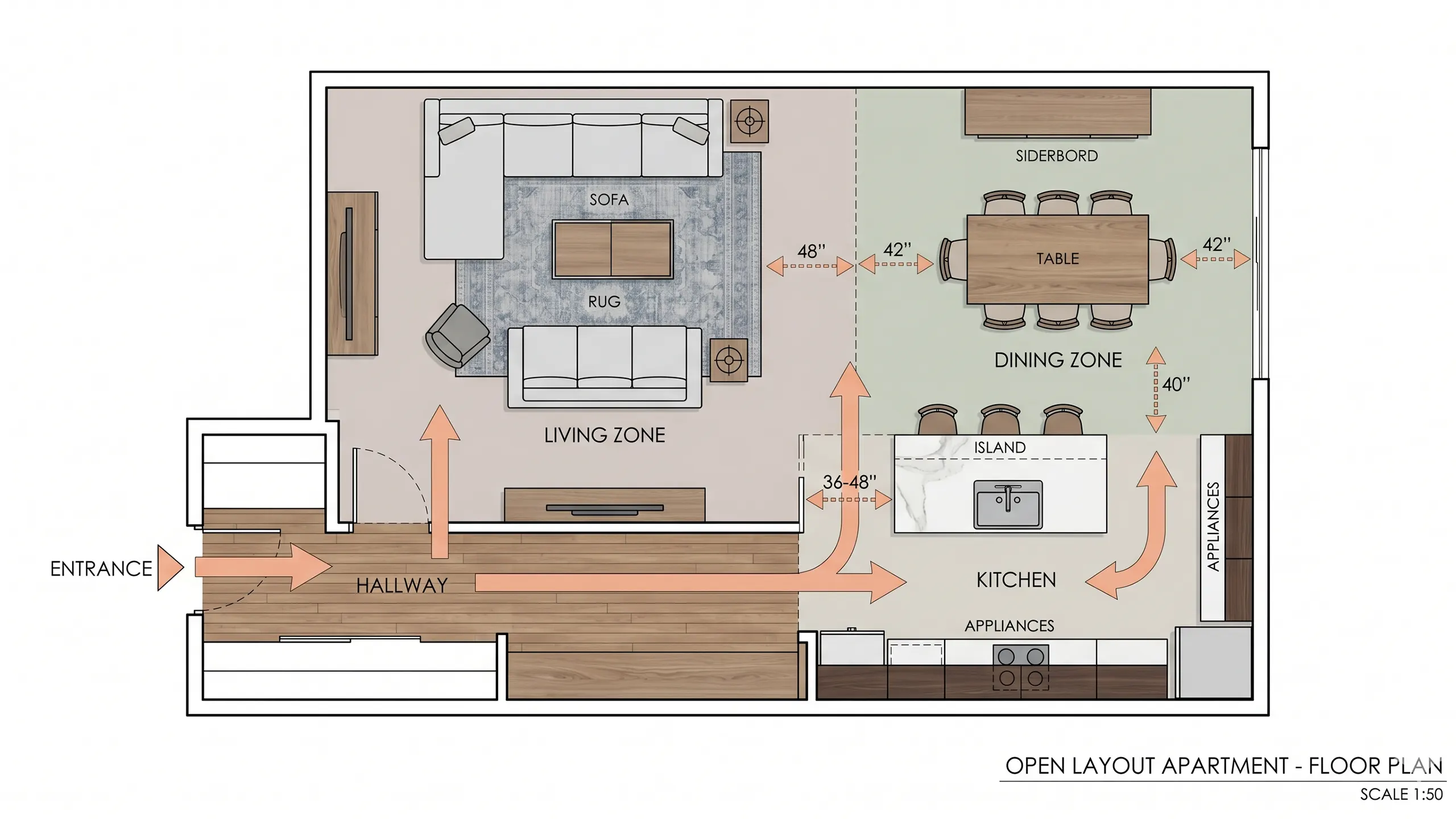
Interior design practice works from standard clearance dimensions because those dimensions reflect how people actually move through space:
- Sofa to coffee table: fourteen to eighteen inches, enough for comfortable reach without feeling cramped.
- Primary circulation path: at least thirty-six inches of clear width, forty-eight preferred where the path is used regularly.
In an open concept apartment layout where the path from the entry to the kitchen runs through the living zone, the furniture arrangement must preserve that corridor without making the room feel like an obstacle course. When these clearances are violated, the room that looked right in the plan feels wrong in person.
Align with Architectural Elements, Not Just with Each Other
Every Manhattan apartment has fixed architectural elements: windows, columns, ceiling beams in prewar buildings, and the perimeter walls that remain even in an open plan. A sofa placed in relation to the window behind it, centered on the view rather than centered on the wall, creates a spatial logic that connects the interior to its context. A dining table aligned with an overhead lighting fixture and a ceiling change, rather than placed arbitrarily in the center of the available floor space, acknowledges the room’s architecture. When furniture ignores the fixed elements around it, the room looks like it was furnished by someone who hadn’t looked up.
Balance Scale Across Zones
In a combined living-dining layout, the relative scale of the furniture in each zone needs to be in proportion to the zone’s importance and size. An oversized sectional in the living area combined with a small dining table creates a visual imbalance that makes one zone feel dominant and the other feel vestigial. Interior designer Tatiana Chechina works from a plan view with furniture drawn to scale before selecting a single piece, and checks the balance across zones before checking the balance within any one zone. In Manhattan apartments where the rooms are compact, that sequencing is what keeps one zone from swallowing the other.
Light Each Zone Independently
Overhead recessed lighting covers a room uniformly. That uniformity is useful during construction and irrelevant during occupancy. In a finished open plan, each zone needs its own light source at a different level. A pendant over the dining table defines the zone from above. Task lighting in the kitchen defines the cooking area. A floor lamp and table lamps in the living zone create warmth and visual depth that recessed lights alone cannot produce. When every zone is lit by the same overhead system at the same level, the zones collapse into a single undifferentiated space no matter how well the furniture is arranged.
Float Furniture Away from the Walls
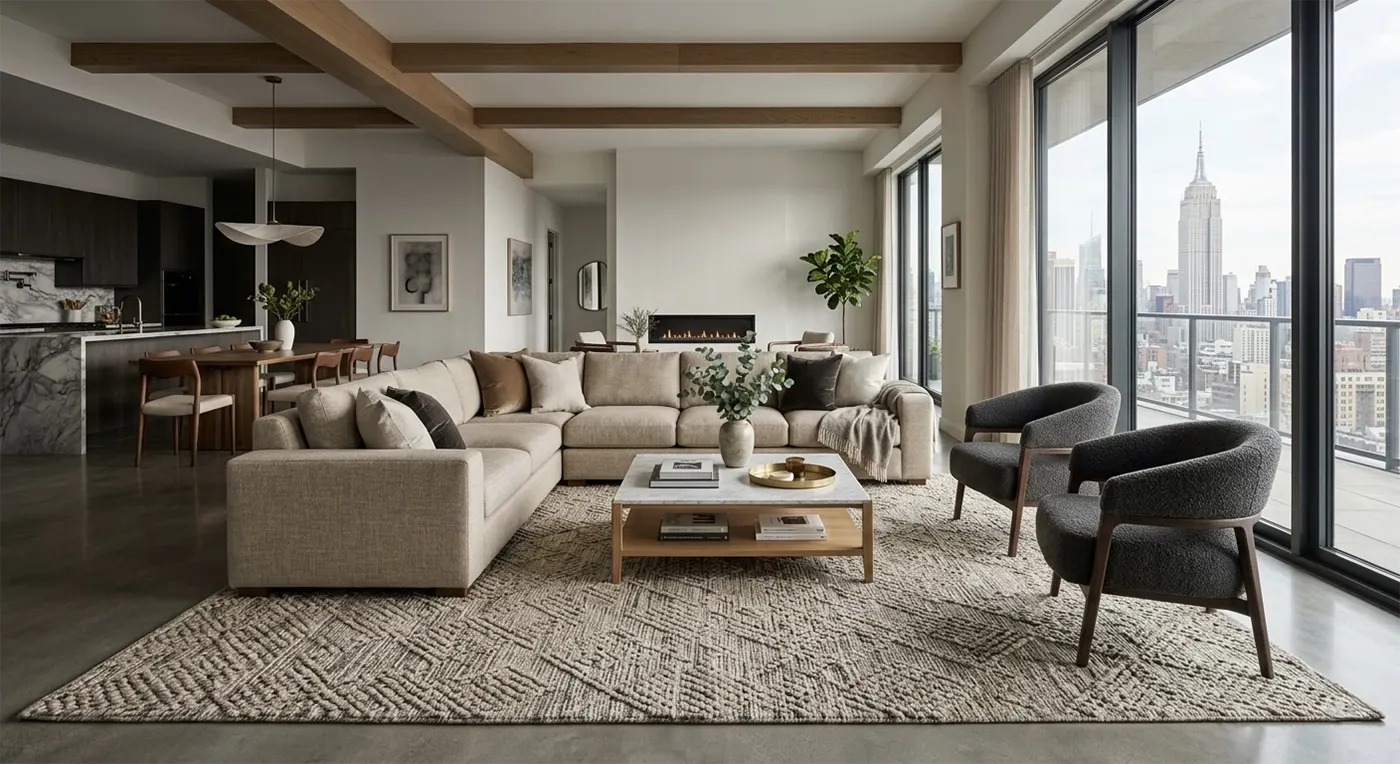
This rule runs directly counter to the instinct most people have in a smaller space, which is to push everything to the perimeter to maximize the floor area in the center. Floating furniture — pulling the sofa away from the wall so that space exists behind it — creates a room that feels larger and more intentional, not smaller. The space behind the sofa defines the living zone’s back edge as clearly as the sofa’s front edge defines its face toward the room.
Floating a sofa off an exterior wall is a furniture decision, not a construction one — it doesn’t touch the building’s thermal envelope and doesn’t require board approval. What it can do is block a perimeter radiator or a plinth-mounted convector standing along that wall, which cuts into how the room actually heats. Leave clearance in front of any radiator or convector before floating furniture past it, especially in prewar buildings where the units sit directly under the windows furniture tends to float toward.
In a living-dining layout Manhattan apartment, floating the sofa and creating a visual back for the living area is often the single change that makes the spatial logic of the plan legible.
Common Mistakes That Undermine Open Layouts
| Mistake | What It Looks Like | What Goes Wrong |
|---|---|---|
| All furniture against the walls | Perimeter lined with pieces, center left empty | Room looks like a waiting area, not a living space |
| Overfilling the space | Every zone fully furnished with no gaps | Circulation paths disappear; room feels smaller than the sum of its parts |
| No focal point | No art, lighting moment, or framed view | The eye has nowhere to land; the room doesn’t resolve visually |
Adapting These Rules for Smaller Manhattan Apartments
In a studio or compact one-bedroom where the entire living program occupies one room, the rules above apply with greater precision because the margins for error are smaller. Zones still need an anchor, a rug, and a light source each — there just isn’t room for anchors sized for a larger apartment. A few substitutions do the compression:
- A daybed or a loveseat in place of a full sofa serves as the living zone’s anchor while taking up less depth against the wall.
- A drop-leaf, extendable, or console-height dining table stays out of the circulation path folded down and opens only when the table is in use.
- A low bookcase or open shelving unit performs the spatial work of a partial wall — marking the edge between zones — while adding storage a larger apartment doesn’t need to fight for.
- Two well-scaled rugs, even at a reduced size, still separate the zones more effectively than furniture alone; skipping the rugs in a small room collapses the zoning faster than it does in a larger one.
The difference between a small open plan that feels intentional and one that feels cramped usually isn’t the square footage — it’s the clarity of the zoning logic. When each zone within a compact open concept apartment layout is clearly defined by its anchor, its rug, and its overhead light, the eye reads the room as organized space rather than a single room where multiple functions compete.
Why Layout Comes Before Finishes
Furniture planning needs to happen before renovation construction is complete, not after — a rule owners often learn only once it’s too late to apply it. The location of electrical outlets, the position of recessed lighting circuits, the placement of the HVAC registers, and the location of any architectural transitions between zones should all be determined in relation to where the furniture will be placed.
When furniture placement is decided after the renovation is finished, the room is furnished around infrastructure that was placed without reference to the layout. Outlets end up behind sofas. The overhead light is not over the dining table. The floor register is where the sofa was supposed to go. Correcting these conditions after the fact is invasive and expensive.
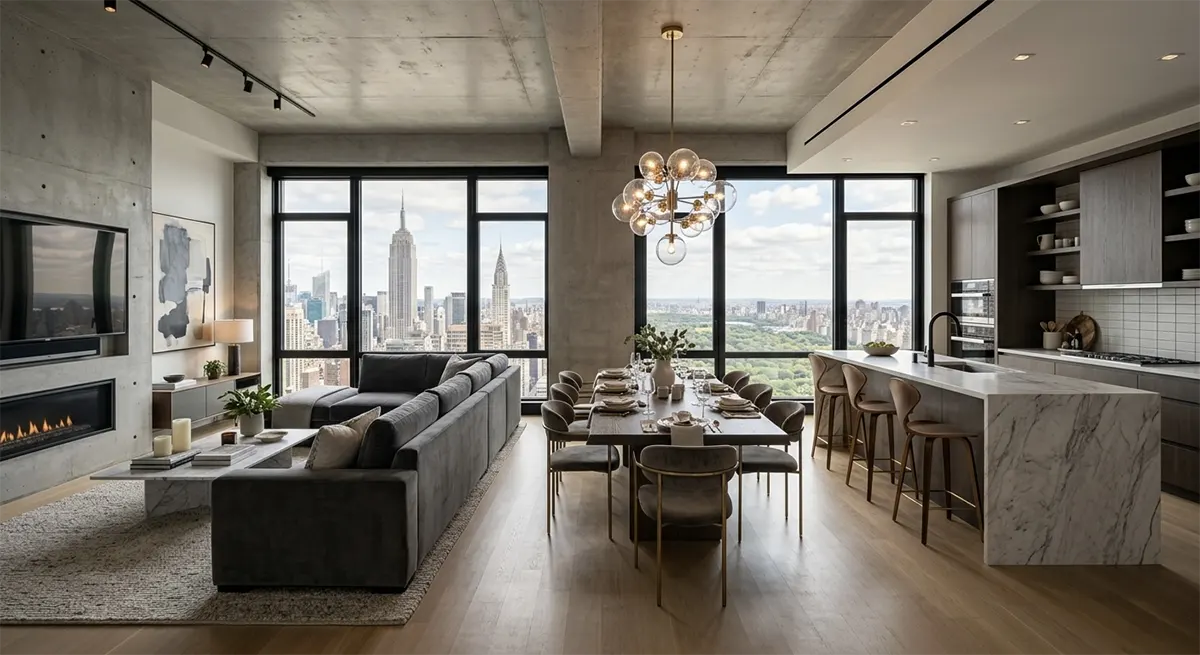
Furniture layout that comes into the renovation at the drawing stage, alongside the architecture, is what avoids this. The room gets designed as a complete environment, with the architecture and the furnishings planned in relation to each other, not in sequence.
Spatial Logic Is the Foundation
In an open layout, nothing does its job in isolation. Every element in the room — furniture, rugs, light sources, circulation paths — belongs to one system that either works as a whole or doesn’t work at all. The rules covered here are not aesthetic preferences. They are the spatial logic that makes open plans function as well as they read.
For Manhattan apartment owners investing in the renovation that creates this kind of space, working with a team that understands both the construction required to open the plan and the design thinking required to inhabit it is the difference between a renovation that produces a beautiful room and one that produces a beautiful photograph of a room that doesn’t quite work.
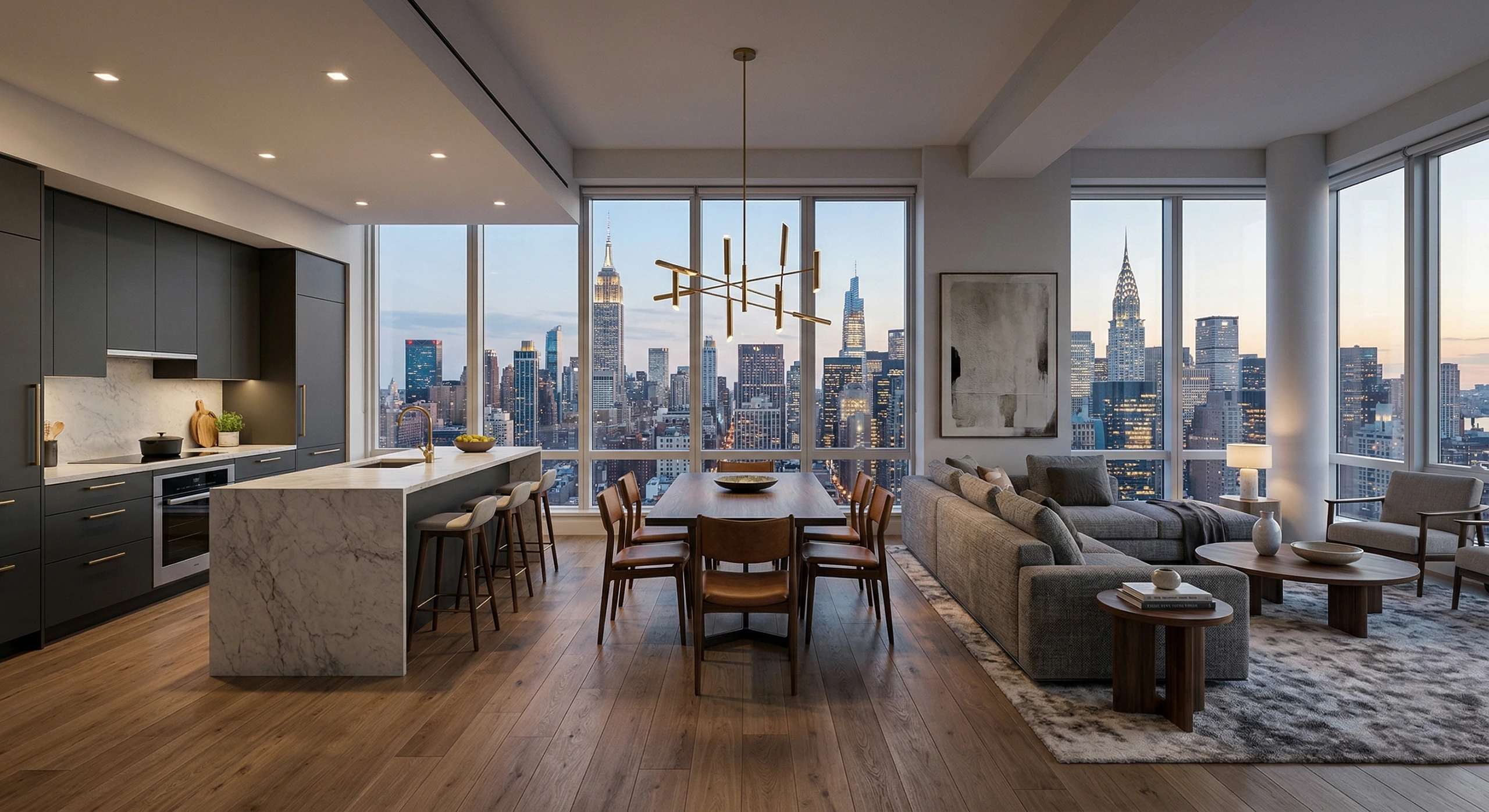
Spatial Zoning in Open-Concept Apartments
Open-concept living has become a defining feature of contemporary urban interiors. It promises light

The Home Spa Bathroom: How to Design a Space That Actually Feels Like an Escape
A bathroom renovation in Manhattan doesn’t have to mean months of construction and a contracto

Renovation Contracts in NYC: How to Protect Your Investment Before Work Begins
There’s a specific moment before the hammers swing, before the dust rises, when the renovation