
Cabinet Refacing or New Cabinets: When Each Is Worth It
The choice between refacing and new cabinets rarely comes down to taste. It comes down to three things: the condition of your cabinet boxes, whether you want to change the layout, and how much disruption your building and schedule can absorb. Work through them in order and the answer is usually obvious.
Start with the boxes
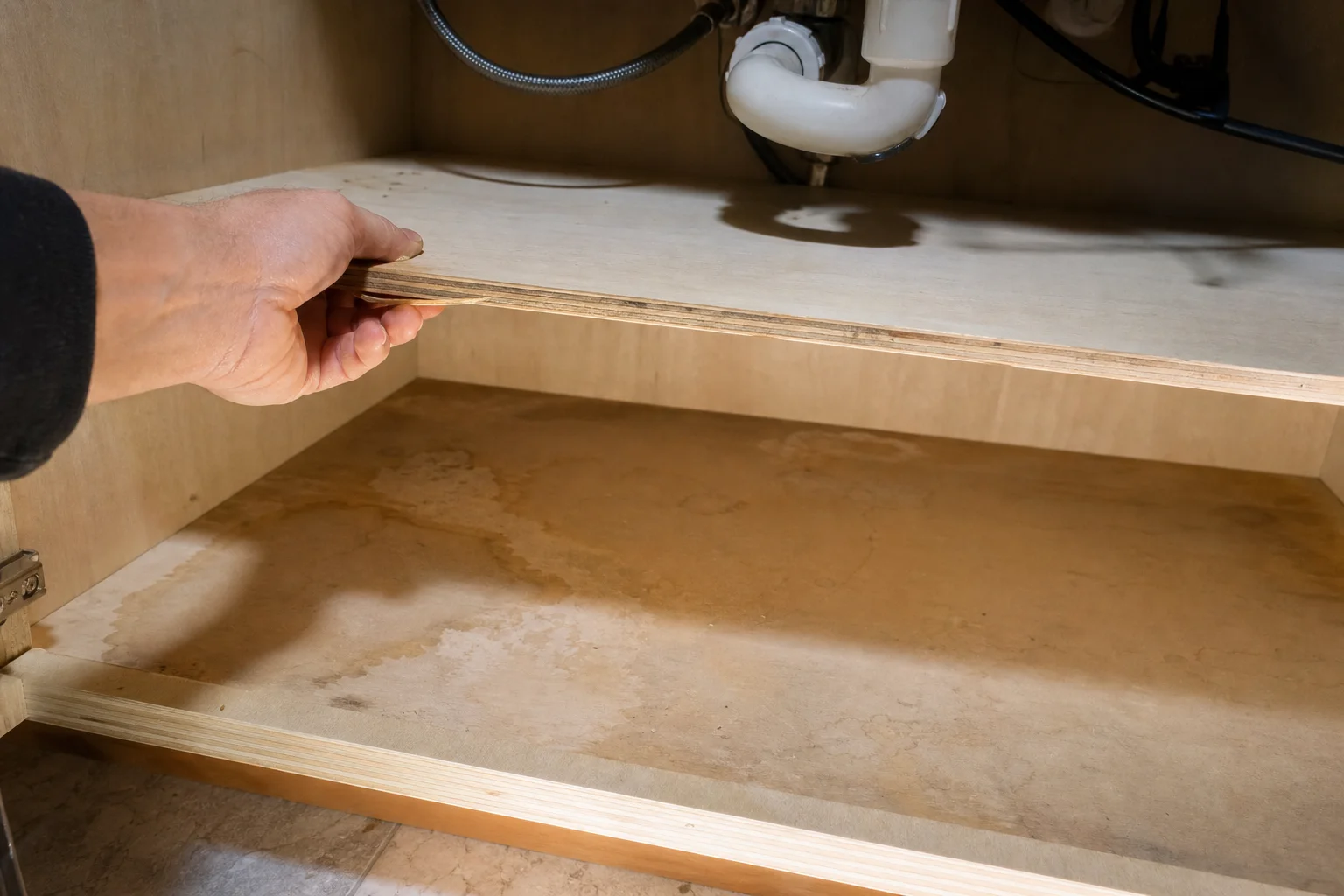
The single question that settles most cases: are the boxes sound? Open the doors under the sink and around the range. Look for swelling at the base panel, sagging shelves, racked frames, or peeling laminate. Solid, square, dry boxes are a candidate for refacing. Boxes that are warped, water-logged, or coming apart are not worth new faces; you would be spending on doors bolted to a failing structure.
Does the layout still work?
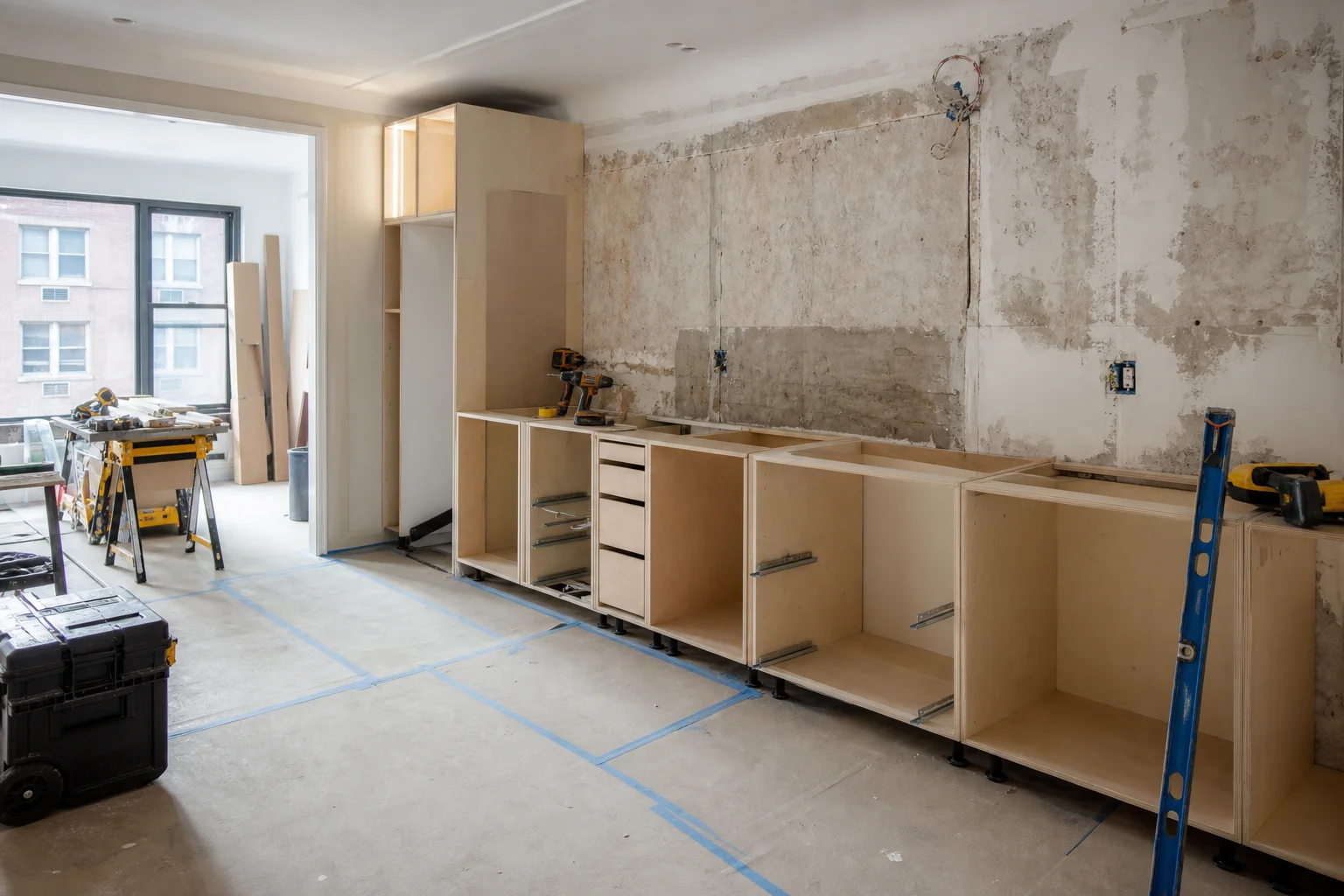
If the kitchen functions and you are not moving the sink, the range, or a wall, refacing keeps the plumbing and wiring exactly where they are and skips demolition. The moment you want an island, a relocated sink, deeper drawer banks, or a wall opened up, you are in replacement territory, because those changes need new boxes and new runs. Wanting a different door color or finish is a refacing question; wanting a different kitchen is a replacement question.
Weigh time, disruption and resale
Refacing is measured in days on site. A full replacement is measured in weeks and brings demolition, dust, and a kitchen you cannot use. In a strict co-op or a landmarked building, the lighter footprint of refacing also means fewer board approvals and filings to chase. Resale cuts both ways: fresh faces and hardware read as renovated to most buyers, but someone paying top dollar for an otherwise gut-renovated apartment may expect brand-new cabinetry behind the doors.
The two paths at a glance
| Factor | Points to refacing | Points to replacement |
|---|---|---|
| Box condition | dry, square, solid | warped, water-damaged, loose |
| Layout | staying the same | moving sink, island, or walls |
| Timeline | want the kitchen back in days | can absorb weeks of downtime |
| Building | strict co-op, tight construction window | gut renovation already planned |
| Storage | current interiors are fine | need new pull-outs and deep drawers |
Two quick scenarios
A 1990s Upper East Side co-op with solid maple boxes and a layout the owner likes: reface. New doors and hardware, a few days on site, no board drama, and the kitchen stays usable through most of the work.
A pre-war galley with a water-damaged sink base and a cramped layout the owner wants opened up: replace. The boxes are already failing and the layout change needs new construction, so new cabinets are the honest call rather than dressing up a structure on its way out.
A short list for your contractor
- Ask them to inspect and certify the boxes before they quote refacing.
- Confirm exactly what “resurfacing” includes, since the word is used loosely.
- Get the door lead time and the number of on-site days.
- Ask whether any plumbing, gas, or structural work is involved and who files with the NYC DOB. Cosmetic refacing rarely needs a permit; moving services or a wall does.
If the boxes are sound and the layout stays, refacing is almost always the faster, lighter choice. If the structure is compromised or the kitchen has to change shape, pay for new cabinets and do it once.

In Defense of Detail: Why the Smallest Things Matter Most in Construction
Stand in a finished luxury apartment and look around. Smooth walls. Perfect light. A quiet sense tha

Quartz, Granite, or Marble: Choosing the Right Countertop for a New York City Kitchen or Bathroom
Countertop selection generates more genuine disagreement than almost any other decision in a renovat
Why Cabinets Never Sit Flush Against a Pre-War Wall
The kitchen arrives on a Tuesday. The boxes come up in the service elevator, the crew sets the base