
The Punch List: What Goes on It and Who Pays for It
Near the end of a renovation, the apartment looks finished but small things are still open. The crew is mostly gone, yet a door rubs on its frame, one cabinet door sticks out slightly past the one next to it, and grout haze still clouds the tile in the hall bath. Those items go on a punch list, and on a well-run job, clearing that list is what actually ends the project.
Here is what belongs on a punch list, what does not, who pays for each kind of item, and how to run the walkthrough so the last two weeks do not turn into two months.
What a punch list is
A punch list is the written list of unfinished or defective work, made at a walkthrough near the end of the job, that the contractor has to complete or correct before the project is closed and the final payment is released. It is not a wish list and it is not a complaint. It is the last agreed scope of work, in writing, with names against the items.
Two milestones frame the end of the job. The point where you can use the apartment, with small items outstanding, is substantial completion. The point where the list is cleared and the paperwork is handed over is final completion. Most of the arguments owners have at the end of a job come from treating those two as the same day.
What goes on it
Punch items are small, specific, and tied to work already in the contract:
- doors and drawers that rub, stick or do not line up;
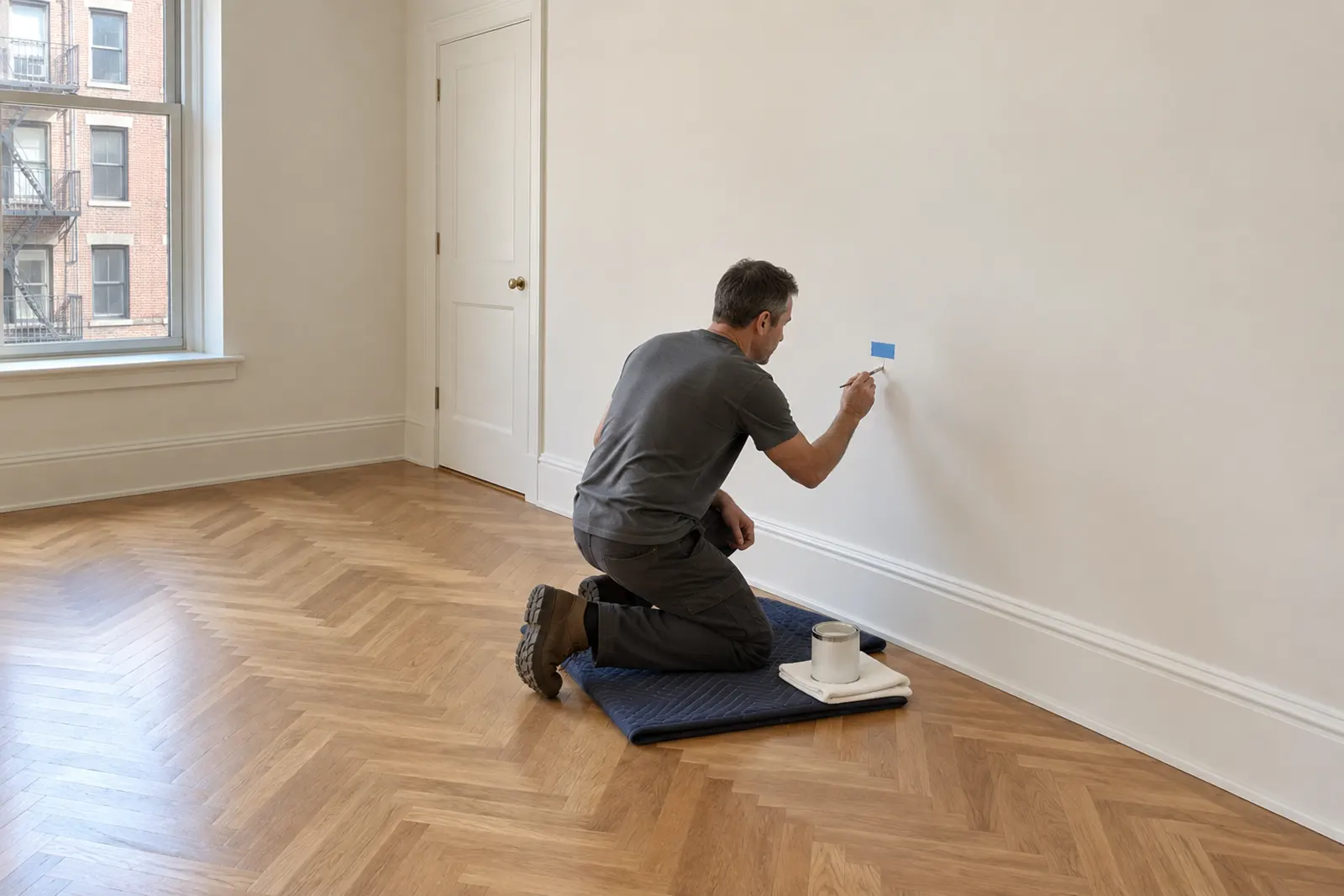
- thin or missed spots in the paint, roller marks, touch-ups where the crew moved equipment;
- grout haze, a missing bead of caulk, a cracked tile;
- a scratched floor board, a dented cabinet edge;
- hardware missing or loose, the trim plate around a faucet or pipe not sitting flat on the wall;
- a fixture that works but drips, a light that flickers on the dimmer.
What does not belong: anything you have decided you want differently now. Moving an outlet, swapping a fixture, adding a shelf, these are changes, and changes are priced and signed as change orders, whatever week of the job they arrive in. Putting them on the punch list is the fastest way to stall it, because the list stops being a list of defects and becomes a negotiation.
Who pays for what
The dividing line is simple and it is worth stating out loud before the walkthrough, because it keeps the conversation calm.
Work that is incomplete or does not meet the contract is the contractor’s cost, including the labor and materials to put it right. A door that was hung badly gets rehung on their time. A surface damaged by a trade gets repaired by that trade.
Work that is a change of mind, a new item, or damage caused after the apartment was handed back to you is yours. So is anything you approved along the way and later dislike, which is why approvals during the job matter more than they feel like they do at the time.
Between those two sits the ordinary gray zone: a mark nobody can date, a hairline crack over a doorway, a scuff found after the furniture arrived. A contractor who works in apartment buildings fixes most of those without an argument, because the cost of the argument is higher than the cost of the touch-up.
The leverage is the final payment
In construction contracts the owner holds back a share of the price, usually 5 to 10 percent, until the work is finished and the list is cleared. That holdback is why punch items get done. Without one written into the contract, the end of a job tends to drag.
For an apartment renovation, the practical version is one line in the contract: a final payment, big enough to matter, due when the punch list is closed and the closeout documents are handed over, rather than when the crew leaves or the kitchen becomes usable.
How to run the walkthrough
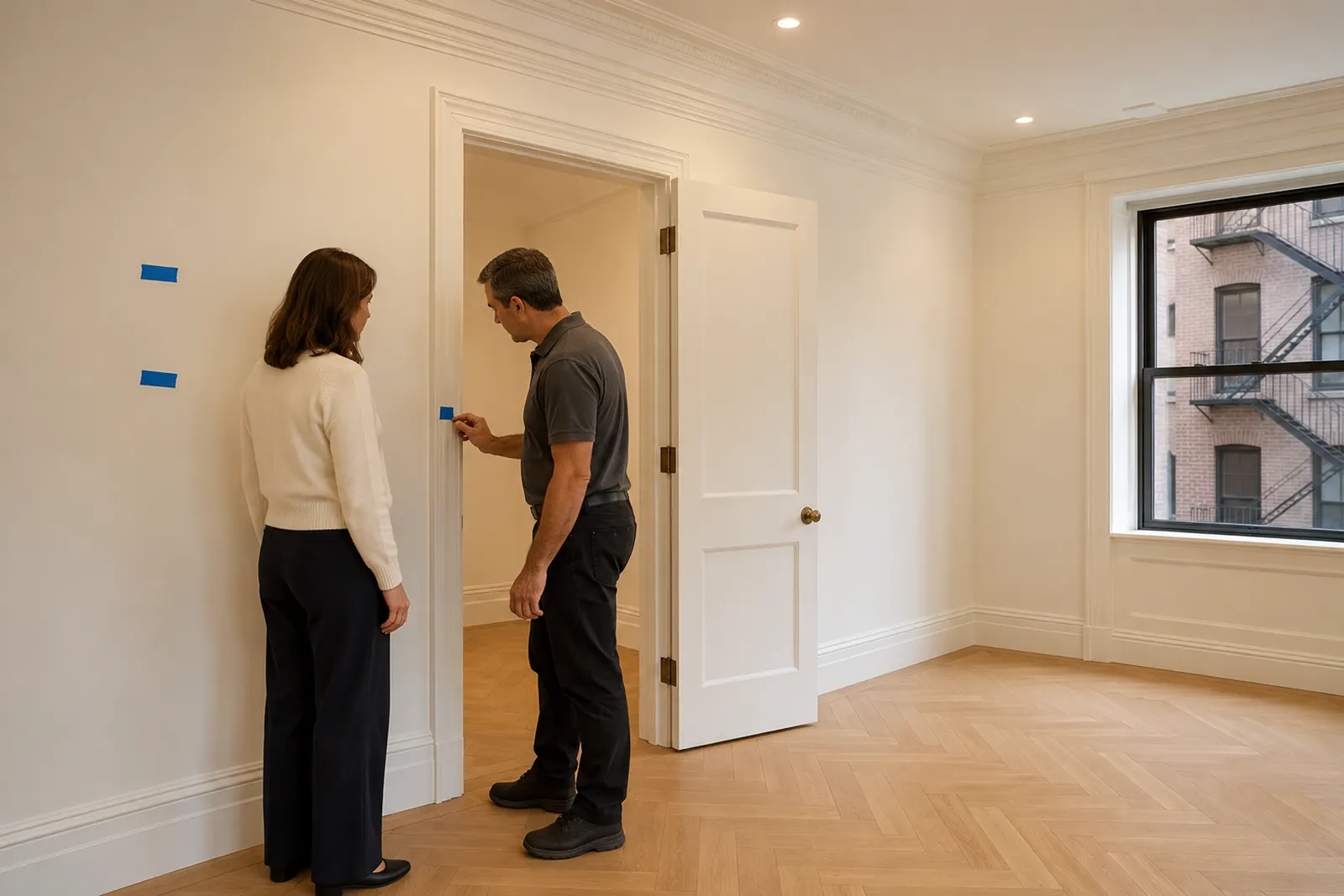
The walkthrough is yours to drive, and the way you do it decides how long the last stretch takes.
- Do it in daylight, with every light also switched on, room by room in a fixed order.
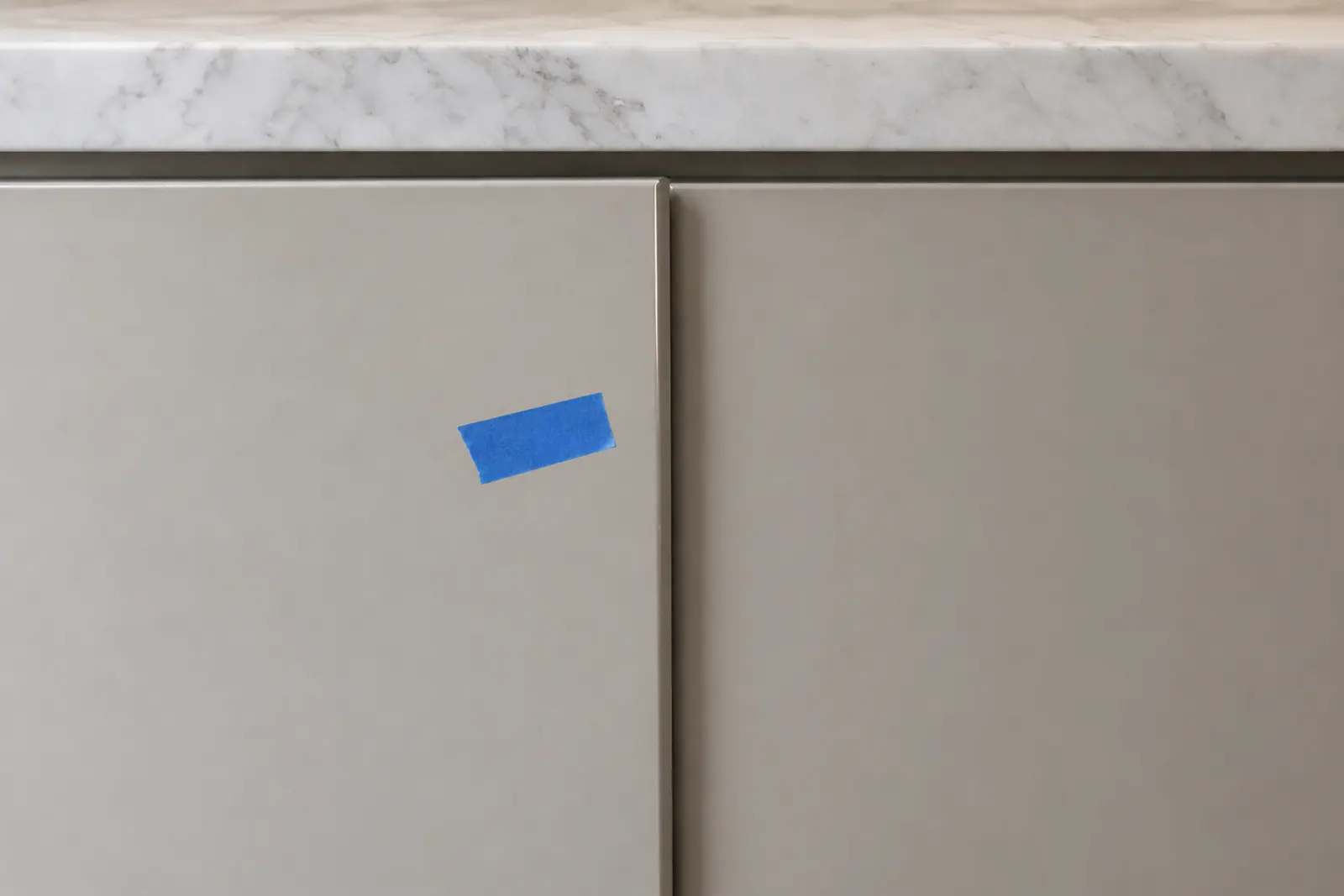
- Bring low-tack painter’s tape and mark each item on the spot. The crew works from what is marked.
- Photograph each marked item, and put everything into one written list with a date.
- Give that list once. Items trickling in by text for three weeks is a common reason the last stretch drags on.
- Agree on a date for the list to be cleared, and a short second walkthrough to confirm it.
Two kinds of items deserve their own line: anything that needs a part ordered, and anything that depends on a trade that has left the building. Both take longer than they look, and both belong on the list with a date rather than a promise.
After the list is closed
Closing the punch list is not the same as closing the project. Two things usually follow.
The first is the building. Your alteration agreement ties the return of the deposit to finishing on time and leaving the common areas as they were, so the elevator pads, the corridor walls and the service entrance get inspected along with your apartment.
The second is the paperwork with the city, which runs on its own track: inspections, sign-offs and the permits being closed out, which we covered in what happens after construction ends. A punch list that is finished does not close a permit, and an owner who does not ask about it often finds out years later when they sell.
Then there is the warranty. Most residential contracts cover workmanship for a year, which is the part that catches the things a walkthrough cannot: a joint that opens over the first heating season, a door that moves once the apartment dries out. Those fall under the warranty, and knowing which is which is what keeps the relationship with your contractor working after the money is paid.

Why ‘Cheap Renovation’ Doesn’t Exist in Manhattan
Every few months, someone buys an apartment in Manhattan with a renovation budget that sounds reason

Water Damage Behind a Pre-War Wall
It usually starts small. A faint brown ring on the plaster under a window after a stormy week. A clo
What Clients Regret After Renovating in NYC (Real Cases)
The beginning of a renovation feels like possibility. Floor plans get sketched, inspiration images g