

What a Contractor Needs From You Before Giving a Real Price
You call three contractors about your kitchen and bathroom, and each one gives you a range rather than a number. It can feel like nobody wants to commit. Usually the reason is simpler: none of them has enough information yet to name a price they can stand behind.
A firm price is something a contractor builds from what you give them. This article covers what that is, in the order it usually comes together, and why each piece narrows the range.
Why you get a range
Wherever a description of the work leaves a gap, the contractor fills it with an assumption. One assumes the demolition price includes hauling the debris away, another prices it separately. One pictures mid-grade cabinets, another custom ones. deVignier Design, which runs bids for its clients, puts it plainly: a bid is only as accurate as the scope of work behind it. Three contractors working from a two-sentence description are pricing three different jobs, which is why their numbers can sit tens of thousands of dollars apart.
A range is an honest way of saying “it depends on things we have not decided yet.” The way to narrow it is to decide them.
Drawings and a written scope
The first thing that turns a range into a number is a set of drawings: the new layout, where the plumbing and electrical go, which walls change. In New York most renovations need architect’s drawings anyway, both for the Department of Buildings and for the building’s own review, so they are worth having before you ask for prices rather than after.

Alongside the drawings, a written scope of work says in plain words what is included and what is not. Is the old flooring coming up or staying? Are the walls getting a thin new coat of plaster (a skim coat) or just paint? Who handles the permits? The list of exclusions matters as much as the inclusions, because it is where most later disagreements start. When every contractor prices the same scope, the remaining differences in their numbers are about price, not about what each one imagined.
Your selections, named
The next biggest source of movement is finishes. If you have not chosen the tile, the stone, the faucets and the light fixtures, the contractor has to put in an allowance: a placeholder sum for something not yet picked. The real choice almost never lands exactly on that number, and the difference arrives later as an extra charge.
Choosing before you ask for the final price is what removes those placeholders. NOR Design and Construction, a design-build firm, describes its approach as finishing the selections before the number is written, so that every product in the bid is named. Not every choice has to be final, but even preliminary selections give a contractor something real to price instead of a guess.
A visit to the apartment

Drawings do not show everything. They do not show a ceiling that sags, a hidden channel in the wall (a chase) already full of pipes where a new drain needs to go, or cracked tile that suggests the floor under it has problems. A contractor needs to walk the apartment, and in an older building, to look inside walls and cabinets wherever that can be done without damage.
In pre-war apartments especially, a careful contractor will want to open a few small spots, check the electrical capacity and confirm where the plumbing really runs before committing to a price. That investigation is what lets the bid name the work, so less is left open for later discussion. It also tells you something about the contractor: the questions they ask on the visit show how closely they are looking.
The building’s rules and your budget
In a co-op or condo, the alteration agreement changes the price as much as the work itself does. Allowed working hours, elevator bookings, floor and hallway protection, insurance requirements and any summer restrictions all add time and cost. Send the agreement to every contractor you ask, so each one prices the same conditions.
Say what you plan to spend. It can feel like showing your hand, but a contractor who knows the budget can tell you early which parts of the wish list fit and suggest where to adjust, instead of returning a number that sends you back to the start. Realm, a renovation advisory service, recommends stating the budget from the first conversation for exactly that reason.
When the contractors have the same drawings, the same scope, your selections, a visit and the building’s rules, their numbers usually come back much closer together. At that point you can compare the proposals themselves, and our posts on reading contractor proposals and looking beyond the lowest bid pick up from there.

What Fits in the Elevator Decides the Kitchen
A countertop that stops at the last turn in the corridor is a routine failure in this city, familiar
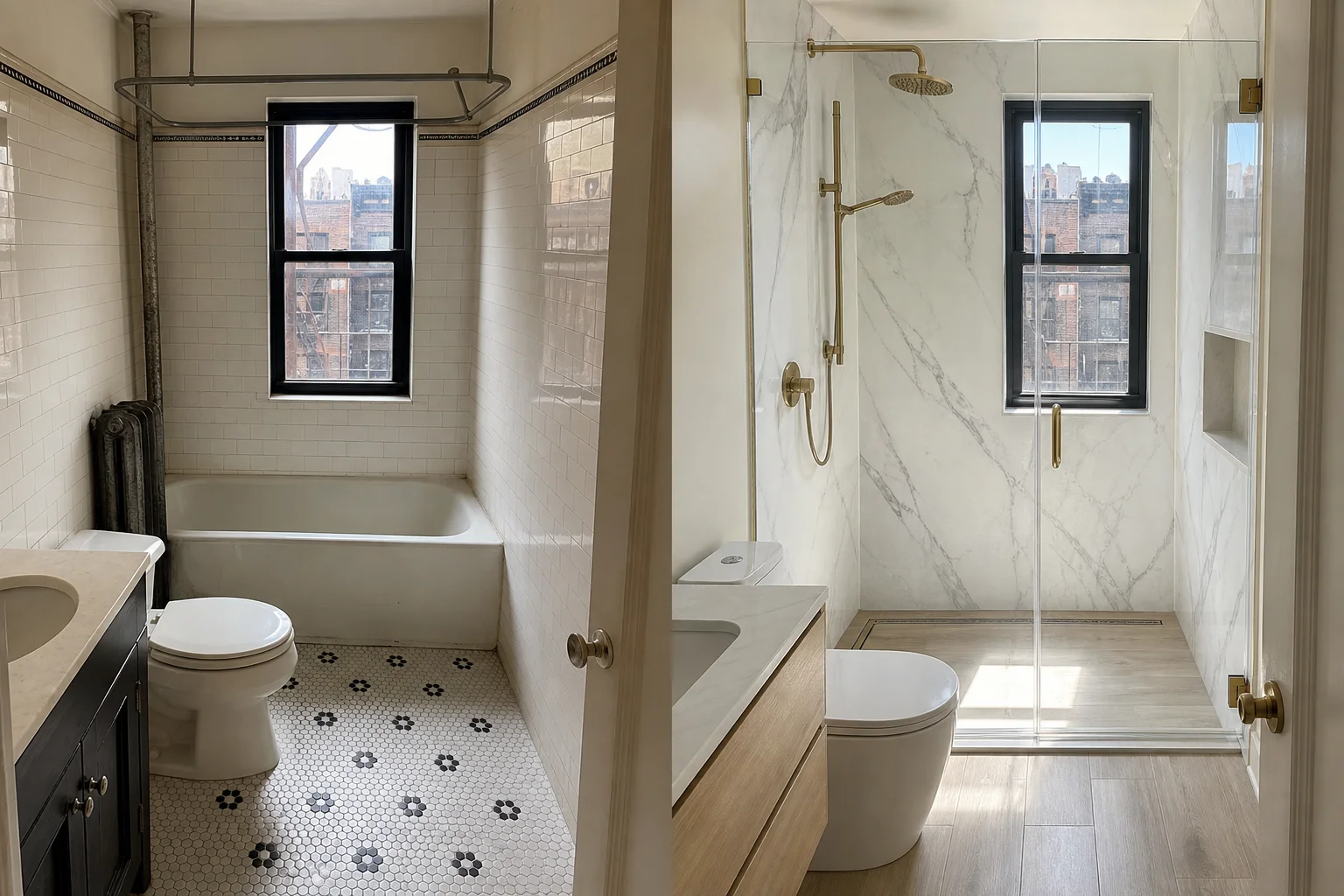
Tub to Walk-In Shower: What the Conversion Involves
Converting a tub to a walk-in shower is one of the most common bathroom remodels: it frees floor are

Beyond the Open Concept: Redefining Modern Living Spaces
For decades, the open concept floor plan ruled American home design. The promise was compelling: sea