
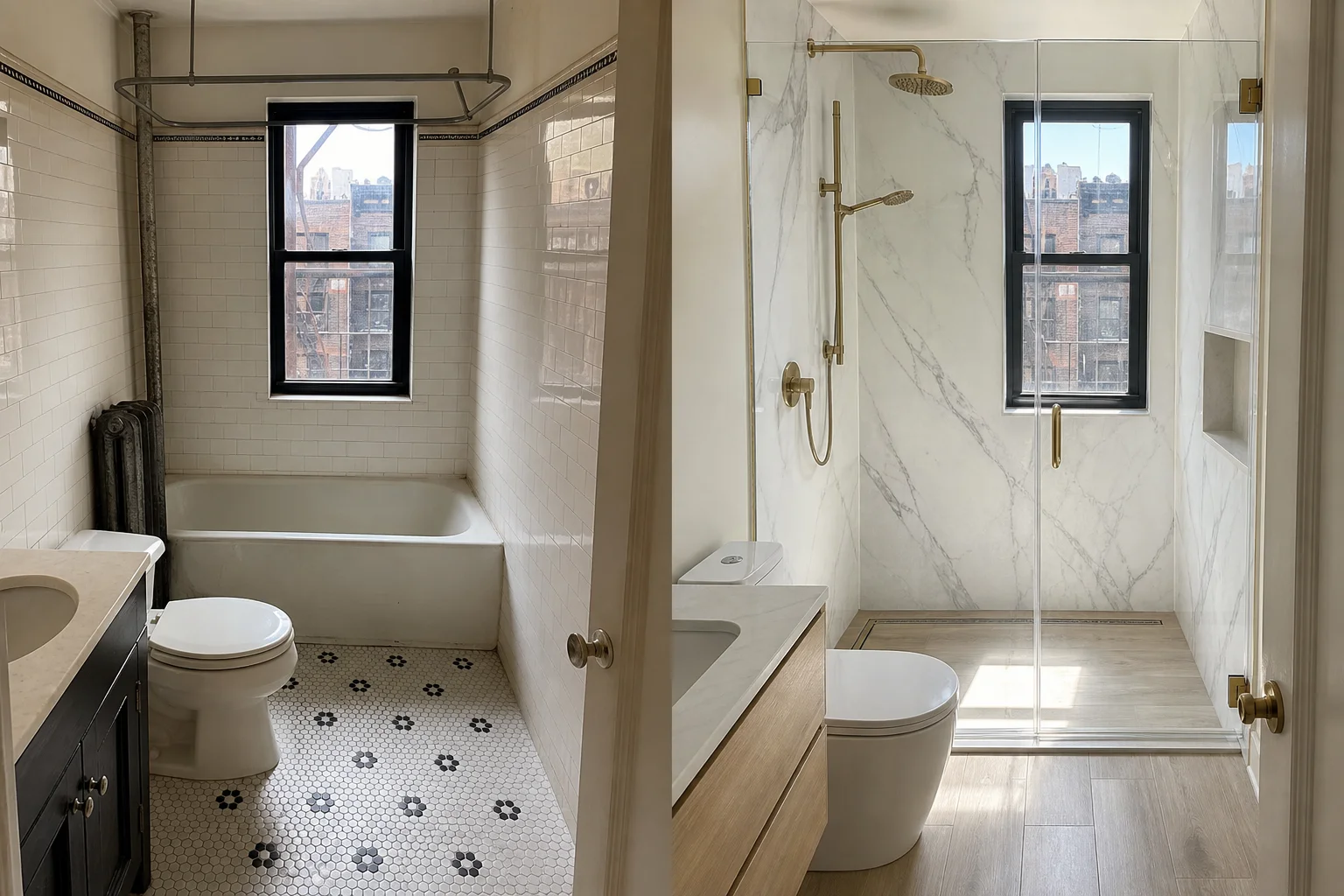
Tub to Walk-In Shower: What the Conversion Involves
Converting a tub to a walk-in shower is one of the most common bathroom remodels: it frees floor area, improves accessibility, and modernizes a dated bath. What the job involves ranges widely, from a prefab insert dropped into the old tub space to a fully waterproofed, custom-tiled shower. Here is the process, the cost range, and what NYC buildings require.
What does the conversion cost?
Expect a wide band depending on materials and how much plumbing moves. A prefab acrylic or stone-polymer system runs roughly $3,000 to $12,000; a mid-range professional conversion with a new pan, tiled surround, and new fixtures typically $11,000 to $18,000; a high-end custom tile shower with premium finishes and plumbing upgrades $18,000 and up. Treat these as national ballparks: in Manhattan, labor, delivery, and co-op logistics push most jobs toward the higher end, so get an itemized quote.
| Approach | Typical range | Notes |
|---|---|---|
| Prefab acrylic or stone-polymer system | $3,000 to $12,000 | fastest, integrated waterproofing; some install in a day or two |
| Mid-range custom (new pan, tiled surround, fixtures) | $11,000 to $18,000 | more choice, ties into plumbing updates |
| High-end custom tile, glass, barrier-free | $18,000 and up | premium finishes, longer install, best resale appeal |
The process, step by step
- Site assessment: check the subfloor, drain location, and wall studs. In pre-war units, plaster-and-lath walls and heavy cast-iron tubs shape the whole approach.
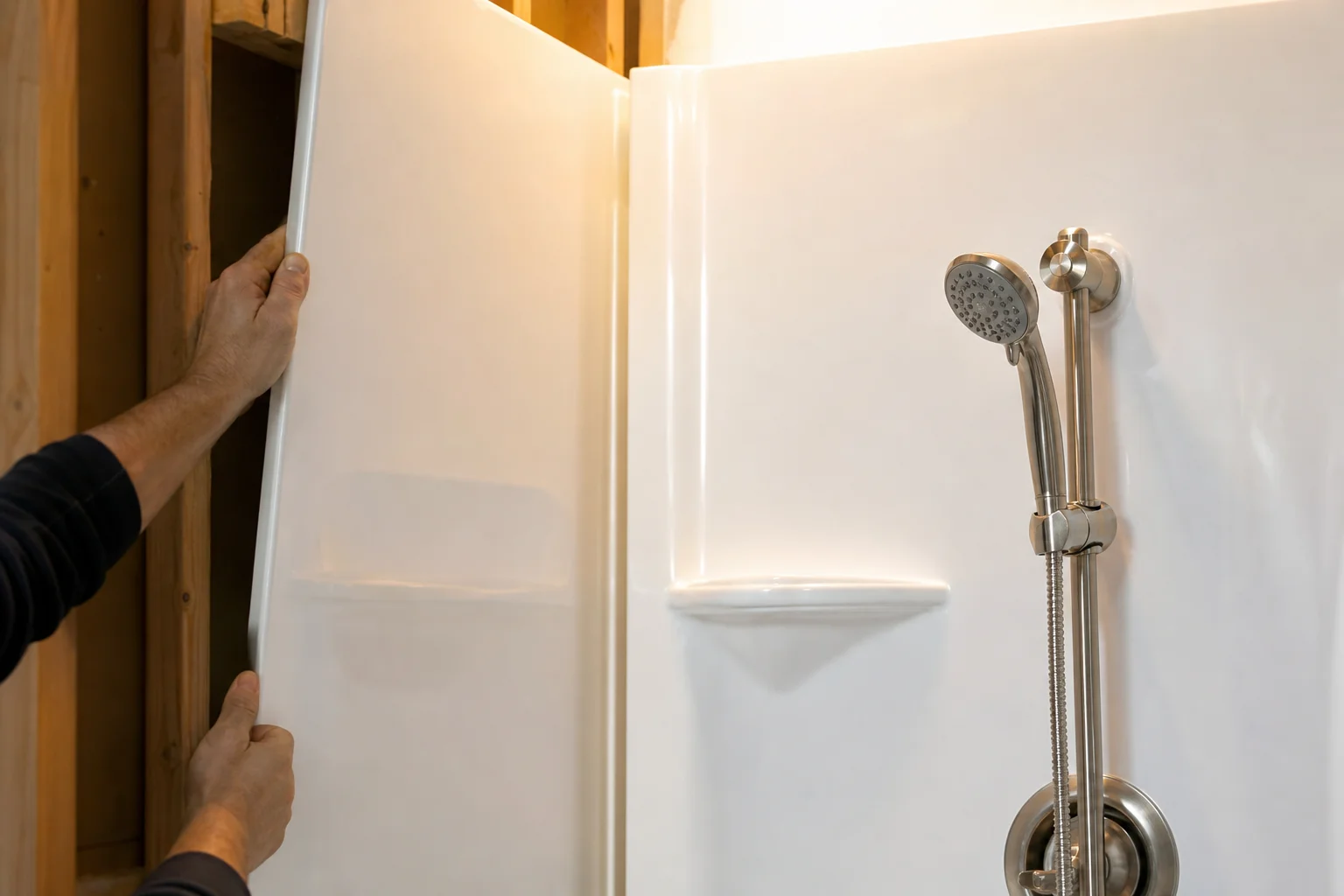
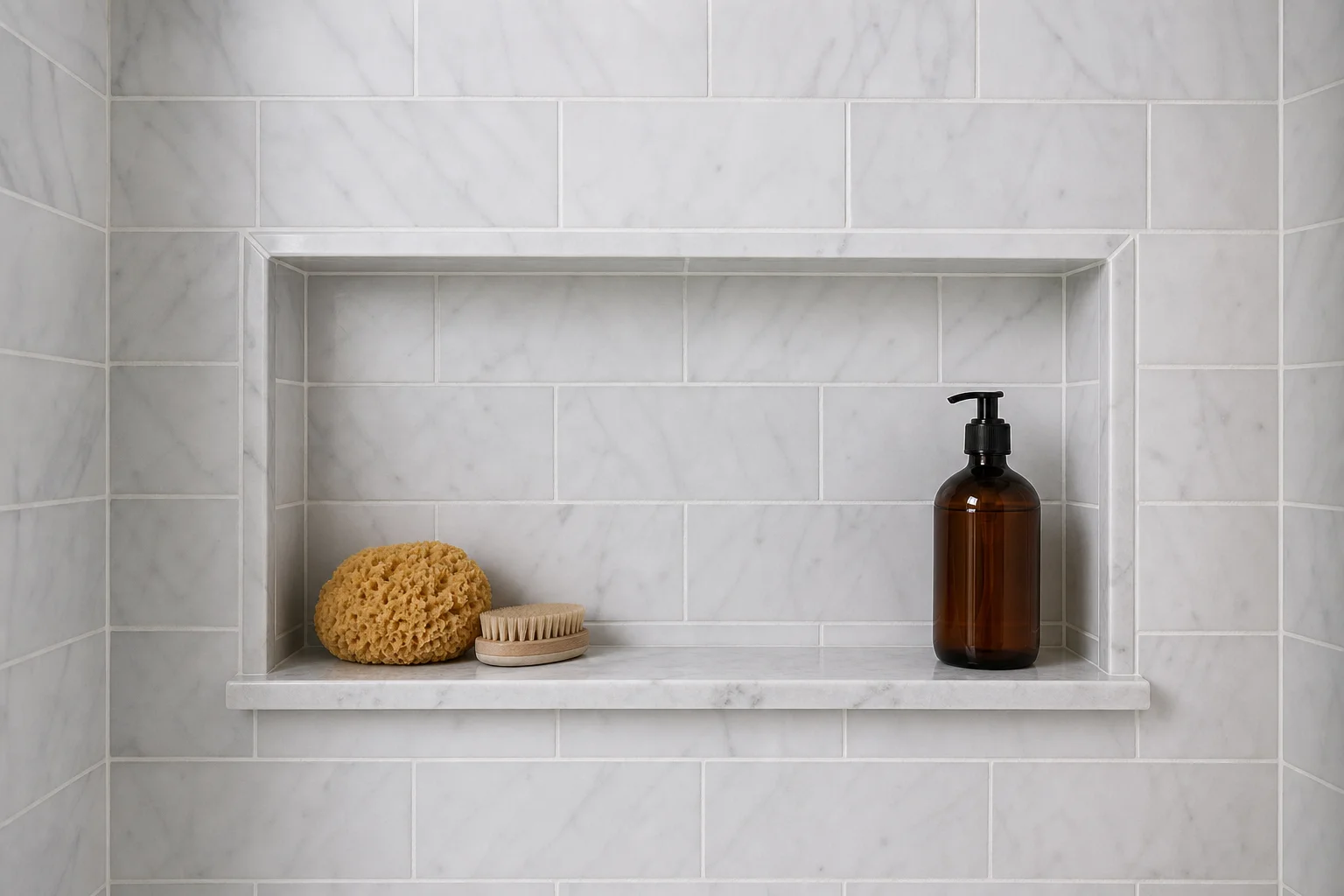
- Choose the system: a prefab insert is faster and cleaner; a built-up tile shower allows custom drains, niches, benches, and tile choices (honed marble, large-format porcelain, zellige).
- Plumbing: relocate or lower the drain and add a pressure-balancing shower valve for safe, stable temperature. Opening a plumbing chase or moving a riser adds cost.
- Waterproofing: a tile shower needs cement board or a bonded waterproof membrane; prefab systems come waterproofed.
- Threshold: decide on a curb or a curbless entry. A barrier-free entry needs careful slope and usually more subfloor work.
- Finishes: glass door and hardware, showerhead and handheld, niche, bench, then a final clean and punch list.
Permits and building approvals in NYC
Because the conversion changes drainage and fixtures, it usually needs a DOB plumbing permit filed through DOB NOW: Build, and work that opens walls or plumbing chases is commonly filed as an Alteration Type 2. A licensed plumber must do and sign off on the plumbing. On top of DOB, check your co-op or condo rules: most require written board approval and set allowed hours for noisy work. Clear it with your superintendent and managing agent before anything is demolished.
Keep the option to add a tub back?
If resale or multi-generational living matters, ask about convertible systems that can be returned to a tub later, and keep the drain detail accessible. In much of Manhattan, buyers still value at least one full bath with a tub, so if the apartment has only one bathroom, think twice before removing the only tub.
Contractor and timeline
Use a licensed plumber and a general contractor who has done conversions in your building type, pre-war walk-up or post-war high-rise, and ask for references. Prefab installs can be quick, a day or a few; built-up tile jobs run longer because waterproofing and tile need cure time, and you will coordinate deliveries and debris removal with building management.

How to Plan an Apartment Renovation in NYC: Ideas and Strategic Planning
Planning an apartment renovation in New York City takes considerably more than design inspiration. B
Soundproofing Apartments: Real Technical Solutions That Work
Living in a building with shared slabs and party walls means accepting that sound travels in ways it

Beyond the Open Concept: Redefining Modern Living Spaces
For decades, the open concept floor plan ruled American home design. The promise was compelling: sea