
Why Hardwood Floors Get Gaps in Winter, and When to Worry
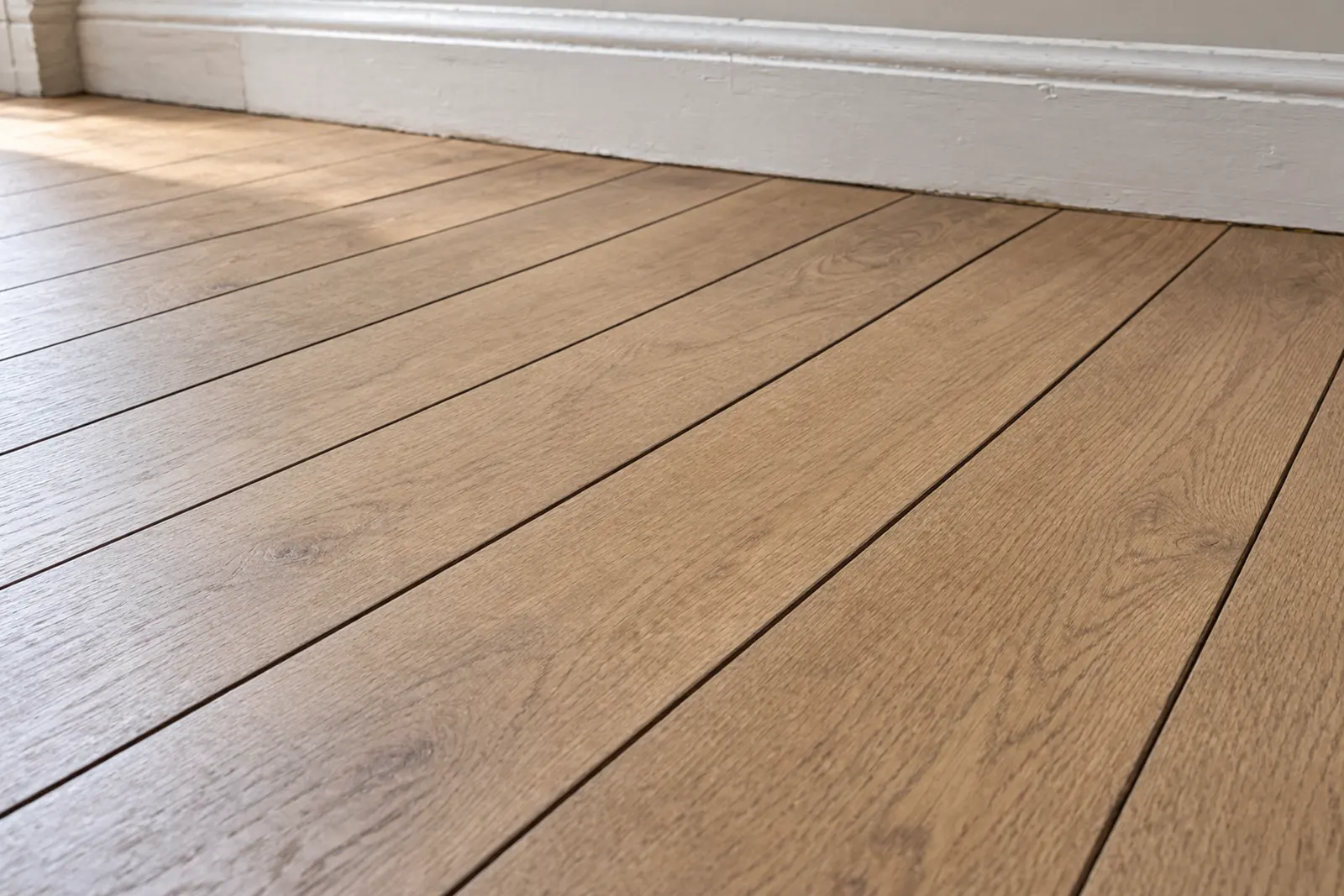
Some time in January you notice thin dark lines between the floorboards that were not there in October. By June they have closed again. Nothing is broken, nothing was installed wrong, and nobody needs to be called.
That is the usual version. There is another one, where the gaps are a symptom, and the difference between them is easy to see once you know what to look at.
Why the floor moves at all
Wood never stops trading moisture with the air around it. When the air is damp the boards take water in and swell; when the air dries out they give it up and shrink. A finished floor behaves the same way ten years after it was laid as it did in the first month.
The movement runs across the boards, not along them, which is why gaps open along the length of each plank and never at the ends. A wide board moves more than a narrow one, because the change is a percentage of its width: on a 7 inch plank you see roughly twice the gap you would see on a 3 inch strip.
Your floor spent last summer swollen and tight. What you are looking at in January is the same floor at its dry size.
The number behind it, and why a pre-war apartment is hard on wood
Wood flooring is made to live in a fairly narrow band of indoor air, 30 to 50 percent relative humidity at 60 to 80 degrees, which is also the range most wood is dried to before it is milled. Inside that band the seasonal movement is small enough to ignore. Gaps start to show when the indoor air drops under about 40 percent.
A pre-war Manhattan apartment runs below that band for months. Steam heat is not adjustable in the way a thermostat is, the radiators run hot, windows get opened to compensate, and the air in the apartment ends up dry enough that people wake up with sore throats. The floor is doing the same thing your skin is.
What normal looks like
Seasonal gapping has a particular appearance, and it is worth knowing it before you call anyone.
- It is spread out. Thin lines appear between many boards across the room, not one dramatic split in one place.
- It is even. The gaps are roughly the same width, often about the thickness of a credit card, and they run the full length of the board.
- It closes. By early summer the floor tightens up and the lines disappear.
- The floor is still flat. You can run a hand across the boards and feel nothing at the edges.
A floor that does all four is behaving exactly as a wood floor should. The only thing to do with it is to stop the air from getting extreme, which is a humidifier question more than a flooring one.
What is not normal
The same room can also show you something else, and these are the signs that bring a contractor out.
- One wide gap while the rest of the floor is tight. That is usually a fastening problem or a board that was never properly fixed, not humidity.
- Gaps that do not close in summer. If the lines are still there in August, the boards shrank past their recovery point, often because the floor was laid before it had come to terms with the apartment’s air.
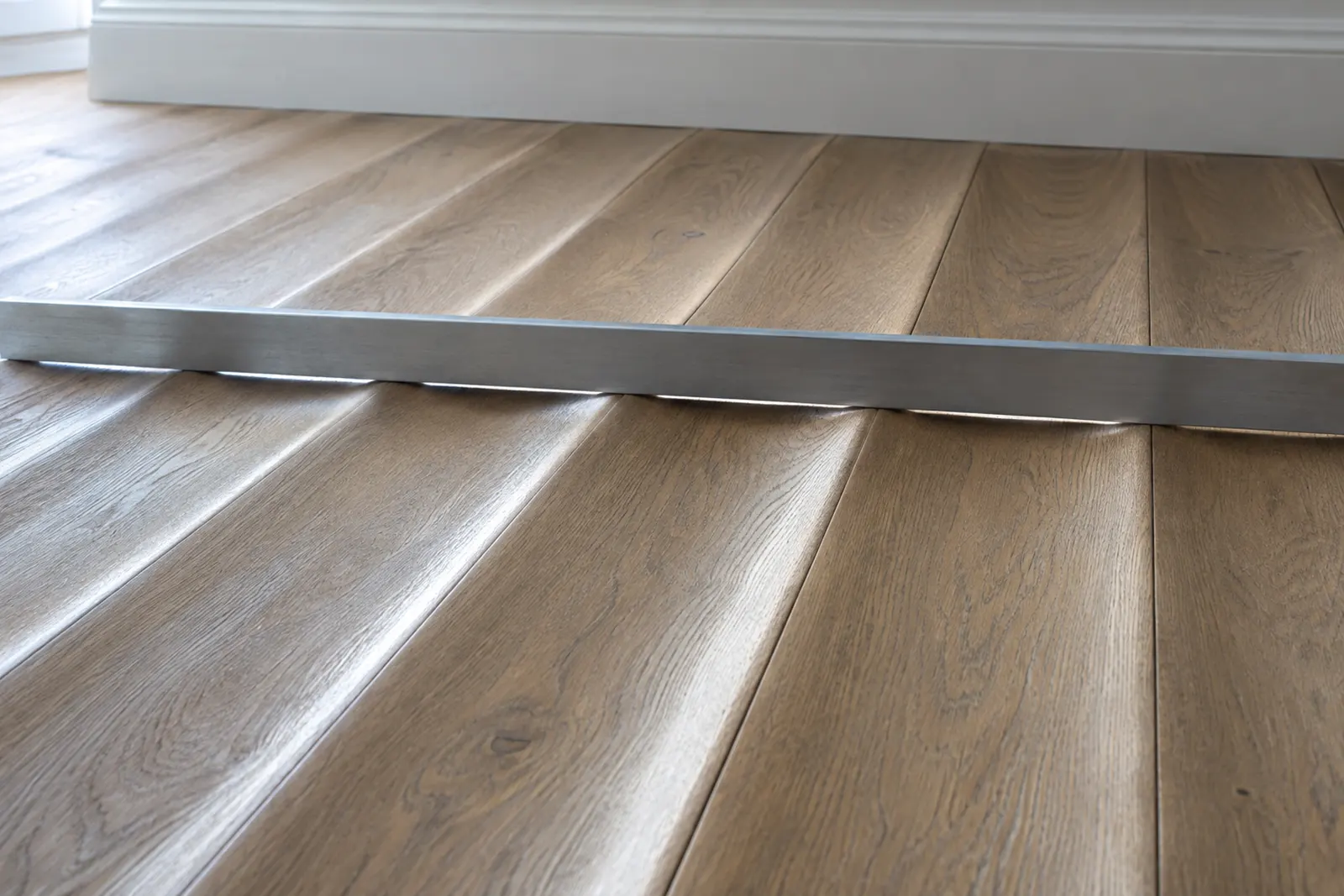
- Cupping. The edges of the boards sit higher than their centers, so the floor feels like a washboard underfoot. That is moisture arriving from below or from a leak, and it is the one sign that should not wait.
- Crowning. The opposite, centers higher than edges. It usually follows cupping that was sanded flat too early.
- A gap with a stain or a smell around it. Water, not weather.
What to do about the ordinary kind
The useful move is to narrow the swing instead of chasing the gaps. A humidifier that keeps the apartment near 40 percent through the heating season does more for the floor than any repair, and it is the same machine that stops the static shocks and the dry cough. A cheap hygrometer in the living room tells you whether you are anywhere near the band.
What not to do is fill the gaps in January. Whatever goes into them, filler or rope or putty, is sitting in a space the floor intends to reclaim in June. When the boards swell back they push the filler out, or worse, they have nowhere to go and the pressure moves somewhere else. If a particular gap is wide enough to catch a heel or a crumb and you want it filled, that work is done at the end of summer, when the floor is at its widest.
Refinishing has the same timing logic. Sanding a cupped floor before it has dried out locks the shape in, and the result is a crowned floor a season later. The floor has to be back to its normal size before anyone touches it with a machine.
The questions worth asking before the floor goes in
If you are still choosing a floor, three decisions change how much of this you will see.
- Board width. Wide planks are the look most people want and they move the most. A 7 or 8 inch board in a steam-heated apartment will show its seasons; a narrower strip floor hides them.
- Solid or engineered. Engineered boards are built in layers that pull against each other, so they move less across their width. In an apartment where the winter air is unforgiving, that argument carries weight.
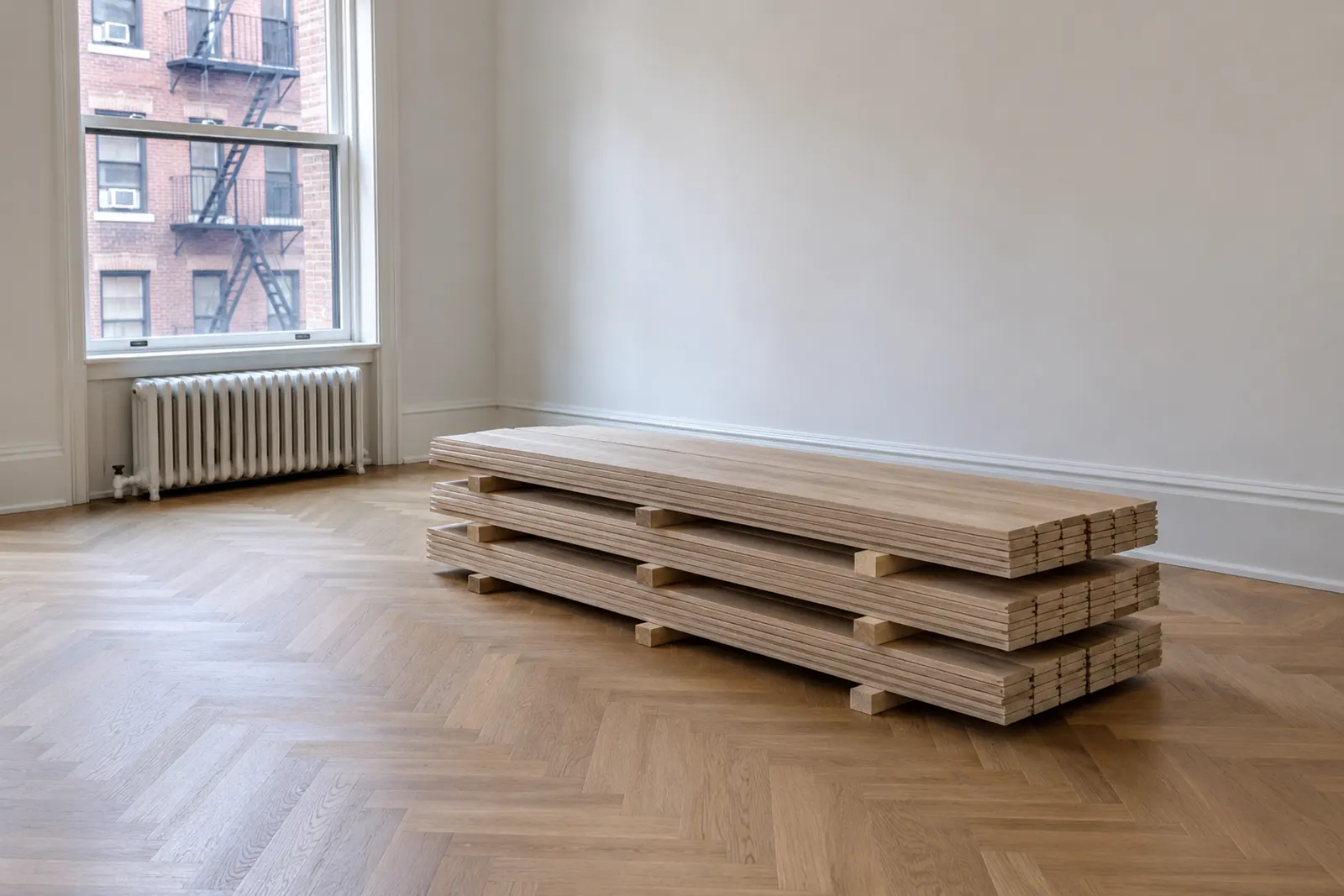
- Acclimation. Wood delivered to the apartment needs to sit there, in the conditions it will live in, until it stops changing. Skipping that step is the single most common reason a floor gaps permanently instead of seasonally, and it costs nothing except time in the schedule.
None of this makes a wood floor stop moving, and a floor that never moved would be made of something else. What these choices buy is a floor whose movement you notice once a year and forget about, rather than one you argue about with a contractor in February.

In Defense of Detail: Why the Smallest Things Matter Most in Construction
Stand in a finished luxury apartment and look around. Smooth walls. Perfect light. A quiet sense tha

What an Allowance in a Renovation Contract Really Covers
Most renovation contracts have a few lines that carry a number but no product: $4,500 for countertop
Veneer, Laminate or Wood: Cabinet Refacing Materials Compared
When you reface cabinets, you keep the boxes and replace the doors, drawer fronts, and trim. The sur