
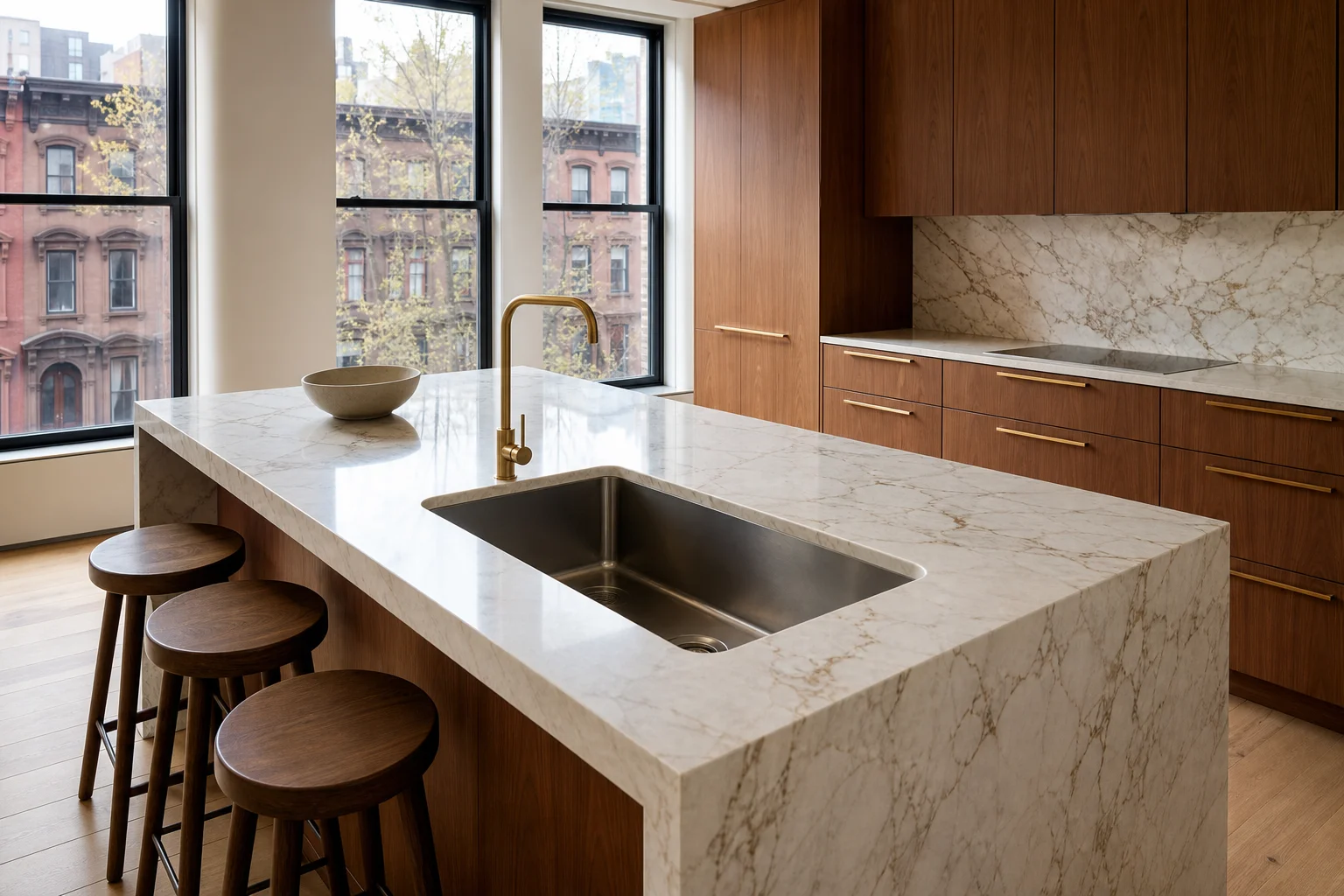
Veneer, Laminate or Wood: Cabinet Refacing Materials Compared
When you reface cabinets, you keep the boxes and replace the doors, drawer fronts, and trim. The surface you choose for those new faces sets the look, the durability, and much of the cost. The three common choices are laminate, real-wood veneer, and new solid-wood doors, plus thermofoil as a budget vinyl-faced option. Here is how they compare.
The material options
- Laminate: a printed or textured sheet bonded to an engineered substrate. Formica and Wilsonart are the common trade names.
- Wood veneer: a thin layer of real wood over MDF or plywood, so the grain is genuine. Suppliers like Columbia Forest Products and Roseburg make the veneer stock.
- Solid-wood doors: new doors in oak, maple, or cherry.
- Thermofoil: a vinyl film heat-pressed over MDF, giving a seamless glossy or matte face at the low end.
Each changes cost, lead time, and how the kitchen ages.
Is laminate durable enough?
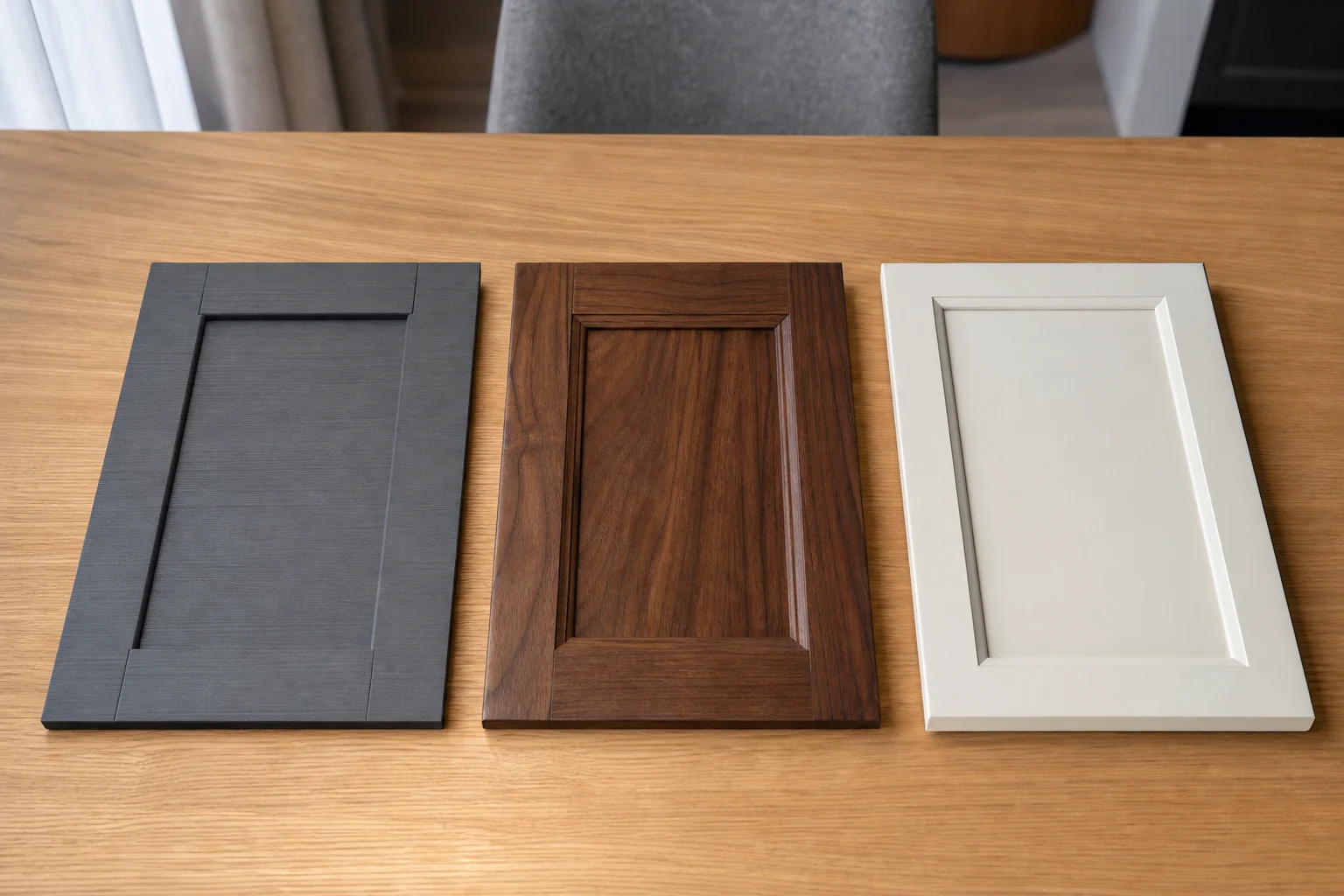
Laminate is the most impact, stain, and moisture resistant of the surfaces and needs the least upkeep. It shrugs off scratches better than paint and wipes clean, which makes it a smart pick for a busy, high-traffic kitchen on a budget. The trade-off is that up close it reads as a manufactured finish rather than natural wood.
Veneer versus solid wood
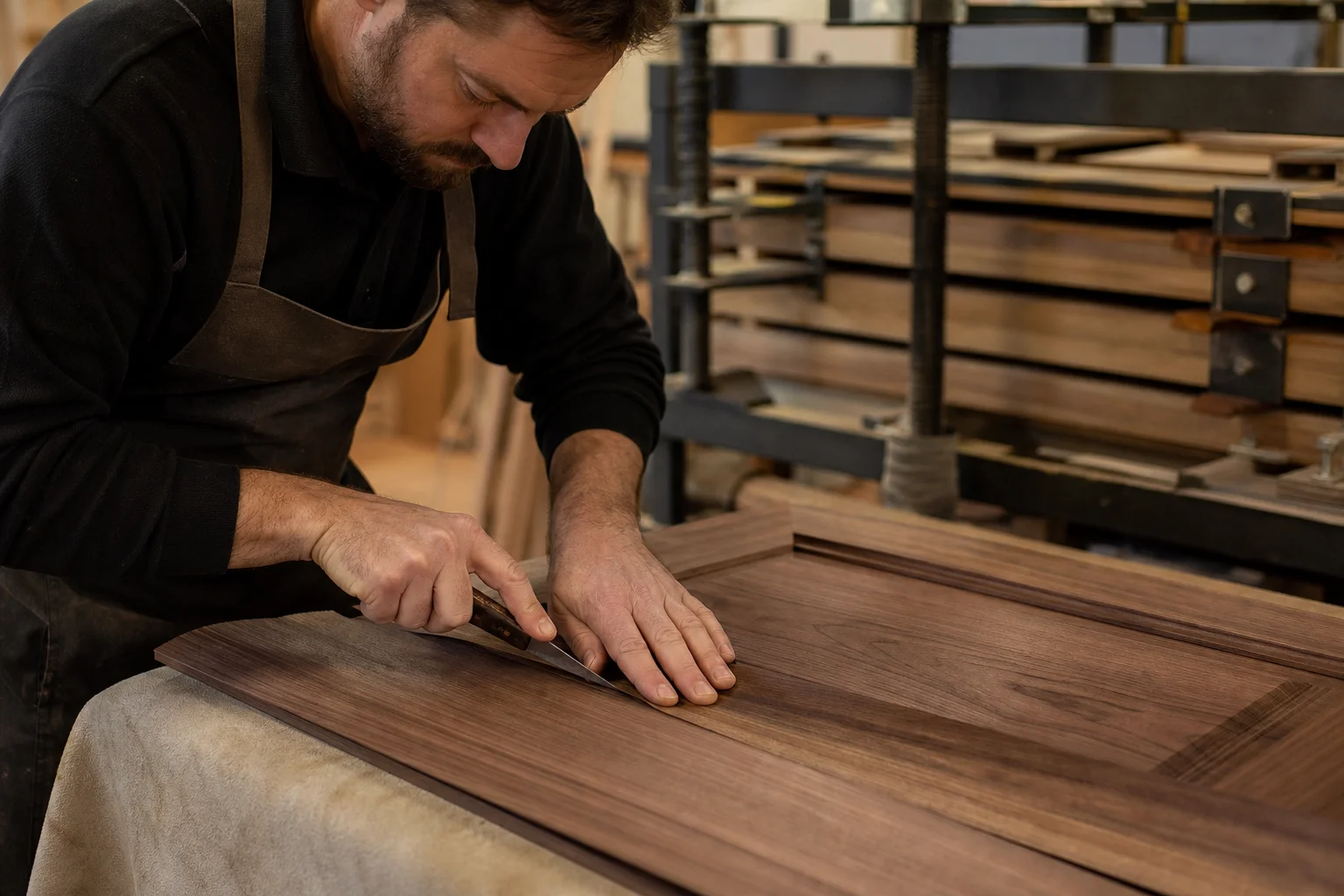
Veneer uses a real-wood face, so grain and color are authentic, and it takes stains and clear finishes that show the wood. Against solid doors, veneer keeps weight and cost down and still lets you refinish light scratches. Solid-wood doors cost more and weigh more, and they often call for upgraded soft-close hinges, but they last the longest and are the easiest to sand and refinish years later. If the boxes and hinge surfaces are sound, swapping to new solid-wood doors, sometimes called redooring, restores both the feel and the perceived value of the kitchen.
How to choose
- Laminate: heavy use, a tight budget, and the fastest, most stain-resistant result.
- Veneer: real wood character (grain, warm tone, the option to stain) at a middle price and weight.
- Solid-wood doors: the longest life and the finish buyers notice.
| Material | Look | Durability | Repairability | Best for |
|---|---|---|---|---|
| Laminate | wide range of colors and textures, modern | high resistance to stains and scratches | chips patchable, whole door easiest to swap | renters, busy family kitchens, budget jobs |
| Wood veneer | authentic wood grain, warm | good, dislikes prolonged moisture | light scratches sand and refinish | a real-wood look at mid budget |
| Solid-wood doors | classic, heirloom feel | longest life, can dent or scratch | sanding and refinishing straightforward | resale-focused and luxury kitchens |
Whatever the face, hardware matters more after refacing than before: upgrading to soft-close Blum or Grass hinges and choosing solid pulls in brushed brass or satin nickel is what makes the result feel truly new.
Permits in NYC
Refacing is cosmetic and usually needs no DOB permit, since it does not touch structure, plumbing, gas, or egress. Adding electrical, moving plumbing, or altering a protected facade would trigger a filing, so check NYC DOB guidance and your building manager. Also confirm co-op or condo board rules, since many buildings require approval even for visible cosmetic changes.

Luxury for Less: Where to Score High-End Materials at Designer Discounts
After fifteen years working on renovations across Manhattan, I’ve come to believe that the dif

In Defense of Detail: Why the Smallest Things Matter Most in Construction
Stand in a finished luxury apartment and look around. Smooth walls. Perfect light. A quiet sense tha
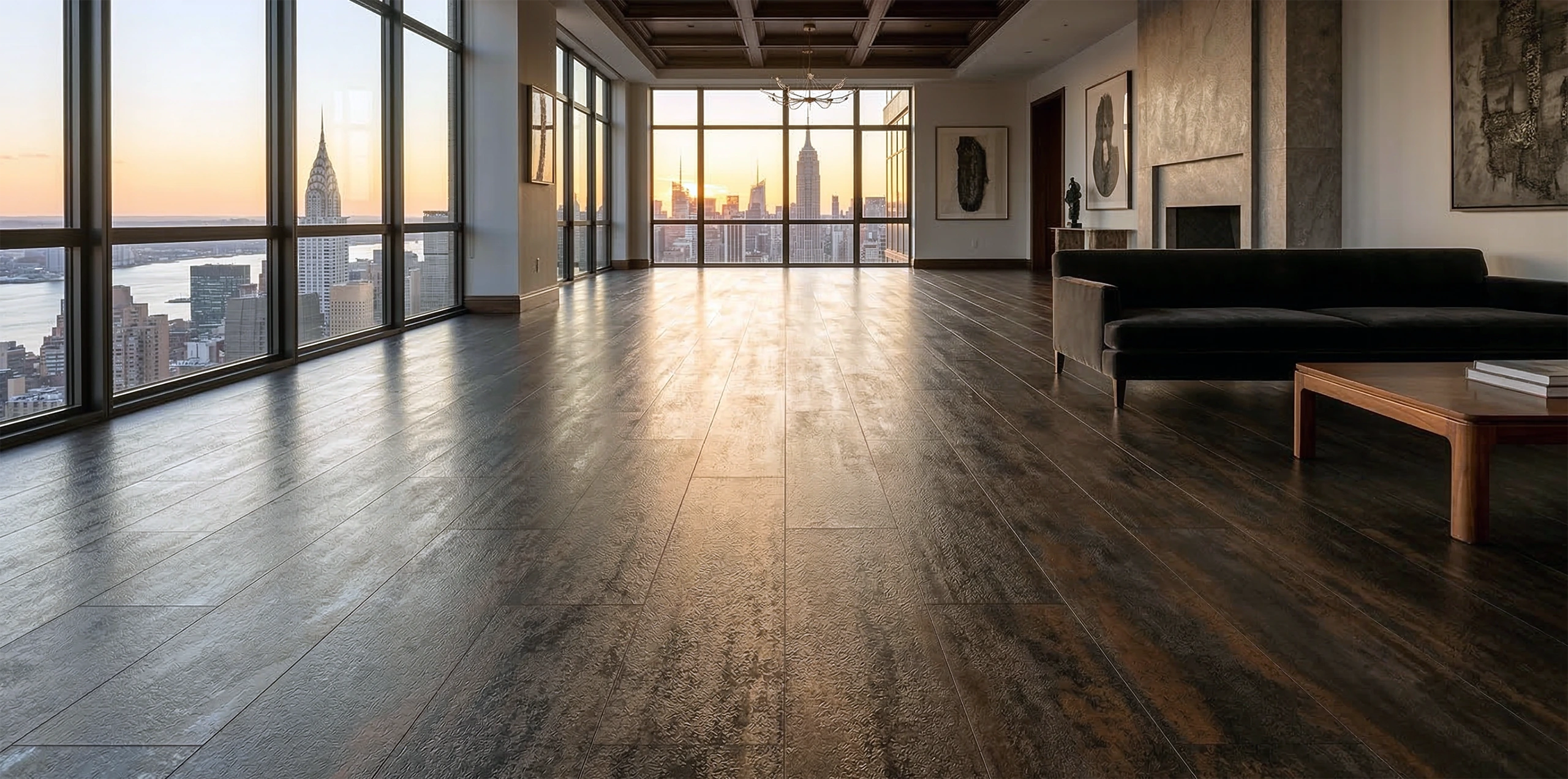
Vinyl Plank vs. Microcement: High-End Flooring in 2026
If you’re standing in a flooring aisle trying to work out what the difference is between all t