

What Your Building Asks of a Contractor, Beyond the License
Anyone who has renovated a New York apartment knows the moment: before a single wall is touched, the managing agent sends back a list. Proof of insurance, with the building named on it. The contractor’s license and registration. Plumber’s and electrician’s license numbers. A plan for protecting the neighbors. For a first-time renovator it can feel like a lot of paperwork for a new kitchen.
Most guides stop at “make sure your contractor is licensed and insured.” In a Manhattan co-op or condo that is only the start. The building, and the city behind it, ask for more, and every piece has a reason. Here is what that list means, and why most of it protects you as much as the building.
The licenses, briefly
The company you sign with needs a Home Improvement Contractor (HIC) license from the city for any home improvement job over $200, and its number goes on your contract. That license covers the carpentry, plaster, floors, tile and paint. Plumbing and electrical work are different: they are done only under a Licensed Master Plumber or a Licensed Master Electrician, personal licenses issued by the Department of Buildings, so a general contractor brings in licensed trades for them. Our piece on hiring a general contractor in NYC goes through how to look these up.

What those guides rarely mention is the second credential an apartment building needs.
The registration most owners never hear about
When a job in an apartment building needs a permit (moving walls, relocating plumbing, new circuits), the contractor filing it also has to be registered with the Department of Buildings as a general contractor. An HIC license alone is not enough for that filing. Registration renews every 3 years.
Most Manhattan apartment buildings are 4 stories or taller, and in those the registration also has to carry safety endorsements: extra sign-offs showing the company is qualified for construction, concrete or demolition work in taller buildings. An experienced contractor has had these for years, so for you it comes down to one question: who will file the permit, and under which registration?
Painting, refinishing floors or replacing cabinets in the same spot usually need no permit at all, and then this part does not apply.
What your building asks for
A co-op or condo adds its own layer, spelled out in the alteration agreement you sign with the building. Typically it asks for drawings for anything beyond cosmetic work, a schedule that respects the building’s work hours, and insurance certificates naming the building and the managing agent, so that damage to a neighbor’s ceiling or the lobby floor goes to the contractor’s insurer and not to the co-op. Our piece on insurance requirements for apartment renovations covers the usual amounts.
When a permit is filed for work in an occupied building, the filing also includes a tenant protection plan: how dust, noise and exits are handled so the neighbors stay safe while the work goes on.
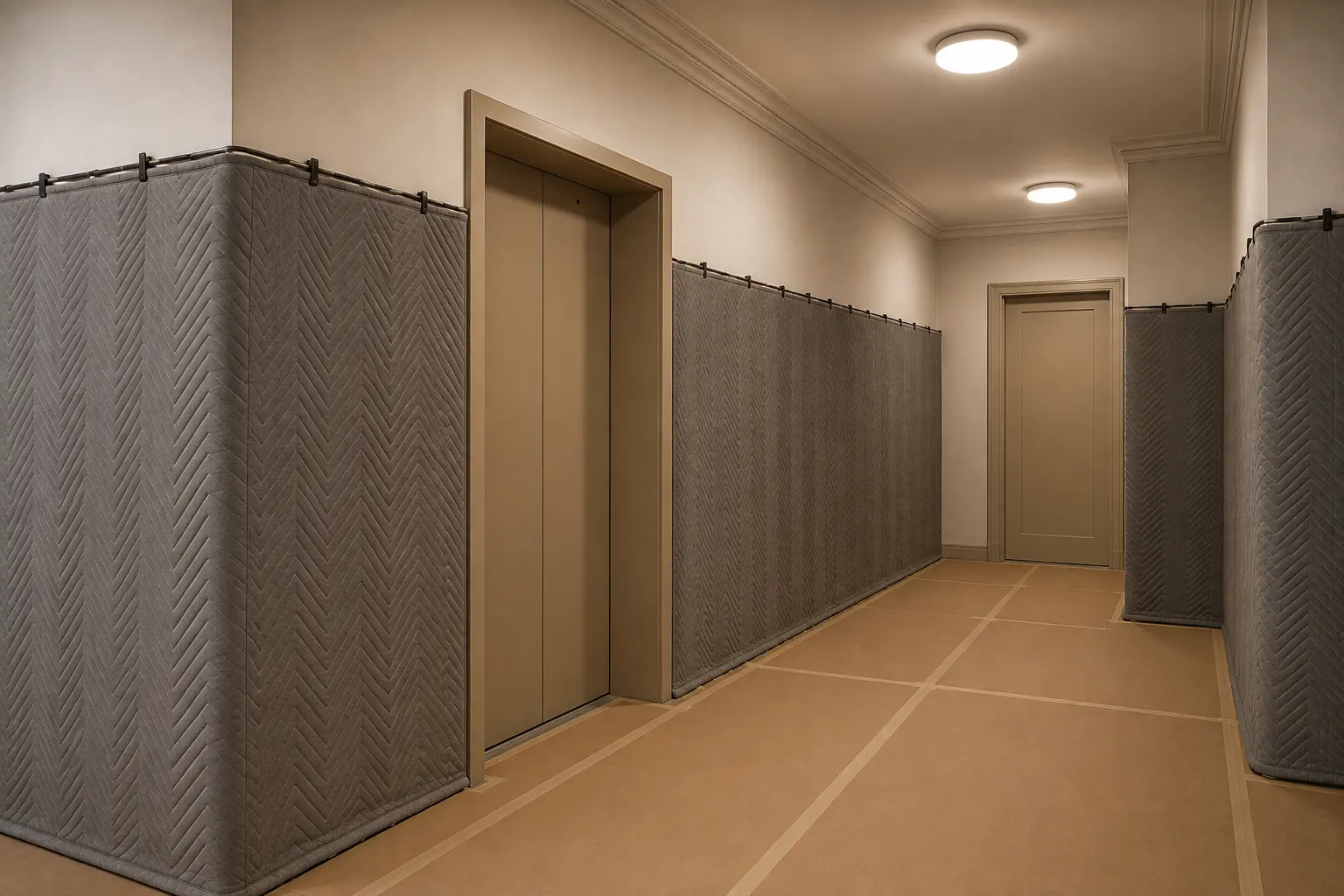
The building’s rules also show up in the hallways. Buildings typically require the elevator and the common corridor to be padded and the floors covered before the first delivery. A contractor who regularly works in Manhattan buildings knows these routines, and it helps a lot if they have already worked in your building or with your managing agent: they know the paperwork, the super and the hours, and approval tends to move faster.
What the license does for your money
Every HIC license comes with financial security: the contractor either posts a $20,000 bond or pays into a city trust fund. If a licensed contractor fails to finish a job, that is where a claim goes, and it is generally capped at $20,000.
For a Manhattan renovation, the real protection is in how you pay. New York State law says that money paid before the work is substantially complete goes into an escrow account at a New York bank within 5 business days, unless the contractor provides a bond or similar guarantee instead. Beyond that, the usual practice is simple: payments follow finished stages of work, and a final portion waits for the walk-through.
A five-minute checklist
- HIC license: active, same company name as on the contract.
- Master plumber and master electrician: names and license numbers.
- DOB registration with safety endorsements, if your job needs a permit.
- Insurance certificates naming your building and managing agent.
- A payment schedule tied to finished work, and where the deposit is held.
A good contractor will hand you most of this in the first meeting, often before you ask. Checking it takes a few minutes, and it means you, your building and your contractor all start the job on the same page.

How to Interview a Contractor Before You Hand Over the Keys to Your Home
How to Interview a Contractor Before You Hand Over the Keys to Your Home What separates a reliable c
Red Flags and Green Lights: Reading Between the Lines of Contractor Proposals
The most expensive mistakes in renovation usually trace back to choosing a contractor on price alone
Small Job, Big Problems: Finding Reliable Contractors for Minor Renovations in Manhattan
A homeowner’s honest account of what it actually takes to get a powder room updated on the Upp