
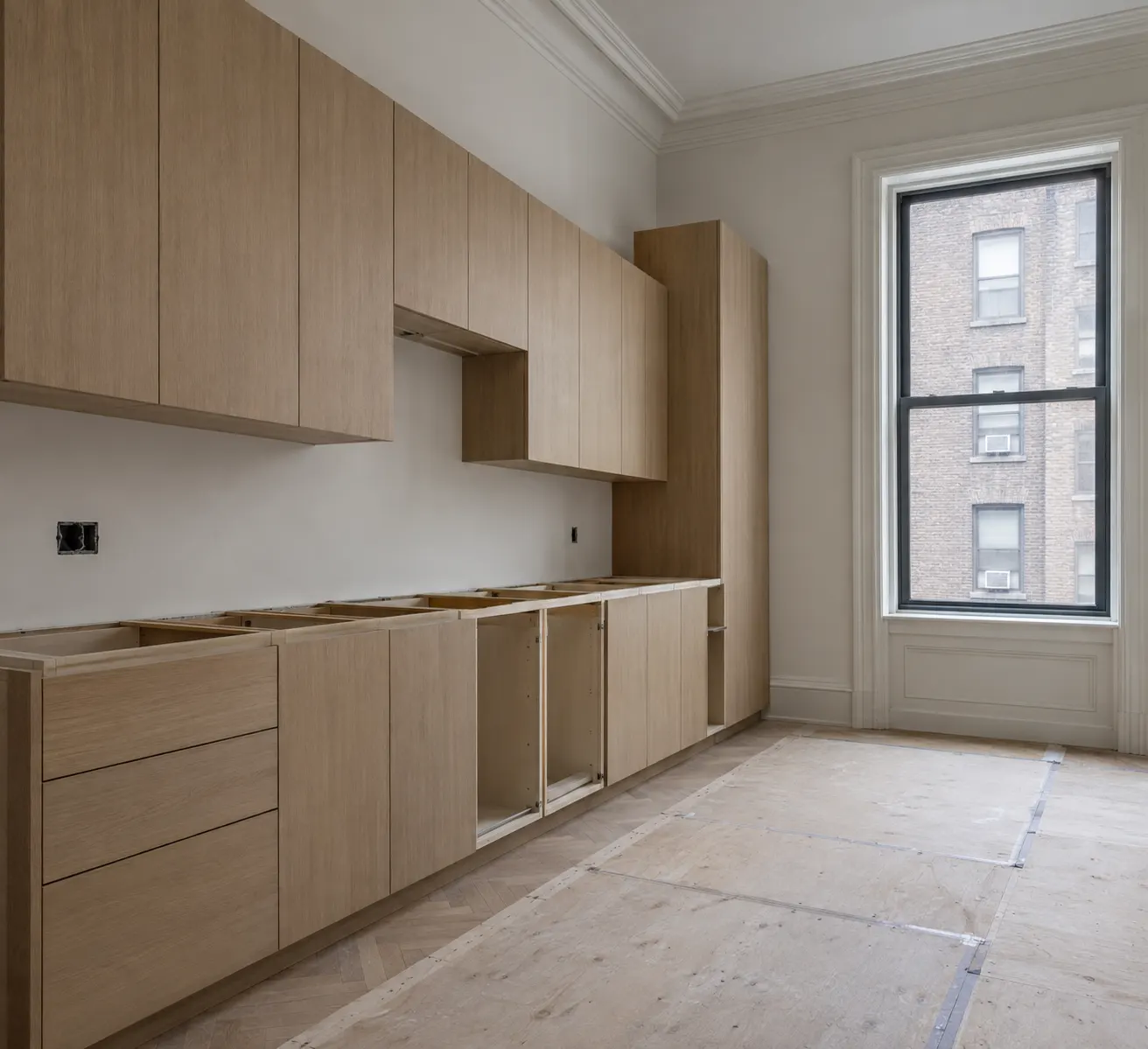
Two Pieces of Paper Decide What Your Renovation Costs
Two owners on the same line of the same building spend $150,000 on the same kitchen. One of them never signs the certificate, so the contractor, who would be left proving the job qualified if the state asked, puts sales tax on the invoices, and the checks total $163,312. That owner also clears the paperwork out of a drawer when the job ends. The other signs a one-page state certificate before the crew starts, so the checks total $150,000, and keeps every invoice.
The first difference is the $13,312 of sales tax, and it is settled the month the work is billed. Nothing in the work made that job taxable and the other one exempt: the same kitchen qualifies either way. The tax gets charged because without the signed certificate the contractor is the one who would have to prove it, and a contractor in that position collects the tax rather than carry the risk. The second one waits 12 years for the closing, where the documented $150,000 of work stays out of the taxable gain. At the top federal long-term capital gains rate of 20 percent that is about $30,000, and more once the separate 3.8 percent net investment income tax and New York State and City tax on the gain are counted. Two pieces of paper, two different laws, two different moments. The work was identical.
Neither piece of paper is complicated. One is a single page you sign, in practice before the crew starts. The other is a folder you keep until you sell. What follows is what each one does, where the line falls, and the places where owners in Manhattan lose the benefit without knowing it was available.
The 8.875 percent that is optional
New York City’s combined sales tax rate is 8.875 percent, made up of 4 percent state, 4.5 percent city and 0.375 percent for the transit district. On a renovation invoice that bundles labor and materials, that rate applies to the whole contract price. On $150,000 it is a little over $13,000.
It applies unless the job is a capital improvement. New York State’s test has three parts and all three have to be met at once. The work substantially adds to the value of the property or appreciably prolongs its useful life. It becomes part of the real property or is permanently affixed to it so that removal would cause material damage to the property or the article itself. It is intended as a permanent installation. Miss one and the job is a repair, and the tax applies to the full invoice.
The form that records this is ST-124, the Certificate of Capital Improvement. It runs one page and carries two signatures. The owner fills in and signs the customer section describing the work, and the contractor completes and signs the section certifying that the form is accepted in good faith, then keeps it for at least 3 years after the due date of the last sales tax return the certificate relates to, or the date that return was filed if that is later, as the reason no tax was collected. The certificate is not valid unless both sides are filled in. Nothing gets filed with the state.
Contractors ask for it before the first invoice, and that is the sensible way to do it, but the state’s actual deadline sits later. A contractor who receives a properly completed ST-124 within 90 days after the services are rendered, and accepts it in good faith, shifts onto the customer the burden of proving the job was not taxable. Miss the 90 days and the burden runs the other way: the contractor has to prove the work was a capital improvement. A late certificate does not by itself make a capital improvement taxable, it just means nobody is protected by the piece of paper any more.
Two things about it surprise people. The first is that the exemption does not reach the materials. Whoever buys them pays sales tax at the register, contractor or owner, and when the contractor buys them that tax is already inside the number on your contract. What the certificate removes is the second layer of tax, the one charged on the bundled invoice. The second is that signing it wrongly lands on you rather than on the contractor. Certify a repair as a capital improvement and the state can come back years later and assess the tax against the property owner, with penalties and interest on top.
Where the line actually falls
Size has nothing to do with it. Renovating one small bathroom from nothing is a capital improvement. Replacing 40 broken faucets across a building is 40 repairs. What decides it is whether the work is permanent and integrated, or whether it puts something back the way it was.
| Capital improvement | Repair |
|---|---|
| Gut renovation of a kitchen or bathroom | Replacing a broken faucet on an existing sink |
| New tile floor or wall, permanently set | Replacing one cracked tile, regrouting |
| New plumbing rough-in, new supply lines or drains | Clearing a blocked drain |
| New electrical service or dedicated circuits | Replacing a dead outlet |
| Custom cabinetry fixed to the wall | Changing cabinet hardware |
| New exhaust hood or fan ducted to the outside | Repairing an existing appliance |
| Removing a wall to open up a room | Painting on its own |
The last row is the one that catches people. Paint by itself is a repair. Paint as part of a gut is priced inside the improvement and travels with it.
The same words, two different laws
Here the ground shifts under owners who have read one article and assume it covers both situations. New York State uses the phrase capital improvement for sales tax. The federal government uses improvement for the calculation of what you owe when you sell. The two overlap heavily, and they are not the same test, written by the same government, or decided at the same time.
The federal version, set out in IRS Publication 523, counts work that adds to the value of the home, prolongs its useful life, or adapts it to new uses. Additions, a new roof, central air conditioning, a modernized kitchen, new flooring, new windows. Routine upkeep does not count, and neither does fixing a leak or painting a room. But repairs done as part of an extensive remodel do count, folded into the project they belong to.
So the answer to whether painting counts is yes and no in the same apartment, depending on which law is asking and what else was happening that month. This is not a loophole. It is two rules written for two purposes, and the practical consequence is that the ST-124 you signed is not your evidence for the second one. That takes its own file.
The folder that matters 12 years later
When you sell, the tax is not on the price. It is on the gain, which is the price you get less what the place cost you. That second number is your basis, and it is not just the purchase price. It starts there, picks up certain closing costs from the day you bought, and grows by every improvement you make while you own the place. Selling costs, agents and closing fees, come off the other side.
Against that gain sits the exclusion. Own the home and live in it as your main home for 24 months out of the 5 years before the sale, and do not have excluded gain on the sale of another home in the 2 years before this one, and $250,000 of gain is free of federal tax for a single filer, $500,000 for a married couple filing jointly. Below the exclusion the arithmetic does not bite, and that is a statement about the price you could get today rather than the one you will get. Above it, every documented dollar of improvement is a dollar that is not taxed.
The reason this is not a footnote in Manhattan is that the exclusion is a fixed number in a market where it stopped being generous a long time ago. A couple who bought at $900,000 and sells at $1.6 million has already used the $500,000 and is looking at tax on the rest. A $150,000 kitchen in the file, if it is still there, is $150,000 that never enters the gain.
Which points at the trap in the phrase “if it is still there”. An improvement you have since replaced does not count any more. The kitchen you put in during 2012 and tore out in 2026 leaves the basis when it leaves the apartment, and only the new one counts. Owners who renovate twice tend to keep adding both to the pile.
What a co-op owner keeps and what a condo owner keeps
Shares in a co-op are not real property, which changes plenty of things about a renovation. It does not change either of these two. Publication 523 treats a cooperative apartment as a main home like any other, so the ownership test, the use test and the exclusion apply the same way. And ST-124 is available to an owner or a tenant who contracts for the work, so a shareholder doing an alteration inside the apartment uses the same one-page form as a condo owner, checking the tenant box rather than the owner box. That box comes with a condition attached. A shareholder holds the apartment under a proprietary lease, and Publication 862 presumes that alterations made by a tenant to leased premises are temporary and therefore not capital improvements, unless an intention to make them permanent is demonstrated. So the papers have to show that intention, and in a co-op they usually can: the proprietary lease and the alteration agreement are where installed work is said to belong to the corporation and to stay with the apartment. Worth reading those two clauses before signing the certificate rather than after.
The difference is on the borrowing side, and it is worth knowing before the budget is set. A condo owner with equity can usually reach it through a home equity loan or line of credit. A co-op shareholder is pledging shares rather than real property, the lenders who do this work are fewer, and the board has to consent to the second lien. That consent is a separate approval on a separate timeline from the alteration agreement, and finding out about it in week 2 of a job you are paying for in stages is an expensive way to learn it.
One more thing worth writing down while the loan is being arranged. Interest on a home equity loan or line of credit is deductible only when the money is used to buy, build or substantially improve the home that secures the loan, and only as an itemized deduction, so it helps only if your itemized deductions come out ahead of the standard deduction. Borrow against the apartment to pay for the apartment and the interest is at least in play. Borrow against it for something else and it is not.
What this looks like as a habit
None of this asks for an accountant on day 1. It asks for five things to exist in one place.
- The signed ST-124, with the description of work you actually gave the contractor
- The contract, the payment schedule, and every change order
- Invoices marked paid, with the method of payment attached to each one
- For a co-op or condo, the alteration agreement and the board approval, which is what shows the work was permitted and permanent
- The DOB permit and the Letter of Completion that closes it out, which is the proof the permitted work was signed off and the document a buyer’s attorney asks for at closing
Scan the lot the week the job closes out, while the contractor still answers the phone and can reissue anything missing. It is a bad idea to reconstruct a 2026 renovation in 2038 from bank statements, and a worse one to reconstruct it from memory.
What does not come back
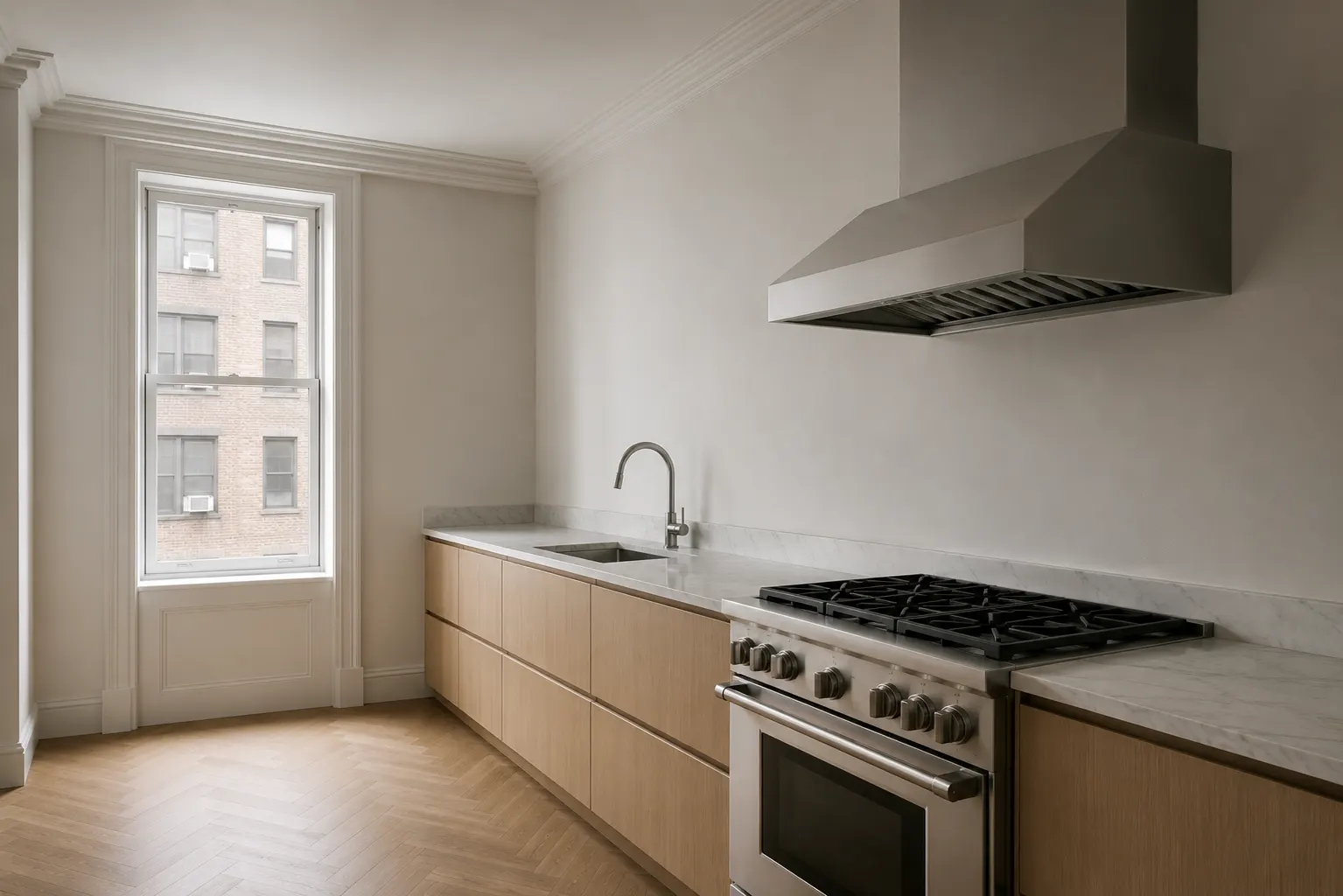
A high basis is not the same thing as a high price. Documenting $150,000 of kitchen does not mean a buyer pays $150,000 more for it, and in a building where every line has been done twice, some of what you spend buys you a faster sale rather than a bigger number. Both pieces of paper protect you from paying tax on money you never made. Neither of them makes the money.
What they do is keep the difference between the two owners at the top of this article from being decided by which one happened to know.

Budget Breakdown: Where Every Dollar Goes in a NYC Renovation
You get the quote. You look at the number at the bottom of the page. You blink. How, you ask yoursel

The Hidden Cost of Beautiful Spaces: What Instagram Doesn’t Show About Home Design
Have you ever scrolled through Instagram, paused at a stunning apartment photo, and thought that it

Renovation Math: How to Calculate True Cost per Square Foot in NYC
“What’s your price per square foot?” It’s almost always the first question I