
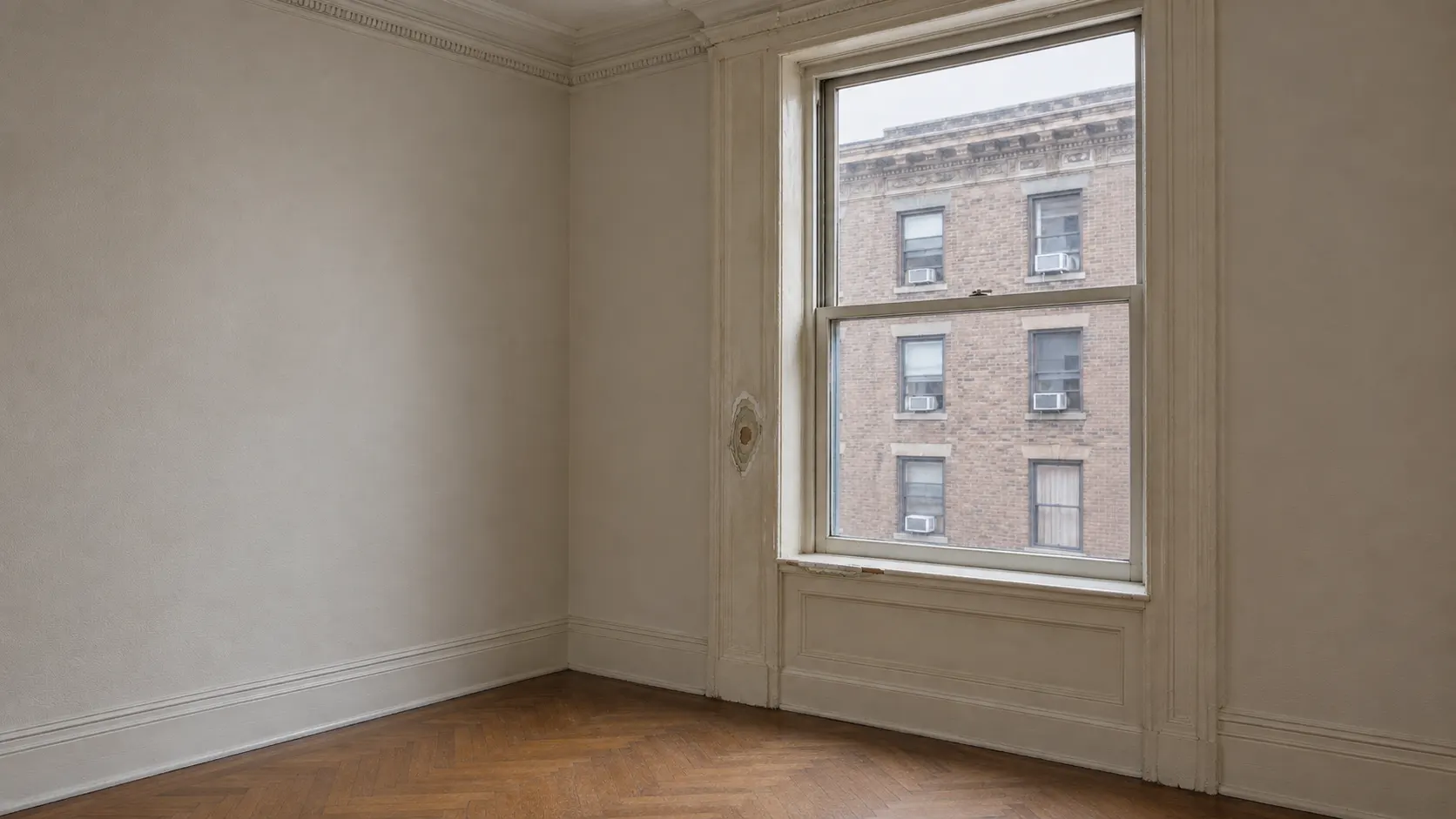
Why Repainting the Trim Is Not a Weekend in a Pre-War Building
The call arrives in the same shape every time. Trim in two rooms has yellowed, a window sash sticks, and the plan is a week of painting while the family is away. In a pre-war building it takes longer, and the reason is the paint.
Nothing is wrong with the apartment. Lead was in household paint until 1978, and it stayed in the good paint longest, because lead is what made a finish hard and washable. In a pre-war building it is somewhere in the layers, usually on the surfaces that took the most abuse: window sashes, door frames, baseboards, casings, kitchen and bathroom trim. Intact under three later coats it is harmless. It becomes a problem the moment somebody sands it, scrapes it dry, or pulls a window out of its frame.
That much most owners know. What surprises them is everything downstream of it, and the same handful of things go wrong on job after job.
[IMAGE_FEATURED: ваш кадр, уже стоит на сайте как featured этого поста]
The estimate was written for a different building
A bid comes in priced as painting: labor, materials, a few days. In a building from the 1920s the price has to cover containment as well, and that line is usually missing.
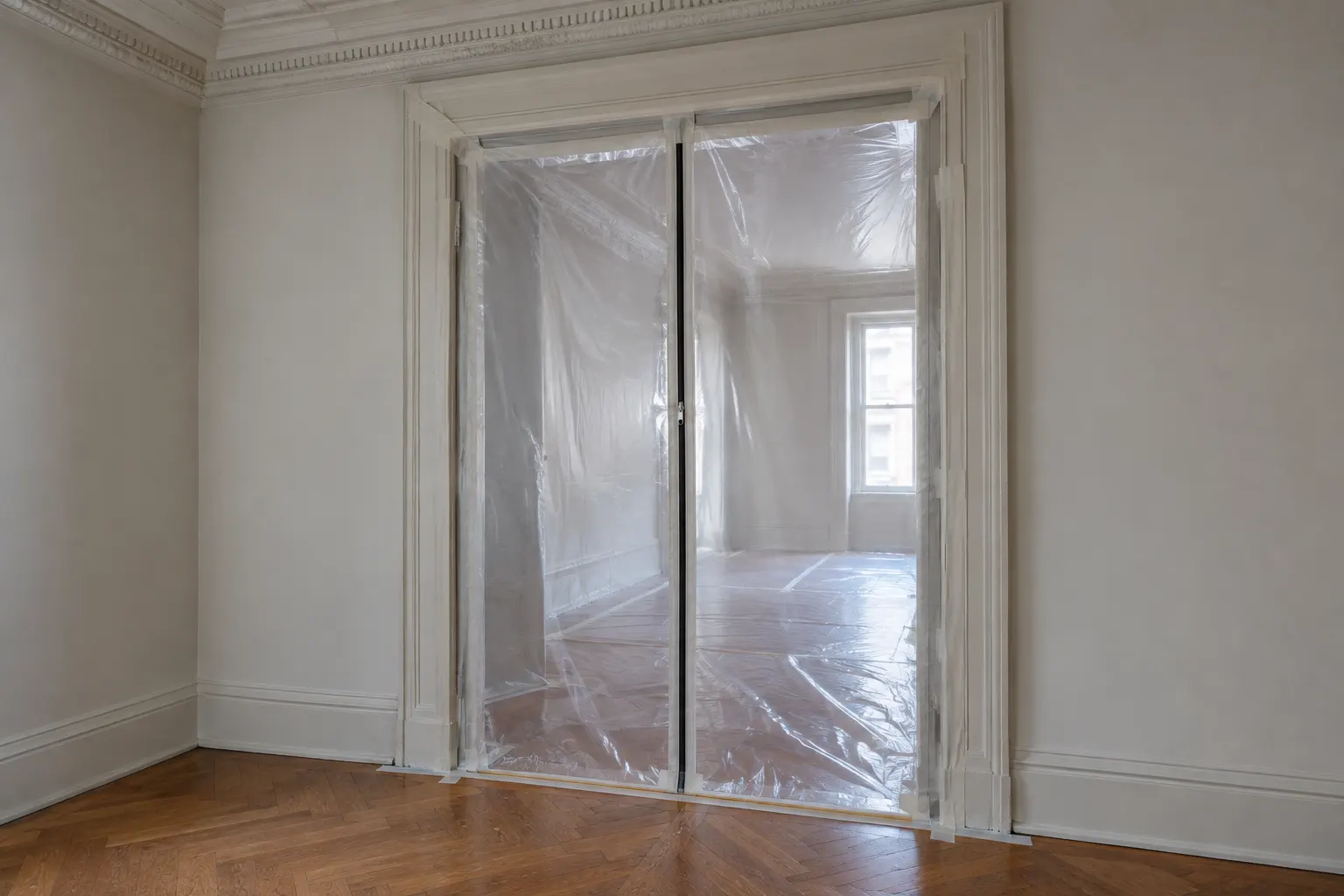
The work area gets sealed. Plastic on the floor, plastic over the doorways, furniture out or wrapped, ventilation shut down so dust does not travel through the apartment. Paint comes off wet, with a spray bottle going the whole time. Then the cleanup, which is the part people underestimate: a HEPA vacuum (one with a filter fine enough to trap lead dust), a wet wipe, then the HEPA vacuum again. A regular shop vacuum won’t do: it blows the fine dust back into the room. Trim work in two rooms that is quoted at one week usually takes closer to two weeks. One day at the start goes to putting up plastic and one at the end to cleanup, and on neither day does anything visible get done.
None of that is abatement, the licensed work of permanently removing or sealing lead. It is ordinary painting done a different way, and the difference shows up as time. Plan for those extra days before you book the move-back date.
Nobody checked whether the contractor is certified
Under the federal Renovation, Repair and Painting rule, anyone paid to disturb paint in a home built before 1978 has to be a certified firm following lead-safe work practices. Walk-up or white-glove co-op, it makes no difference. The rule reaches what it calls target housing, which leaves out studios and other units where the living area is not separated from the sleeping area, along with housing for the elderly or people with disabilities. That carve-out disappears once a child under 6 lives there or is expected to, which matters in pre-war buildings, where many apartments are studios. Doing the work yourself is outside the rule, and that exemption ends the moment you rent part of the place out, run a childcare business in it, or buy and flip.
The practical failure is a crew arriving with an orbital sander and no plastic, on a job where the owner assumed certification came with the contractor’s license, which it does not. Ask for the certification number, not the assurance, and ask before the deposit rather than after the work starts.
The same conversation settles the second question worth asking, which is what the containment adds to the schedule and the price. It belongs on paper as its own line. A bid that hides it cannot be compared with one that shows it, and the one that shows it gives you the real number to plan around.
The job was assumed to be too small to count
Small jobs do get a pass, but the cutoff is smaller than people expect (6 square feet of paint per room indoors), and size is only half the test. The federal definition of minor repair and maintenance also requires that the job be neither window replacement nor demolition of painted surface, and that none of the prohibited methods be used. Power sanding, grinding or blasting without a dust-collecting hood and a HEPA vacuum attached, burning paint off with an open flame, or a heat gun running at 1,100 degrees Fahrenheit or above: any one of those puts even a 5-square-foot job under the rule, the same as a 50-square-foot one.
| Threshold | Set by | What it means |
|---|---|---|
| 6 square feet of paint per room, indoors | Federal RRP rule | At or below it, a job can qualify as minor repair and maintenance |
| 2 square feet or more in a single room | NYC Department of Housing Preservation and Development (HPD), HPD safe work practices | The city’s lower line, recommended in every pre-1978 building |
| Window replacement | Federal RRP rule | Never a small job, at any size |
| Any window removal | HPD safe work practices | Pulling a sash to strip it is work the city expects to be done lead-safe |
So a patch of casing can sit under the federal number and still be work the city expects to be done lead-safe. In practice the argument rarely gets that far, because on a job of any size a certified contractor will presume lead is present and simply work that way, which costs less than proving otherwise.
Testing is worth it when the scope is big enough that knowing which surfaces are clean would change the price, or when you want the result on record. An XRF inspection reads the lead content straight off the painted surface without scraping anything, and New York firms quote roughly $300 to $700 for a single apartment at 2026 prices. One wrinkle is worth knowing before you spend it: the federal exemption for tested-clean surfaces is written at 1.0 milligrams per square centimeter, while New York City defines lead-based paint at 0.5. A surface can pass the federal test and still be lead-based paint by the city’s number.
The windows were never yours to replace
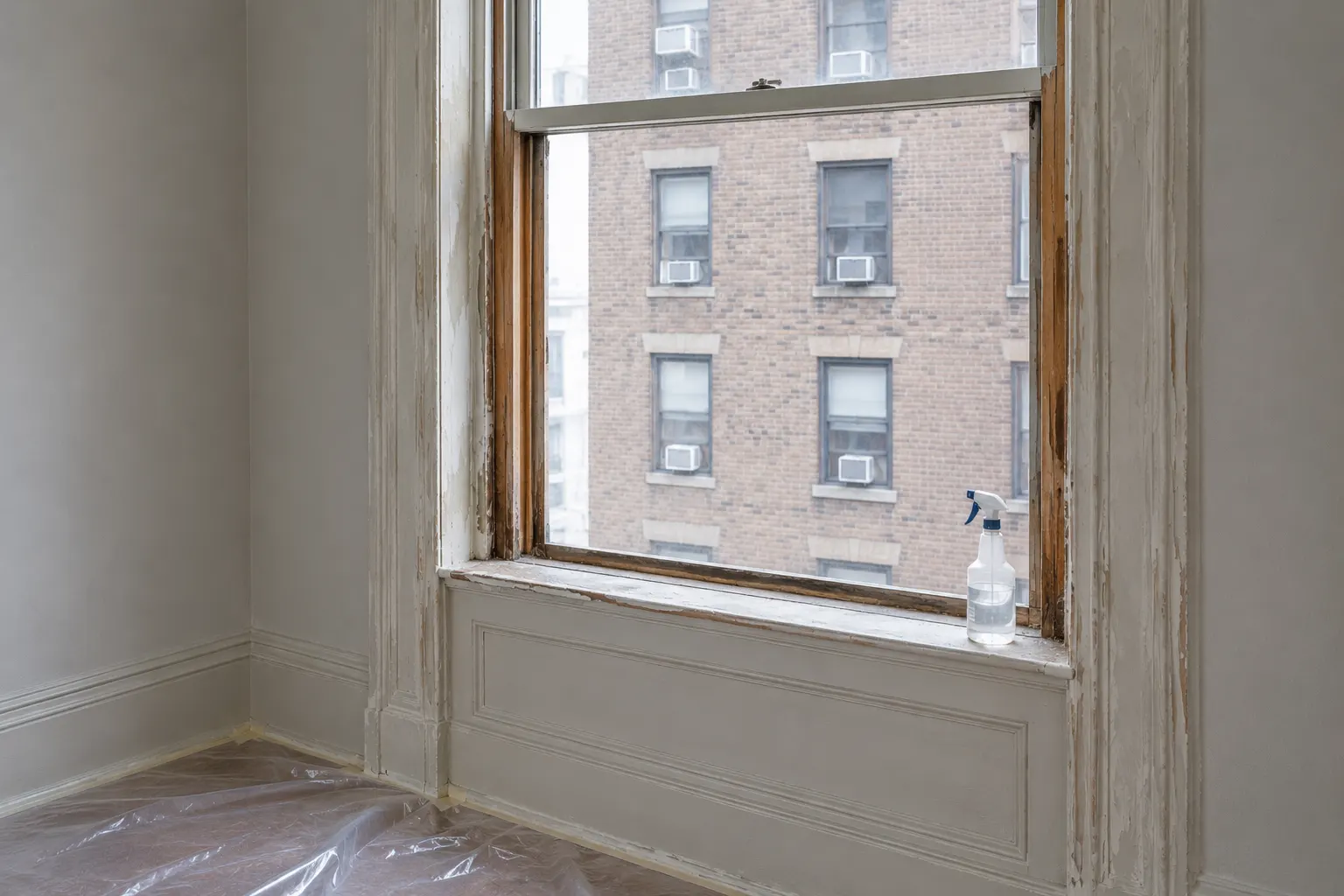
Windows and their sashes are where the paint in a pre-war apartment gets disturbed most often, which is why so many plans start there, and why so many stall. In a co-op or condo the windows usually belong to the building: the proprietary lease or the declaration puts them in the common elements, so replacement runs on the corporation’s schedule and the corporation’s budget, not yours. What is yours is the painted casing and the sash channel inside the apartment.
Owners who miss this often budget for new windows, get turned down by the board, and end up doing only the trim anyway. It is worth finding out which category your windows fall into before the scope is written, because that changes both the price and who you are negotiating with.
What the board will ask for
In a co-op or condo nothing starts until the board signs off, and the alteration agreement is where lead turns into paperwork. Buildings that have been through it before ask for the contractor’s lead-safe certification alongside the certificate of insurance, and some want the containment plan in writing: which doorways get sealed, where the debris goes, how the corridor is protected on the way to the service elevator.
The reason is not fussiness. Dust that leaves your apartment lands in common areas, and common areas are the corporation’s problem in a way your living room is not. The indemnity clause in the alteration agreement, the part where you promise to cover damage your work causes to the building, hands that problem back to you. A contractor who works in pre-war buildings brings the certification and the containment plan to the board unprompted. One who does not will be asked for them in the first week and can spend two weeks producing them.
The clean apartment turned out to be the expensive one
Lead-safe work belongs to the dirty half of a renovation, next to demolition. When the whole apartment is being redone that is convenient: the containment is going up anyway and the trim folds into a stage that was already messy.
Lead-safe work is most inconvenient on the job most owners call us about: a small cosmetic project in an apartment that is finished and lived in. In a gut renovation the plastic is already up. In a finished apartment it goes up for the trim alone, so the same two rooms cost more. If a kitchen or other big project is coming, do the trim then.
Where it stops being ordinary
Everything above assumes an owner living in their own apartment. That is also the case the city’s lead laws are least aimed at.
Local Law 1 of 2004 presumes that the paint in a multiple dwelling of 3 or more units built before 1960 is lead-based, and makes the owner deal with hazards where a child under 6 spends 10 or more hours a week. In a 1960 to 1978 building no such presumption exists, and the same duties attach only to paint the owner knows to be lead-based. Local Law 31 of 2020 required XRF testing of dwelling units, and Local Law 111 of 2023 added the common areas, both landing on the same deadline in August 2025. Those duties run to the owner of the building, and HPD’s guidance brings co-op and condo units into scope when they are not occupied by the owner or the owner’s family. Live in your apartment and that machinery is not pointed at you. Rent it out, and those duties are yours.
Where a child under 6 does live in a covered building, the work changes character. Any job that reaches 2 square feet ends with dust samples taken by a certified inspector independent of both the owner and the contractor, sent to a state-certified laboratory, with the room staying shut until the numbers come back clean. Past 100 square feet of paint in one room, or 2 painted windows coming out, the contractor has to hold abatement certification on top of everything else. If that is your situation, it is a conversation with a lead professional before it is a conversation about paint colors.
And when lead turns up on surfaces that are staying, you have two ways to go. Encapsulation seals sound paint under a coating made for the purpose, quoted around $5 to $15 per square foot by New York firms at 2026 prices. Full removal, by stripping or by replacing components, runs roughly $10 to $30 per square foot on the same quotes. Both ranges come from firms selling the service, so treat them as a rough guide, not a price. In practice, friction surfaces (the window sashes and door edges where paint grinds into dust every time they move) are usually replaced, flat stable surfaces are sealed, and the pieces in between are decided case by case.
What this changes about your plan
Lead in a pre-war building is an ordinary condition of the housing stock, like plaster and cast iron, and it has a settled way of being handled. Ask for the containment as a line in the bid and check the certification before the deposit.

Bathroom Renovation in Manhattan and New York City: What Actually Matters
Bathroom renovation in Manhattan is rarely simple, and it involves far more than choosing tile and s

Building Your Dream Team
Every great renovation starts long before the first wall comes down. It begins with a question: who

How to Hire a General Contractor in NYC: Costs, Credentials, Red Flags
A general contractor’s price is not mostly labor. It is their licence, their insurance, their