

Building Your Dream Team
Every great renovation starts long before the first wall comes down. It begins with a question: who is steering this ship? Should you hire a collection of independent experts, architects, designers, engineers, trades, and coordinate them yourself? Or should you place your trust in one unified team, led by a general contractor or a design-build firm, that manages every detail from start to finish?
Your answer defines not just how your project unfolds, but how smooth or chaotic the journey turns out to be.
The Multi-Specialist Model
Choosing your own team of individual professionals can be deeply rewarding. You hand-pick an architect for creativity, a structural engineer for precision, a designer for style, and separate contractors for craftsmanship. You become the conductor of a fairly complex orchestra.
The appeal is real: you curate every member of the team according to their strengths and the project’s personality, each specialist brings focused expertise that suits highly customized or technically demanding work, and each contract has a clearly defined scope with no ambiguity about who is responsible for what.
That freedom comes at a real cost in time, energy, and patience, though. Coordinating multiple professionals means constant communication, aligned schedules, and a shared understanding of design intent that does not happen automatically. Your whole team needs to know what the others are working on, and the design and construction sides should meet regularly to stay aligned. The biggest risks here are fragmentation and delay. Miscommunication between a designer and a builder can mean costly rework or mismatched expectations, and when something goes wrong, it is not always obvious whether the architect, the subcontractor, or you ends up responsible for fixing it. That lack of unified accountability is part of what gave rise to the design-build model in the first place, which merges design and construction under one entity specifically to simplify responsibility.
This approach tends to make sense when you have the time and interest to be hands-on, your project calls for unique or experimental design solutions, and you are comfortable managing timelines, budgets, and the occasional conflict directly.
The General Contractor or Design-Build Model
Now picture a different setup: one company handling architecture, design, engineering, permitting, and construction. One point of contact, one contract, one process from start to finish. This is the general contractor or design-build model, and it has become increasingly common in complex urban settings like New York City.
The advantages tend to cluster around a few things. There is a single point of accountability, so you know exactly who is responsible for the final result. Communication is more direct, since there is no information lost between a separate designer and builder. Projects often move faster because design and construction phases overlap rather than running strictly in sequence, and budget tends to stay more predictable because one team is working within agreed cost parameters from day one. Working with a design-build firm means working with one team of designers and construction professionals throughout the process, which tends to mean fewer delays and fewer miscommunications.
The tradeoff is reduced flexibility in choosing individual subcontractors, and the outcome depends heavily on whether the contractor’s internal team is genuinely strong across every discipline. When everything sits under one roof, a weak link affects the whole project, which is exactly why picking the right design-build partner matters as much as picking the model itself.
Which Model Fits Your Project
A few questions tend to clarify which approach makes sense.
How complex is the project: simple cosmetic work can work fine with multiple trades, while a major renovation or full gut project usually benefits from unified oversight.
How involved do you want to be: if managing details appeals to you, multiple specialists can work well, but if you would rather focus on the outcome, a general contractor or design-build team tends to suit you better.
What is your tolerance for risk: coordinating your own team means more exposure to disputes and misalignment, while a design-build contract consolidates that risk under one party.
And what does your schedule actually allow, since tight timelines, especially in Manhattan co-ops with strict construction hours, tend to favor a single command structure over a coordinated group of independents.
A Few Habits That Help Either Way
Whether you assemble your own team or work with a single contractor, a handful of habits consistently save time and frustration. A kickoff meeting that gets everyone in one room to align goals, budgets, and communication early matters more than it sounds like it should. Regular updates, whether weekly or biweekly, tend to catch small issues before they grow into expensive ones. Contracts should spell out deliverables and accountability in writing rather than leaving anything to a verbal understanding. Work should move from design into construction only after documentation and materials are actually confirmed, not on an assumed timeline. And contingency time and funds belong in the plan from the start, since older buildings reliably surprise even experienced teams.
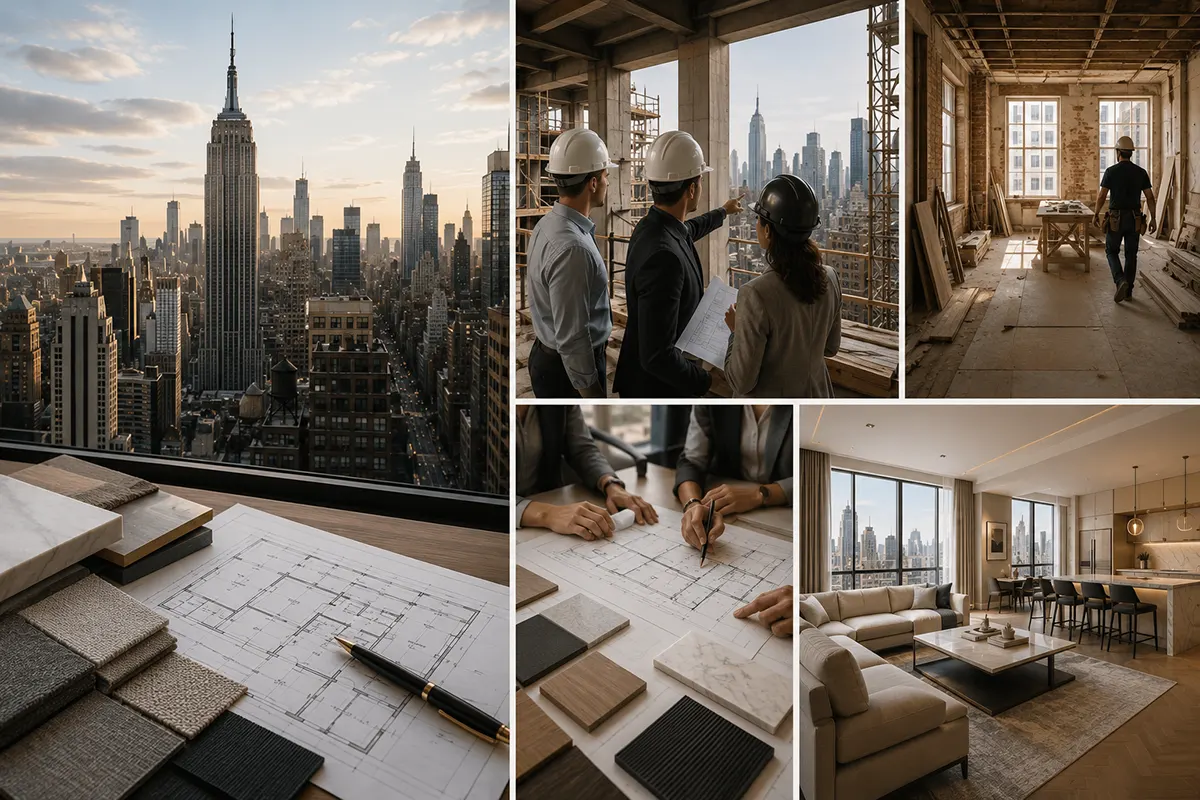
The Manhattan Reality
In a dense city like New York, where elevator access, noise restrictions, and co-op approvals all add friction, the design-build model tends to outperform a fragmented one. Working hours are a bigger factor here than people expect: most Manhattan buildings restrict construction to weekdays only, typically 8 a.m. to 5 p.m., which leaves a narrow window for coordinating multiple independent trades without losing time to scheduling conflicts. A single general contractor managing the whole crew has an easier time working within that window than several separate specialists trying to align their own schedules around it.
Co-op boards often reinforce this directly. Many Manhattan co-op boards require a single licensed general contractor of record on the alteration agreement before approving a renovation package at all, regardless of how many subcontractors that GC brings in underneath. For owners weighing the two models, that requirement alone can settle the decision before the design work even starts. An integrated team also tends to mean fewer administrative bottlenecks with building management, faster turnaround between design approval and actual construction, and less risk of errors from miscommunication between separate parties. That combination is part of why firms like Hoppler Design & Build have become regular partners for luxury Manhattan renovations, with architecture, interior design, and construction management unified under one roof from concept through completion.
Choosing between the two models comes down to what kind of process you actually want. If deep creative input matters more to you than convenience, and you do not mind managing the moving parts yourself, building a team one expert at a time can work well. If a smoother process, clearer accountability, and a design that translates cleanly into construction matter more, a unified design-build partnership tends to be the better investment. Either way, the result depends as much on how the work comes together as it does on how the finished space looks.

Beyond the Lowest Bid: Understanding True Value in Contractor Selection
You’re standing over three competitive estimates, and the lowest one stares back like an irres

Red Flags and Green Lights: Reading Between the Lines of Contractor Proposals
The most expensive mistakes in renovation usually trace back to choosing a contractor on price alone
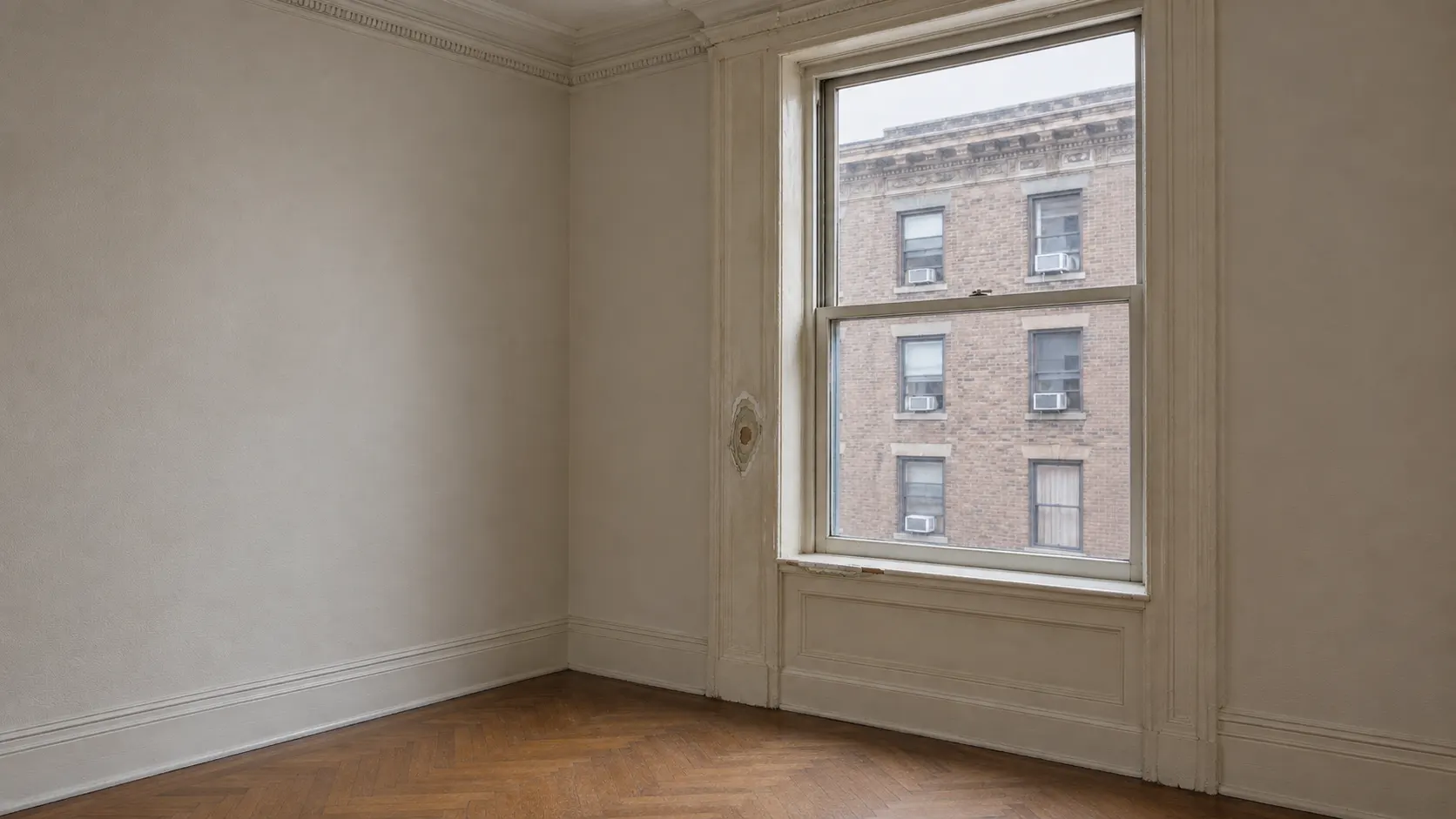
Why Repainting the Trim Is Not a Weekend in a Pre-War Building
The call arrives in the same shape every time. Trim in two rooms has yellowed, a window sash sticks,