

Permits, Plans, and Patience: Navigating NYC’s Department of Buildings Like Someone Who’s Done This Before
A renovation in New York City starts with mood boards and material samples. It continues with paperwork, waiting, and the Department of Buildings. Knowing how the DOB works, and where the delays actually accumulate, is what separates a renovation that keeps moving from one that sits for months.
The Permit Misconception
Assuming a small project skips permits is one of the more expensive mistakes in Manhattan. The city draws its line between cosmetic changes and regulated alterations, not between big jobs and little ones.
Painting, replacing flooring, and swapping cabinet fronts are cosmetic and fall outside DOB oversight. Anything touching the layout, the utilities, or the safety systems requires a filing. Move plumbing, take down a non-load-bearing wall, run new electrical circuits, or modify the HVAC, and you are changing how the space works. That needs a permit.
Skipping the DOB does not free you from the building. Flooring is the clearest case: it needs no city permit, but most co-ops enforce their own soundproofing standards, and installing a floor that misses the required rating is how owners end up pulling up new material at their own expense after the neighbor below complains.

The Filing Timeline
A permitted renovation moves through several stages, and each one can stall.
It starts with a registered architect or licensed engineer documenting the proposed work against the building code and zoning. This phase cannot be rushed, because incomplete drawings generate objections during review, and every objection restarts the clock.
In a co-op or condo, board approval runs alongside the DOB filing. The package includes architectural plans, contractor credentials, and a noise management plan. Boards often take more than a month, and no work begins until the approval is in hand.
One recent change affects this sequence. Since February 2026, when a co-op or condo unit owner files in DOB NOW, the board is added to the job as a stakeholder and a board representative has to attest that the filing was authorized. The board is now inside the DOB filing rather than beside it, which means the city application waits on a board action you do not control. Industry estimates put the added time at two to four weeks.
Once the application is in through DOB NOW, a plan examiner reviews it for structural safety and code compliance. Six to twelve weeks is typical for a significant Manhattan project, longer when citywide volume is high. After the permit issues and construction starts, mid-project inspections come before the Letter of Completion that closes the permits out.

Local Law 196: What It Covers, and Whether It Covers You
Local Law 196 comes up often in renovation conversations, usually without the part that matters most: who it actually applies to.
The law requires workers to carry Site Safety Training cards, and it applies to covered projects, meaning sites that require a Construction Superintendent, Site Safety Manager, or Site Safety Coordinator under the building code. Those thresholds attach to demolition and new construction, not to interior work inside an occupied building. A single-apartment renovation almost never reaches them.
If you want to confirm rather than assume, the DOB publishes a Site Safety Construction Map where you can enter the address and see whether the requirement applies to that site. Worth two minutes if a contractor cites the law as a reason for anything.
Board Rules Versus City Rules
The DOB sets a floor, not a ceiling. Your building is free to be stricter, and usually is.
A co-op board can prohibit relocating a kitchen or bathroom even where the city would approve the drawings. Boards set working hours, and some ban construction outright for part of the year. Those rules change how long the project takes more than any city process does.
Management also holds leverage at the end. If a contractor leaves damage in a corridor or fails to restore common areas, the board can hold the security deposit and stretch out closeout, and a clean record with the DOB does nothing about it.
The practical consequence is that you are running two approval tracks answering to different authorities. Running them one after the other, instead of together, is what adds months.
Reducing Friction
Projects that move through this with the least trouble tend to share a few habits.
- Bring in the architect or engineer during the concept phase. They will tell you whether the scope you have in mind is something the city and the building will approve, before you get attached to a design that cannot be built.
- Prepare the board package as carefully as the city filing. Informal or incomplete submissions are a leading cause of avoidable delay, and the board is under no obligation to rush a second look.
- Build a real buffer into the schedule. Pre-war plaster hides things, and the schedule needs room to absorb them.
- Consider a design-build team. When the people drawing the plans and the people building from them answer to the same accountability, the handoff from filing to construction stops being a place where information goes missing.

How to Pass NYC Inspections the First Time
Inspections are the part of a New York City renovation that most owners think about last and feel mo
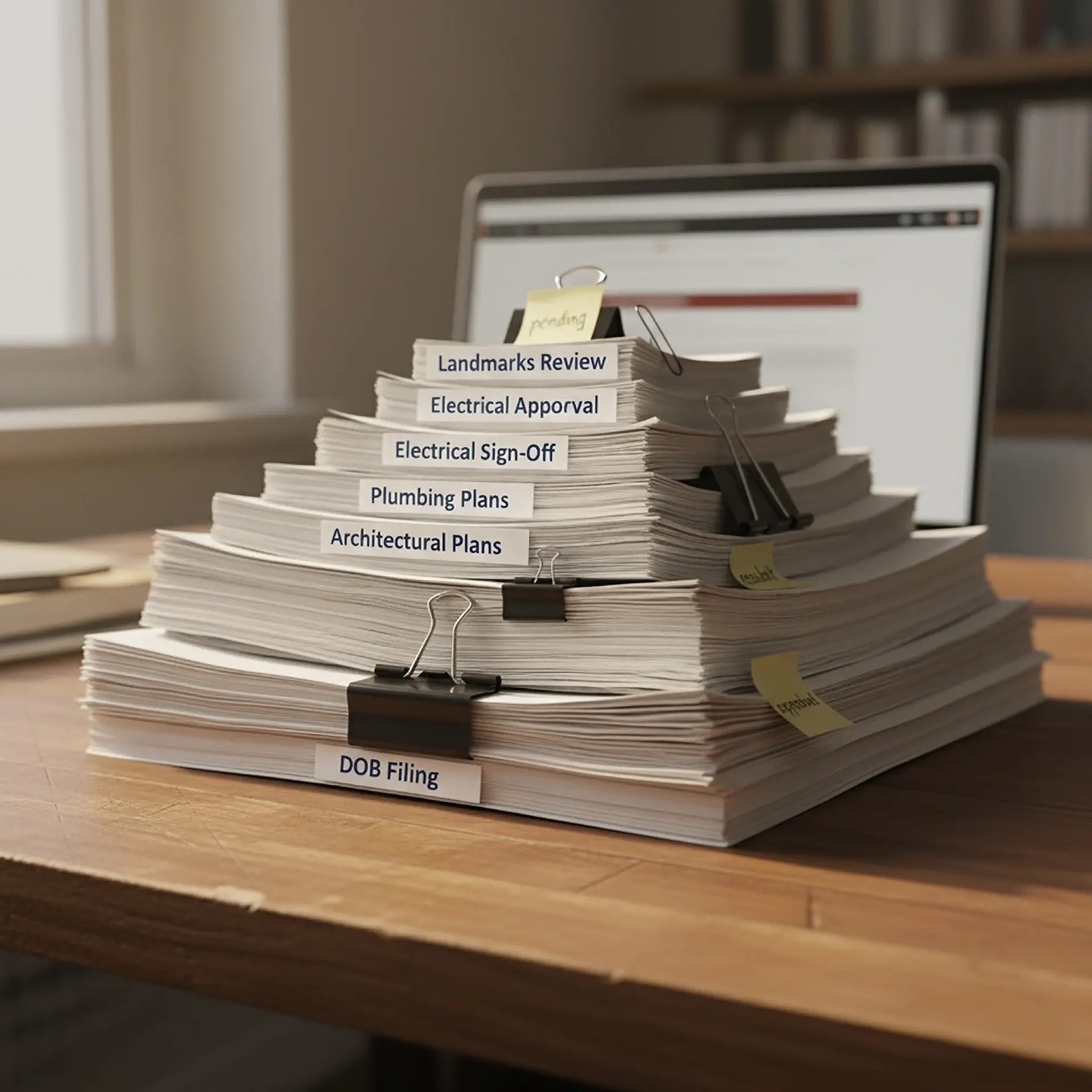
The Permit Pyramid: Who Approves What in NYC Construction
Renovating anything in New York City, from a studio apartment to a brownstone, means navigating a hi

DIY or Hire a Pro? A Guide to Making Smart Renovation Decisions
The appeal of DIY renovation is real. There’s something genuinely satisfying about improving y