
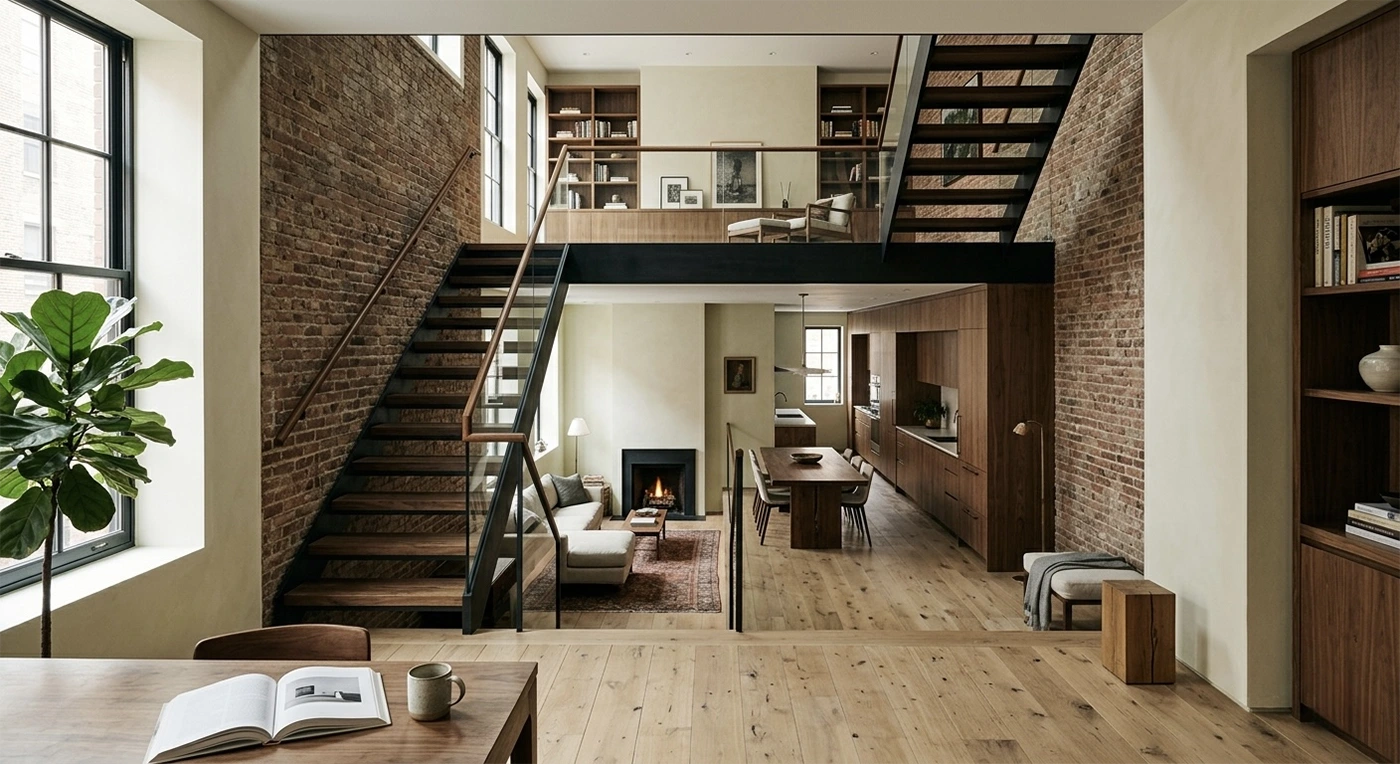
Townhouse Renovations: Structural and Design Challenges
Renovating a townhouse is among the most complex and rewarding forms of residential transformation. Unlike an apartment within a larger building, a townhouse is a fully independent vertical structure with its own foundation, roof, exterior walls, and direct relationship to the street. That independence creates opportunity. Owners may reconfigure layouts, modernize systems, restore façades, and even expand vertically or horizontally, subject to zoning. At the same time, every intervention carries structural, mechanical, regulatory, and logistical implications that must be addressed holistically rather than in isolation.
In dense urban markets such as New York City, and especially in Manhattan, townhouse renovations unfold within a tightly regulated and highly visible environment. Sidewalk protection may be mandatory. Party wall notifications can influence sequencing. Landmark status may govern façade alterations. Work hours, staging areas, and crane operations are often restricted. In this context, a successful renovation depends not only on design excellence but also on technical precision, code fluency, and disciplined project management.
This article provides a comprehensive professional overview of townhouse renovation from structural reinforcement to mechanical modernization, from envelope performance to preservation strategy, and from permitting realities to implementation sequencing. The focus is on integrated thinking. Structure, systems, envelope, interior architecture, and regulatory compliance must operate as a coordinated framework.
Understanding the Existing Building as a System
Every successful townhouse renovation begins with forensic clarity. Before design intent is expressed, the building must be understood in measurable, documented terms. Construction type must be identified. Many urban townhouses rely on load bearing masonry party walls combined with timber joists spanning front to back. Others incorporate steel framing from later alterations. Foundations may range from shallow stone footings to reinforced concrete systems introduced during twentieth century interventions.
A comprehensive conditions survey is essential. This includes measured drawings, structural probes, photographic documentation, selective demolition to confirm framing conditions, and evaluation of drainage and roof slopes. Mechanical and electrical systems must be mapped. Aging plumbing stacks, undersized electrical panels, and obsolete heating systems frequently dictate renovation scope more than aesthetic ambitions.
Party walls deserve particular attention. In attached row configurations, these walls often provide not only fire separation but also lateral bracing. Penetrations, beam pockets, or large openings can alter load distribution and stiffness. In urban settings where buildings sit inches apart, even modest structural shifts may affect adjacent properties. Party wall rights in New York are largely governed by real property and common law rather than a single consolidated statute, but the mechanics of protecting a neighbor’s structure during construction are codified: NYC Building Code §3309 (Administrative Code Title 28) makes the party doing the work responsible for protecting adjoining property, and if that protection requires physical access to the neighbor’s side, it requires a license to enter obtained from that neighbor under §3309.2. That license is theirs to grant or withhold, which is exactly why it belongs in the sequencing conversation from the earliest planning stage, not after a schedule has already been set.
Historic designation, if applicable, introduces additional layers of review. In districts overseen by the New York City Landmarks Preservation Commission, exterior alterations, window replacements, stoop repairs, and rooftop additions may require formal approval. Even in non landmarked buildings, original staircases, plaster moldings, mantels, and façade elements often carry substantial architectural and market value. The renovation strategy should therefore begin with evaluation rather than assumption.
Structural Interventions and Load Path Integrity
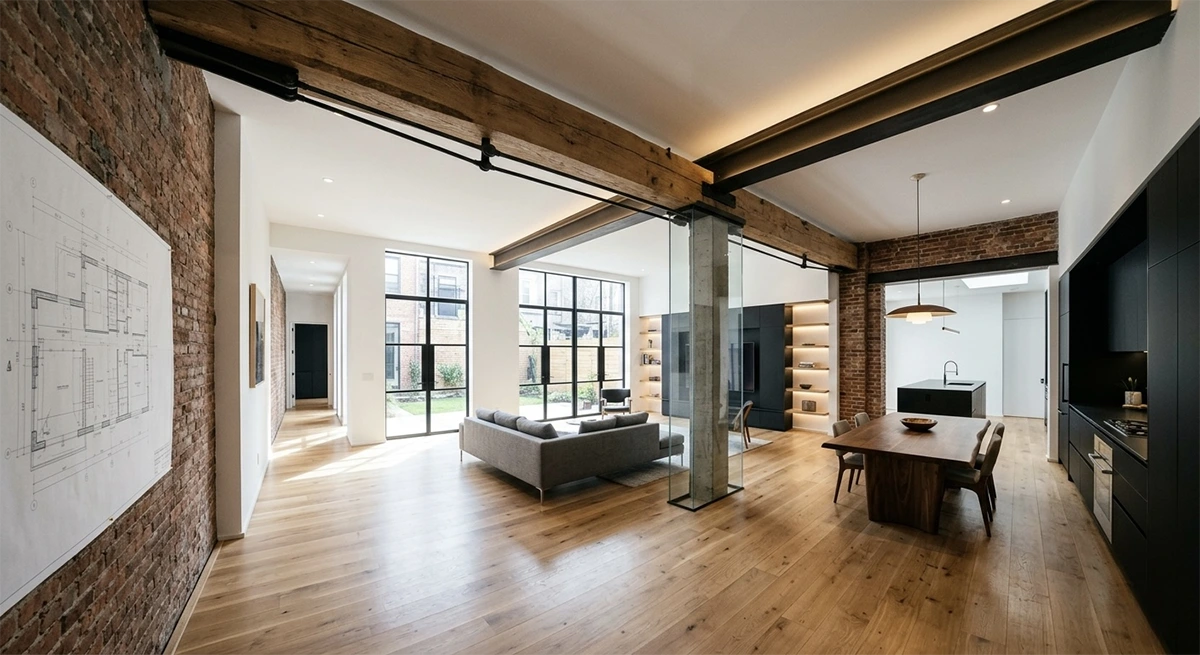
Townhouses depend on continuous load paths that transfer gravity and lateral forces from roof to foundation. When owners seek open plan living areas, enlarged rear façades, or rooftop additions, those load paths are inevitably disrupted. Structural redesign must reestablish continuity safely and efficiently.
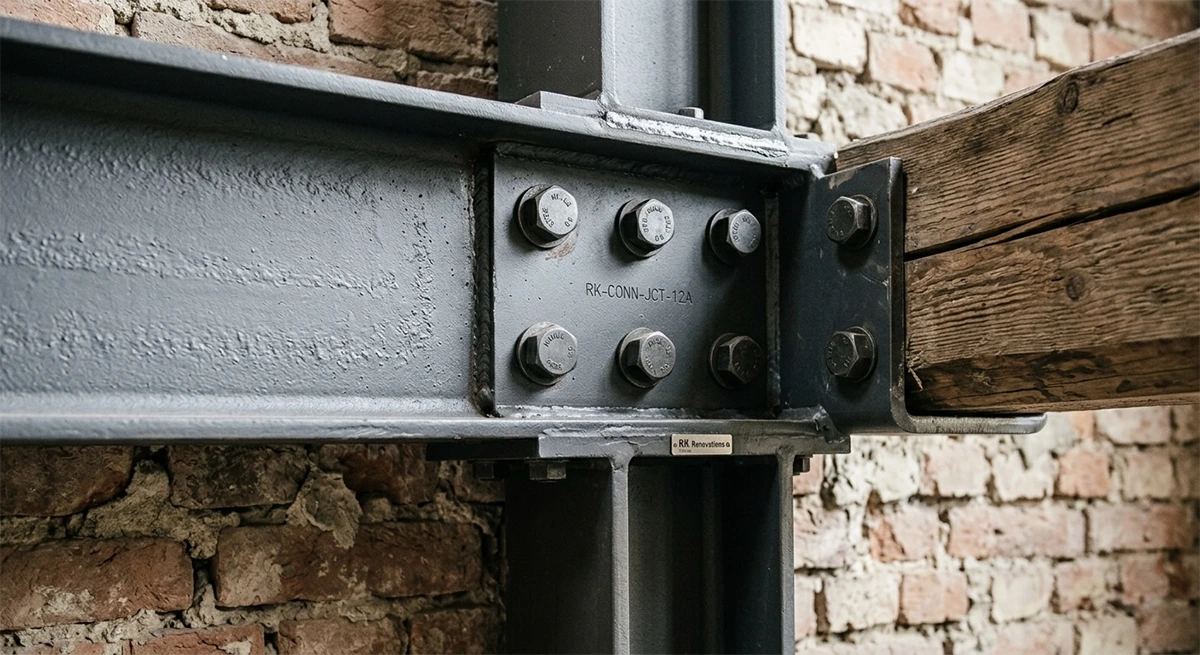
Removing a bearing wall to create a kitchen and living room connection typically requires introduction of a structural beam. In masonry buildings, this may involve steel wide flange sections bearing into reinforced pockets within party walls. Timber joists can be reinforced through sistering with laminated veneer lumber or engineered wood products. In certain conditions, steel flitch plates are introduced between timber members to increase stiffness without excessive depth.
Rooftop additions introduce vertical loads that existing foundations may not have been designed to carry. Structural engineers must verify foundation capacity. If insufficient, underpinning becomes necessary. Underpinning methods range from staged mass concrete approaches to micro piles or needle beam systems, depending on soil conditions and adjacency constraints. Sequencing is critical. Excavation beneath existing foundations must proceed incrementally to prevent settlement.
Basement lowering projects illustrate the intersection of structural ambition and geotechnical complexity. Increasing ceiling height can unlock valuable square footage, yet excavation below existing footings requires temporary shoring, underpinning, and careful moisture control. In dense urban soils, water table considerations and adjacent foundation proximity demand specialized engineering oversight.
Stair reconfiguration presents additional structural implications. Creating new stair openings alters diaphragm behavior within floor systems. Reinforcement around openings ensures lateral stability. At the same time, code requirements for tread dimensions, riser height, guardrails, and headroom must be integrated into structural planning to avoid redesign.
Early collaboration with a licensed structural engineer is fundamental here. Structural design shouldn’t be reactive; it should guide the feasibility and sequencing of architectural intent from the outset, not get called in after a layout is already drawn.
Modernizing Mechanical, Electrical, and Plumbing Systems
Townhouse renovations provide rare freedom to reconfigure vertical systems. Unlike apartments constrained by shared risers, townhouses allow greater flexibility in relocating kitchens and bathrooms. However, that flexibility must be exercised strategically. Aligning wet spaces vertically reduces cost and minimizes slab penetrations.
Plumbing modernization frequently includes replacement of aging cast iron stacks, introduction of new venting strategies, and installation of backflow prevention devices in basement levels. Drainage slopes must be verified, especially where floor elevations are altered. Coordination between structural beams and plumbing routes prevents conflicts that otherwise lead to costly field modifications.
Heating, ventilation, and air conditioning upgrades are often transformative. Older townhouses may rely on steam radiators or inefficient boilers. Contemporary renovations frequently introduce high efficiency hydronic systems or air source heat pumps. Ductless mini split systems offer minimally invasive solutions where ceiling heights cannot accommodate large ducts. Where full ducted systems are desired, designers must balance ceiling depth reductions with spatial proportion.
Local Law 97, the centerpiece of the city’s Climate Mobilization Act, doesn’t directly apply to most townhouses — its emissions caps trigger at 25,000 square feet, well above what a typical single-family or multi-unit rowhouse contains. But the direction it signals still matters for mechanical planning now. A gut renovation that expands the building’s floor area by more than 110% is treated as new construction under Local Law 154, which brings the all-electric requirement into play — phasing in for shorter buildings starting in 2024 and for taller ones in 2027 — and that determines whether a new gas boiler or range is even an option. Even outside that specific trigger, owners replacing mechanical systems now are increasingly choosing heat pumps and induction service over combustion equipment they might need to replace again within a decade as the city’s regulatory direction continues the same way.
As building envelopes are tightened through insulation and new windows, indoor air quality becomes increasingly important. Heat recovery ventilation systems improve fresh air exchange while conserving energy. Integrating these systems early avoids awkward soffits or exposed ductwork.
Electrical infrastructure is another major driver of renovation scope. Upgrading to 200 amp service is common, particularly when introducing induction cooking, electric heating, or electric vehicle charging. Panel placement, meter access, and coordination with utility providers require advance planning. In urban environments, trenching for new service lines may involve street permits and coordination with city agencies.
Smart home systems, integrated lighting controls, and advanced security infrastructure are increasingly expected in high value markets. These systems require structured wiring pathways that should be incorporated into framing and finish plans.
Envelope Performance and Moisture Management
The building envelope defines long term durability. Roofs, parapets, façades, and flashing details must be approached as interdependent components. In masonry townhouses, parapet failures are a common source of water intrusion. Proper coping stones, flashing membranes, and drainage slopes are not cosmetic details. They are risk mitigation measures.
Rear extensions and rooftop decks require careful structural and waterproofing integration. Deck assemblies must incorporate appropriate membranes, drainage mats, and overflow strategies to prevent trapped moisture. Where green roofs are introduced, additional structural loading and root barrier systems must be considered.
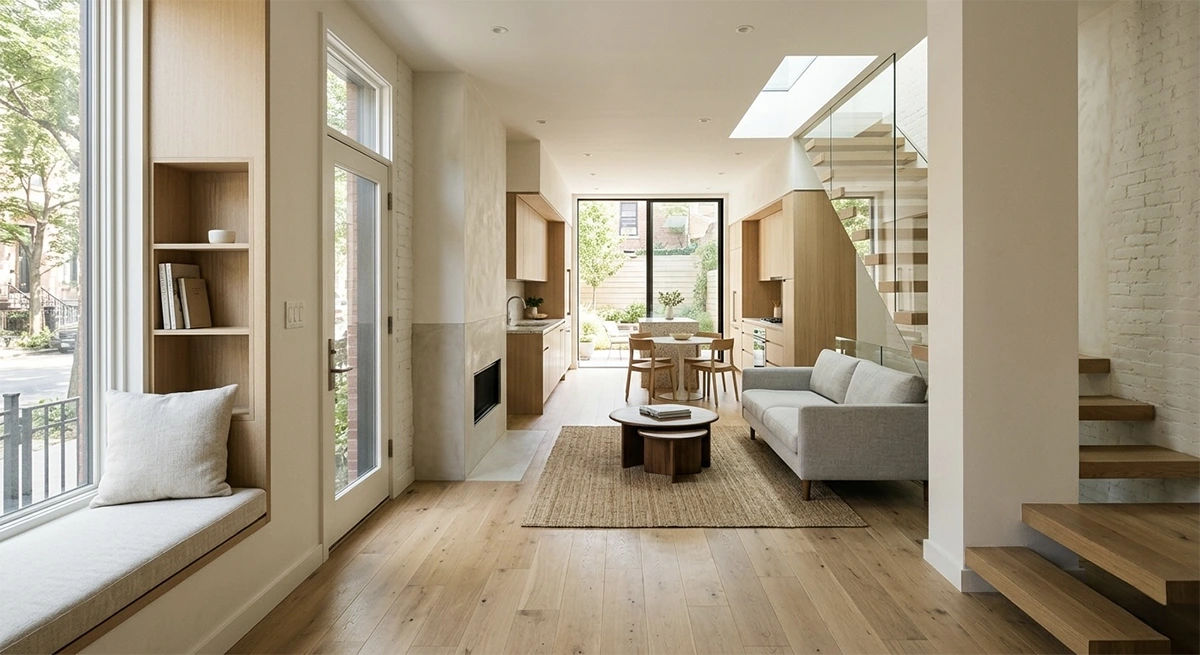
Façade restoration often involves repointing brick with compatible mortar mixes, repairing brownstone with patching compounds that match vapor permeability, and restoring ornamental cornices. Replacement with incompatible materials can compromise both appearance and moisture behavior. In landmarked contexts, material selection may be subject to review.
Thermal upgrades in solid masonry walls require nuanced detailing. Interior insulation without proper vapor control can create condensation within wall cavities. Closed cell spray foam, mineral wool with vapor retarders, or interior framing systems must be evaluated in relation to dew point calculations. Window retrofits can improve performance significantly. In historic façades, interior storm inserts often provide energy benefits while preserving original frames.
Durability should guide envelope decisions above all. A visually striking façade that fails within five years is a poor investment regardless of how it photographed on completion day; long term performance is what actually enhances asset value and occupant comfort.
Preservation, Proportion, and Design Cohesion
Townhouses frequently embody architectural character that distinguishes them from generic new construction. Preserving stair geometry, ceiling proportions, and original millwork can elevate market appeal. Restoration of hardwood floors, plaster moldings, and decorative fireplaces often yields stronger aesthetic results than wholesale replacement.
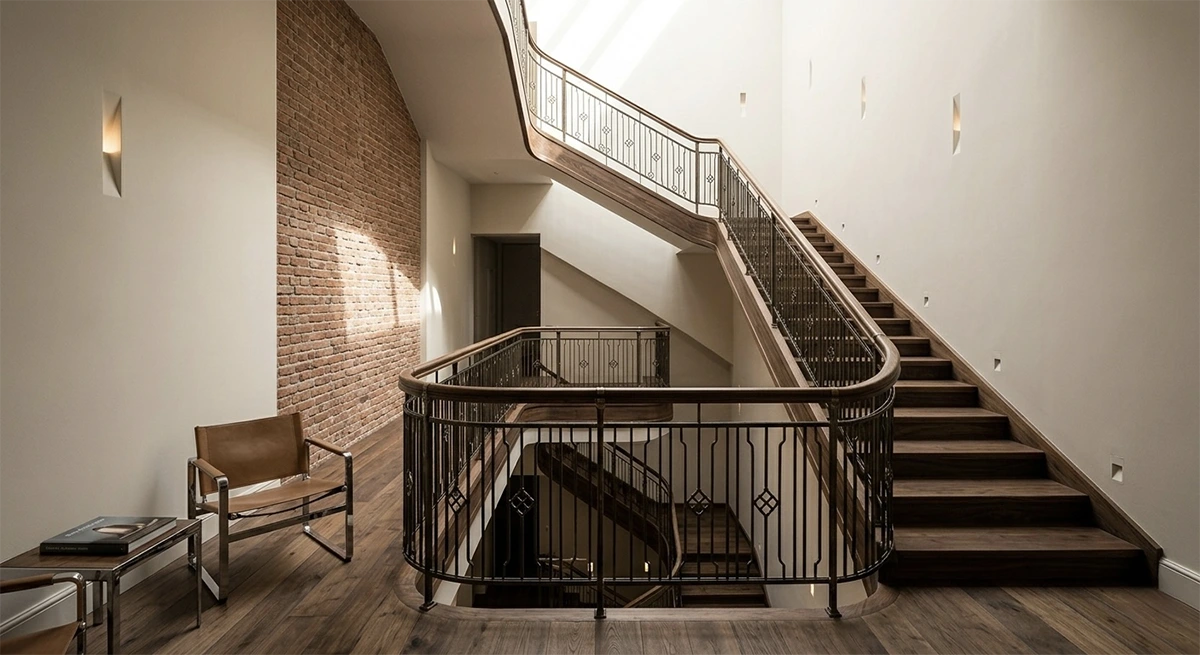
Contemporary insertions should respect underlying proportion. Kitchens and bathrooms may adopt modern materials, yet transitions between old and new must feel intentional. Material palettes that balance texture and restraint support cohesion across multiple levels.
Lighting design is particularly important in vertical homes where daylight penetration may be limited to front and rear exposures. Layered lighting strategies including ambient, task, and accent components improve perceived scale and comfort. Staircases benefit from integrated wall lighting that enhances safety while highlighting architectural rhythm.
Acoustic separation between floors deserves attention, especially in open plan configurations. Sound attenuation layers within floor assemblies improve privacy and perceived quality.
Where accessibility improvements such as lifts or residential elevators are introduced, structural coordination and architectural integration are essential. Shaft placement affects floor plans, and headroom requirements influence roof structure.
Code Compliance and Permitting Strategy
Townhouse renovations typically require permits across structural, plumbing, mechanical, and electrical disciplines. In New York City, filings are submitted to the New York City Department of Buildings. Scope determines whether applications are filed as limited alterations or full renovations. Changes to occupancy classification, substantial structural work, or additions may trigger more extensive review.
For any townhouse built before April 1, 1987 — the overwhelming majority of the city’s rowhouse stock — an ACP-5 asbestos investigation by a DEP-certified inspector is required before the DOB will issue a demolition or alteration permit, and before any interior demolition begins. If asbestos-containing material is found in pipe insulation, floor tile, or plaster, licensed abatement has to be completed first. This isn’t a step to schedule around the construction timeline; it’s a prerequisite to it, and it belongs in the earliest phase of planning alongside the conditions survey.
Zoning regulations govern allowable floor area, rear yard depth, height limits, and lot coverage. Rooftop additions must comply with setback rules. Rear extensions may be limited by exposure plane requirements. Early zoning analysis prevents costly redesign.
Fire safety provisions must be integrated. Depending on scope, sprinkler systems may become mandatory. Egress pathways, fire rated assemblies, and smoke detection must align with current codes even when renovating older structures.
Permitting timelines vary considerably by scope and building. Early engagement with experienced filing professionals streamlines review and reduces administrative delays, and documentation quality directly influences approval speed — incomplete or inconsistent drawings are what generate the objections that extend schedule and cost.
Urban Logistics and Neighbor Coordination
Townhouse renovations in dense neighborhoods unfold within constrained logistical environments. There may be limited space for material storage. Deliveries are often restricted to specific hours. Sidewalk sheds may be required to protect pedestrians during façade work.
Crane operations for steel beams or rooftop assemblies necessitate street closures and additional permits. Dust containment measures and vibration monitoring reduce risk of neighbor claims. Clear communication with adjacent property owners supports smoother execution.
Party wall agreements document pre construction conditions and allocate responsibility for potential damage. Photographic surveys conducted before work begins protect all parties and reduce dispute potential.
Professional project management is indispensable in this context. Coordination among trades, inspectors, suppliers, and neighbors determines whether a project advances efficiently or stalls under compounding constraints.
Budget Drivers and Financial Planning
| Scope | Typical Budget Range |
|---|---|
| Cosmetic updates across the whole townhouse (paint, floor refinishing, fixtures) | Roughly $75,000 to $200,000+, driven by NYC labor rates across multiple floors |
| Comprehensive mechanical upgrades | Six figures |
| Full gut renovation across multiple levels | Mid six figures or higher |
| Structural additions, underpinning, rooftop expansions | Seven figures in high cost markets |
Labor costs in markets such as Manhattan reflect union conditions, insurance requirements, and permitting complexity. Contingency allowances are essential and should scale with how much of the scope is exploratory. Fifteen to twenty percent is a reasonable baseline for a typical pre-war structure. Projects involving underpinning, basement lowering, or confirmed hazardous material abatement are more realistically budgeted at twenty-five to thirty percent, because so much of that scope only becomes known once excavation or demolition is underway.
| Phase | Typical Duration |
|---|---|
| Pre design investigation | Several weeks |
| Architectural and engineering design | 1–3 months depending on scope |
| Permitting | Several additional months |
| Construction — targeted interior updates | ~2 months |
| Construction — full structural transformation with additions | 8 months or more |
Transparent financial planning enhances client confidence and reduces mid project tension.
Risk Management and Insurance Considerations
Renovation risk extends beyond design and construction. Contractors should maintain appropriate general liability coverage and provide certificates naming relevant stakeholders as additional insured. Builder’s risk policies protect against damage during construction. Professional liability coverage for design consultants mitigates exposure related to errors and omissions.
Vibration monitoring and settlement tracking may be advisable during structural interventions. Clear documentation of existing conditions before demolition reduces liability exposure. Party wall agreements formalize understanding between neighbors and define responsibility parameters.
Integrated Implementation Framework
A disciplined implementation framework supports durable outcomes. The process typically begins with comprehensive survey and documentation, followed by coordinated architectural and engineering design. Permitting strategy should be aligned with project phasing. Procurement of long lead items such as windows or mechanical equipment should occur early to protect schedule.
During construction, temporary protections including shoring, dust containment, and sidewalk coverage must precede demolition. Structural reinforcements should be installed before extensive finish removal to maintain stability. Envelope repairs are ideally completed early to establish a dry interior environment before finish work proceeds.
Closeout requires final inspections, sign offs, warranties, and as built documentation. Commissioning of mechanical systems ensures performance aligns with design intent. Thorough documentation supports long term maintenance and resale transparency.
What a Well-Run Townhouse Renovation Actually Delivers
Townhouse renovation is not a collection of isolated upgrades. It is a comprehensive recalibration of structure, systems, envelope, and interior architecture. When executed with technical rigor and architectural sensitivity, it extends the life of the building, enhances energy performance, strengthens structural resilience, and elevates market value.
In complex urban environments such as New York City, success depends on early coordination, regulatory fluency, and integrated design thinking. Structural integrity and moisture control should always precede cosmetic ambition. Preservation of architectural character should coexist with modernization of mechanical systems. Logistics and neighbor coordination must be managed proactively.
A well executed townhouse renovation reinforces not only the building itself but also its contribution to the streetscape and the broader urban fabric. When approached as a unified system rather than a sequence of aesthetic decisions, the result is a durable, high performing residence capable of serving its occupants for decades to come.

Beyond the Open Concept: Redefining Modern Living Spaces
For decades, the open concept floor plan ruled American home design. The promise was compelling: sea
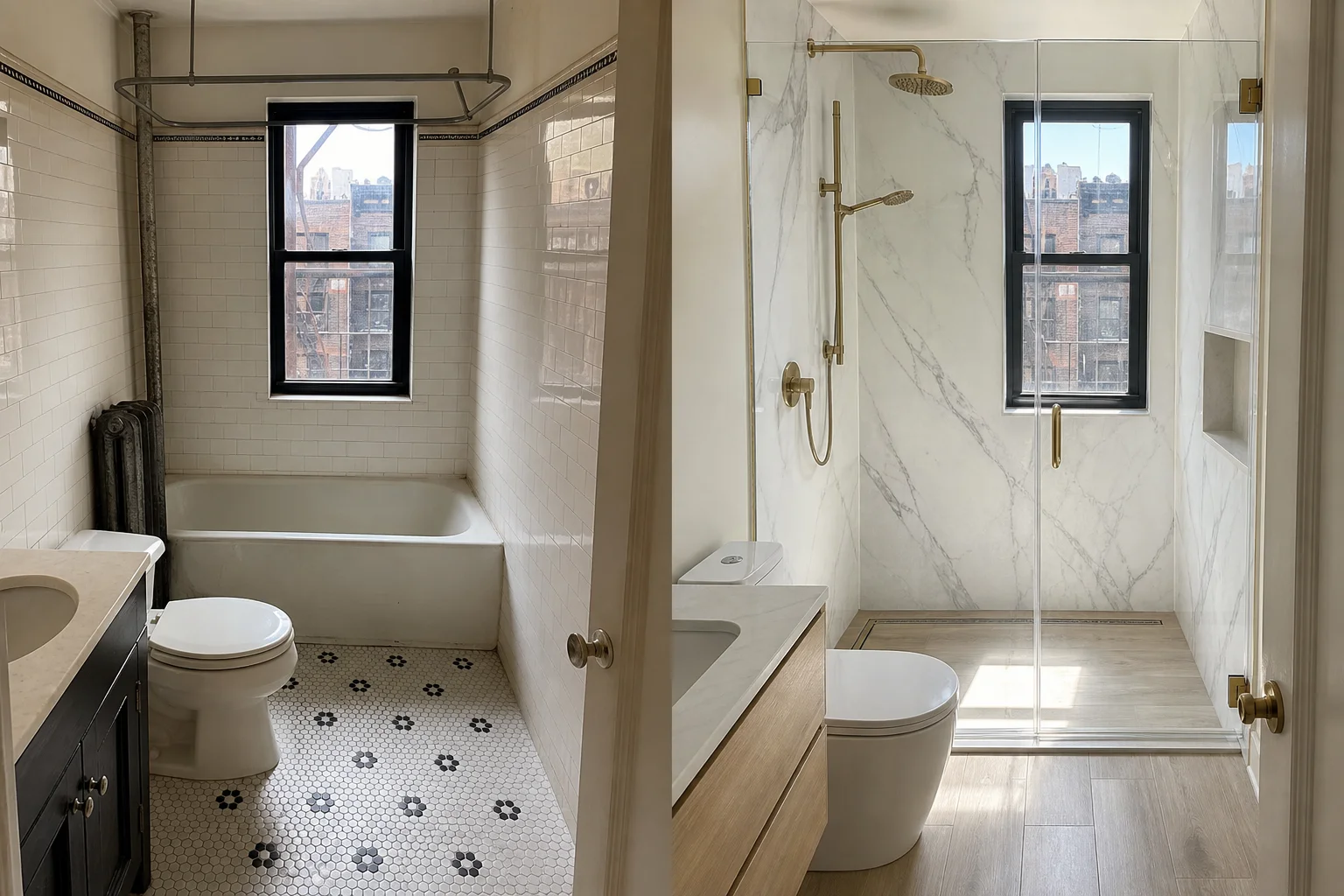
Tub to Walk-In Shower: What the Conversion Involves
Converting a tub to a walk-in shower is one of the most common bathroom remodels: it frees floor are

Waterproofing Bathrooms: Methods, Membranes, and Building Code Compliance
Tile may be the visible finish in a bathroom, but it isn’t what keeps water out. In multifamil