
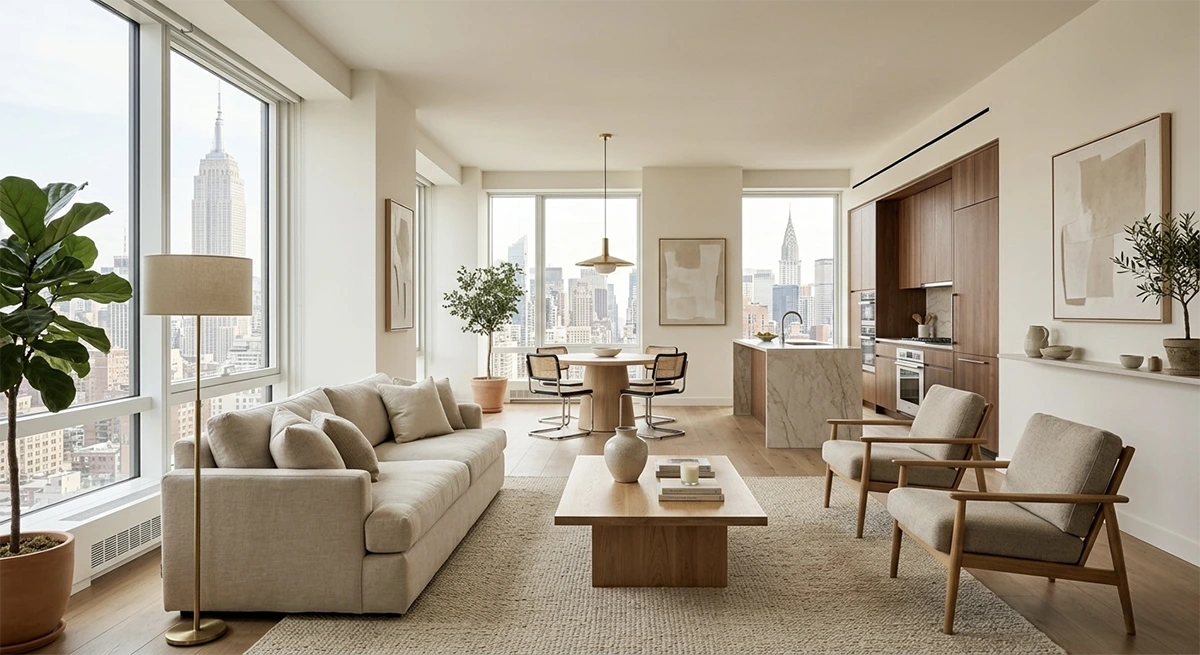
Design Decisions That Help Apartments Sell Faster
Selling an apartment quickly and at a premium is rarely accidental. In competitive urban markets such as New York City, perception forms in seconds and solidifies within minutes. Buyers do not walk through a property as passive observers. They assess layout logic, light exposure, material quality, acoustic comfort, storage adequacy, and potential maintenance risk almost instinctively. Their response is emotional, but grounded in practical evaluation.
In Manhattan, where price per square foot ranks among the highest in the United States, hesitation is expensive. The longer an apartment sits on the market, the more leverage shifts to buyers. Price reductions generate doubt. Multiple weeks without offers create suspicion. By contrast, well positioned apartments often receive strong interest within days, sometimes with competitive bidding.
The difference usually isn’t location or square footage. It comes down to presentation, cohesion, and the removal of friction — and the underlying principle is simple: buyers move faster when uncertainty is low. Design choices that reduce doubt and communicate maintenance integrity shorten negotiation cycles and support stronger final pricing.
The Psychology of Speed in Manhattan Real Estate
In dense markets such as Manhattan, buyers often view multiple apartments in a single afternoon. Each property competes not only on price but on clarity. When an apartment feels intuitive, cohesive, and move-in ready, the decision-making process accelerates.
Buyers mentally simulate living in the space within seconds of entry. They evaluate circulation, imagine furniture placement, test storage capacity in closets, glance at ceiling height, and assess light direction. If the plan reads clearly and finishes feel neutral, they begin projecting their own life into the apartment. If confusion arises, momentum slows.
Speed correlates with confidence, and confidence comes from three things working together: functional clarity, perceived durability, and aesthetic cohesion. Open sightlines, balanced proportions, and logical flow deliver the first. Durable surfaces and visible waterproofing integrity deliver the second. Consistent materials and a restrained palette deliver the third.
The most successful listings are those where buyers sense that the property has been cared for, thoughtfully improved, and presented without visual noise.
Layout and Flow: Immediate Readability Converts Viewers into Buyers
Layout is the first filter, and buyers need to understand the plan without explanation.
In open-concept apartments, especially those common in modern condominiums and loft conversions, sightlines should extend from entry to primary living areas. When a buyer steps through the door and sees light reaching the back of the apartment, scale feels generous. If the entry reveals a wall of clutter or awkward partitions, the experience contracts immediately.
A primary circulation path of at least thirty-six inches enhances comfort and spatial logic. Narrow or zigzag circulation creates subtle stress. Even if the square footage is adequate, poor flow signals inefficient planning.
Flexibility adds measurable value. A second bedroom that clearly functions as a guest room, home office, or den widens the buyer pool. In smaller units, zoning through rugs, lighting, and furniture placement helps buyers grasp intended use. Defined dining zones, even compact ones, communicate completeness.
Layout readability directly affects days on market. Apartments that require explanation rarely move quickly. Those that feel self-evident generate stronger emotional responses and faster offers.
Kitchens: The Primary Conversion Zone
Across listings, kitchens serve as decision accelerators. Buyers interpret kitchen condition as a proxy for overall maintenance.
A well-designed kitchen demonstrates efficient adjacency between sink, cooktop, and refrigerator. Clear prep zones increase confidence. Even modest kitchens benefit from logical sequencing and uninterrupted counter space.
Durable countertops such as engineered quartz or honed stone perform particularly well in urban markets. These materials signal low maintenance and longevity. Neutral veining broadens appeal and avoids polarizing taste.
Cabinetry should feel solid and consistent. Soft-close hinges, aligned reveals, and coherent hardware finishes communicate quality. Storage solutions such as deep drawers, pull-out pantry units, and vertical dividers reveal practical intelligence.
Appliance consistency often matters more than ultra-luxury branding. Stainless steel or integrated panel-ready appliances create cohesion. Under-cabinet lighting improves perceived usability and costs relatively little compared to full renovation.
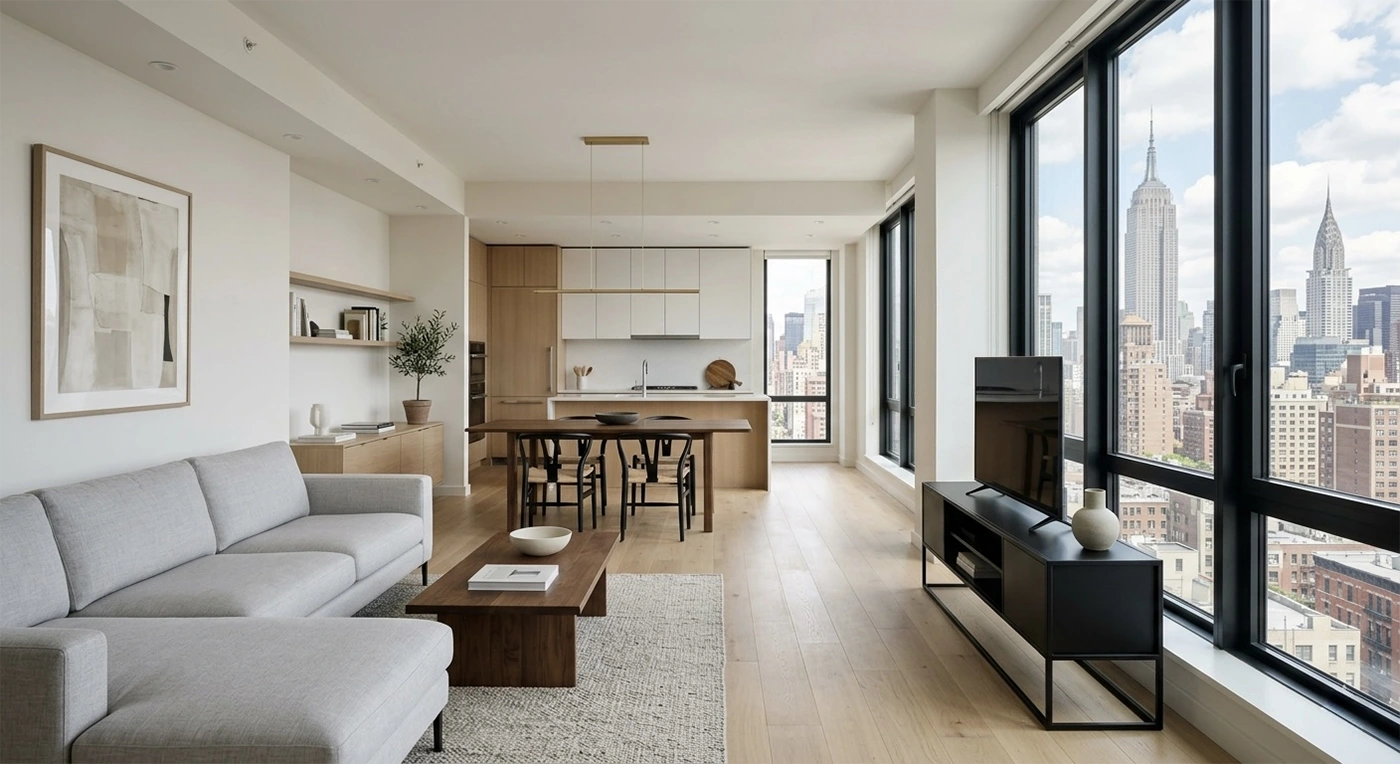
A targeted kitchen refresh works primarily by removing a question from the buyer’s mind. A buyer who perceives a kitchen as complete isn’t mentally subtracting a renovation budget from their offer, and that shift in framing is what shortens negotiation, regardless of what any published return-on-investment figure claims.
Bathrooms: Eliminating Maintenance Risk
Bathrooms invite scrutiny because water damage carries high cost. Buyers often inspect tile alignment, grout lines, caulking, ventilation, and fixture quality closely.
Large-format tiles with minimal grout lines communicate cleanliness and modernity. Neutral palettes outperform trend-driven statements in resale scenarios. Warm whites, soft grays, and natural stone textures provide longevity.
Properly scaled vanities with usable counter space increase perceived luxury. Frameless glass enclosures expand visual volume and feel contemporary. Consistent metal finishes across faucets and shower fittings reinforce cohesion.
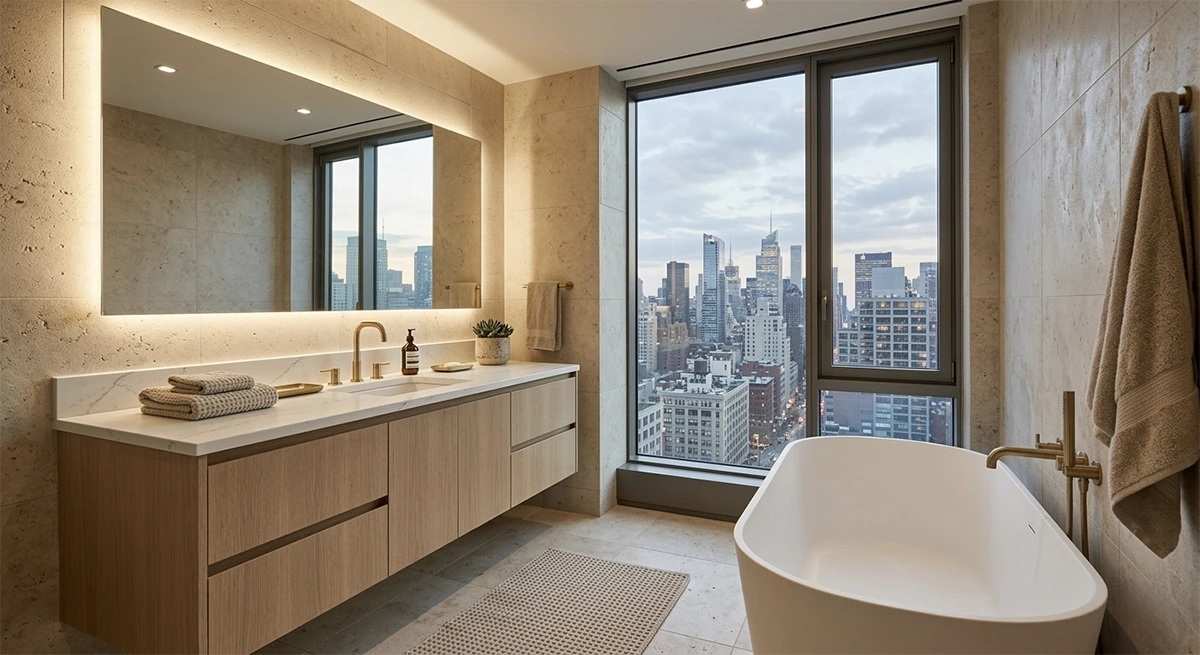
Ventilation is critical. Quiet, efficient exhaust fans reduce moisture risk and signal responsible upkeep. In older cooperative buildings, bathroom waterproofing integrity can significantly influence negotiation dynamics.
When bathrooms feel solid and meticulously detailed, buyers assume the apartment has been maintained comprehensively. That perception reduces leverage for price negotiation and supports quicker contracts.
Materials and Finish Cohesion: The Language of Quality
Cohesion communicates professionalism. Interior designer Tatiana Chechina makes the point plainly: a buyer registers consistency across a whole apartment faster than they register any single expensive element, which is why one coherent material story usually outperforms one dramatic upgrade surrounded by mismatched leftovers.
Wide-plank engineered hardwood floors create warmth and continuity. Matte or low-sheen cabinetry hides wear and reads sophisticated. Unified hardware finishes across kitchen and bathrooms produce visual harmony.
Subtle texture variation prevents flatness. A stone backsplash paired with smooth cabinetry, or a textured wall covering in a living area, adds depth without overwhelming.
Inconsistent finishes generate doubt. If door hardware changes between rooms or flooring shifts abruptly without purpose, buyers may question renovation quality.
Neutral palettes broaden buyer appeal. Warm whites, muted grays, and soft taupes provide psychological comfort and allow purchasers to envision their own furnishings.

In competitive listings, cohesive finish language shortens deliberation and widens the buyer base.
Lighting: The Silent Multiplier of Perceived Value
Light shifts perception faster than almost any other design element.
Maximizing natural daylight should be a priority. Clean windows, minimal treatments, and strategic mirror placement amplify brightness. Apartments with strong light exposure often command premiums.
Artificial lighting must be layered. Ambient ceiling fixtures provide base illumination. Task lighting at kitchen counters and vanities enhances usability. Accent lighting highlights artwork or architectural details.
High color rendering index fixtures, ideally above ninety, ensure materials appear rich and accurate. Dimmers allow buyers to experience the apartment in multiple moods during showings.
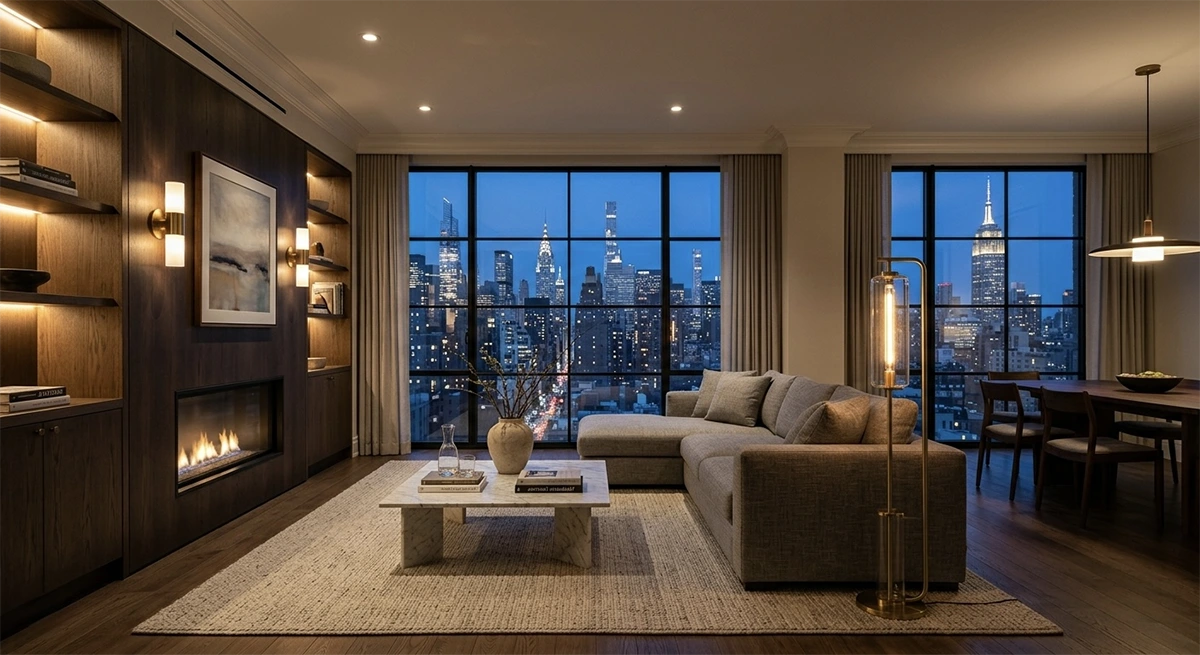
Well-illuminated spaces photograph better, show better, and sell faster. Lighting upgrades are among the most cost-effective improvements for reducing time on market.
Storage: Increasing Perceived Square Footage
In dense urban apartments, storage equates to livability. Buyers often evaluate closet interiors as carefully as kitchen finishes.
Built-in wardrobes, organized pantry systems, and integrated millwork maximize usable volume. Entry consoles or compact mudroom solutions communicate practicality.
Closets should be decluttered and lightly staged to demonstrate capacity. A tidy, organized closet reads as spacious, even if dimensions are modest.
Perceived square footage often matters more than actual square footage. Effective storage increases both.
High-Impact, Low-Cost Upgrades
Not all improvements require full renovation budgets. Replacing dated hardware modernizes cabinetry instantly. Updating faucets and shower fixtures elevates bathroom perception.
Fresh paint in neutral tones with crisp trim lines communicates care. Repairing grout, replacing worn outlet covers, and ensuring every light bulb functions correctly signals maintenance diligence.
Smart thermostats and modern control systems communicate contemporary convenience. These modest investments often yield disproportionate impact.
One caution specific to co-ops and condos: while none of this work requires a DOB permit, that isn’t the same as requiring nothing. The trigger for the building’s own process is bringing a contractor through the door, not whether the work is structural. Painting, floor refinishing, and fixture swaps commonly fall under a decoration agreement or a notification to the managing agent, and the building will still want the contractor’s certificate of insurance, a booked service elevator, and agreed work hours before anyone starts. Confirm this before scheduling work against a listing date.
Staging and Photography: The Conversion Layer
In a digital-first market, online presentation drives physical traffic.
Professional staging clarifies proportion and use. It reduces buyer guesswork and helps a viewer form an emotional connection with rooms that would otherwise read as empty volume, which is the mechanism behind its effect on listing engagement.

Photography should capture natural light at optimal times of day. Balanced exposure and accurate color representation build trust. Overly distorted wide-angle lenses may increase perceived size temporarily but can damage credibility when buyers visit in person.
Clear, cohesive imagery accelerates showing-to-offer timelines.
Pricing Strategy and Value Communication
Strategic pricing aligned with recent comparable sales positions an apartment competitively. However, value must be communicated clearly.
Provide documentation for renovations including permits, warranties, and receipts. Highlight recent HVAC replacements, electrical upgrades, and waterproofing improvements. Transparency reduces due diligence time and fosters confidence.
There is a harder edge to this that sellers underestimate. A property’s DOB record is public, and the buyer’s attorney will pull it as a matter of routine due diligence. Open violations, or permits that were issued and never closed out, surface at exactly the moment when a seller has the least leverage — under contract, with a closing date in play. An open violation can stall or kill a deal outright, and resolving one at that stage is far more expensive than it would have been to close it properly at the time.
The document that proves work was finished correctly is the Letter of Completion, issued by the DOB after final inspection on an Alteration filing. If a prior renovation was permitted but never closed out, there is no letter, and its absence is visible. Sellers who renovated years ago should check their DOB record well before listing, not after an offer arrives. Where the work resulted in a new Certificate of Occupancy, that document serves the same purpose.
Co-op or Condo: The Difference That Sets Your Real Timeline
Everything above shortens the path from listing to accepted offer. What happens after that offer depends heavily on which kind of apartment you own, and this is where sellers routinely misjudge the calendar.
In a condominium, the board generally holds a right of first refusal and the review is comparatively light. In a cooperative, the buyer must be approved by the board: a full financial package, references, and in most buildings an interview. The board can decline without stating a reason. This is a real gate, not a formality, and it sits entirely outside the seller’s control.
The practical effect on timing is substantial. Board review commonly takes two to six weeks from a complete package, and eight or more when the board requests supplemental material or meets only monthly. Measured end to end, a financed co-op purchase has recently been running around ninety to a hundred and twenty days from contract to closing, against roughly sixty to ninety for a condo. A seller who plans around the condo timeline in a co-op building is planning around the wrong number.
One recent change works in sellers’ favor here. New York City’s co-op transparency law, Intro 1120-B, took effect on July 28, 2026 and applies to applications submitted on or after that date. It requires the co-op to acknowledge receipt of a purchase application within 15 days, and once the application is deemed complete, the board has 45 days to approve or deny. The law covers cooperatives with ten or more residential units; condominiums, HDFCs, and government-supervised co-ops are excluded. Missing a deadline does not approve the buyer automatically, but it exposes the building to HPD fines starting at $1,000. For sellers, this is the first hard outer boundary on how long a board can sit in silence, and it makes the post-contract phase materially more predictable than it was a year ago.
None of this changes the design work, but it changes how you sequence around it. Preparing a co-op for market means preparing for a longer tail after the handshake.
Budget Prioritization for Sellers
Smaller budgets should focus on paint, lighting, hardware, and staging. These upgrades significantly improve perception without requiring a DOB filing.
Mid-range budgets often target kitchen refreshes, bathroom refinishing, and custom closet systems. These improvements directly address buyer priorities.
Larger investments such as full kitchen remodels, bathroom redesigns, and layout refinements can command premium pricing when executed professionally and aligned with building regulations.
Given Manhattan labor and permitting costs, budgeting must include realistic timelines and contingencies.
Timing and Coordination
Cosmetic improvements typically require several weeks. Kitchen and bathroom updates extend longer due to appliance lead times and inspections. Full renovations may span months.
Those durations describe construction only. In a co-op or condo, add the building’s own approval before anything starts: an alteration agreement or decoration agreement package typically takes four to eight weeks to clear, longer where the board meets monthly or requires its own engineer to review drawings. A seller working backward from a target listing date needs that block in the schedule from the beginning, because it cannot be compressed by paying the contractor more.
Schedule staging and photography immediately after final cleaning to present the apartment at peak condition.
Proper coordination between contractor, designer, and broker ensures that the listing enters the market at its strongest moment.
What Actually Moves an Apartment
Selling faster in New York isn’t about extravagance; it’s about reducing friction. Buyers move decisively when layout feels intuitive, finishes feel timeless, light enhances volume, storage appears generous, and maintenance risk seems minimal.
Design strategies that communicate clarity and care consistently shorten time on market and support stronger sale prices. Clean documentation does the same work on the transactional side, removing the questions that stall a deal after the offer. Thoughtful preparation is what turns a listing from one of several options into a decision.
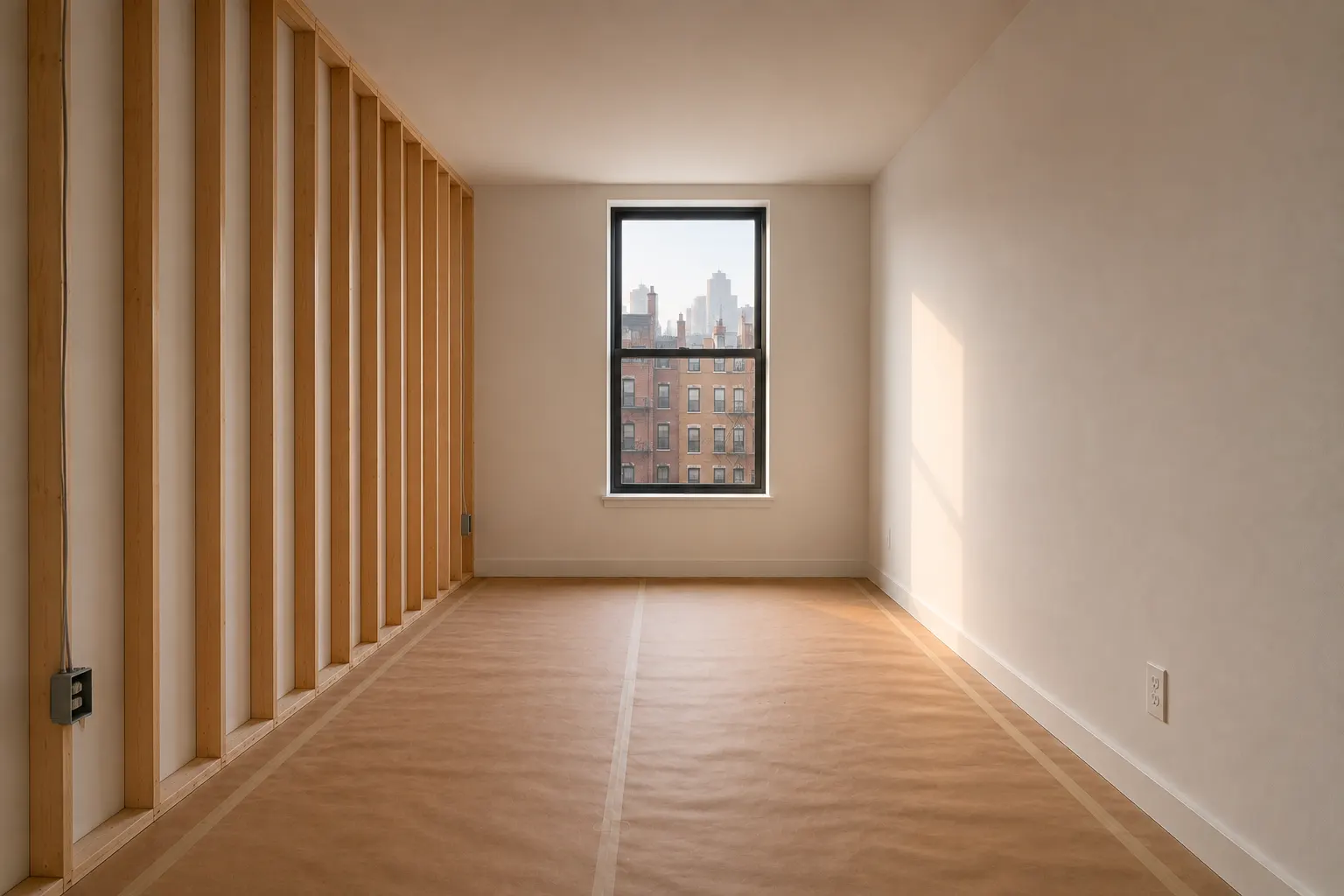
Outlet Height and Spacing: What the Code Actually Requires in New York City
Search for standard outlet height and you will find a confident number, usually 12 to 16 inches from
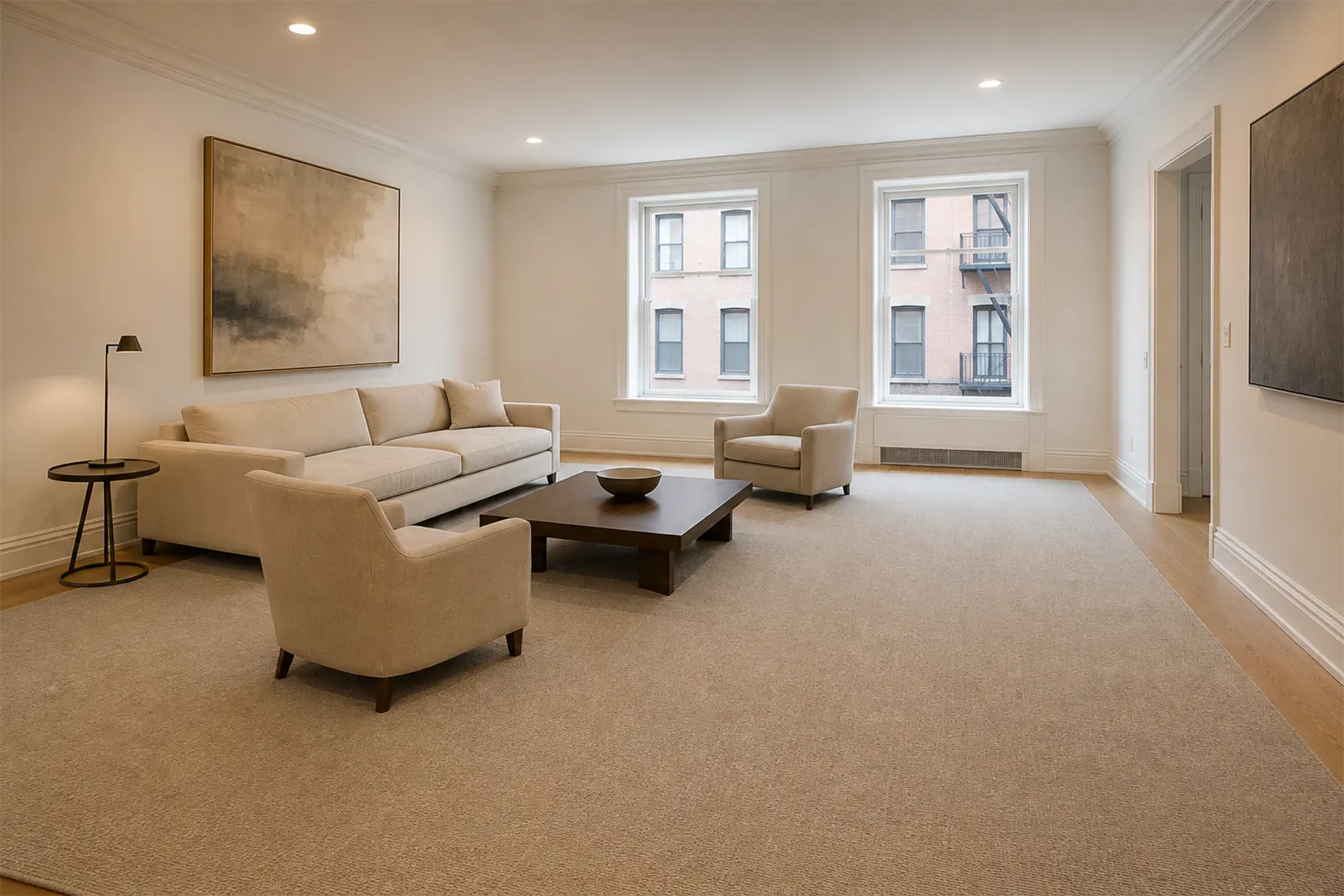
Can You Put Hardwood Floors in a NYC Co-op?
You buy an apartment with old wall-to-wall carpet, plan to pull it up and lay wide-plank oak, and th
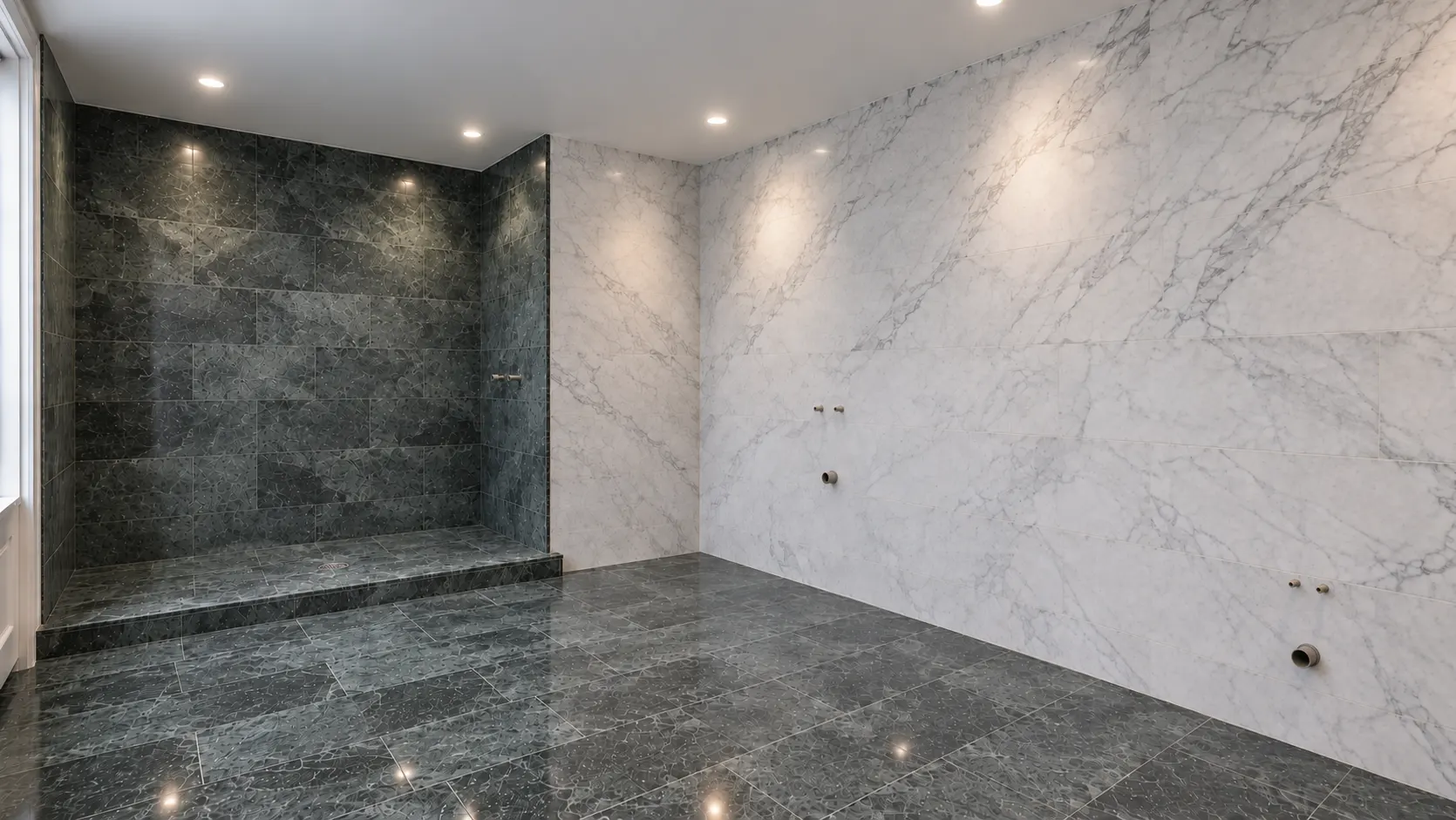
Why the Bathroom Is Always Finished Last
Somewhere near the end of an apartment renovation there is a week when the bathroom looks finished a