
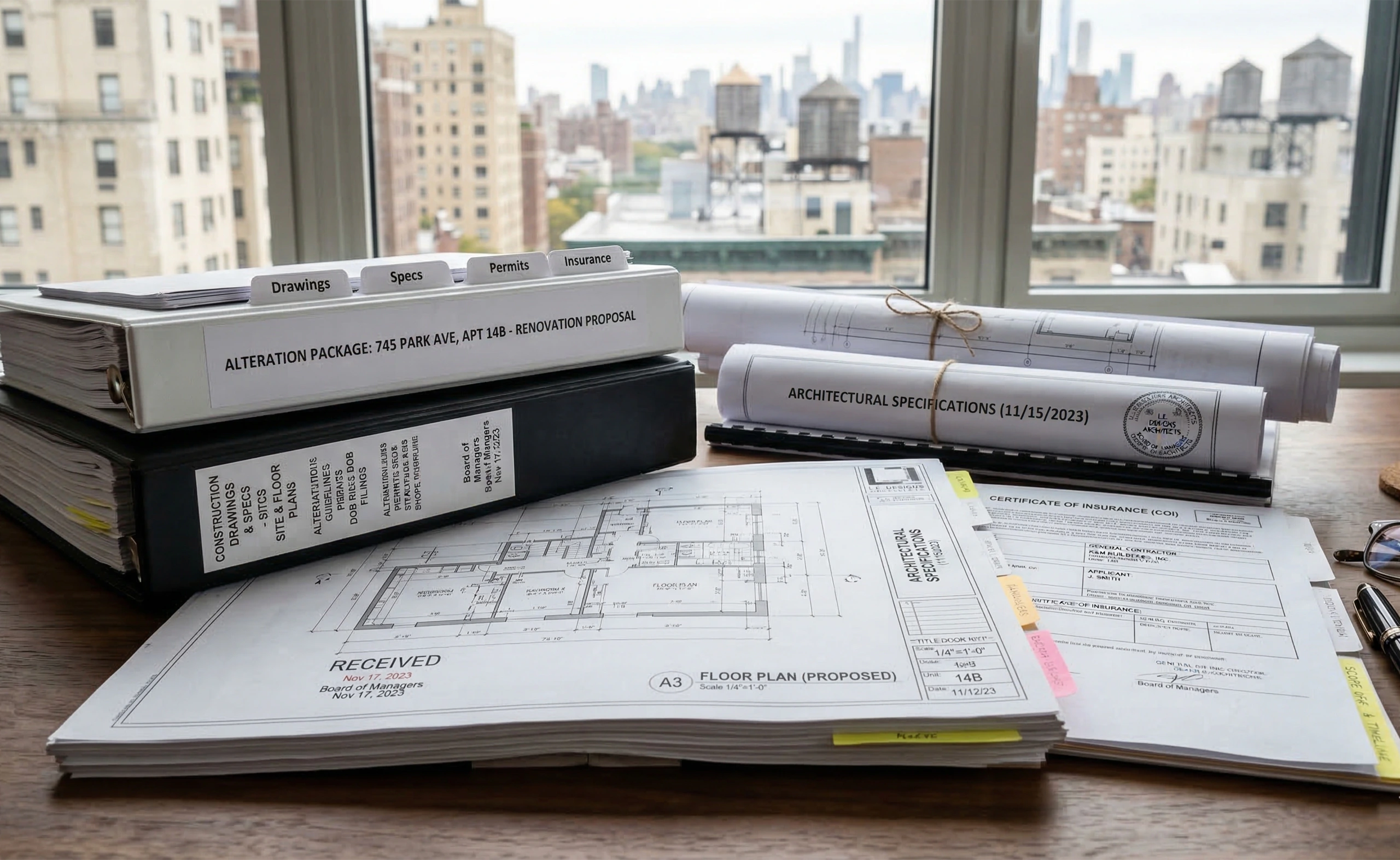
The Full NYC Renovation Approval Process: From Concept to Final Sign-Off
One of the most common misconceptions in city renovations is that construction time equals project time. In reality, physical construction may represent only one-third to one-half of the total project duration. The remainder is consumed by feasibility, design development, board review cycles, municipal filings, plan examination, procurement, and inspections.
A realistic small-to-moderate interior renovation in a regulated urban building often unfolds like this:
| Phase | Typical Duration |
|---|---|
| Feasibility and concept | 3–6 weeks |
| Board preparation and review | 4–8+ weeks depending on meeting cycles |
| Construction document preparation | 4–8 weeks |
| Municipal review and permit issuance | 4–16+ weeks depending on scope and review cycles |
| Procurement of long-lead items | 6–12+ weeks (often overlapping with review) |
| Construction | 8–20+ weeks depending on scope |
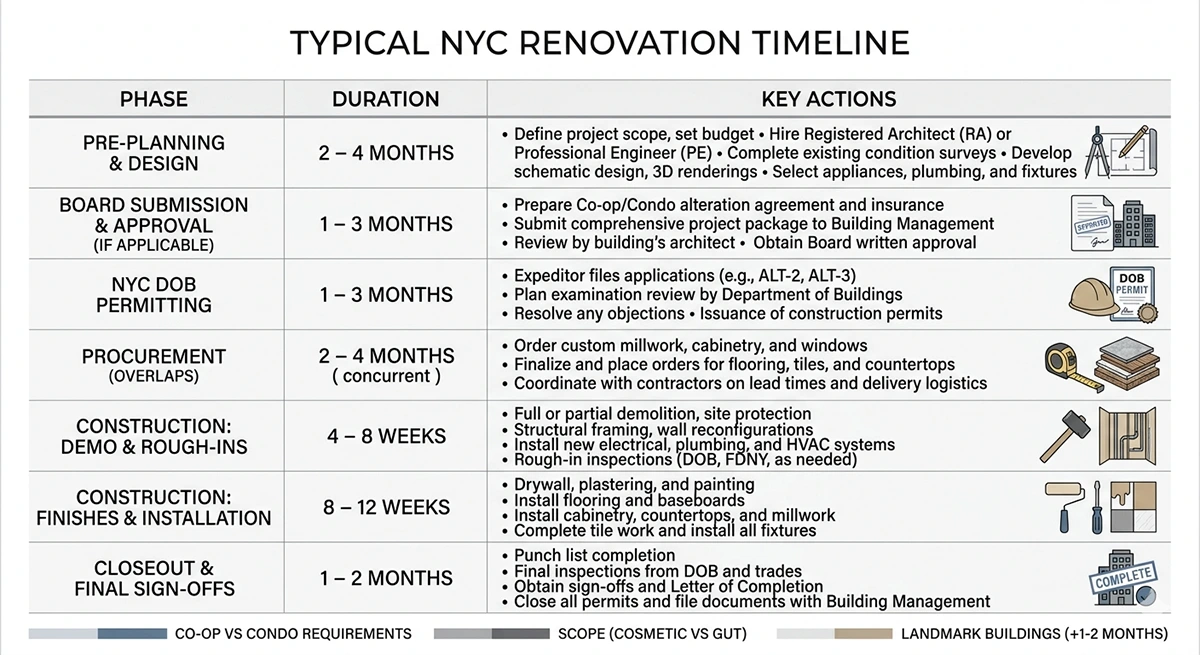
These phases overlap, but they do not compress infinitely.
Understanding this shifts decision-making. If a board meets once per month, a missed submission is not a minor inconvenience; it is a 30-day schedule extension. If a plan examiner issues comments requiring structural clarification, the response cycle may add several weeks. If imported tile is ordered after demolition begins, the job may sit idle while waiting for delivery.
One recent change deserves a place in that calculation. Since February 2026, when a co-op or condo unit owner files in DOB NOW, the board is automatically added to the job as a stakeholder and a board representative must attest that the filing was authorized. Industry sources put the added time at roughly two to four weeks. The significance is not the duration itself but the dependency it creates: the DOB filing now waits on a board action that sits outside the applicant’s control, so board engagement and municipal filing can no longer be treated as fully sequential tracks. Time is a structural component of the work, and this is one more place where it has to be designed for rather than discovered.
Understanding Risk Allocation in Urban Renovations
In dense buildings, risk is shared whether you intend it to be or not. Water does not respect property lines. Structural loads do not stop at demising walls. Noise and dust travel vertically and horizontally.
For this reason, urban renovation administration is built around containment and documentation. Risk allocation operates at several levels:
- Contractual risk between owner and contractor
- Insurance-backed risk transfer to carriers
- Structural risk mitigation through engineered design
- Operational risk control through logistics and protection plans
- Regulatory risk management through proper filings and inspections
When any one of these layers is neglected, friction appears. Most stop-work orders, board conflicts, and insurance disputes are not caused by dramatic failures. They arise from small administrative omissions: missing endorsements, unclear scopes, undocumented protection measures, or deviations from stamped drawings. What looks like bureaucracy from the outside is a risk containment system built for vertical communities, where one apartment’s mistake becomes several apartments’ problem.
Reading an Alteration Agreement Like a Professional
Many owners skim alteration agreements and focus only on work hours and deposits. Professionals read them differently. They read them as a risk allocation document.
An alteration agreement typically governs:
- Insurance minimums and endorsement language
- Work hours and noise limitations
- Required protection for common areas
- Contractor qualification standards
- Deposit structures and potential fines
- Inspection rights of the building
- Completion deadlines and penalties
- Restoration obligations if damage occurs

The clauses that cause delay are often procedural. Some agreements require engineer review of structural drawings before board circulation. Others require that insurance certificates be approved by the building’s counsel, not merely the managing agent. Some require neighbor notification periods before work begins.
If these items are discovered late, schedules unravel. The correct approach is to map the alteration agreement against your preliminary schedule and identify which clauses create gating events, the things that must happen before construction can legally begin. Treat the agreement as part of the design brief rather than as paperwork to sign at the end of it.
When Scope Creep Becomes Filing Creep
One of the most subtle schedule killers is incremental scope expansion after filing.
A project initially filed as a straightforward kitchen replacement may evolve to include panel upgrades, relocation of plumbing lines, or modification of structural headers. Each additional scope item can alter the filing classification or trigger revised submissions.
Plan examiners compare field conditions to filed drawings. If inspectors discover work outside the approved scope, they can halt the project until amendments are filed and approved.
The disciplined workflow locks structural, MEP, and life-safety scope before filing. Finish selections can keep evolving through construction; load-bearing decisions cannot.
The Economics of Delay
Delay in urban renovation is not abstract. It has measurable cost components:
- Extended general conditions for the contractor
- Additional architectural and engineering time
- Expediter fees for re-filings
- Storage fees for early-delivered materials
- Temporary housing costs for owners
- Elevator and building access extensions
- Opportunity cost if the property is intended for resale
Add those together and even a modest four-week delay can compound into five figures of indirect cost in a major city. Viewed through that lens, early investment in coordination, professional drawings, and experienced consultants stops looking like an expense and starts looking like insurance.
Designing a Workflow That Survives Scrutiny
Successful teams build a workflow that anticipates inspection and review rather than reacting to it. This includes:
- Creating a submission checklist before filing
- Conducting internal drawing coordination reviews
- Holding pre-construction meetings with building management
- Confirming insurance compliance before contractor mobilization
- Building a procurement log for long-lead materials
- Maintaining a live inspection calendar
- Assigning a single communication lead

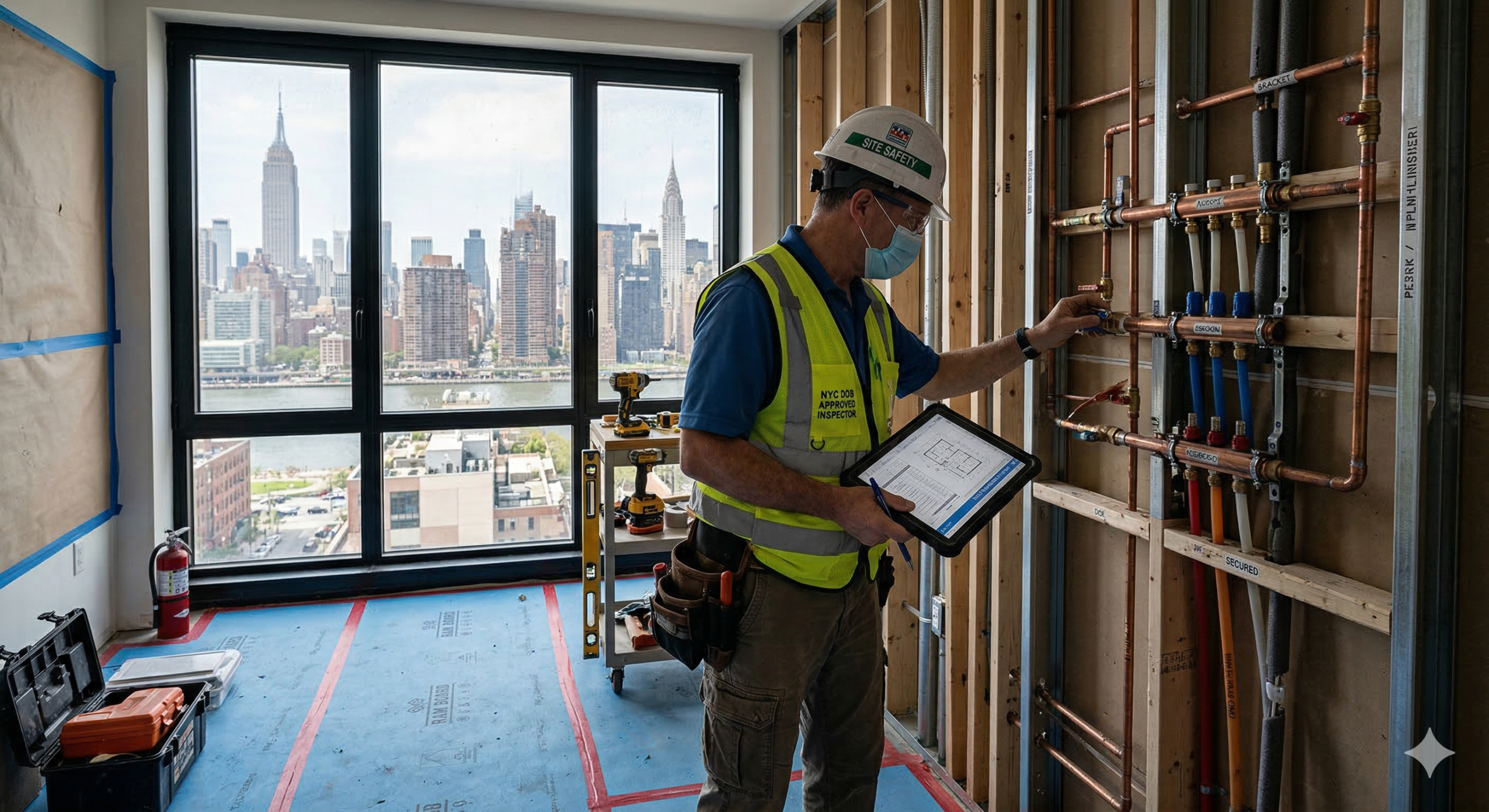
Inspection-driven scheduling is particularly important. Rough plumbing cannot be concealed before inspection. Structural steel cannot be enclosed before sign-off. Waterproofing must pass flood tests before tile installation proceeds. When inspection milestones drive the sequence rather than following it, rework drops sharply.
The Human Dimension: Communication as Schedule Control
Urban renovations take place in occupied buildings. Neighbors live above, below, and adjacent to the work zone. Staff operate elevators and manage deliveries. Boards answer to residents.
Silence creates friction.
Clear pre-construction notices, periodic updates, and responsiveness to complaints reduce escalation. Many boards impose additional restrictions not because of technical violations, but because of resident dissatisfaction.
Professional communication protects schedule continuity as directly as any technical decision does. A brief weekly status update to management that outlines progress, upcoming noisy operations, and inspection dates often prevents misunderstanding and builds credibility.
Post-Completion: Protecting the Asset
The final stage of a renovation is administrative consolidation. Permit sign-offs must be recorded. Certificates archived. As-built drawings collected. Engineering letters confirming structural completion retained. Insurance endorsements closed properly.
This documentation serves multiple purposes:
- Future resale disclosures
- Insurance underwriting clarity
- Board record requirements
- Future renovation reference
- Defense against latent defect claims
An undocumented renovation is a liability that surfaces at the worst possible moment, usually during a sale, when a buyer’s attorney pulls the DOB record and finds a permit that was never closed out. A documented one is an asset that answers those questions before they are asked.
A Realistic Perspective on Acceleration
Clients frequently ask how to “speed up” a renovation. The honest answer is that speed comes from sequencing intelligence, not from skipping steps.
Acceleration strategies that preserve compliance include:
- Early hazard testing. In practice this means two specific things in older New York buildings. Any building constructed before April 1, 1987 requires an ACP-5 asbestos certification from a DEP-certified investigator before the DOB will issue a permit and before demolition begins. Separately, in housing built before 1978, work that disturbs painted surfaces must be performed by an EPA Lead-Safe Certified firm. Start both at the beginning of the project: if asbestos turns up, licensed abatement moves onto the critical path ahead of everything else.
- Early board engagement
- Parallel procurement during review cycles
- Pre-submission consultations
- Complete, coordinated drawing sets
- Experienced contractors familiar with the building
Shortcuts that bypass review, omit documentation, or under-file scope inevitably slow the project later. The fastest projects are the ones that move steadily without interruption.
Approvals Are Part of the Design
In dense urban environments, approvals are not peripheral to design. They shape it.
Ceiling heights may shift to accommodate fireproofing. Layout decisions may respond to plumbing stack constraints. Structural interventions may determine spatial rhythm. Delivery schedules may dictate finish sequencing.
When approvals are integrated into design thinking from day one, the outcome isn’t a compromised project. It’s one that acknowledges its context and moves through it without stalling.
The most successful renovations recognize that drawings, filings, logistics, inspections, and construction are interlocking systems rather than separate silos. When they are aligned, the result is a space that feels effortless, precisely because the administrative architecture beneath it was rigorously built.

How to Pass NYC Inspections the First Time
Inspections are the part of a New York City renovation that most owners think about last and feel mo

Co-op and Condo Renovation Rules: Navigating Building Board Approvals in NYC
Living in a New York City co-op or condo means your renovation has to clear two separate hurdles. Ci
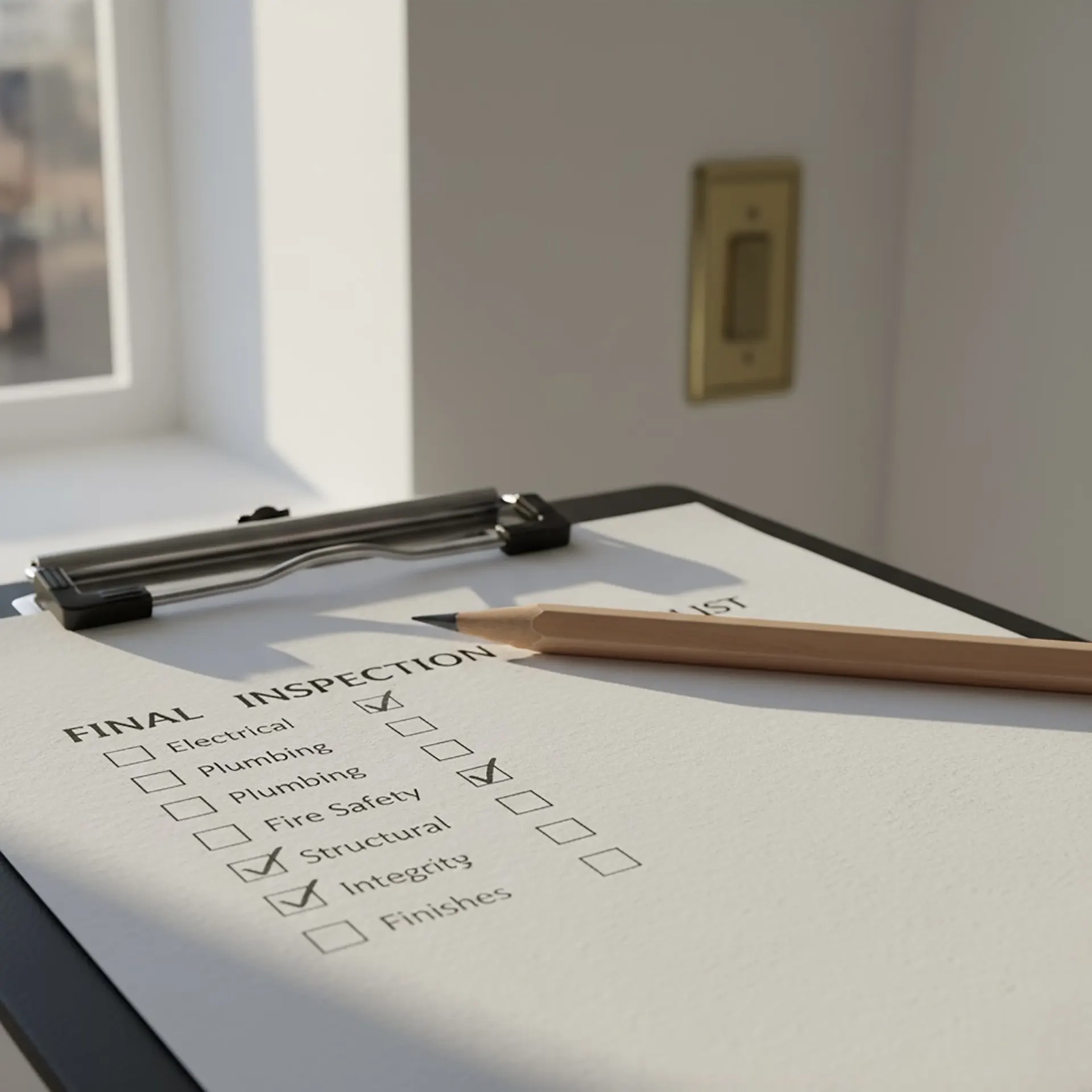
Inspections, Sign-Offs, and Surprises: What Actually Happens After Construction Ends
Until the Department of Buildings signs off on a project, every permitted wall, wire, and pipe conne