
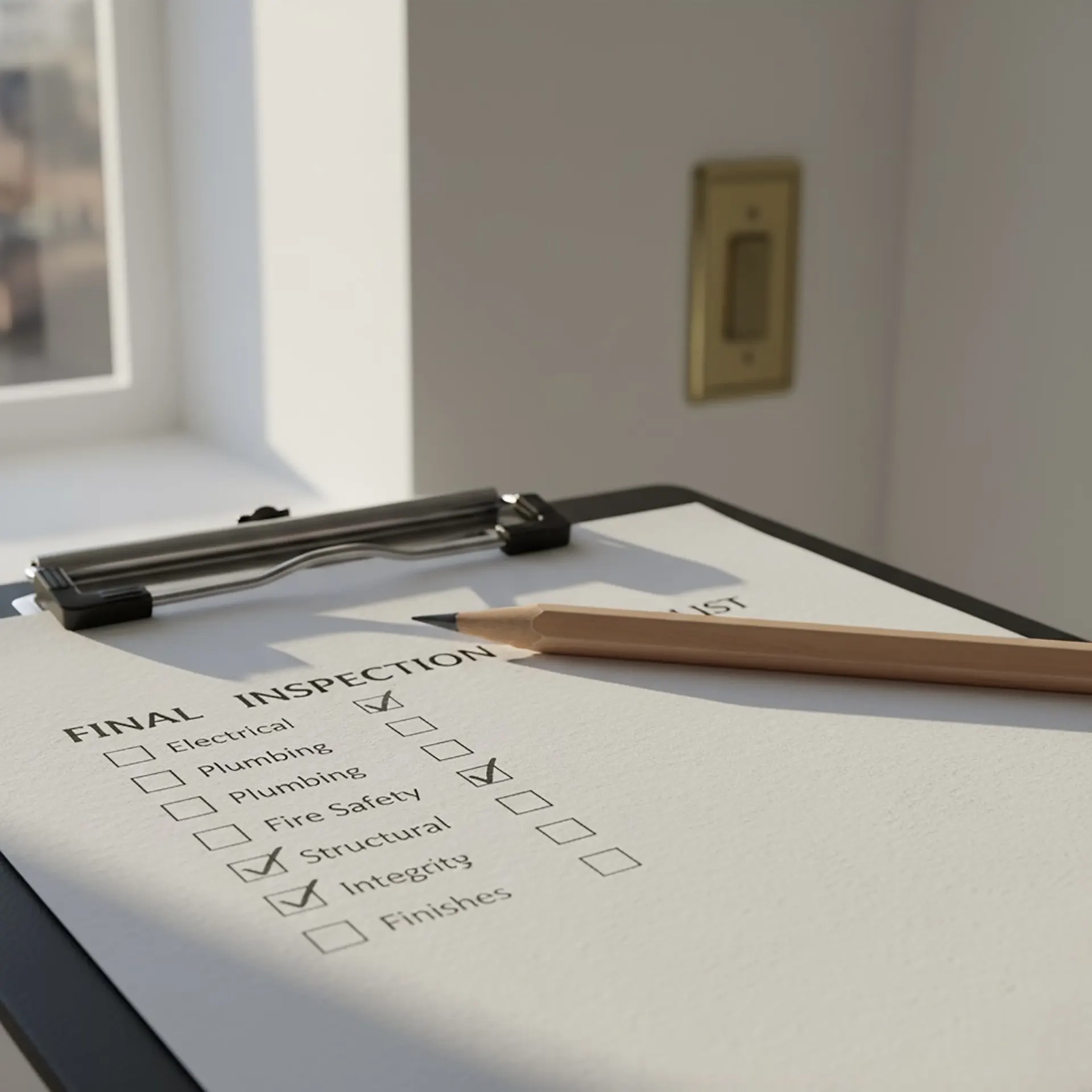
Inspections, Sign-Offs, and Surprises: What Actually Happens After Construction Ends
Until the Department of Buildings signs off on a project, every permitted wall, wire, and pipe connection remains legally open. The city needs documentation confirming the work was completed correctly and matches the approved plans, and without it, the renovation stays unresolved on paper, which creates real problems when the apartment is eventually sold or refinanced.

1. How the closeout process works
Closeout moves from internal quality control through a series of city-mandated inspections, and each step has to happen in order before the next one can start. Before any city inspector sets foot in the space, the team walks through the finished work themselves, catching and correcting the small things, like a door that’s slightly off-level or a scratch on a finished surface, before anyone from the city sees them. From there, third-party licensed agencies conduct special inspections that verify the work no longer visible once construction wraps: firestopping, structural elements, mechanical systems. Those agencies sign the TR1 and TR8 forms that the DOB requires for review, and without them, the closeout simply doesn’t move forward. Next comes the DOB inspection itself, where a city inspector compares the finished space against the approved architectural drawings. Any discrepancy, a wall that shifted slightly during construction, a ceiling height that ended up different from what was filed, has to be reconciled in the drawings before sign-off can happen. The inspector isn’t judging the quality of the craftsmanship; the sole question is whether what was built matches what was filed. The final step is the Letter of Completion, the city’s official confirmation that every active permit on the project has been closed.| Step | What happens | What can stall it |
|---|---|---|
| Internal review | Team inspects the finished space before any city inspector visits | Minor defects caught late delay the city inspection |
| Special inspections | Third-party agencies verify firestopping, structural elements, mechanical systems; sign TR1 and TR8 forms | Missing forms block the DOB review entirely |
| DOB inspection | City inspector compares the finished space against the approved architectural drawings | Any discrepancy between what was built and what was filed fails the job |
| Letter of Completion | City officially confirms all active permits are closed | Open subcontractor sign-offs or unresolved building obligations delay issuance |

2. Why permits stay open
A renovation that finished two years ago with permits still sitting open is a common situation in Manhattan, and the reason is almost always the same: contractors get paid, the crew moves on to the next job, and the administrative follow-through simply stops. Closing a permit takes real work and generates no income once the final payment has cleared, so without a disciplined process behind it, that paperwork tends to fall to the bottom of everyone’s list. Open permits don’t disappear on their own. They sit quietly in the DOB record until a sale goes into contract, a refinance gets underway, or a buyer’s attorney runs a title search, and at that point the problem becomes urgent and expensive in a way that makes it far harder to resolve than if it had been handled at the time.
3. Where things go wrong
Small changes made during construction are the most common source of inspection failures. A wall that ends up a few inches off from the plan, a ceiling height adjusted in the field to work around an unexpected duct, both of these need to be reflected in an updated architectural filing before the DOB inspection happens. An inspector comparing the finished space to the original drawings will fail the job if the two don’t line up, regardless of how well the work itself was executed. Subcontractor documentation causes its own share of delays. Every trade on the job, plumbers, electricians, fireproofing specialists, has to sign off on their portion of the work, and collecting those signatures after everyone has already moved on to the next project is considerably harder than collecting them before final payment goes out. Building management is a third, and often underestimated, source of delay, particularly in co-op and condo buildings that run their own parallel closeout process alongside the city’s. If a contractor hasn’t returned the building’s security deposit, hasn’t restored a common area or hallway used during construction, or has any other unresolved obligation with the building, management can hold up the overall process on their end regardless of where the DOB paperwork stands. This isn’t a rare edge case; it happens regularly across Manhattan buildings, and it rarely comes up in planning conversations until it’s already causing a problem.4. The document to keep
The Letter of Completion confirms that the renovation was permitted, inspected, and legally closed, and it’s the single document most likely to matter the next time the apartment changes hands. When the unit is sold, it transfers with the property, and it’s typically one of the first things a buyer’s attorney looks for during due diligence, since an open permit on the DOB record is exactly the kind of issue that can stall or derail a deal at the last minute. Store the Letter of Completion with your other property documents the moment you receive it, not just so you can find it years later, but so it’s ready to hand over the day you decide to sell. If you’re on the buying side of a renovated apartment, ask the seller for it before the deal closes rather than assuming it exists. An open permit is a liability that stays attached to the property until someone resolves it, and that someone is far better off being the person who caused it than the person who inherits it.

How to Pass NYC Inspections the First Time
Inspections are the part of a New York City renovation that most owners think about last and feel mo
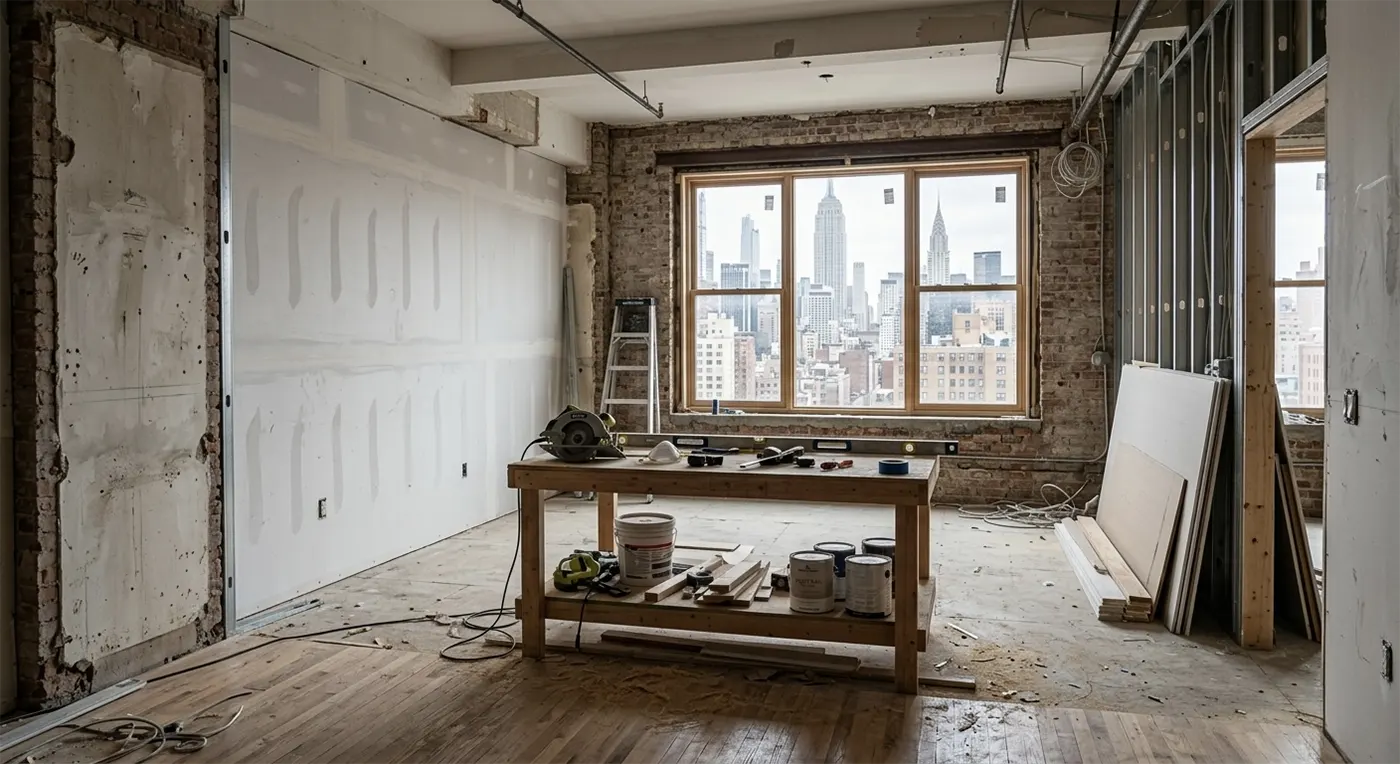
Renovating Without a Permit in NYC: Fines and Legal Risks
Unpermitted renovation work is more common in New York City than most owners want to admit, and the

Cracking the NYC Permit Code: Your Step-by-Step Guide to DOB Approvals
Navigating New York City’s Department of Buildings is genuinely complicated, and the consequen