
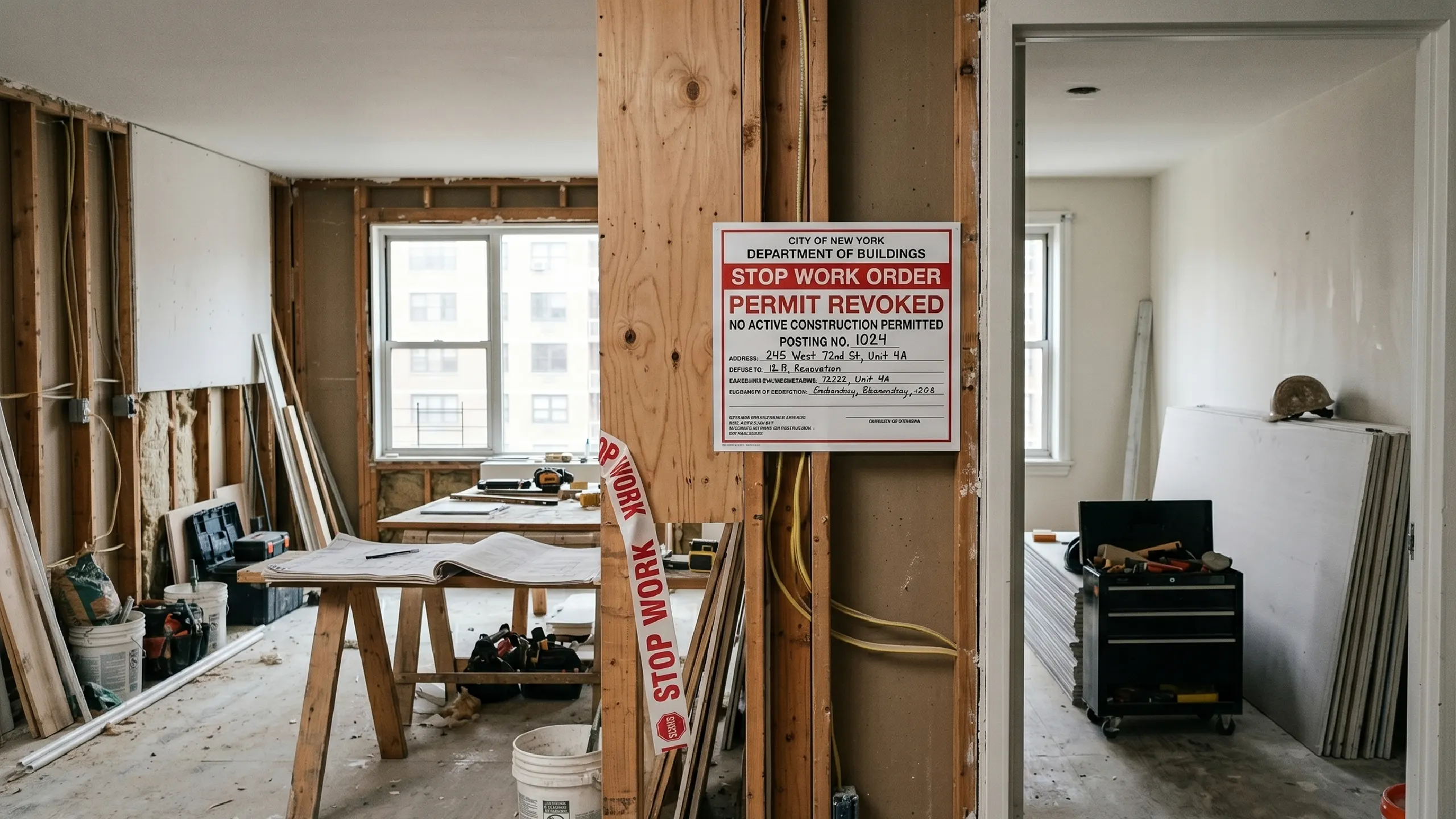
What Happens If Your Contractor Pulls the Wrong Permit
Permit errors are more common on Manhattan renovation projects than most owners realize, and the consequences are rarely minor. The NYC Department of Buildings does not distinguish between intentional misfilings and honest mistakes. An application that doesn’t accurately describe the scope of work will be rejected, objected to, or discovered during inspection, and the project pays the price regardless of who made the error or why.
The permit a contractor files defines the legal authorization for the work. Everything that follows, including inspections, approvals, and final sign-offs, is evaluated against that permit. When the permit doesn’t match the actual scope, the disconnect surfaces at the worst possible time: mid-construction, when materials are installed, trades are sequenced, and the cost of stopping is high.
What “Wrong Permit” Actually Means in NYC
A wrong permit is not always a fabricated or fraudulent document. In most cases, it’s a filing that categorizes the work incorrectly or fails to capture the full scope of what the renovation involves. One note on terminology before the rest of this: DOB NOW retired the old ALT-1/ALT-2/ALT-3 system in 2021. What used to be an ALT-1 is now filed as an Alteration-CO; what used to be ALT-2 and ALT-3 are both filed as Alteration. Many owners and even some contractors still say “ALT-2” out of habit — the underlying distinction is the same one, just under a different name.
The most consequential version of this error is filing an Alteration for work that legally requires an Alteration-CO. An Alteration covers changes that don’t affect the apartment’s use, occupancy classification, or egress. An Alteration-CO is required when any of those conditions change, and it results in a new or amended Certificate of Occupancy. Combining two apartments into one, reconfiguring the path of egress, or changing the legal occupancy of a space all trigger Alteration-CO. Filing these projects as a plain Alteration is a misclassification the DOB will catch, either during plan examination or at final inspection, and the discovery requires correction regardless of how far construction has progressed.
A subtler version of the same problem: an architect files a permit for a renovation that, partway through construction, expands in scope through change orders. The new scope, which now includes structural modifications or systems work not described in the original filing, isn’t reflected in the approved drawings. The permit covers the original project. The contractor is building something different. That gap is a permit problem, even though the original filing was correct when it was submitted.
Immediate Consequences When the Error Is Discovered
The DOB’s plan examination process catches most misfiling errors before the permit issues. When an examiner identifies a discrepancy between the described scope and the application type, they issue a formal objection. The filing is placed on hold. The applicant must respond with corrected documentation, and in cases where the application type itself is wrong, the submission must be entirely refiled under the correct classification.
If the error makes it past plan examination and into active construction, the consequences are more severe. A DOB inspector who arrives for a scheduled inspection and finds work that doesn’t match the approved drawings will flag the discrepancy. If it’s significant, the result is a stop-work order covering all activity on the project, not just the work in question.
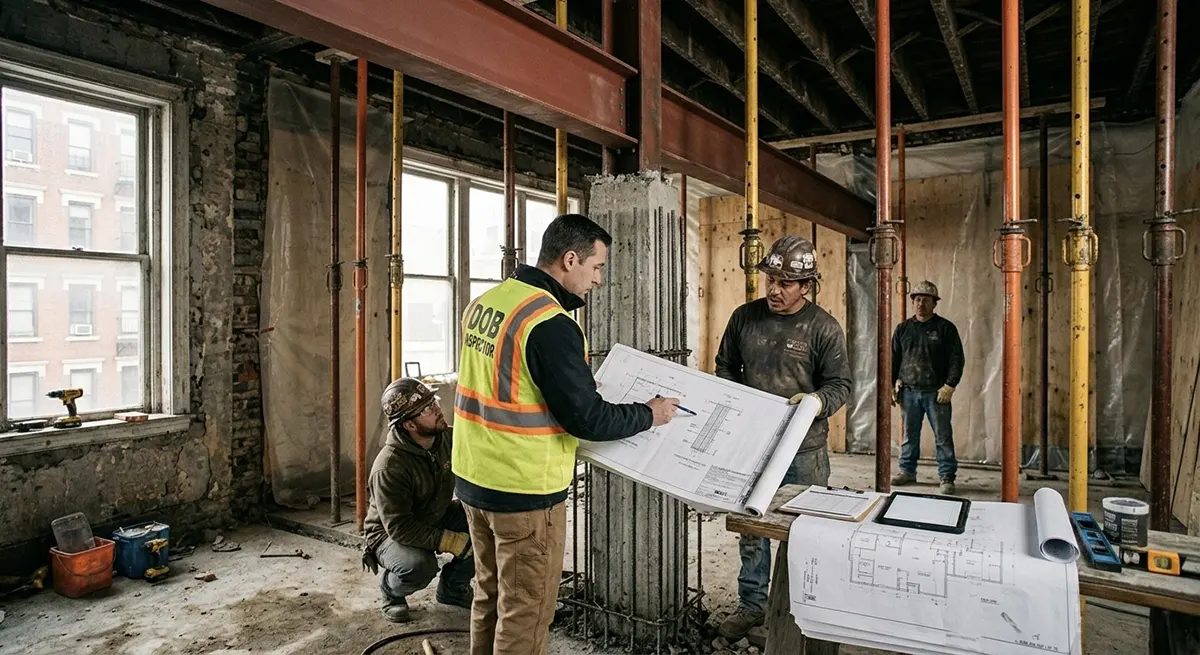
A stop-work order in New York City isn’t a warning — it’s a legal directive that halts all construction on the project immediately. Workers leave the site. Materials sit where they are. The project doesn’t move until the violation is cured and the DOB formally lifts the order, a process that involves submitting a cure application, paying fines, and in many cases appearing before OATH’s Environmental Control Board (ECB) Tribunal. On a straightforward case, owners commonly describe the gap from stop-work order to resume authorization in weeks rather than days — the exact length depends on how quickly the cure application and any required Tribunal hearing get scheduled.
Project Delays: The Real Timeline Impact
A permit misclassification discovered at plan examination adds real time to the pre-construction schedule — often measured in months rather than weeks, depending on how substantial the revision is and how quickly the DOB processes the corrected submission. An Alteration that needs to be refiled as an Alteration-CO is not a quick fix. New drawings may be required. Additional engineering documentation, egress analysis, and occupancy calculations are standard components of an Alteration-CO that weren’t part of the original filing. All of that takes time to prepare and submit, and then waits in the DOB’s review queue alongside every other application the agency is processing.
When the error surfaces during construction, the delay is measured differently. The stop-work order freezes the project. Subcontractors who were scheduled to begin their phases are rescheduled or move to other jobs, and rescheduling them back means fitting into their availability rather than the project’s preferred sequence. A tile setter who was supposed to start in three weeks may not be available for six or eight weeks by the time the stop-work order is resolved. Each trade delay cascades into the next, and the original construction schedule is effectively voided.
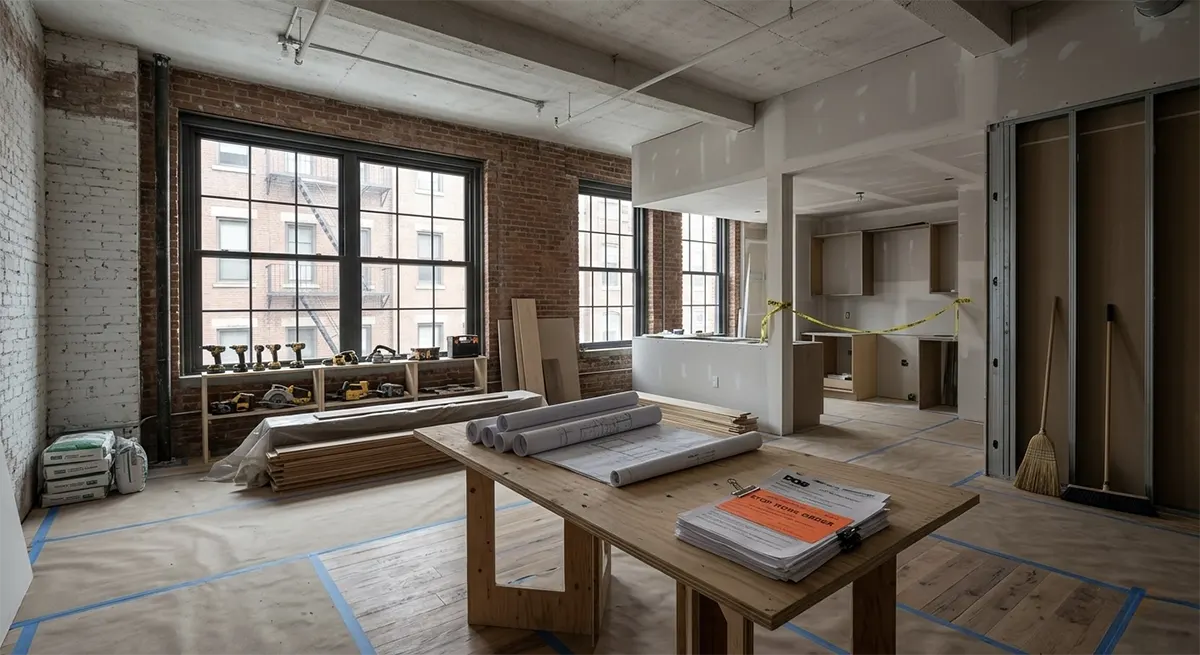
Financial Impact: Where the Costs Accumulate
Refiling an incorrect permit has direct costs: revised architectural drawings, updated engineering documentation, expediter fees for managing the corrected submission, and the DOB’s associated filing fees. These costs are real but manageable compared to the indirect costs of the delay they cause.
Extended temporary housing is one of the largest indirect costs. An owner paying roughly $6,000 to $10,000 a month for transitional living who loses two months to a permit error is absorbing $12,000 to $20,000 in housing costs that weren’t in the budget — an illustration of the math, not a fixed market rate, since furnished Manhattan rentals vary widely by size and location. Maintenance fees and mortgage payments on the apartment continue throughout the delay. Contractor overhead for a project on hold accumulates in ways that vary by contract structure but rarely disappears entirely.

If the permit error surfaces during construction and results in work being done that needs to be removed or altered, the costs escalate further. Tile that was installed in an area where the permit drawings showed different work is tile that may need to come out. Plumbing that was roughed in without proper authorization is plumbing that may need to be exposed again for inspection. Remediation work that reverses completed construction is among the most expensive possible uses of a renovation budget.
DOB civil penalties for unpermitted or non-compliant work are assessed per violation, under 1 RCNY §102-04. For a one- or two-family dwelling, that’s the greater of six times the permit fee or $600, capped at $10,000. For any other building — which covers virtually every Manhattan co-op and condo — it’s the greater of twenty-one times the permit fee or $6,000, capped at $15,000, per violation. A project with more than one misfiled trade can generate more than one of these penalties.
Legal and Compliance Risks
Unpermitted work, or work performed under an incorrect permit, creates a legal record that doesn’t disappear when the renovation is finished. The DOB’s violation history for a property is public and permanent. An open violation on an apartment creates disclosure obligations during sale, can delay or prevent closing, and in some cases makes the property unfinanceable until the violation is resolved.
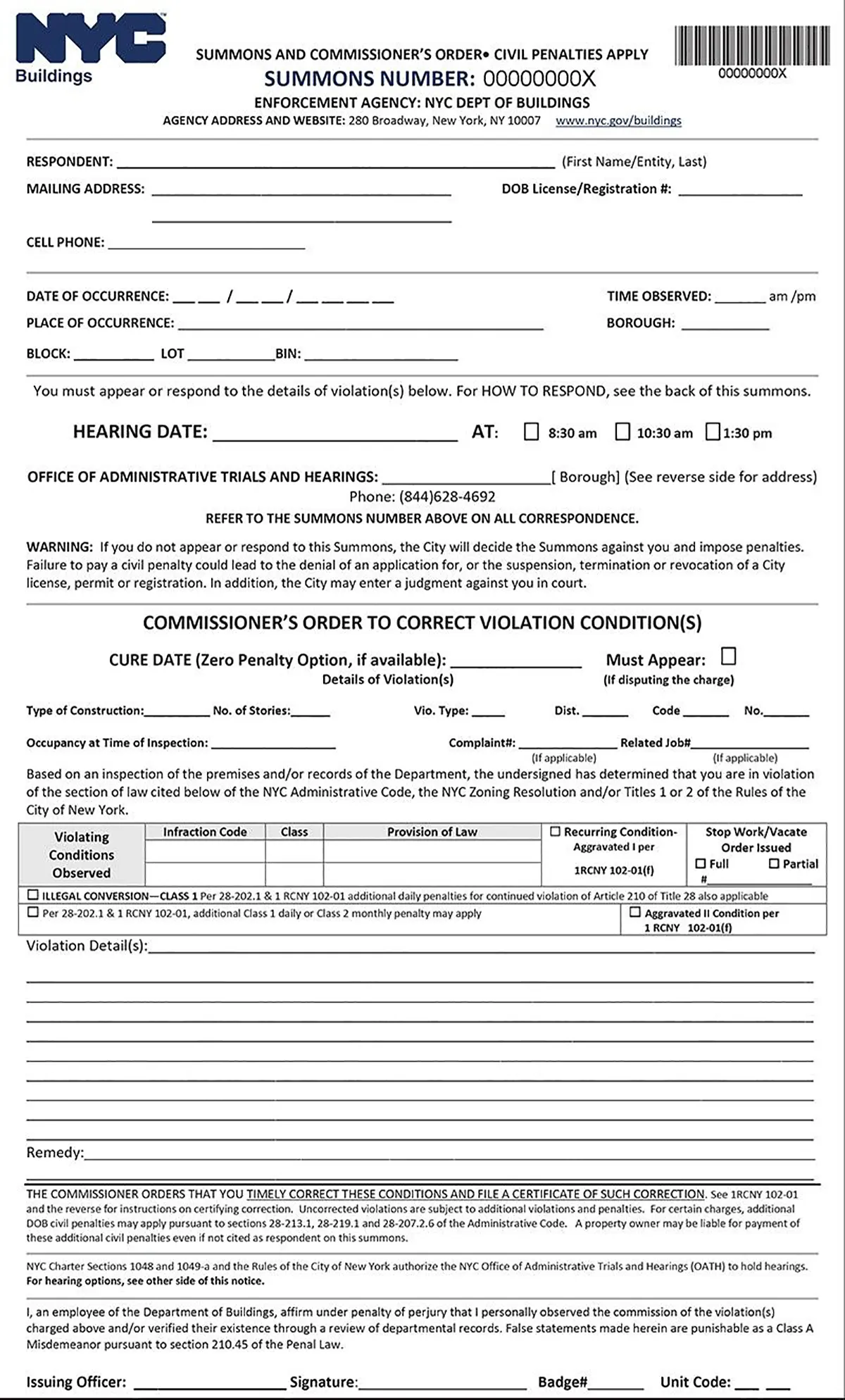
Insurance exposure is a related concern. A contractor who performed work under an incorrect permit, resulting in a stop-work order or DOB violation, creates a professional liability situation. Whether that liability is the contractor’s, the architect’s, or shared between them depends on who was responsible for the permit filing and what the contracts specified. The owner is rarely the liable party in these disputes, but they are the one whose timeline and project are disrupted while the parties resolve it.
Co-op and Condo Complications
In a cooperative or condominium building, the permit problem doesn’t stay between the owner and the DOB. The alteration agreement that the board executed was based on the approved scope as described in the permit drawings submitted to the building. When the permit is found to be incorrect and the drawings must be revised, those revised drawings need to go back to the managing agent and in many cases back to the board for review.
Egress specifically is where co-op boards look hardest. A board’s approval is tied to the exact scope in the drawings it reviewed, and a change to how someone exits the apartment in an emergency is not the kind of detail a board treats as a formality — it’s usually the first thing a re-review focuses on.
This is a practical and political problem simultaneously. A board that learns its approval was based on drawings that turned out to be incorrect for the scope of work being performed has a legitimate basis to revisit the approval, impose additional conditions, or require a full re-review before authorizing the project to continue. In co-op buildings where board decisions are made at monthly meetings, a re-review process that straddles two meeting cycles adds real time on top of the DOB-related delay.
There’s also a separate gate at the other end of the process. Getting the DOB to lift a stop-work order doesn’t automatically get the crew back into the building. Many managing agents require their own written confirmation — from the architect and, where the discrepancy was significant, from the DOB record itself — that the underlying issue is resolved before they’ll reopen the elevator schedule and let work resume. That confirmation is a building-level requirement, independent of and in addition to whatever the DOB requires to lift its own order.
The loss of board trust is a real consequence that affects more than just the current project. A shareholder who has created a compliance problem in the building, even inadvertently, faces a more scrutinized approval process for any future work.
A Real-World Scenario
An owner in a prewar co-op on the Upper East Side engages a general contractor who has connections to an expediter who files renovation permits regularly. The scope of the project involves combining a secondary bedroom with the adjacent dining area to create a larger primary suite, reconfiguring one bathroom, and renovating the kitchen. The contractor’s expediter files the project as an Alteration, which is appropriate for most of the work but doesn’t account for the fact that the bedroom-to-suite reconfiguration affects the apartment’s egress configuration by relocating a doorway that the building’s approved plans describe as part of the egress path.
The DOB’s plan examiner catches the egress issue six weeks into the review. The filing is placed on hold pending revision. The architect, who was not closely involved in the permit strategy, needs two weeks to prepare a revised egress analysis and updated drawings for what now needs to be filed as an Alteration-CO. The corrected submission goes back to the DOB and waits in the review queue. Another four weeks pass before the permit issues. The total pre-construction delay from the original submission to permit issuance is twelve weeks instead of the six the owner planned for.
Construction begins, but the owner’s temporary housing lease has expired. They extend month-to-month at a premium rate, absorbing an additional cost they hadn’t budgeted. The subcontractors who were lined up for the project have taken other work during the delay. One of them isn’t available for the revised start date, and their phase needs to be rescheduled around their availability. The project finishes ten weeks later than the revised schedule projected.
How to Prevent This
The starting point is a thorough scope analysis before any permit is filed. The architect needs to review the proposed work against every condition that determines the correct application type: changes to use, occupancy, egress, and the building’s existing Certificate of Occupancy. This is not a checklist exercise. It requires judgment applied to the specific facts of the project and the specific conditions of the building.
Coordination between the architect and an experienced DOB expediter ensures that the application type and filing strategy reflect both the technical requirements and the current practices of the DOB’s plan examination teams. Expediters who file similar projects regularly know which issues plan examiners are currently scrutinizing and can prepare submissions that anticipate and address those concerns before they become objections.

When scope changes occur during construction, the architect needs to be actively involved in assessing whether those changes require a plan amendment before work proceeds. A change that seems minor in isolation may be the change that pushes the project into a different application type or triggers a code requirement that wasn’t part of the original filing. Addressing it formally and promptly costs far less than discovering it at final inspection.
The Permit Is the Foundation of Everything That Follows
Every inspection, every sign-off, and every approval in a Manhattan renovation is evaluated against the permit. When the permit is wrong, the project’s legal foundation is wrong, and everything built on it is at risk. The cost of getting it right at the outset is a fraction of the cost of correcting it after the fact.

Teams with deep experience in NYC permit navigation know how to assess scope correctly from the start, coordinate all filings for consistency, and manage the DOB’s review process in a way that minimizes objections and maximizes predictability. That experience is what separates projects that move through the approval process on schedule from the ones that lose months before a single wall is opened.
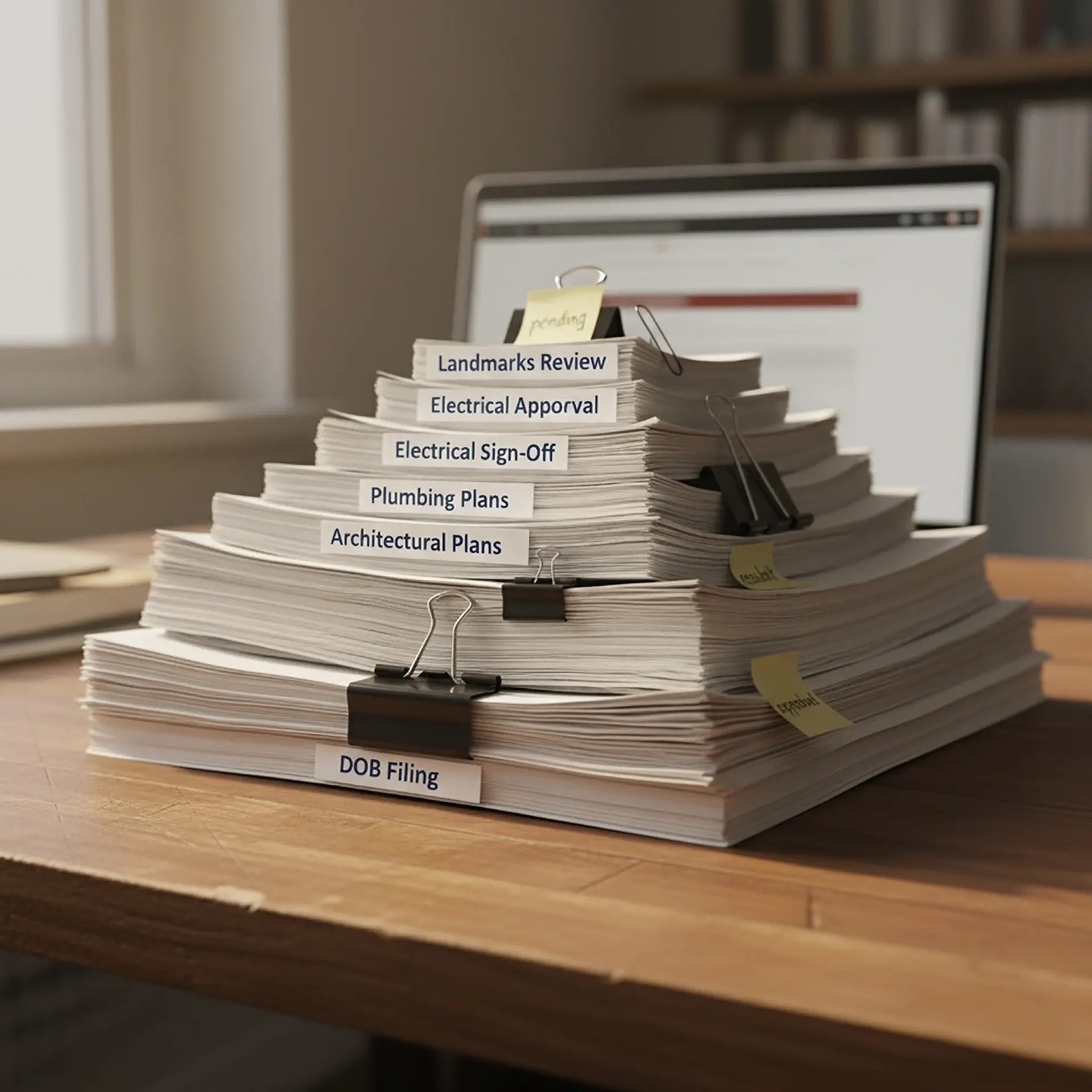
The Permit Pyramid: Who Approves What in NYC Construction
Renovating anything in New York City, from a studio apartment to a brownstone, means navigating a hi
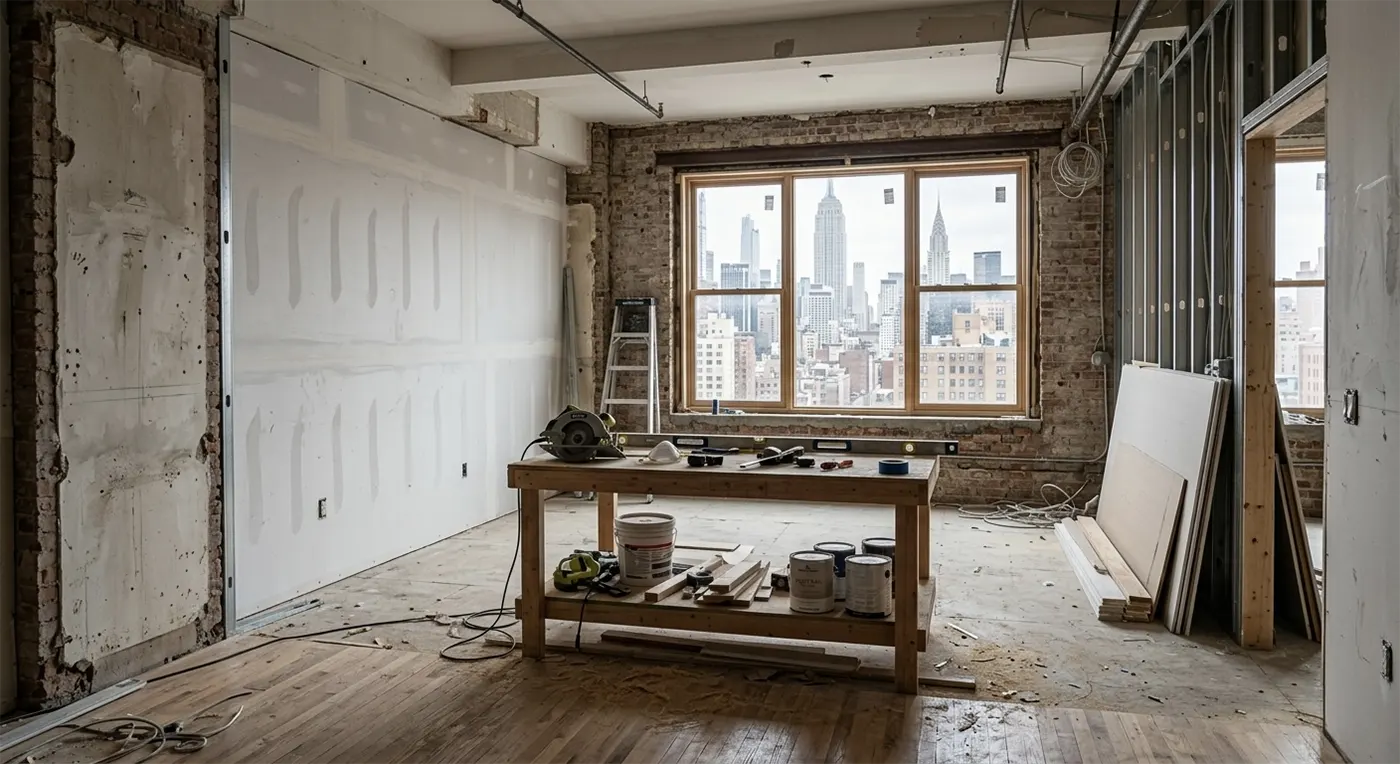
Renovating Without a Permit in NYC: Fines and Legal Risks
Unpermitted renovation work is more common in New York City than most owners want to admit, and the

Insurance Requirements for Apartment Renovations
Insurance requirements in Manhattan co-ops and condominiums are shaped by how New York buildings are