

The Hidden Costs of NYC Compliance: Budgeting for Permits, Inspections, and Fees
Embarking on a renovation project in New York City is exciting. You have a clear vision for your space, a team in place, and a starting budget. Seasoned homeowners and contractors in the five boroughs know one thing well, though: the number on the initial quote is rarely the final price.
The city’s compliance process, with its layers of permits, inspections, and fees, represents a significant and often underestimated part of the total cost. Ignoring these elements is how budgets break and timelines slip. A successful NYC renovation depends as much on a careful financial and logistical strategy as it does on the design itself.
The Role of the Department of Buildings
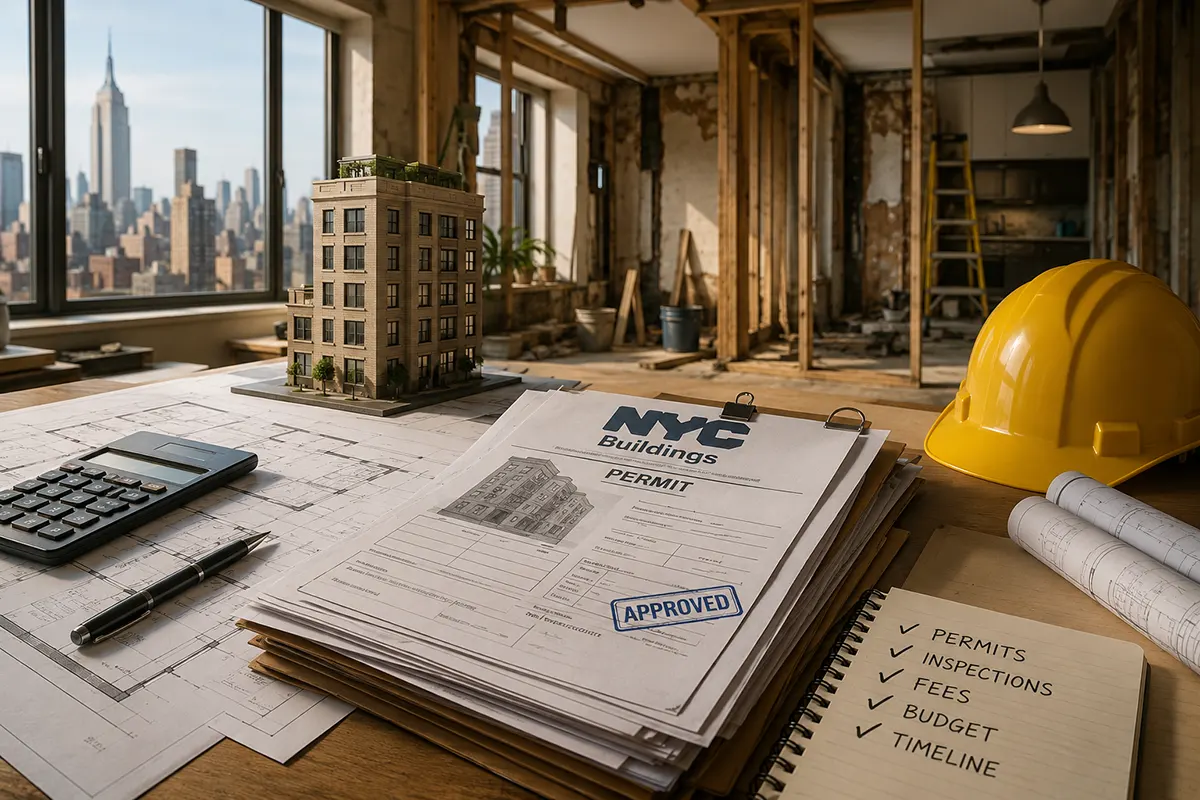
Any project touching structure, plumbing, electrical systems, or egress needs a DOB permit, and the timeline and budget for that project are shaped heavily by the filing process that follows. This is not universal, though: purely cosmetic work, such as repainting, swapping cabinet hardware, or replacing appliances on existing connections, generally does not require a permit at all. The line tends to blur with kitchen and bathroom work specifically, since even a seemingly simple update often involves moving a fixture or touching a circuit, which is enough to pull the whole project into permit territory.
The DOB calculates fees by permit type, using a tiered schedule tied to construction value, plus separate charges for plan examination and any required surcharges. A typical kitchen or bathroom renovation involving plumbing or electrical work usually files as an ALT-2 permit, with DOB filing and permit fees in the range of roughly $1,000 to $6,500 depending on project value, on top of architect or engineer fees that often run $5,000 to $20,000 or more. A full gut renovation involving layout changes or structural work typically requires the more involved ALT-1 filing, where DOB-side fees alone can run from $3,000 into the tens of thousands on larger Manhattan projects, before architectural and engineering fees are added. If the building is landmarked, Landmarks Preservation Commission review adds its own separate fees and timeline on top of the DOB process.
Mandatory Inspections and Delays
Beyond the initial permit fees, the process is punctuated by mandatory inspections at critical stages, typically covering plumbing rough-ins, electrical work, firestopping, and final completion. Each one has to be scheduled and passed before the project can move forward. If an inspector finds a violation or an issue, a re-inspection is required, which adds both fees and time to the schedule. A failed inspection can stall work for days or weeks, and every day of that delay adds to labor costs on top of the calendar slip.
What the Building Adds on Top
The fees do not stop with the city. Most co-op and condo buildings layer on their own administrative costs, typically including a non-refundable application fee, a refundable security deposit, and review fees for the building’s own architect or engineer. These can run from a few thousand dollars to tens of thousands on larger projects, and Manhattan co-op boards in particular are known for adding $5,000 to $15,000 or more in deposits alone.
DOB permits and board approval are formally separate processes, run by different parties for different reasons, and one approval does not automatically grant the other. In practice they still need to happen together: as of a January 2026 rule change, co-op and condo boards in New York City are now required to complete a digital attestation in the DOB’s filing system before a renovation permit affecting their building can be issued, which makes early board engagement more important than it used to be rather than something that can be handled in parallel and resolved later.
Avoiding Budget Surprises
Proactive planning and transparent communication with your renovation team go a long way toward keeping costs predictable. A realistic budget should include a contingency fund, typically ten to twenty percent of the total project cost, to cover the issues that tend to surface once walls open up: outdated plumbing, hidden structural damage, or compliance fixes nobody saw coming. Working with contractors and architects who have real experience filing in New York City matters here, since they already understand local regulations, realistic approval timelines, and where the bureaucratic delays tend to show up before they become budget problems.
Request a detailed contract that breaks out the full scope of expected costs rather than a single lump estimate. Knowing the full financial and logistical picture from the start is what separates a Manhattan renovation that runs over budget from one that comes in close to plan.
Blueprints, Codes, and Compliance: What Every NYC Renovation Needs Before It Begins
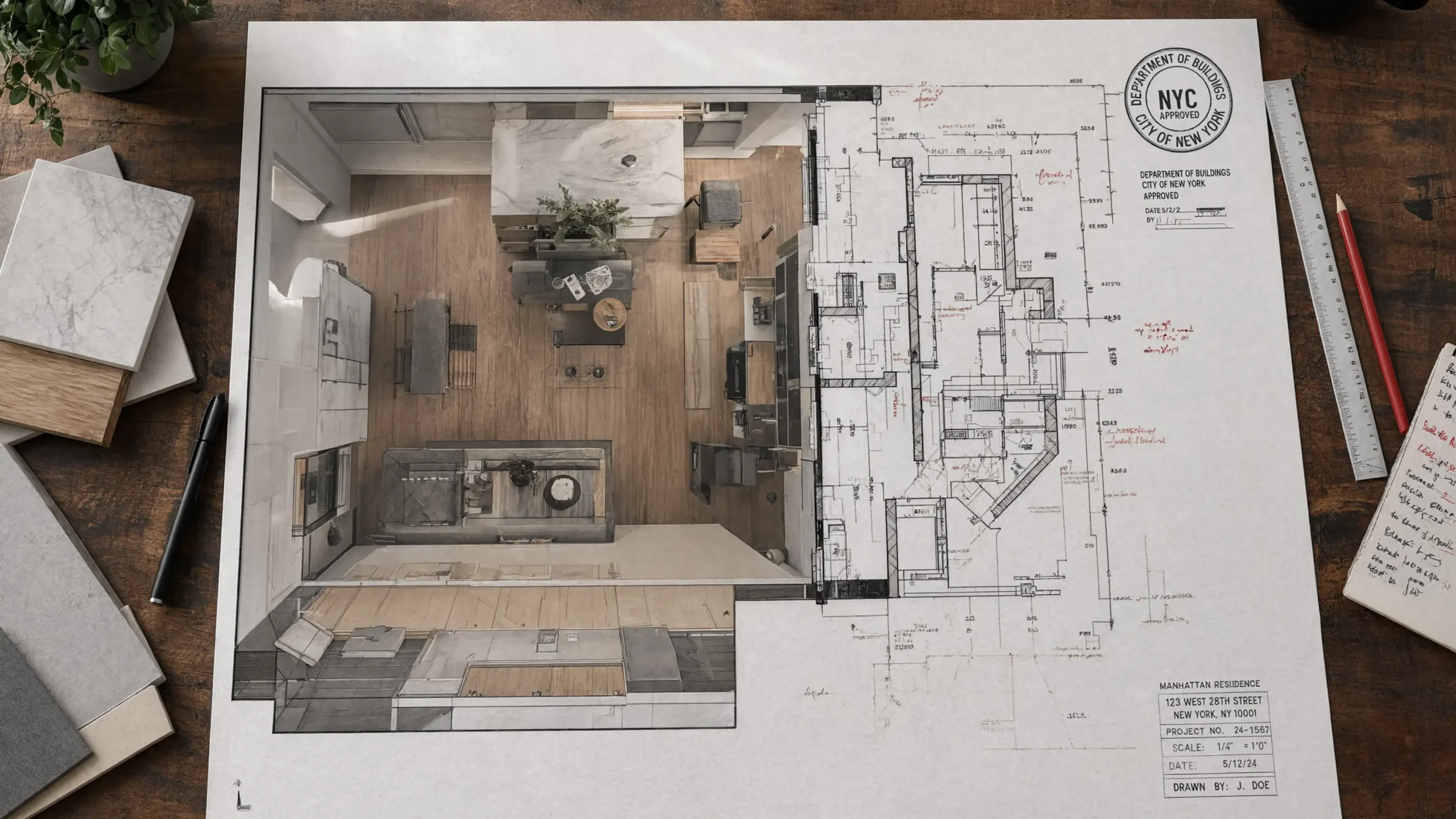
Before the first wall comes down or the new floors are ordered, there are invisible rules that deter
What Happens If Your Contractor Pulls the Wrong Permit
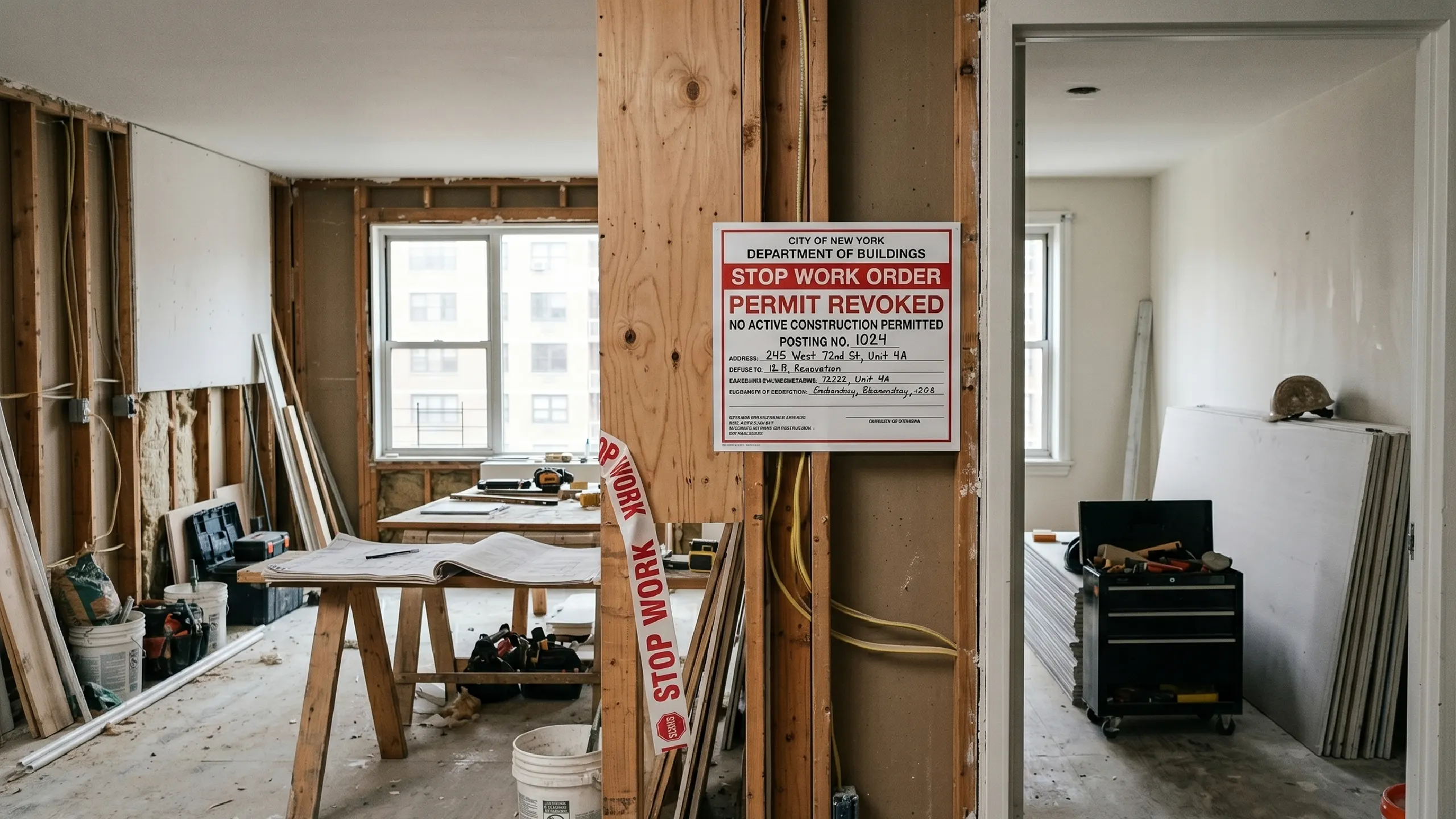
Permit errors are more common on Manhattan renovation projects than most owners realize, and the con

How to Pass NYC Inspections the First Time
Inspections are the part of a New York City renovation that most owners think about last and feel mo