

Landmark Living: Renovating Historic Buildings in NYC’s Protected Districts
There is a unique romance to living in a pre-war brownstone or a historic loft in one of New York City’s designated districts. The soaring ceilings, ornate cornices, and undeniable sense of history offer something no modern build can replicate. That character comes with a complex set of rules once it is time to renovate, though. Unlike a standard remodel, a project within a protected district means working with the Landmarks Preservation Commission, a process built around preserving the city’s architectural legacy rather than blocking progress on it. Understanding how that process works is the first real step toward a renovation that respects the building’s history without sacrificing modern livability.

The Landmarks Preservation Commission Process
The LPC’s primary role is to review proposed work on the exterior of a landmarked building, along with significant interior changes to public spaces, to determine whether it is appropriate to the building’s historical character. The process culminates in a Certificate of Appropriateness, and the application typically includes architectural drawings, material samples, and historical photographs documenting the existing condition.
Review timelines vary with complexity. Straightforward facade repairs or like-for-like window replacements can clear in a few weeks. More involved applications, particularly anything touching multiple visible elements or requiring design review by the full commission rather than staff-level sign-off, can take several months. This timeline needs to be built into the project schedule from the start, since construction generally cannot begin until the certificate is issued.
Material Requirements and Restrictions
A major part of the LPC’s oversight is its guidance on materials. Repairs and replacements must match the original as closely as possible. Windows need to match the original profile, muntin configuration, and often the material itself. Masonry work carries specific requirements around brick, stone, and mortar composition. Sourcing tends to fall to a smaller pool of suppliers and craftsmen who work in materials and techniques the commission will actually approve.
An off-the-shelf vinyl window will almost certainly be rejected outright, which is why authentic sourcing matters more here than in a standard renovation. Modern substitutes are not automatically forbidden, though. Materials like aluminum windows or synthetic stone can be acceptable if they closely replicate the historic profile, texture, and performance, and modern options are more likely to be approved when the original material is no longer available, when it is structurally unstable, or when energy efficiency can be achieved without changing how the building looks from the street. On highly visible or architecturally significant buildings, the commission tends to hold the line more strictly and may require true historic materials, wood windows over PVC being a common example.

Interior Work
Interior changes are sometimes part of LPC review, but only under a specific condition worth understanding clearly: the commission has jurisdiction over interiors only when those interiors are individually landmarked, which is a separate and much narrower designation than the building or district landmark status itself. Relatively few buildings in New York carry an individually landmarked interior. For the large majority of landmarked buildings, interior renovations, including layout changes, plumbing relocations, and structural alterations, fall under standard DOB review rather than LPC review, as long as the work is not visible from the street.
This means most owners have real flexibility to modernize a layout, update systems, or do a full gut renovation inside a landmarked building without LPC involvement, provided the exterior stays untouched. Adding smart home systems or energy-efficient upgrades generally falls into this same category, with one caveat: anything visible from the outside, including solar panels, exterior HVAC units, visible conduit, or rooftop equipment, still requires its own LPC approval even if the rest of the renovation does not.
Choosing the Right Contractor
The most useful thing a contractor can bring to a project like this is direct experience with the LPC process itself. A contractor who has worked in landmarked buildings before understands what the commission expects, has a track record of approved applications, and already has relationships with the suppliers and craftsmen who can source materials the commission will accept. That experience tends to show up most clearly in how smoothly the approval process goes and how few costly missteps happen along the way.
Two Common Questions
Which types of exterior, facade, or interior work need LPC approval, and what’s exempt?
On the exterior, anything that changes what the building looks like from the street needs review: window and door replacement, facade material or finish changes, masonry repair or cleaning, roof modifications, skylights, decks, railings, exterior lighting, awnings, signage, stoops, fences, and rear-yard or rooftop additions. On the interior, review only applies if the interior itself is individually landmarked, in which case visible architectural changes and alterations to original plasterwork, moldings, staircases, or fixtures require approval. Ordinary maintenance is generally exempt: repainting in the same color, cleaning without harsh chemicals, minor repairs using identical materials, interior work in non-landmarked interiors not visible from the street, and mechanical or electrical upgrades that do not change the building’s visible appearance. As a rule of thumb, if the work changes what someone can see from the street, or touches a protected interior, it needs LPC review.
Do I have to match historic materials exactly, or can I use modern substitutes?
Not always exactly, but closely. Replacements need to match the original in profile, texture, color, and scale, and materials should be appropriate to the building’s era and architecture. Modern substitutes can be approved when they visually match the original, when the original material is unavailable or impractical to source, or when energy efficiency improvements can be made without altering the exterior appearance. The commission’s real priority is preserving the historic look rather than the original fabrication method, so a modern material that achieves the same appearance and performance has a reasonable path to approval.
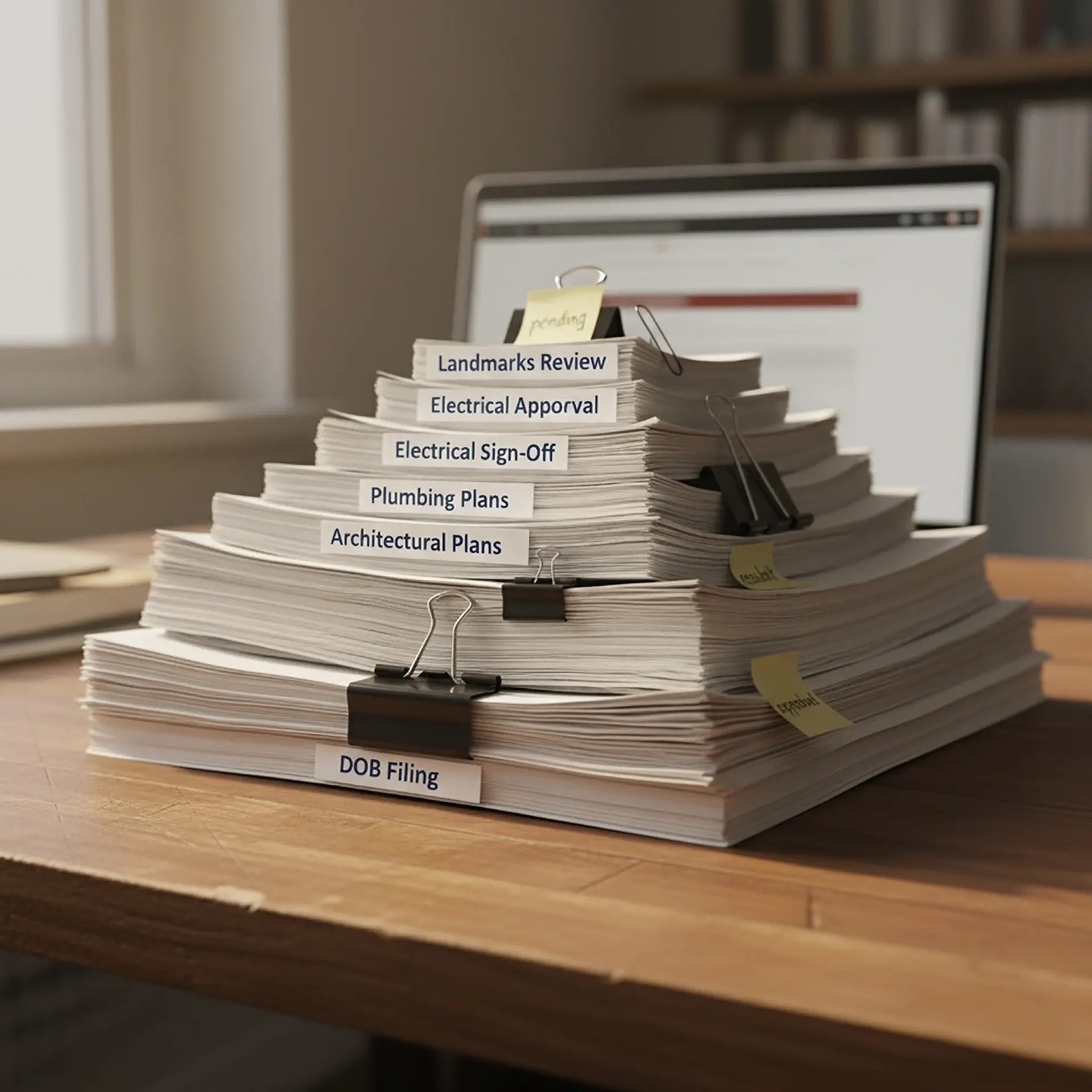
The Permit Pyramid: Who Approves What in NYC Construction
Renovating anything in New York City, from a studio apartment to a brownstone, means navigating a hi
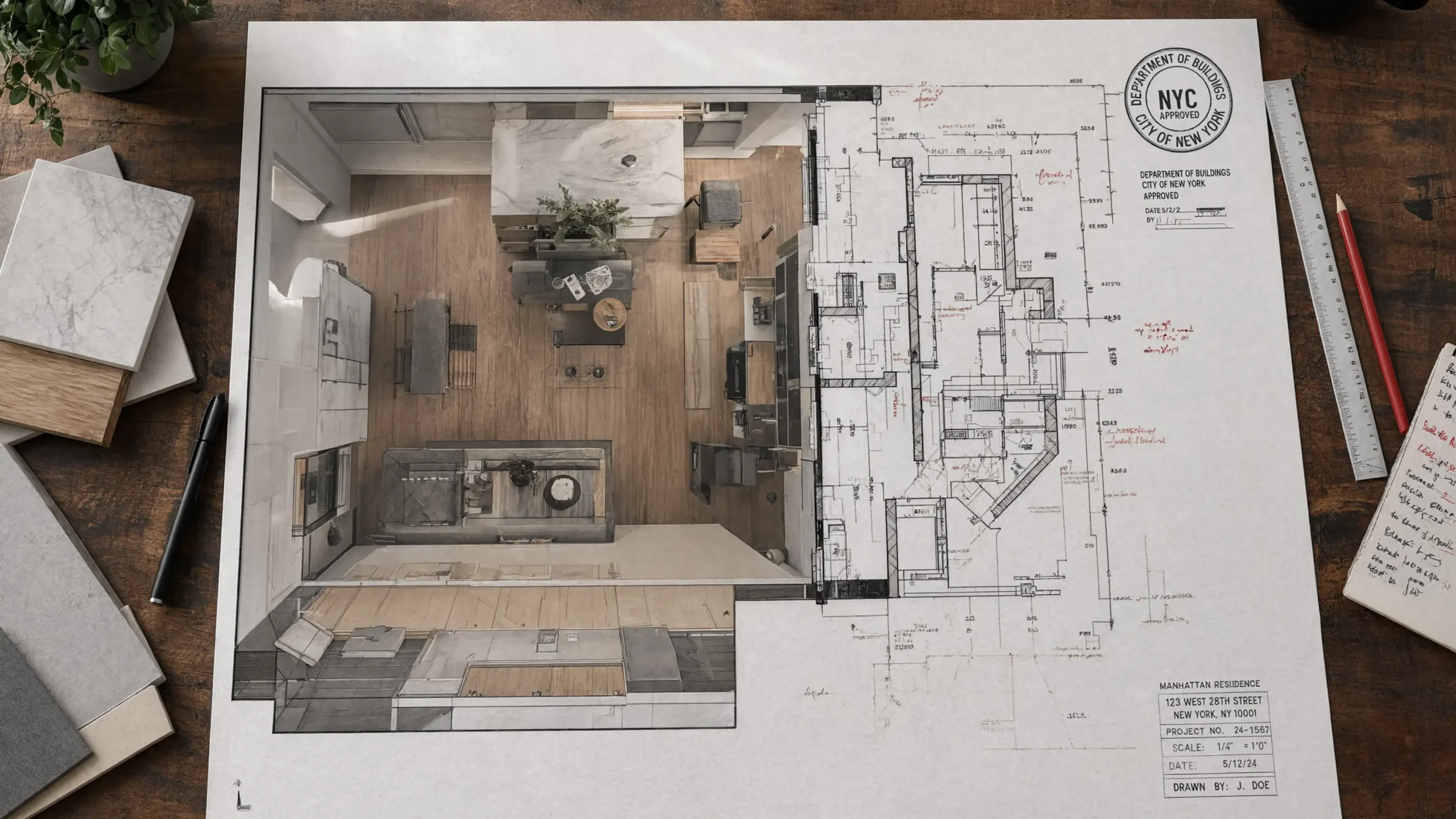
Blueprints, Codes, and Compliance: What Every NYC Renovation Needs Before It Begins
Before the first wall comes down or the new floors are ordered, there are invisible rules that deter

DIY or Hire a Pro? A Guide to Making Smart Renovation Decisions
The appeal of DIY renovation is real. There’s something genuinely satisfying about improving y