
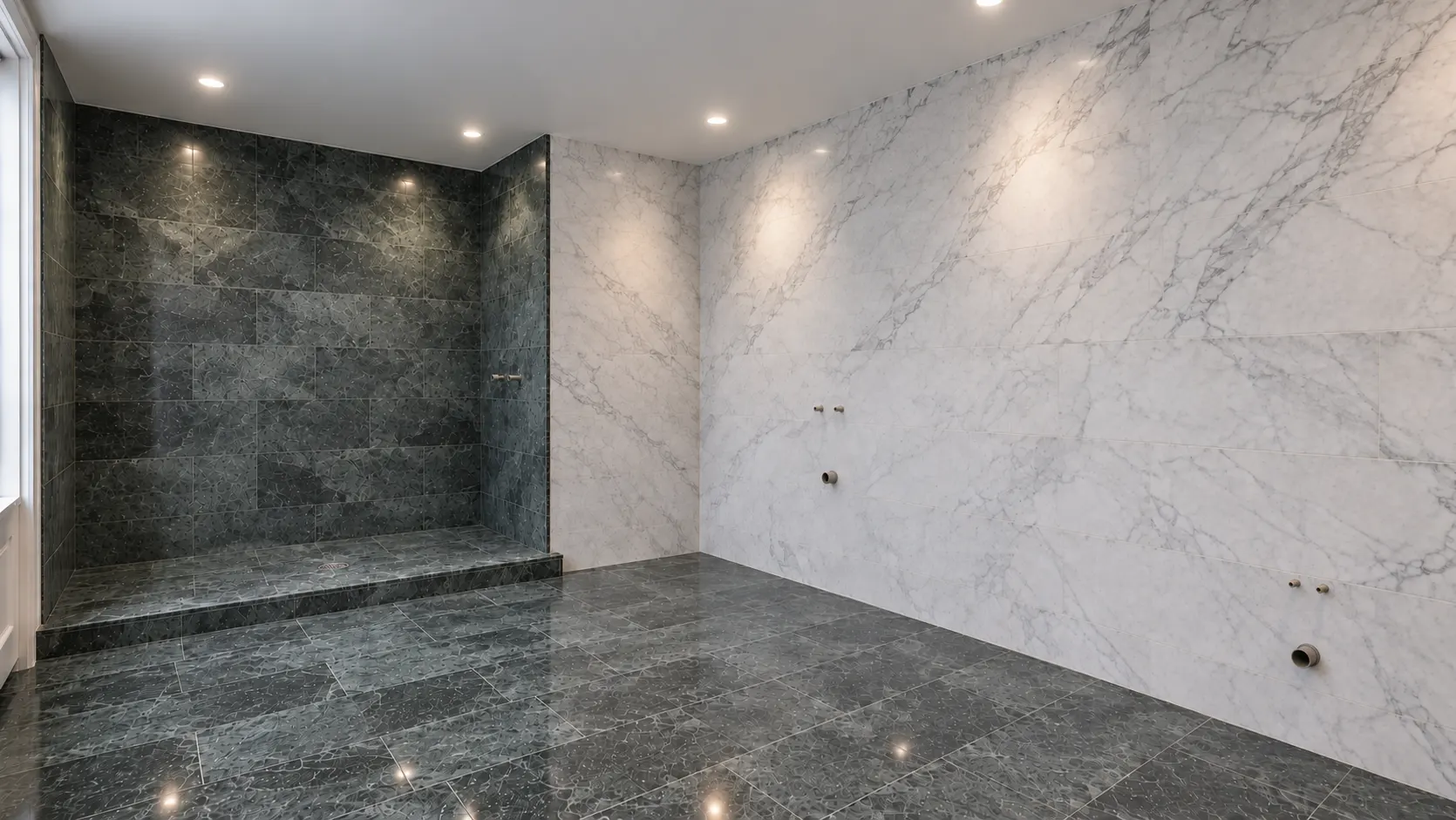
Why the Bathroom Is Always Finished Last
Somewhere near the end of an apartment renovation there is a week when the bathroom looks finished and cannot be used. The tile is on the wall. The fixtures are in the hallway in their boxes. Nobody is working in there, and nothing is wrong. The room is waiting, and the waiting was always going to happen.
Owners read that week as a contractor problem. It is not. A bathroom is the one room in an apartment built out of layers that chemically depend on each other, and every layer has a period after it goes down when the only correct action is to leave it alone. Add those periods together and you get most of the difference between a bathroom schedule and a kitchen schedule.
A kitchen is assembled, a bathroom is built up
In a kitchen, most of what happens is dry assembly. Cabinets get screwed to walls, a counter gets set on them, appliances slide into openings, and if two trades want the room on the same day they can usually share it. Work moves sideways.
A bathroom moves upward. Substrate goes on the floor and walls, then waterproofing over that, then tile set into mortar over that, then grout between the tile, then sealant and paint, then the fixtures. Each layer bonds to the one under it, and each one has to reach a certain state before the next can be trusted to stick to it. Nothing can be done out of order, and only one crew fits in the room anyway.
That is why the answer to how long a bathroom takes is never a number of working days. It is working days plus waiting days, and in a small pre-war bathroom the waiting days can equal the working ones.
The first wait is under everything
Old bathroom floors in this city are rarely flat. Under the tile that just came out there is usually a mortar bed, and under that a subfloor that has moved for a hundred years. Whatever gets used to make that flat again, a new mortar bed or a poured leveling compound, arrives wet and has to give up that water before anything is bonded to it.
How long depends entirely on the product, on how thick it went down, and on the room. A leveler poured thin in a warm ventilated room is ready quickly. The same material poured thick in a closed interior bathroom in February takes considerably longer, and the surface being walkable is not the same thing as the material being ready for tile. Those are two different numbers on the same data sheet, and the second one is the one that matters.
This is the first place a schedule gets quietly compressed, because the floor looks done. It is also the least visible failure when it goes wrong, since the consequences appear later, as tile that sounds hollow underfoot or grout that keeps cracking along one line.
The cure and the test are two separate days on the calendar
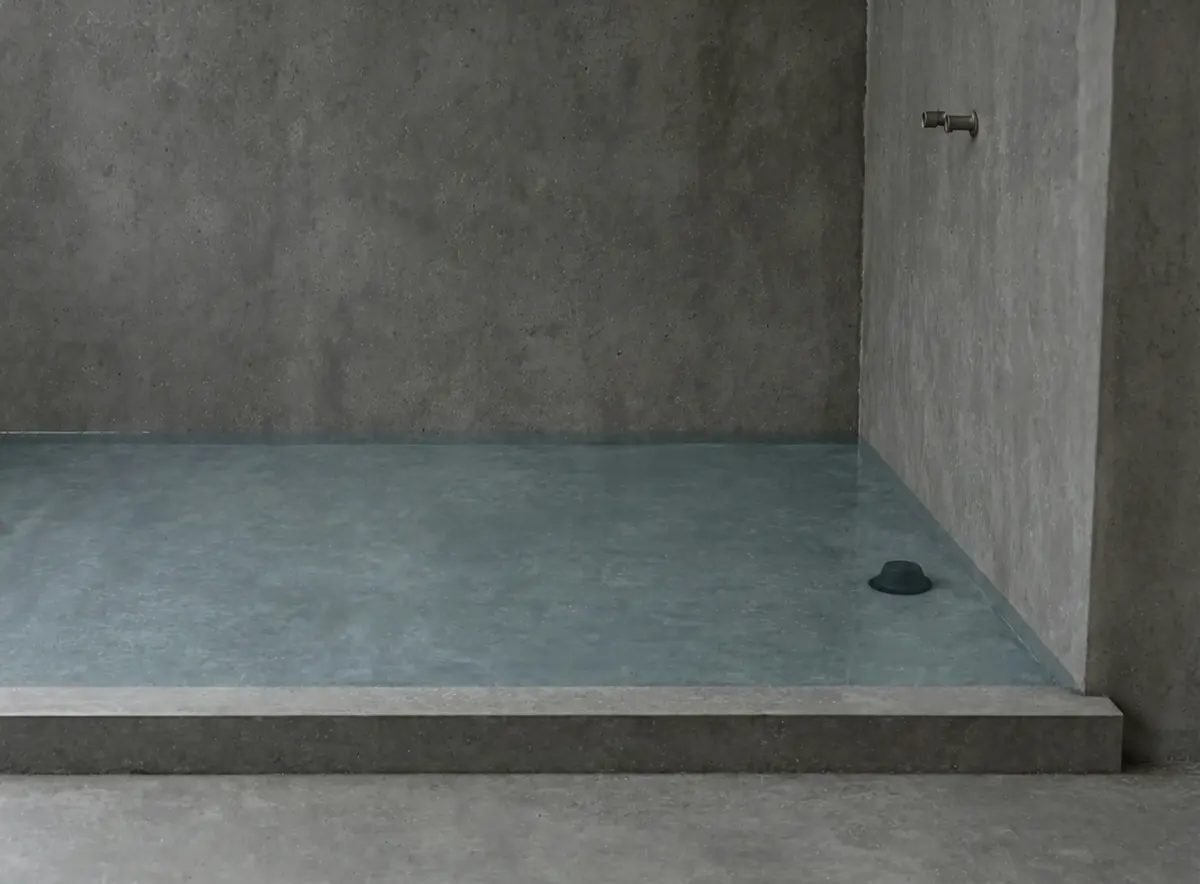
Waterproofing is the layer nobody sees and the only one whose failure destroys somebody else’s apartment. In an apartment building that is not a figure of speech: the ceiling below belongs to a neighbor, and the alteration agreement makes the damage yours.
So the membrane goes down, and then it has to cure. A liquid applied membrane is not waterproof at the moment it stops being wet to the touch. It reaches its properties over a period the manufacturer specifies, and until it gets there it cannot be flooded, tiled or walked on. Sheet membranes have their own version of the same rule at the seams. There is no universal number, and the number that applies is the one on the data sheet for the product actually being used, in the conditions of that room.
Then comes the flood test, and on a schedule it behaves like nothing else in the room. Everything else on a bar chart is work: somebody arrives, does a thing, leaves it better than they found it. The code minimum is short, 15 minutes with the water standing, but buildings and their engineers routinely want it held for hours or left overnight so somebody can look at the ceiling below with the load still on. That is what turns a 15 minute procedure into a day when the shower floor is held under water behind its threshold and the room is out of use to every trade, and it sits at the exact point where the sequence can still be stopped. What the procedure consists of we set out separately in our piece on waterproofing methods, membranes and code compliance.
What matters here is that it is a hold point and belongs on the schedule as its own line. Whether the city test applies at all depends on how the shower floor is built: NYC Plumbing Code 2022 section 312.9 calls for the test where the floor or receptor is made watertight by an applied liner under section 417.5.2, so what triggers it is the liner, not the shower in general. Where it does apply, the building can only add to the code minimum, never lower it, so the alteration agreement often calls for a longer hold, and the duration it actually requires belongs written next to the date rather than assumed. Ask when the water goes in and whether anyone is coming to look at it standing. That day is the cheapest day in the entire project, because the alternative is finding the leak after the tile, the fixtures and the neighbor’s ceiling are all in place.
Then the tile waits on the mortar, and the grout waits on the tile
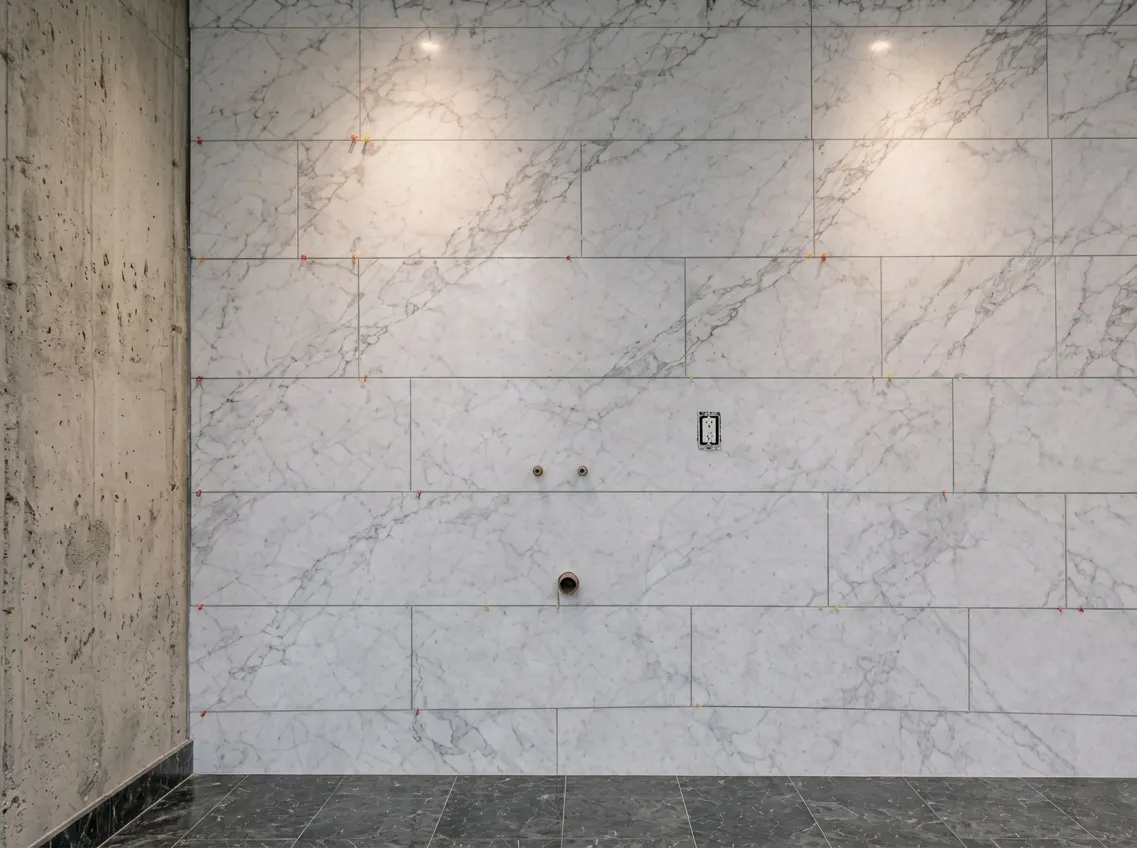
Tile goes on in a bed of mortar that is holding water, and that water leaves through the joints. Grouting closes those joints. Do it too early and the moisture is trapped under the tile with nowhere to go.
What follows is not dramatic and that is the problem. The grout cures unevenly and dries to different shades on the same wall, which reads as a bad batch rather than as a scheduling error. Efflorescence, a white haze pushed to the surface as water finally leaves, shows up on the joints weeks later. The bond under the tile is weaker than it should be. None of it is visible on the day, and all of it is permanent.
The wait after grouting works the same way and gets skipped more often, because by then the room looks finished. Cement grout needs its own period before it meets water, and the sealer, where one is used, needs the grout to be dry before it goes on and then needs its own time after. Running the new shower the evening the grout went in is the most common way a homeowner damages a bathroom that was built correctly.
Every one of these periods varies by product. Fast setting mortars and epoxy grouts exist precisely to shorten them, and they cost more, behave differently under the trowel and are less forgiving of mistakes. That trade is worth discussing with the tile setter in advance. What is not worth doing is assuming the ordinary materials will behave like the fast ones because the calendar needs them to.
The decisions that close before the walls do
The other thing that stretches a bathroom is not a wait at all. It is a set of choices that stop being reversible much earlier than anyone expects, at the moment the walls are closed up.
Rough plumbing is not a generic stage. It is built around specific products. Where the shower valve sits, and how deep it sits in the wall, comes from that valve. A wall hung toilet needs its carrier set in the wall, and the carrier is chosen for that toilet. A freestanding tub with a floor mounted filler needs the supply lines coming up through the floor in two places decided in advance, because moving them afterward means opening the floor of a room that is finished. A niche is framed while the wall is open and never after.
All of which means the fixture list has to be settled before the trades that hide it arrive, and settled means bought rather than chosen. A model that turns out to be discontinued after the wall is closed leaves two options: a substitute that fits the rough that already exists, or opening the wall again. The first is how bathrooms end up with a valve that does not match the shower head. The second is how a 2 week delay becomes a 5 week one.
This is also where a small apartment differs from a house in an unhelpful way. There is no slack in the wall. A rough set 2 inches off in a house gets absorbed by a thicker wall or a deeper chase, while in a pre-war apartment the wall is often as thin as the plumbing allows and the tile layout was drawn to the inch. So the tolerance that would have hidden a late change is not there, and a late change goes straight into the schedule instead.
Why the room cannot be worked around
Everything above would matter less if other work could continue in the same room. It cannot, and that is the second half of the answer.
A Manhattan bathroom is often 5 feet wide. One person fits comfortably. During curing periods nobody should be walking on the floor at all, and any dust raised in that room settles on a surface that is chemically open. So the crew leaves and works somewhere else in the apartment, which is fine on a full renovation and impossible on a job where the bathroom is the whole scope.
The building narrows it further. Work happens inside the hours the city and the building allow, which means a cure period that ends at 7 on a Saturday evening does not release anything until Monday morning. Weekends and holidays land inside cure windows and stretch them. This is why an honest bathroom schedule in an apartment counts weeks rather than days, and why the same work in a house finishes sooner with the same crew and the same materials.
What to do about it
The waiting cannot be removed. It can be planned around, and most of the pain comes from not planning around it.
Ask for a schedule that shows the hold points, not just the work. A bar chart with tile set on one day and grout on the next is a schedule that has not been thought about. Order everything early, because a fixture that arrives late lands at the end of a chain of waits and pushes all of them. Decide about fast setting materials at the beginning rather than at the moment somebody wants to save a weekend. And in a one bathroom apartment, plan where you will actually wash, honestly and in advance, because the answer decides whether the schedule is tolerable or not.
The materials set the pace
The bathroom finishes last because it is the only room where the materials, not the crew, set the pace. A contractor who tells you which days are waiting days is describing the job accurately. One who promises a bathroom in a week is describing a bathroom that will look finished in a week.

Beyond the Open Concept: Redefining Modern Living Spaces
For decades, the open concept floor plan ruled American home design. The promise was compelling: sea

Design Decisions That Help Apartments Sell Faster
Selling an apartment quickly and at a premium is rarely accidental. In competitive urban markets suc

Buying to Renovate: What to Look for Before You Sign
In New York City, buying to renovate is as exciting as it is risky. A pre-war apartment full of char