
Can You Put Hardwood Floors in a NYC Co-op?
You buy an apartment with old wall-to-wall carpet, plan to pull it up and lay wide-plank oak, and then a line in the house rules stops you: 80 percent of the floor has to stay covered. Owners usually find that line after the closing, sometimes in a letter from the managing agent.
The rule is real, it is not a city law, and it is more flexible than it sounds. Here is where it comes from, what your board will want to see if you are replacing the floor, and what happens when the neighbor below calls the managing agent.
The 80 percent rule belongs to your building
There is no New York City law requiring you to cover your floors. The requirement comes from your own building’s documents: the proprietary lease and house rules in a co-op, the bylaws and rules in a condo. Every building writes its own version, and some have none at all.
Where it exists, the number is usually 80 percent, sometimes 85 or 90, and it applies to the dry rooms: living room, bedrooms, dining room, hallways. Kitchens, bathrooms and closets are normally excluded. In an apartment with 900 square feet of covered rooms, an 80 percent rule means about 720 square feet under rugs.
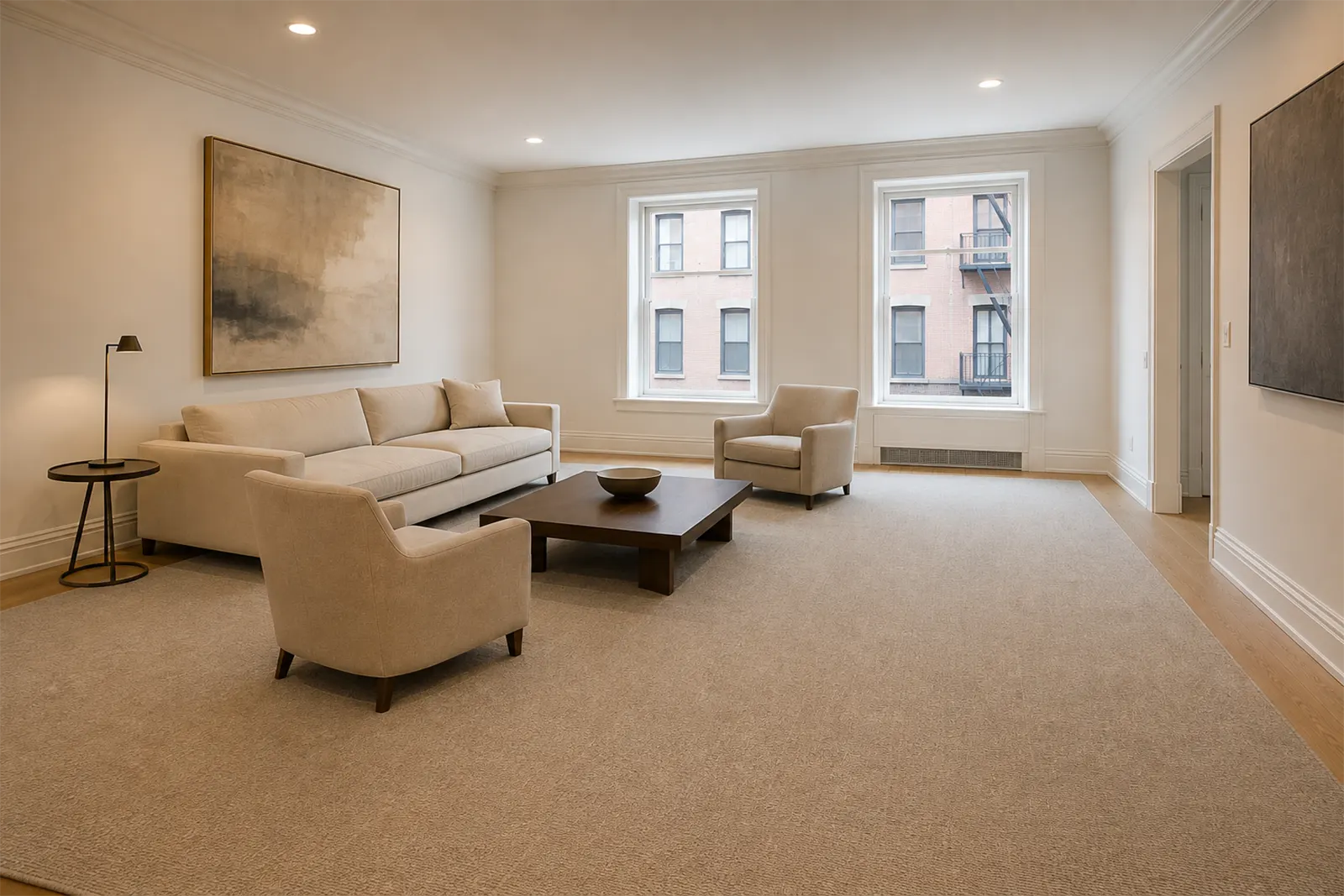
The good news is that most of the new floor can stay on view. Area rugs almost always count, so wall-to-wall carpet is rarely required, and a large rug under the seating, one under the dining table, one in each bedroom and a runner in the hall usually get you there with the oak still showing around the edges. Many buildings also want a proper rug pad, sometimes a sound-rated one, which helps both the neighbor and the floor.
Replacing the floor is a separate approval
Covering the floor is one question. Taking the old floor out is another, and it goes through the building’s alteration process, the same package that covers any renovation work.
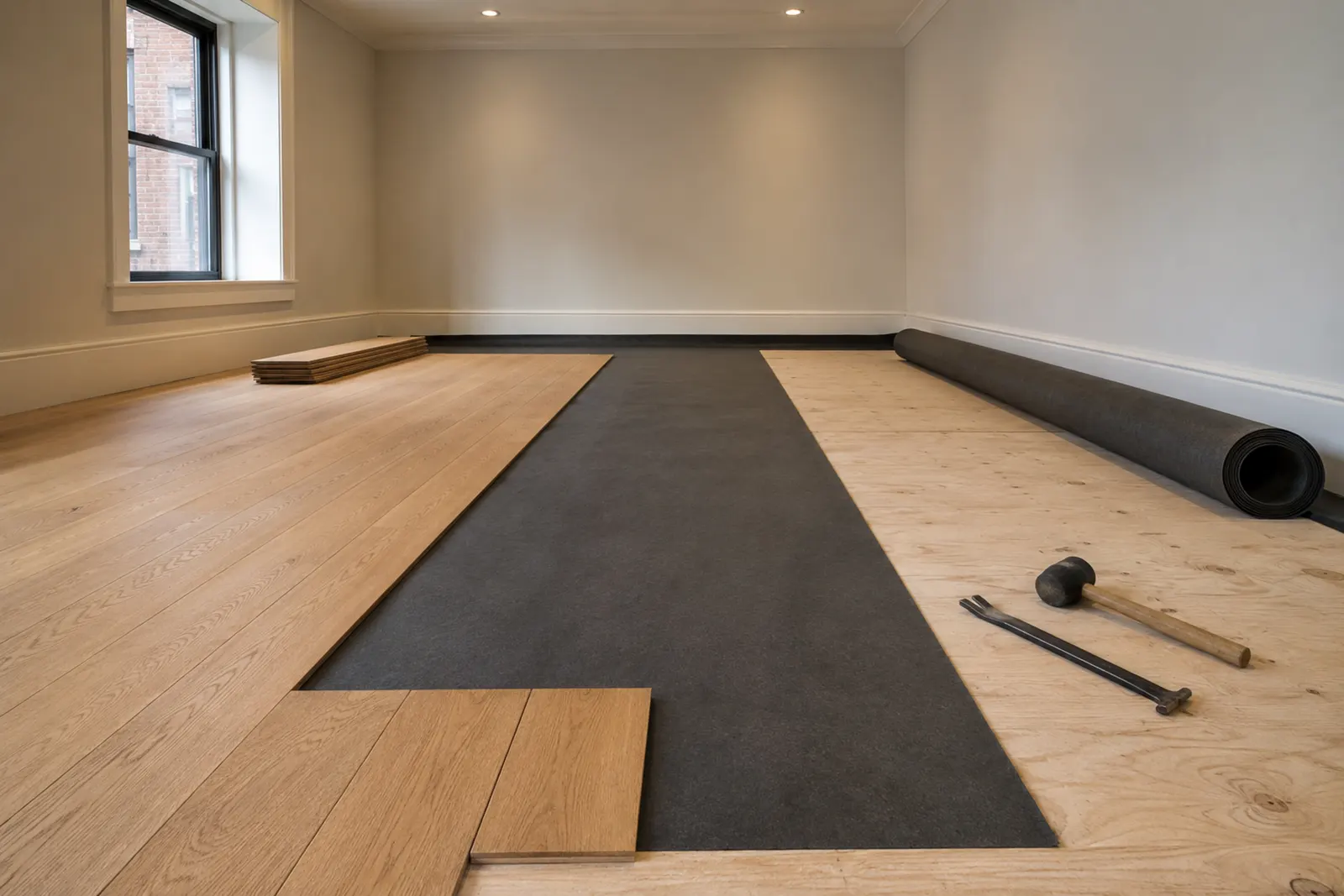
Boards look at flooring plans closely because impact noise is what generates complaints. What they typically ask for is an acoustic underlayment with a published rating, the product data sheet showing that rating, and drawings that show the assembly. The number most Manhattan buildings ask for sits around 50 to 55 on the Impact Insulation Class scale, the measure of how well a floor blocks footsteps; stricter buildings set 60 or higher.
This is worth reading carefully in your own documents, because the city’s sound rules between apartments cover new construction, while your renovation is governed by the building’s alteration agreement. If you want the technical side, how these assemblies are actually built and what they cost, we covered it in soundproofing solutions for apartments.
The trade you can often make
Owners who spend money on a wood floor rarely want to hide it under rugs. Many boards will treat that as a conversation rather than a rule: if your plans show a floor assembly that performs better than the building’s minimum, a board can grant relief from the carpet percentage, or reduce it.
That decision belongs to the board, and it is made on paper, before the work starts, with the ratings in front of them. Ask the managing agent how your building has handled it for other shareholders. Nothing here is automatic, and a waiver another apartment received years ago does not carry over to you.
Refinishing is not the same as replacing
Sanding and refinishing the boards you already have does not change the floor assembly, so the acoustic question does not arise. It is still work by a contractor in someone else’s building, which means the usual paperwork: notice to management, a certificate of insurance from the contractor, the building’s work hours, and agreement about odor and drying time, since finish fumes travel to the apartments above and below.
When the neighbor below complains
Enforcement almost always starts with a complaint, not an inspection. The usual sequence in a co-op is straightforward: the super or the managing agent visits your apartment, and if the floor coverage falls short of the house rule, you get a letter asking you to fix it. If nothing changes, the next step is a formal notice to cure: a written deadline, normally 30 days, to fix the problem.
Two things are worth knowing about how these end. Courts generally defer to a co-op board’s judgment on how the building is run, so fighting a carpet requirement is expensive and rarely successful, and the losing side can end up paying the board’s legal costs. And if you replaced the floor without the underlayment the building required, the board can require you to take the new floor up and do it properly at your own expense.
Most cases never go that far. Boards and attorneys push these disputes toward mediation, and the outcomes are often practical. In one Queens co-op, the two neighbors agreed to install noise-absorbing material between the upstairs floor and the downstairs ceiling and split the cost, with the board contributing part of it.
Ask before you order the oak
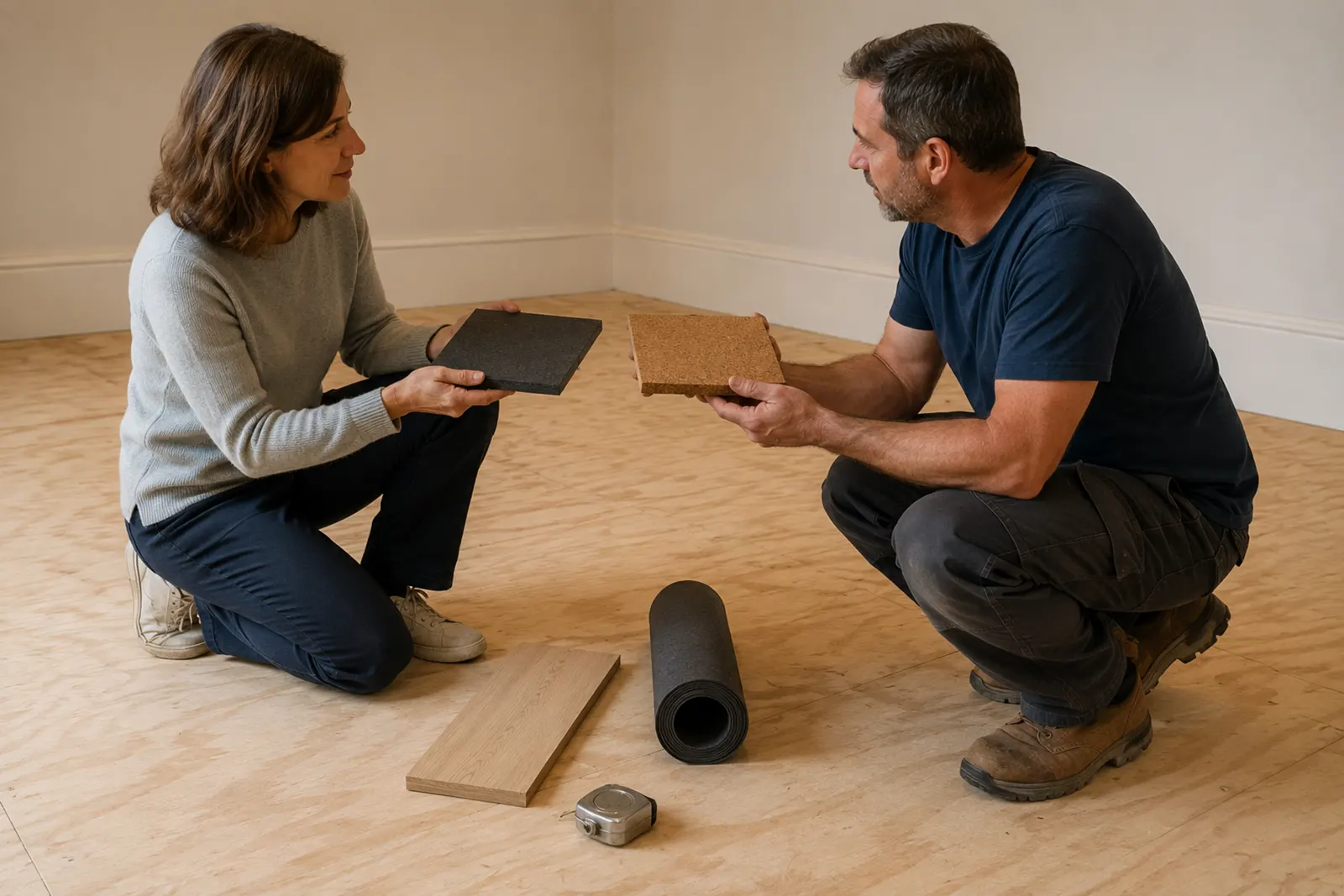
Five minutes with the managing agent answers everything that matters, and the answers change what you buy:
- Is there a floor coverage requirement, and what percentage is it?
- Do area rugs count, and is a specific rug pad required?
- What acoustic rating does the building require under a new hard floor?
- What has to be submitted, and who reviews it?
- Has the board ever reduced the carpet requirement for a high-performance floor?
If you are still in contract, this is a question for due diligence, alongside the house rules your attorney is already reading. Choosing rugs before the floor goes in lets you plan them into the design instead of buying them in a hurry after a letter from the managing agent.

Beyond the Open Concept: Redefining Modern Living Spaces
For decades, the open concept floor plan ruled American home design. The promise was compelling: sea

Soundproofing Apartments: Real Technical Solutions That Work
Living in a building with shared slabs and party walls means accepting that sound travels in ways it

Waterproofing Bathrooms: Methods, Membranes, and Building Code Compliance
Tile may be the visible finish in a bathroom, but it isn’t what keeps water out. In multifamil