

Beyond the Open Concept: Redefining Modern Living Spaces
For decades, the open concept floor plan ruled American home design. The promise was compelling: seamless flow between kitchen and living room, effortless entertaining across combined dining and living areas, and the flexibility to reimagine a space with nothing more than a furniture rearrangement. It became the default aspiration for anyone renovating, and New York was no exception.
Then something shifted. Remote work became permanent for many households. Families spent more time at home simultaneously, doing different things, needing different things. And the open concept, for all its visual appeal, began to reveal its limitations. Many Manhattan design and build firms are now seeing a consistent pattern: clients who once wanted walls removed are asking for them back. Not out of nostalgia, but out of genuine need for acoustic privacy, functional separation, and rooms with a defined purpose.
The Case for Defined Space
The pandemic made the problem impossible to ignore. Video calls compete with background noise. Cooking smells and sounds migrate freely through open layouts. A partner watching television in the living area and someone working at the kitchen table occupy the same acoustic space with no meaningful separation. The visual openness that photographs beautifully can feel relentless to live inside.
What many households discovered is that they didn’t want open or closed. They wanted control. The ability to open a space for entertaining and close it for focus. To cook without the kitchen becoming the center of every room. To work from home without the entire apartment serving as a backdrop to every call.
In Manhattan, acting on that desire requires more planning than in most markets. Adding or removing walls in a co-op or condo involves board approval, NYC Department of Buildings permits, and in many pre-war buildings, a structural assessment before any modification begins. These elements form the essential framework for good design. Working with a team that understands them from the outset keeps projects on schedule and on budget.
Semi-Open Plans: The Practical Middle Ground
The most effective response to the limitations of pure open concept design is the semi-open or broken plan. Designers are increasingly using this approach to create spaces that are connected yet gently defined, rather than fully undifferentiated.
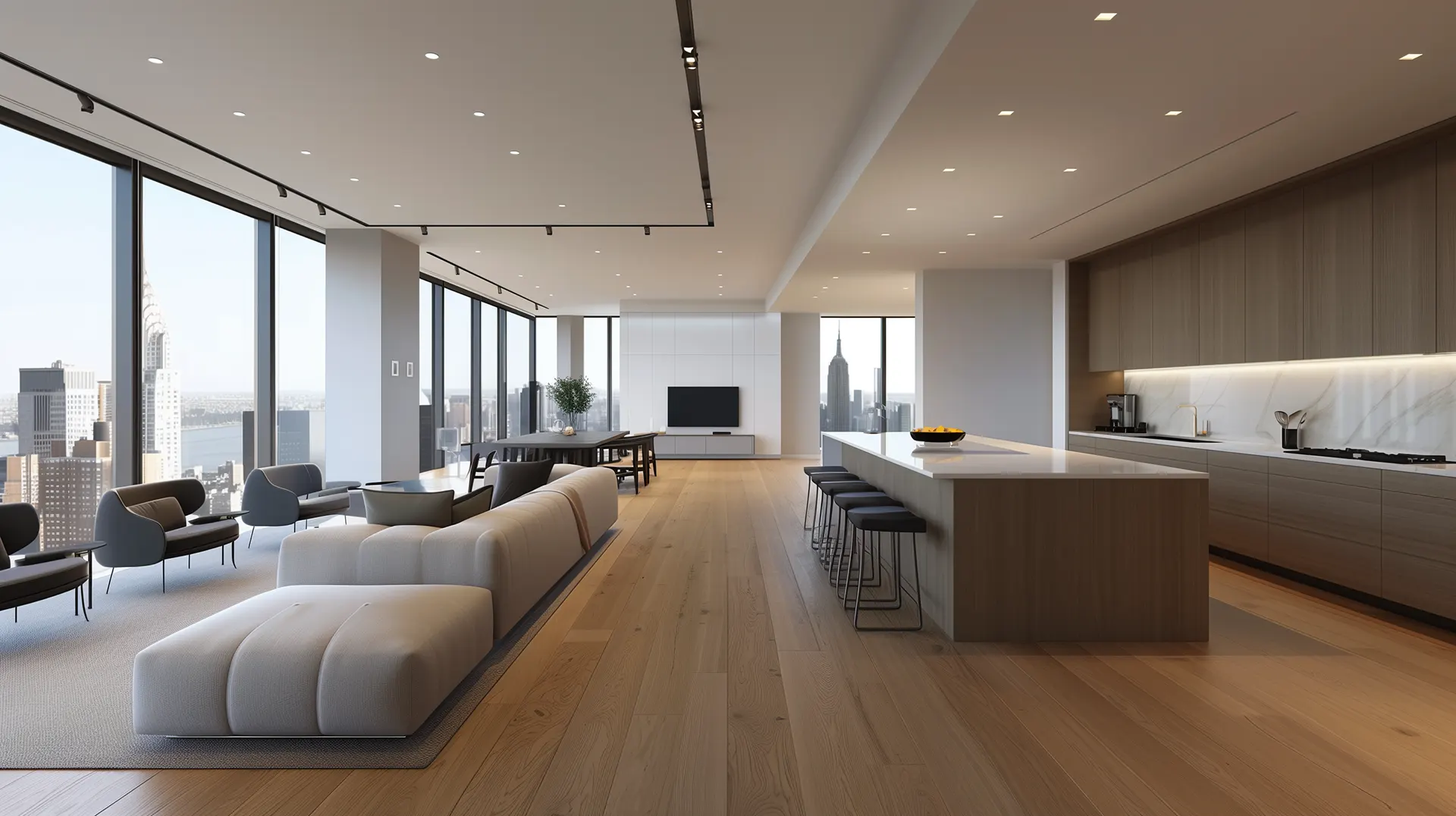
Kitchen islands with raised breakfast bars create a natural threshold between cooking and living areas without closing either off. Built-in bookcases define an office nook within a living room while maintaining visual connection to the rest of the space. Strategic furniture placement and layered lighting establish distinct zones that feel purposeful without requiring any structural intervention.
For solutions that do involve physical separation, sliding panels, partial walls, and built-in shelving units can all achieve meaningful division between zones. In Manhattan buildings, any of these that require wall attachment or modification should be reviewed against building rules before installation begins. Co-op boards in particular have varying requirements around noise transmission and structural alteration, and what’s straightforward in one building may require formal approval in another.
Broken Plan Living in Practice
The broken plan concept works because it treats flexibility as a design requirement rather than an afterthought. A living area that opens fully to a dining space for a dinner party but draws partially closed for an ordinary weekday evening. A kitchen that connects to the main living area during casual moments but offers separation during serious cooking. A home office that exists within the footprint of a studio apartment without consuming it visually when the workday ends.
The design tools that make this possible range from the architectural, partial walls, pocket doors, structural openings with frameless glass, to the purely interior: rugs that anchor zones, ceiling treatments that define areas without interrupting sightlines, pendant lighting that marks a dining area while ambient lighting softens the living zone beside it.
The best broken plan layouts are planned around the specific household. Traffic patterns, daily schedules, acoustic priorities, and entertaining habits all inform where separation is needed and where connection serves better. That specificity is what distinguishes a space that functions well from one that simply photographs well.
In Which Situations Is an Open Layout Not the Best Option?
Open layouts suit certain lifestyles and floor plans well, but they are not universally the right choice. A more structured approach tends to work better when the household includes people working from home who need acoustic separation for calls and focused work; when cooking is frequent and intensive and kitchen odors and noise are better contained; when children and adults share the space simultaneously with different noise tolerances and safety considerations; when household members keep different schedules and sound isolation between areas matters; and when the building’s existing architecture, particularly in pre-war Manhattan apartments, offers structural character and room definition worth preserving rather than opening up.
In these situations, a balanced approach that maintains some connectivity while introducing meaningful separation typically produces a more livable result than either extreme.
What Is an Open Concept Layout and Why Has It Been So Popular?
An open concept layout removes interior walls to combine the kitchen, dining, and living areas into a single continuous space. The appeal is consistent: natural light travels further without walls to interrupt it, movement between areas feels intuitive, and even a modest square footage reads as more generous when it isn’t divided. For entertaining, the format is particularly effective, allowing someone cooking to remain part of the conversation rather than isolated in a separate room.
For Manhattan apartments specifically, where square footage is limited and maximizing the sense of space is a priority, open layouts have been especially popular. The shift toward semi-open and broken plan approaches doesn’t diminish those advantages. It adds nuance to them.
What Is the Most Effective Way to Divide an Open Concept Living and Dining Area?
The goal is to create legible zones without sacrificing the light, flow, and sense of openness that make the layout work. The most effective approaches depend on the space and how much definition is needed.
Furniture placement is the most immediate tool available. A sofa positioned with its back toward the dining area creates a natural boundary between zones. A console table behind it reinforces the transition. Area rugs anchor each function visually, one under the dining table and one in the living area, establishing separation without any physical barrier.
Lighting layers do significant work in differentiating zones. A pendant or chandelier over the dining table and softer ambient lighting in the living area create distinct moods that make each zone feel purposeful without any structural change.

For more defined separation, partial partitions in slatted wood or open shelving units maintain sightlines while adding architectural presence. Accent walls or subtle shifts in paint color or texture can visually mark the boundary between areas. Ceiling treatments including beams, recessed panels, or a change in finish height can define zones with genuine architectural weight.
Each of these approaches can be planned and executed within the constraints of a Manhattan co-op or condo. For anything involving wall attachment, drilling, or structural modification, confirming building requirements before installation is always the right first step.

One Renovation, Two Perspectives: How Designers and Builders See the Same Space Differently.
Every renovation begins with a floor plan and two professionals standing over it. They are looking a
Townhouse Renovations: Structural and Design Challenges
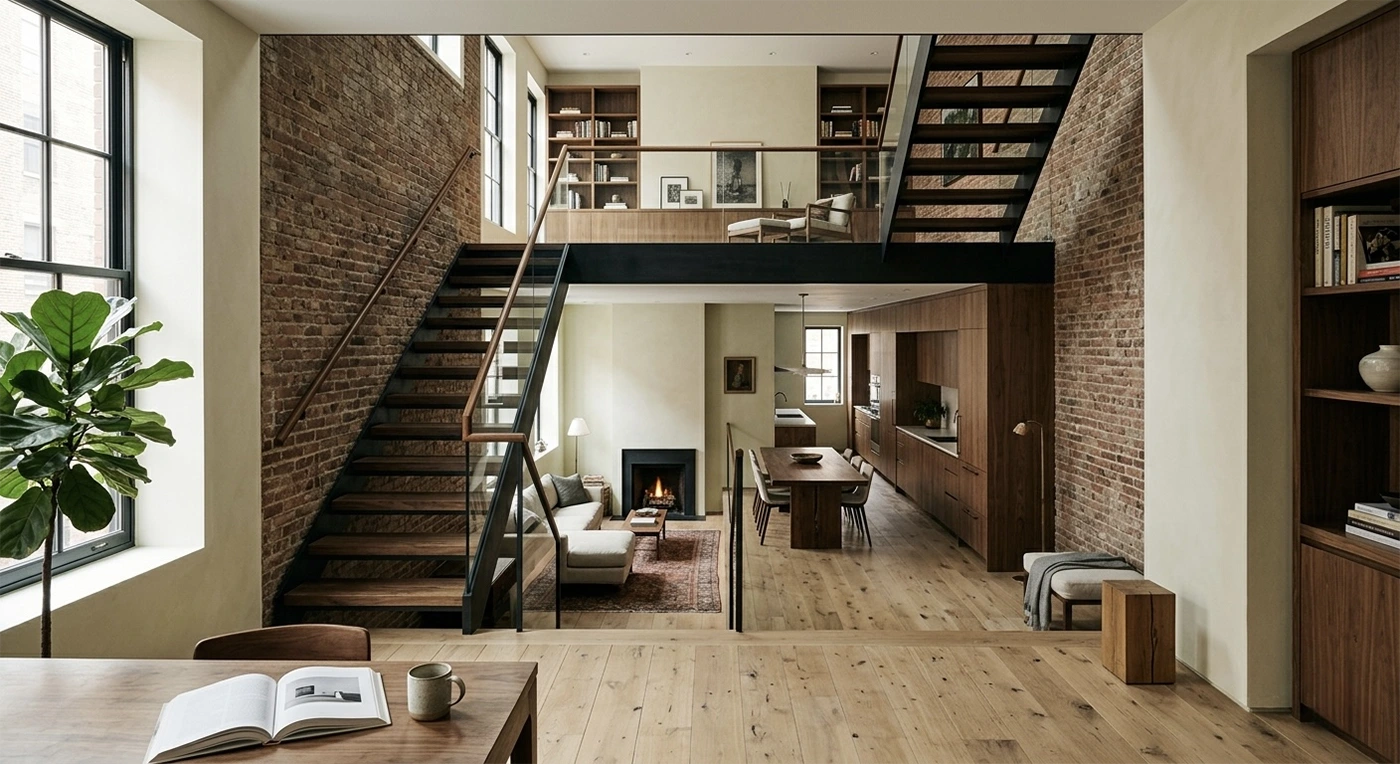
Renovating a townhouse is among the most complex and rewarding forms of residential transformation.
Why the Hood Over Your Range Does Nothing
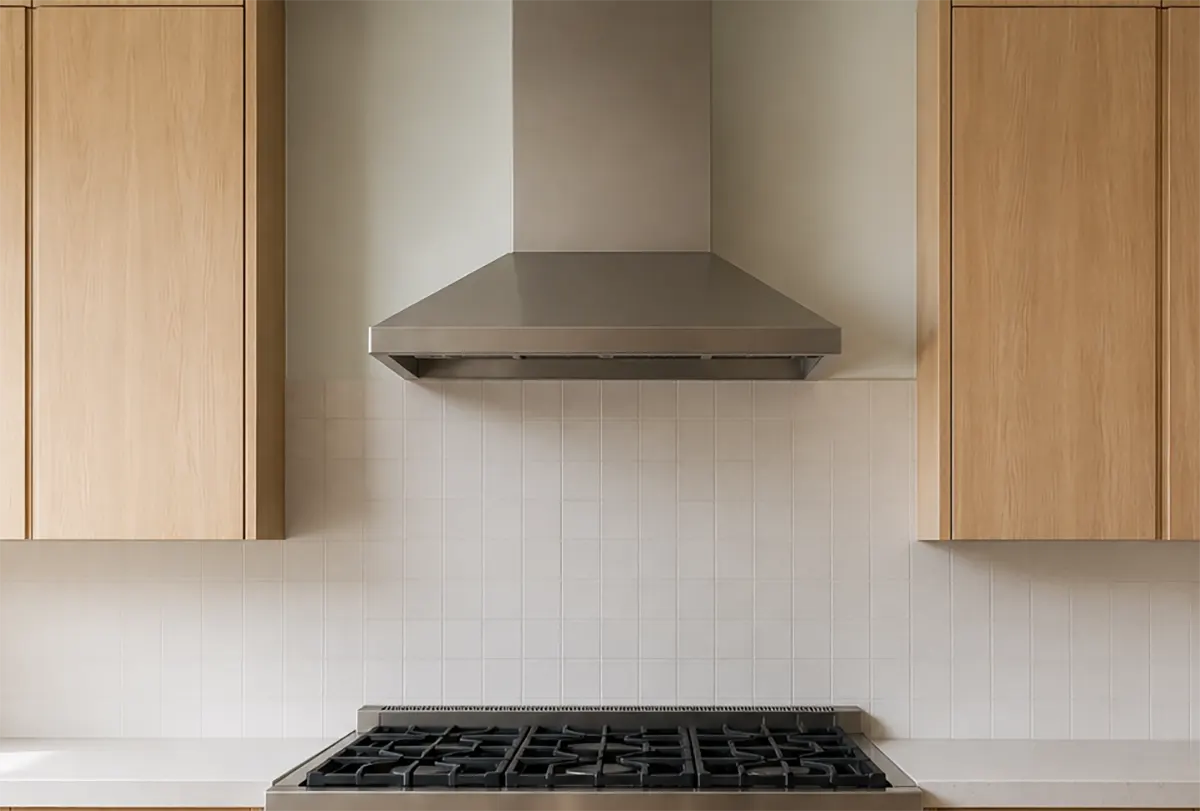
Fish on Thursday, and on Friday morning the hallway still knows about it. The film on the cabinet do