

How to Plan an Apartment Renovation in NYC: Ideas and Strategic Planning
Planning an apartment renovation in New York City takes considerably more than design inspiration. Between building regulations, structural constraints, budget realities, and board approvals, nearly every decision carries consequences beyond aesthetics. A successful renovation balances architecture, engineering, function, and long-term value, and what follows covers the essential considerations for approaching a project with a clear plan from start to finish.
Start with an honest assessment of the property
Before thinking about aesthetics, evaluate the building itself, because a great many renovation problems begin with owners underestimating existing conditions.
Check the age of the electrical wiring and plumbing. In older properties, particularly townhouses and pre-war buildings, the existing systems often can’t support modern loads. Upgrading a kitchen without upgrading the electrical panel tends to create problems later, and the same logic applies to heating and ventilation, since beautiful interiors won’t compensate for poor airflow or inconsistent heat.
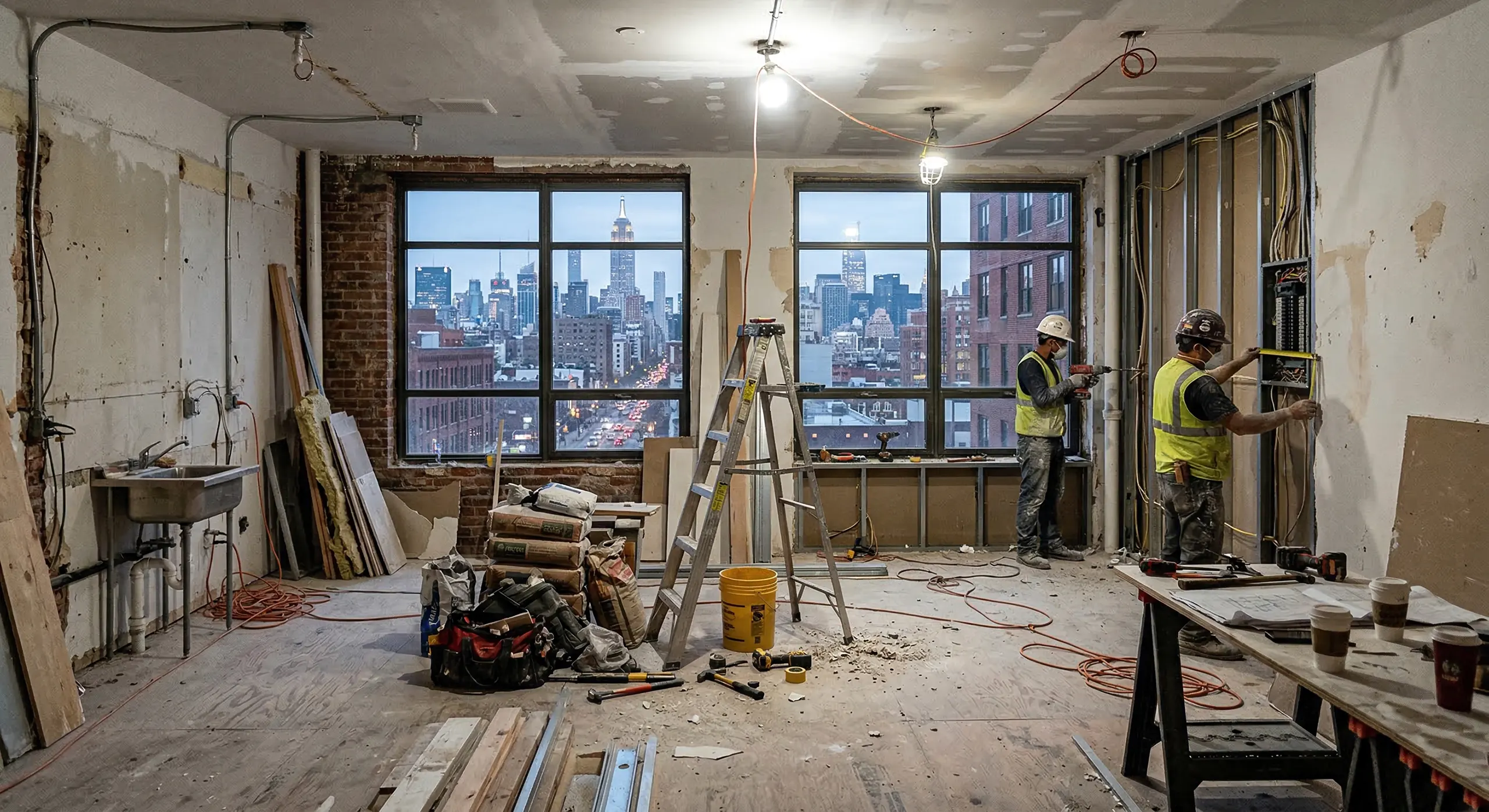
Structural conditions matter just as much. Load-bearing walls, ceiling heights, slab thickness, and the building’s overall condition define what’s realistically possible. Moving a wall isn’t purely a design choice; it’s an engineering decision with permit and approval implications. Understanding these limitations early is what prevents expensive redesign later.
Layout planning is about function, not trends
Open concept layouts dominated for years, but removing walls doesn’t automatically improve a home, and the goal is better function rather than emptiness.
The useful questions are practical ones. Where does clutter accumulate? Where do you need more storage? Is the kitchen too far from where you actually eat? Do the bedrooms feel private enough?
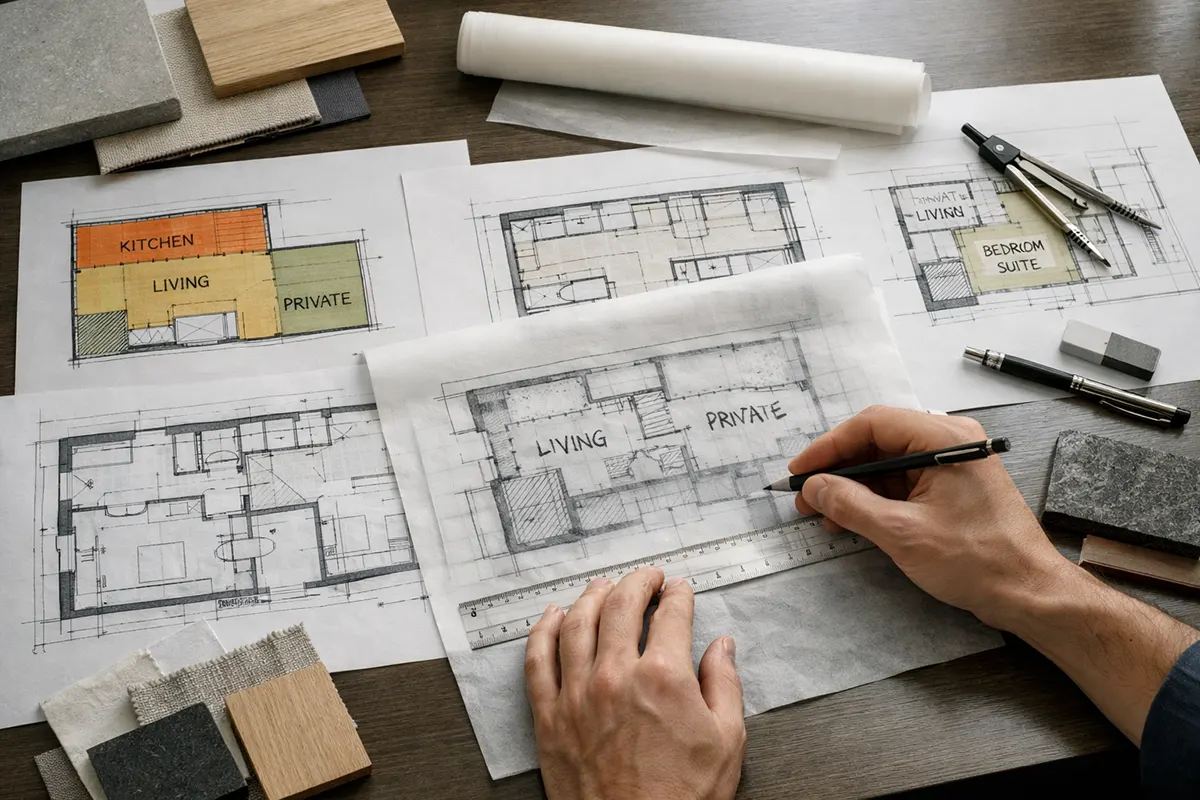
Good design solves daily frustrations. Sometimes that means opening a space up and sometimes it means adding separation, and zoning frequently works better than full openness. Slight changes in floor level, ceiling detail, built-in millwork, or sliding partitions can define areas without sacrificing light.
Worth knowing before you commit to that last idea: sliding partitions and any built-in element that fixes to walls or ceilings generally require board approval in a co-op or condo, and a partition that runs to the ceiling can also raise questions about egress, sprinkler coverage, and window access depending on how it’s configured. Confirm with your building before the design depends on it.
Circulation ultimately matters more than square footage. A well-organized 1,200 square foot apartment routinely feels more comfortable than a poorly planned 1,800 square foot one.
Budget reality and cost structure
Most renovation budgets fail because they focus on visible finishes, when the largest expenses are usually hidden. Structural work, plumbing relocation, electrical upgrades, waterproofing, insulation, and permits can consume a substantial share of the total, and finishes should be selected only after those baseline costs are understood.
A useful approach divides the budget into five categories: structural and engineering, mechanical systems, finishes and fixtures, labor, and contingency.
Contingency isn’t optional in New York. In older properties especially, unexpected conditions are routine, and hidden water damage, uneven subfloors, outdated pipes, and existing code violations tend to surface once demolition begins. A reserve of 10 to 20 percent protects the project from delays and from decisions made in a hurry.
Sequence and timeline
Renovation follows a logical order, and skipping steps creates genuine problems. Design has to be finalized before demolition, technical drawings need enough detail for contractors to price accurately, and permits should be secured before any major structural or mechanical work begins.
The typical sequence runs: planning and design, then asbestos assessment and any required abatement, then permits and approvals, demolition, structural and mechanical rough work, inspections, insulation and drywall, flooring and millwork, and finally fixtures and finishes.
That second step deserves emphasis because it’s the one most often overlooked. In any building constructed before April 1987, which covers the large majority of Manhattan’s housing stock, an asbestos assessment by a licensed investigator is generally required before the DOB will issue a permit for work disturbing existing materials. The results get filed with the DEP, and if asbestos is found, licensed abatement has to happen before general demolition proceeds. This isn’t a formality a good contractor skips to save you time. It gates the permit, and building it into the schedule from the start avoids a delay at exactly the moment everyone expects work to begin.
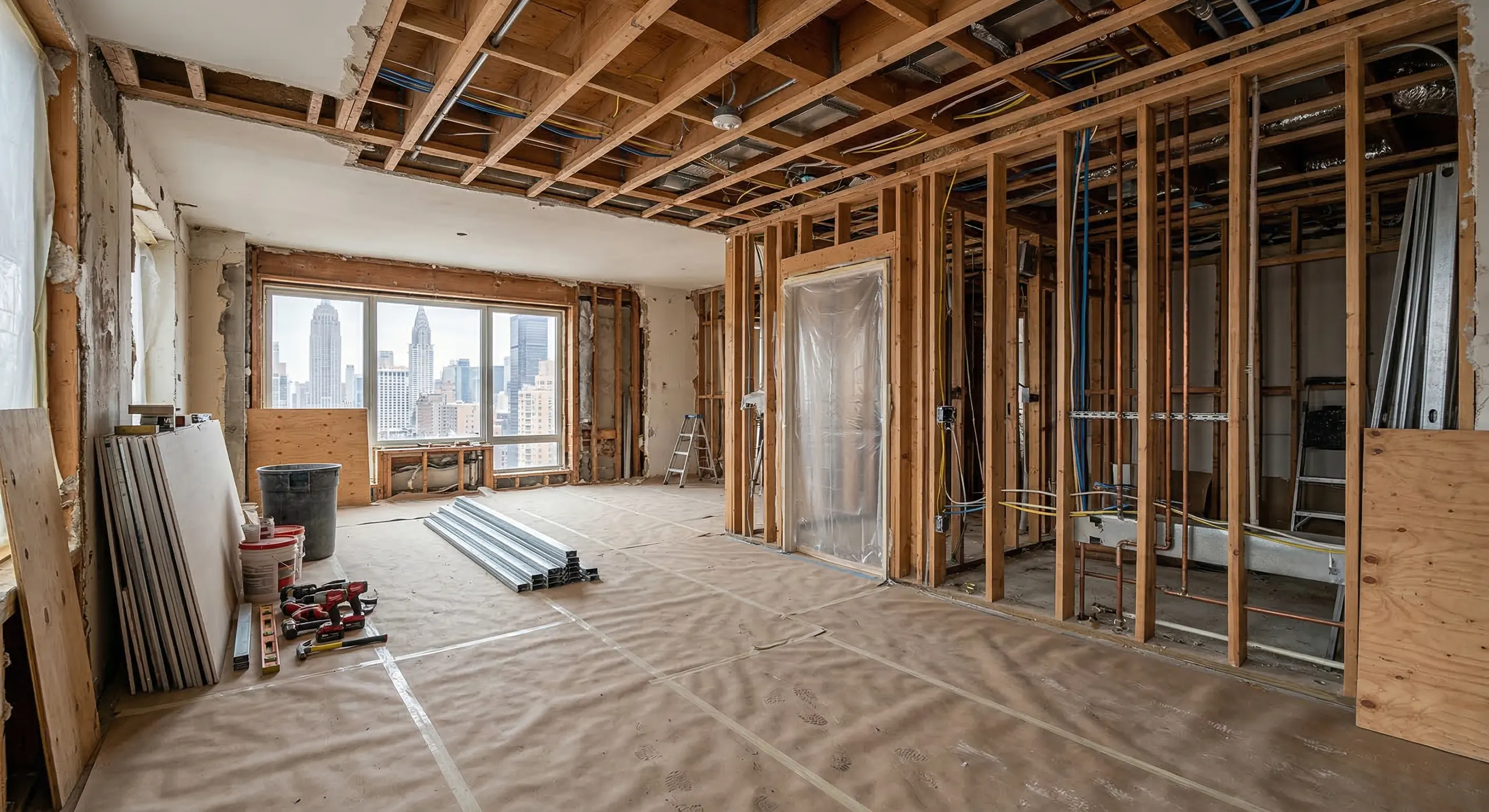
Understanding the sequence also helps set expectations. Cabinets can’t be installed before the floors are level, and tile can’t go in before the plumbing is properly set.
Apartments and condos: special considerations
In a multi-unit building, renovation comes with a layer of restriction that doesn’t exist in a house. Building management typically requires plan approval, insurance documentation, and adherence to specific working hours.
Plumbing stacks usually can’t be moved far, and bathrooms and kitchens are often confined to certain zones as a result. Noise rules may limit when demolition can happen, and elevators have to be reserved for material delivery.
Sound insulation deserves particular attention. Proper underlayment beneath floors and well-built wall assemblies reduce neighbor complaints and genuinely improve daily comfort. Most buildings also set minimum sound ratings for hard flooring in their alteration agreements, so this is a requirement as much as an investment.
Material selection: durability over trend
Material decisions should balance appearance against performance, and a few patterns hold consistently. High-gloss finishes show scratches. Soft stone stains readily in a kitchen. Low-quality hardware works loose within a couple of years. Engineered wood is often more dimensionally stable than solid planks. Porcelain slabs deliver durability comparable to natural stone with considerably less maintenance.
The better question is how a material will age rather than how it looks on day one.
Touchpoints matter more than decorative details. Door handles, faucets, light switches, cabinet hardware, and flooring get experienced every single day, and investing there creates a sense of quality without overspending elsewhere.
Lighting is both technical and emotional
Lighting shouldn’t be an afterthought, since it shapes mood, usability, and how large a space feels.
Plan it in layers: ambient lighting for general brightness, task lighting for kitchens, desks, and bathrooms, and accent lighting for art and texture.
In concrete buildings, recessed fixtures can’t simply be cut into the structural slab, which is a real constraint but not the dead end it’s sometimes described as. The standard solution is a dropped ceiling, either across a room or, more efficiently, in a localized section along a hallway or perimeter, which creates a cavity for wiring and recessed fixtures while preserving ceiling height where it matters most. Surface-mounted fixtures and track systems are the other reliable answer. Any of these approaches involves permitted electrical work and, in a co-op or condo, board approval.
Warmer color temperatures generally read as more residential and comfortable than cool white light.
Exterior work and property value
For townhouse and building owners, the exterior affects both appraisal value and buyer perception, and improvements to facade materials, windows, insulation, roofing, and landscaping often return well.
Energy efficiency upgrades such as better insulation, modern windows, and a properly sealed building envelope reduce operating costs over time. They’re rarely dramatic visually, but they add meaningfully to value and comfort.
One critical caveat in New York. If your property sits within a landmarked historic district or is an individually designated landmark, essentially any change visible from the street requires approval from the Landmarks Preservation Commission before work begins. That includes window replacement, facade repairs, roof changes visible from the street, and any treatment applied to masonry such as paint, coating, or limewash. The LPC review process takes time and can result in requirements you didn’t anticipate, and work performed without approval can result in violations and an order to reverse it. Large portions of Manhattan fall within historic districts, so check your property’s status before planning any exterior work.
The psychological side of renovation
Renovation is disruptive, and whether you’re living through construction or managing contractors from a distance, it’s stressful. Clear communication, realistic timelines, and written agreements reduce that considerably.
Decisions get harder once construction is underway, which is exactly why detailed planning before demolition matters so much. Changing a layout mid-project reliably increases both cost and delay.
It also helps to separate inspiration from reality. Images online typically represent ideal conditions, generous budgets, and perfect lighting, while real projects require compromise. The aim is to compromise strategically rather than emotionally.
Long-term thinking
A renovation should support how you plan to live over the next five to ten years, which means thinking about storage, potential family changes, work-from-home needs, and eventual resale flexibility.
Neutral but high-quality base finishes make later updates easier, while highly specific design statements tend to date quickly. The fundamentals of layout, light, and proportion hold their value regardless of what’s currently fashionable.
Renovation combines architecture, engineering, budgeting, and a fair amount of psychology. Approached methodically it improves daily life and increases property value, and approached in a rush it produces stress and unexpected cost. Preparation is what separates the two.
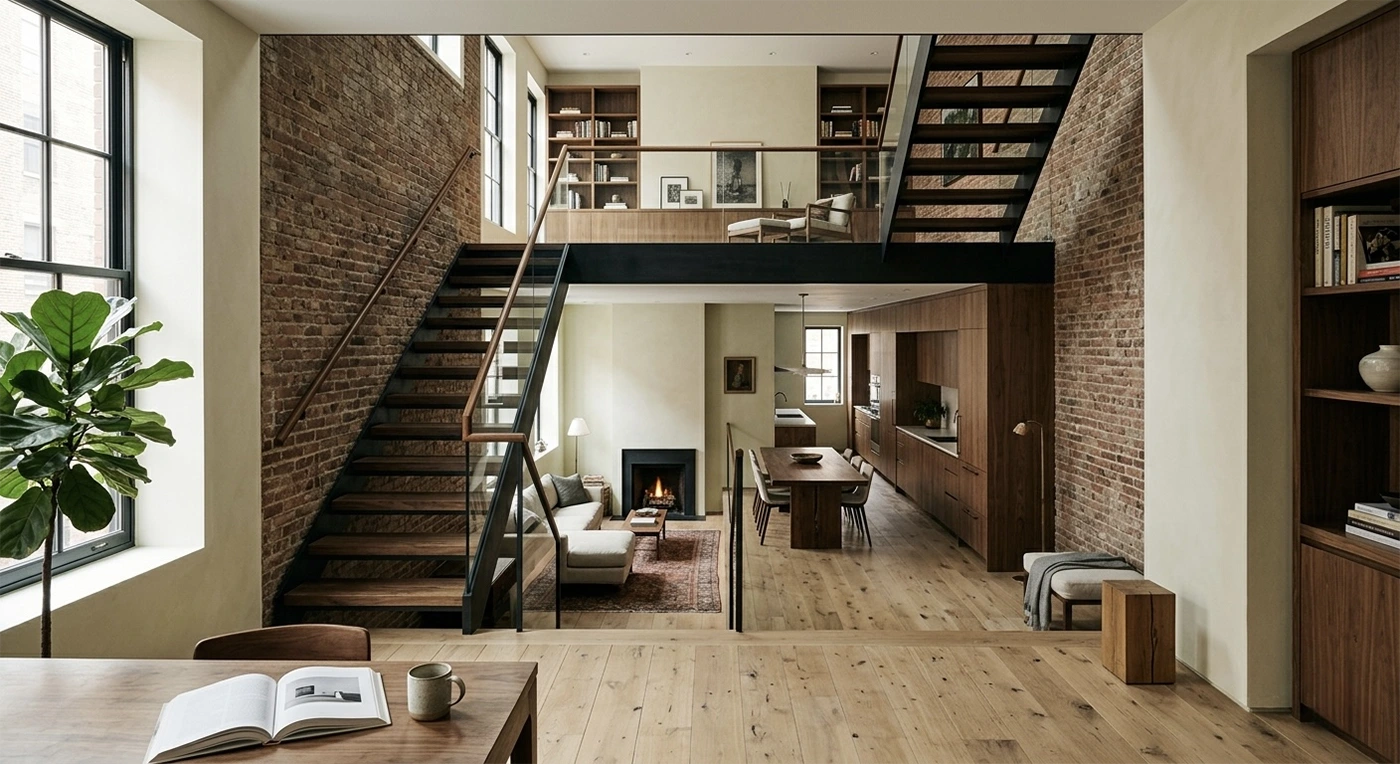
Townhouse Renovations: Structural and Design Challenges
Renovating a townhouse is among the most complex and rewarding forms of residential transformation.

Soundproofing Apartments: Real Technical Solutions That Work
Living in a building with shared slabs and party walls means accepting that sound travels in ways it

How to Read a Floor Plan Like a Pro
Whether you’re purchasing a new apartment, embarking on a full renovation, or simply evaluatin