

What an Allowance in a Renovation Contract Really Covers
Most renovation contracts have a few lines that carry a number but no product: $4,500 for countertops, $3,500 for tile, $2,000 for lighting. Those are allowances, money set aside for things you have not chosen yet. They are also the single most common reason the final invoice does not match the contract you signed. Most of that gap can be closed before you sign.
Why the number exists at all
A contractor has to price the whole job before you have picked a faucet. They cannot guess at your taste, and stalling the contract until every selection is made helps nobody, so they put a placeholder in each category where the choice is still open. Tile, countertops, plumbing fixtures, lighting, appliances, flooring and hardware are the usual ones. Labor, demolition and permits are normally fixed.
Set at a realistic number, an allowance is a useful planning tool. The trouble starts when the number is lower than what you are likely to buy, so the gap shows up later as an overage.
What the number covers, and what it leaves out
Unless the contract says otherwise, an allowance covers the material and nothing else. Installation labor sits somewhere else in the quote, or sometimes nowhere obvious at all, which is how a tile selection turns into two separate surprises.
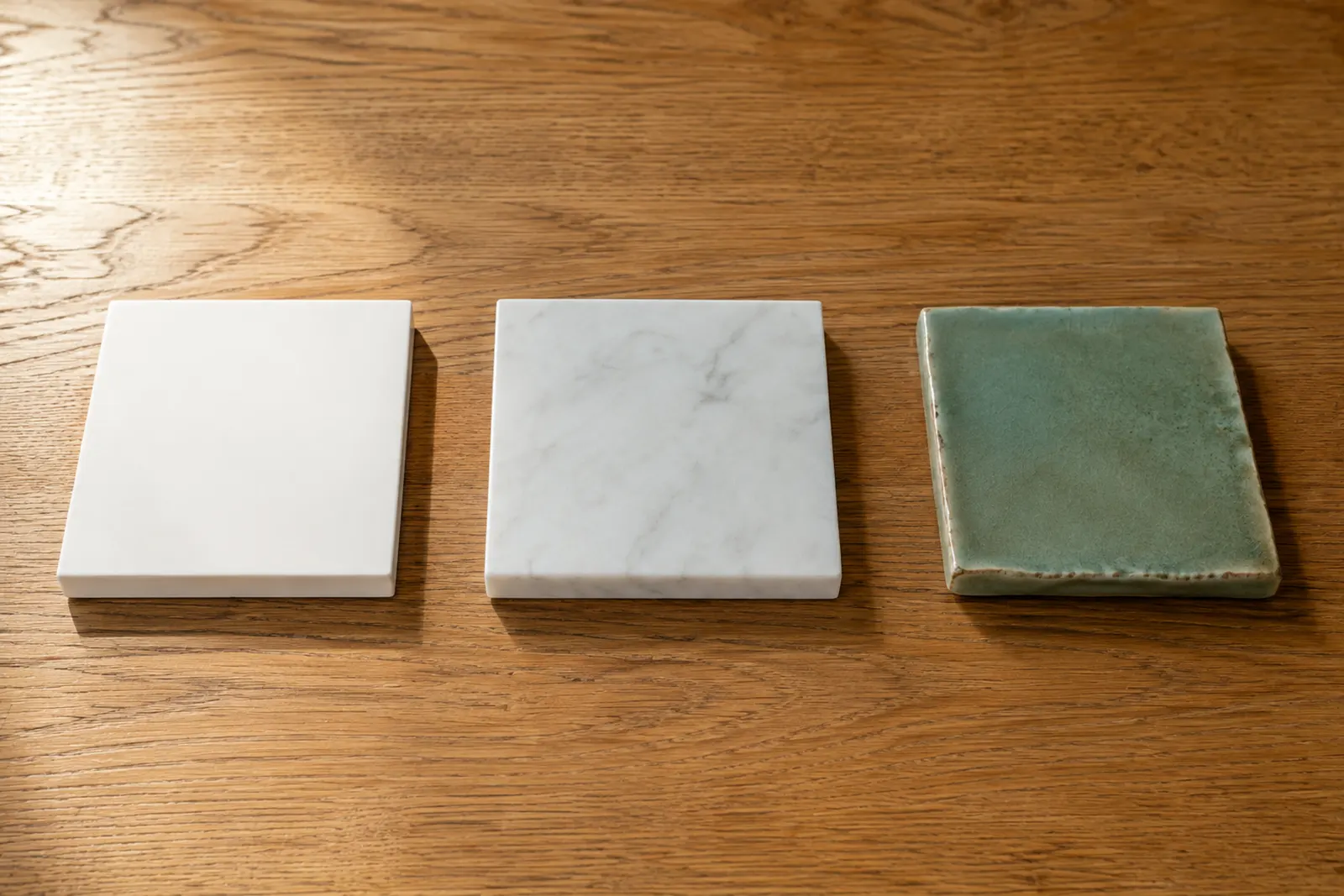
Tile is the clearest example. Material runs a few dollars a square foot at the low end and well past fifteen at the high end, while the labor to install it adds roughly six to twelve dollars a square foot, more for a herringbone pattern or a shower that needs waterproofing. On a bathroom floor, that labor is a four-figure number, and it is not inside the tile allowance.
Two more items hide in the same place: sales tax and delivery. In a Manhattan building, delivery means a service elevator reservation and sometimes a two-hour window with a porter standing by, which the supplier bills for.
Where the overage really lands
Say the tile allowance is $3,500 and you choose tile that costs $5,200. The difference looks like $1,700. The invoice will be higher, because contractors who buy materials for you generally apply their standard markup, commonly 15 to 25 percent, to the overage, and tax rides on top. Your actual out-of-pocket is closer to $2,100.
Nothing about that is improper if the contract says materials carry a markup. The problem is timing: the allowance on the bid was written at the contractor’s buy price, so the markup is invisible until you are already in love with the tile. Ask for the percentage before you start choosing, and do the arithmetic in the showroom, not when the invoice arrives.
What happens when you come in under
This is the clause owners forget to ask about, and the answers differ. Some contracts credit the unused money back to you on the next payment. Some route it into the contingency, the reserve for problems found during the work. Some say nothing at all, and then it is unclear who keeps the difference.
Ask the question in plain words: if I choose a fixture that costs less than the allowance, where does the difference go? Then have the answer written into the contract. A credit clause is one sentence and it is worth real money.
Late selections cost time
An allowance is a deferred decision, and in an apartment renovation a deferred decision eventually hits the schedule. Stone can only be measured for cutting once the cabinets are installed, appliances and tile can run weeks of lead time, and in a co-op the alteration agreement may cap the project at around 120 days with penalties after that.
Every allowance you leave open past the start of construction is a date you have not yet booked. It also tends to turn into a change order, which we cover in change orders explained.
Four things to settle before signing
- Price your real selections. Spend an afternoon at a showroom or on supplier sites and check that each allowance covers what you would actually choose, not the cheapest item in the category.
- Ask what is inside the number. Material only, or material with labor, tax and delivery? Get it stated per line, not as a general assurance.
- Ask the markup percentage that applies to any overage, so you can price an upgrade before you order it.
- Convert what you have already chosen into fixed line items. If the faucet is picked, it does not belong in an allowance. A fixed line is a commitment; an allowance is an estimate.
A contract full of allowances is not a bad contract, and a contractor who uses them is not hiding anything. It means the design is not finished, which at signing is normal. What matters is that each number was built from a real product rather than from a wish, and that the contract says where the money goes in both directions.

Vinyl Plank vs. Microcement: High-End Flooring in 2026
If you’re standing in a flooring aisle trying to work out what the difference is between all t
Veneer, Laminate or Wood: Cabinet Refacing Materials Compared
When you reface cabinets, you keep the boxes and replace the doors, drawer fronts, and trim. The sur

Luxury for Less: Where to Score High-End Materials at Designer Discounts
After fifteen years working on renovations across Manhattan, I’ve come to believe that the dif