

In Defense of Detail: Why the Smallest Things Matter Most in Construction
Stand in a finished luxury apartment and look around. Smooth walls. Perfect light. A quiet sense that everything just feels right.
Now look closer. The gap where the marble slab meets the wood floor. The shadow line where the ceiling meets the wall. The way the screw heads on the light switch plate all sit perfectly vertical.
That perfection is not luck. It is labor, measured in millimeters. At Hoppler Design and Build we pay attention to the things you will likely never notice consciously but would feel instantly if they were wrong.
1. Luxury is alignment
Most people think luxury is a question of materials, that buying Calacatta Gold makes a renovation high-end. Materials matter, but alignment is what separates the two. A stone slab meeting a wall in a seamless joint is luxury. A cabinet door that closes with a soft, confident thump and sits perfectly flush is luxury.
Tolerance is not one number across a project; it changes with what you are looking at. General construction works to roughly a quarter of an inch, which is fine for framing that will be covered. On a visible stone joint or a reveal, that is an enormous distance. Those we work to about a millimeter, because at a quarter inch the only solution left is a heavy molding to cover the gap.
| Condition | Standard approach | Precision approach |
|---|---|---|
| Wall meets ceiling | Molding covers the variation | A reveal, which requires a genuinely straight substrate behind it |
| Stone meets floor | Joint caulked and filled | Joint tight enough to leave unfilled |
| Switch and outlet plates | Roughly level, individually | Aligned to the tile coursing and to each other |
That is the difference between a ceiling that feels heavy and a ceiling that feels like it is floating.

2. The anatomy of precision: shop drawings
Craftsmanship begins long before anyone picks up a hammer. It begins with shop drawings: ultra-detailed fabrication documents that specify every joint, every material transition, and every lighting cut. A carpenter should not be working it out on site. It gets worked out on paper and in CAD, months ahead.
This is where owners often conflate two different sets of drawings, and the distinction is worth knowing. The drawings filed with the DOB for your permit are architectural and engineering documents stamped by a registered architect or professional engineer. They establish that the work complies with code, and they are what earns you permission to build. They are not detailed enough to build a stone-to-millwork joint from.
Shop drawings are the layer below that: produced by the fabricator or contractor after the permit is in hand, reviewed by the architect, and never filed with the city. The permit set gets you approval. The shop drawings get you the joint. A project that skips the second set is one where those decisions get made on site, by whoever is holding the tool that day.
The reveal is the clearest example of what that detailing buys. Where wood paneling meets drywall, the standard move is a chunky molding covering the gap. The alternative is a deliberate shadow-casting recess that makes both materials read as distinct and crisp, and it only works if the substrate behind it was built straight enough to allow it. That is a decision made in drawing, not on site.
3. Why details decide how a room feels
None of it registers consciously. All of it registers. Misalignment produces a low level of visual noise that the eye keeps returning to, and the effect is cumulative across a room.
Interior designer Tatiana Chechina describes it as the difference between a room you can stop looking at and one you cannot: when the lines resolve, attention settles, and when they do not, something keeps pulling at it. Laser alignment during layout is how that gets controlled, one element at a time.

4. The paradox of perfection
There is a saying among master builders: the difference between good and great is what happens when nobody is watching.
High-end construction is slow on purpose. It takes time to scribe a baseboard to a wall so there is no gap. It takes time to lay out tile so there are no slivers at the edges of the room. Owners often ask why a high-end renovation costs more, and this is most of the answer: alignment costs time, and time costs money.
What it buys back is quiet. Clients who live in the result stop noticing the details entirely, which is the intended outcome. The best detail is the one so precisely made that it disappears.
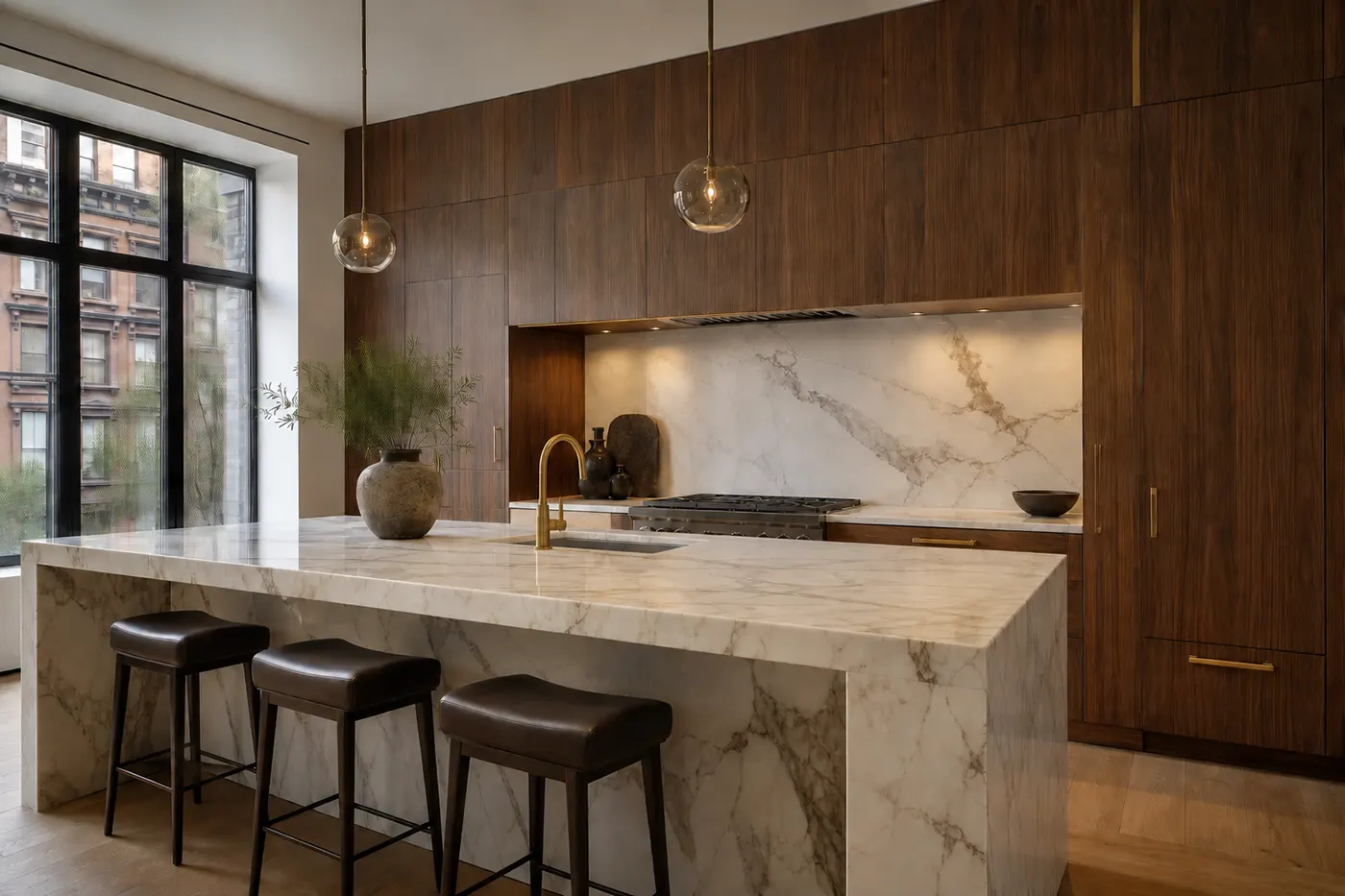
Cabinet Refacing or New Cabinets: When Each Is Worth It
The choice between refacing and new cabinets rarely comes down to taste. It comes down to three thin
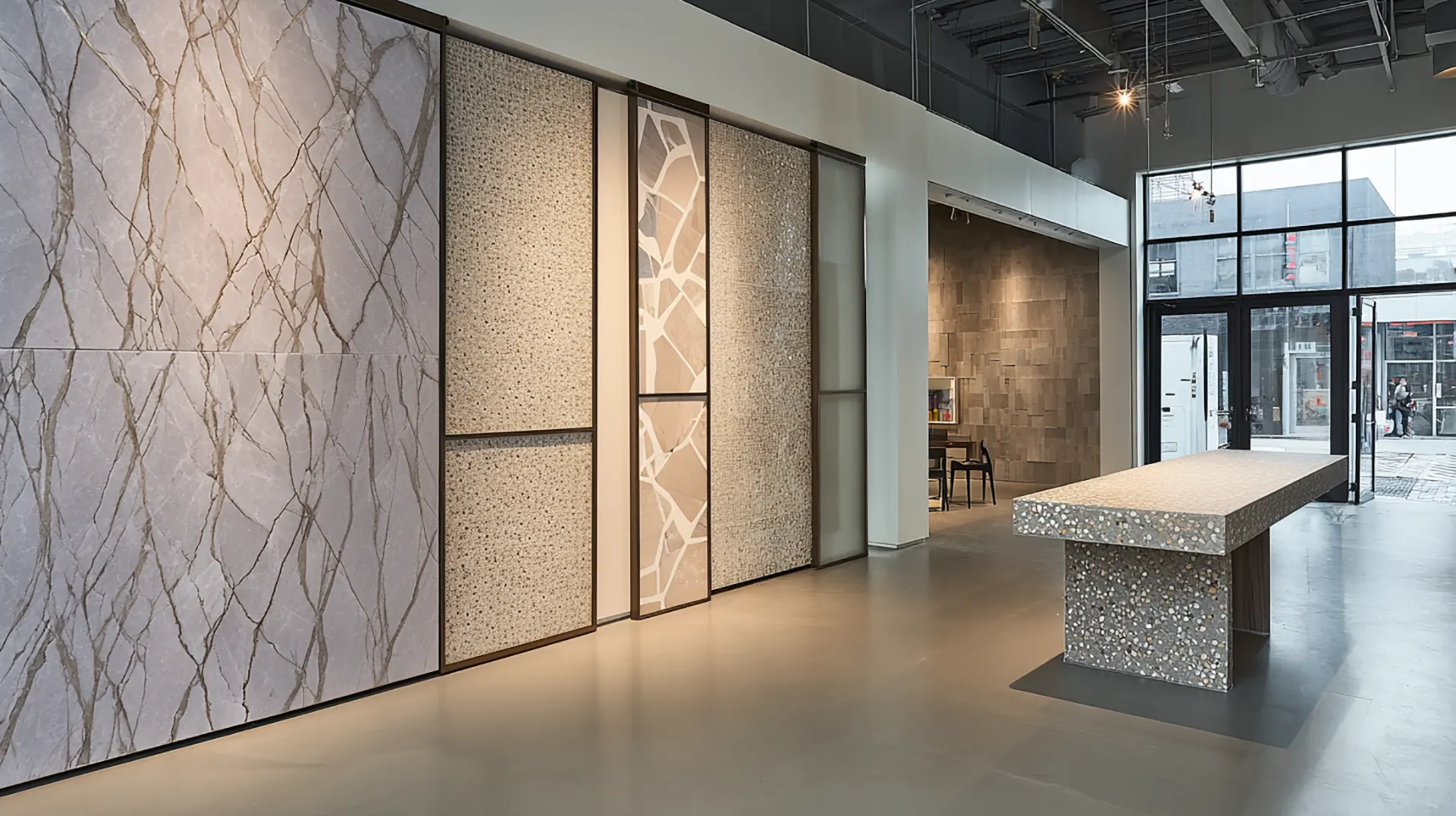
The New Tile Revolution: Innovative Materials Changing the Game
The tile industry is undergoing a true renaissance, transforming tiles from simple functional surfac

Vinyl Plank vs. Microcement: High-End Flooring in 2026
If you’re standing in a flooring aisle trying to work out what the difference is between all t