

Quartz, Granite, or Marble: Choosing the Right Countertop for a New York City Kitchen or Bathroom
Countertop selection generates more genuine disagreement than almost any other decision in a renovation, and with good reason. These surfaces absorb the visual weight of an entire room, endure daily contact with everything from acidic food to heavy cookware, and will likely outlast every other finish installed in the same project. The choice deserves more than a preference for how something looks in a photograph.
Quartz, granite, and marble each make a legitimate case depending on how the kitchen or bathroom is actually used, who uses it, and how much ongoing maintenance the owner is realistically willing to commit to.
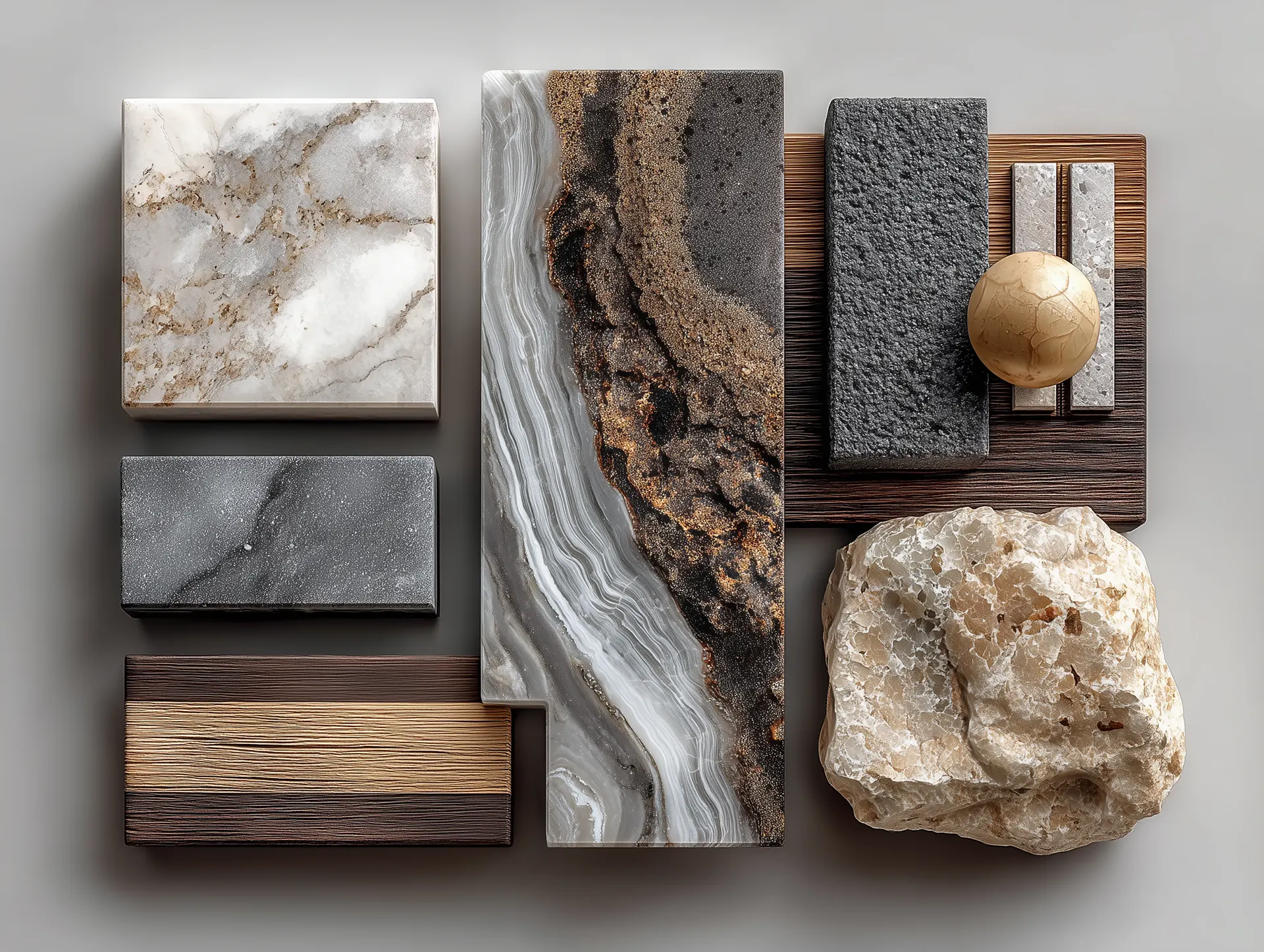
Quartz Countertops: The Practical Perfectionist
Quartz countertops are manufactured rather than quarried, produced by combining roughly ninety percent ground natural quartz with polymer resins and pigments. The result is a non-porous surface that resists staining without sealing, tolerates spilled wine, coffee, and cooking oils without absorbing them, and maintains consistent color and pattern across the full slab.
For owners renovating kitchen islands or long continuous countertop runs where visual continuity matters, that consistency is genuinely useful. Natural stone slabs vary from piece to piece, and matching across a large installation requires careful selection at the yard. Quartz eliminates that variable entirely. Contemporary product lines have expanded well beyond the solid-color options that defined the category a decade ago, with patterns that credibly replicate Carrara marble veining or the movement of exotic granite without carrying their maintenance requirements.
Where quartz underperforms is at high temperatures. The polymer resins that bind the quartz particles are vulnerable to sustained direct heat, and hot pots placed repeatedly on the surface without protection will eventually cause discoloration or surface damage. Using trivets consistently is a genuine maintenance requirement with this material, not a suggestion.

Granite Countertops: The Natural Champion
Granite’s case rests on what no manufacturing process has yet replicated: the visual complexity that forms over geological time. Each slab carries a specific mineral composition, coloration, and pattern that exists in no other piece of stone, and for owners who find that particularity meaningful, engineered alternatives simply do not answer the same question.
Granite is also genuinely hard. Its density makes it highly resistant to scratching under normal kitchen conditions, and it tolerates direct contact with hot cookware far better than quartz, since there are no resin components to damage. In households where cooking is frequent and pots move quickly from stovetop to counter, that thermal resilience has practical value that compounds over years of use.
The maintenance requirement is sealing, typically every one to two years depending on the specific stone’s porosity. A simple water test shows when resealing is due: water that absorbs into the surface rather than beading indicates the stone is ready for a fresh application.
One point specific to Manhattan renovations: material cost, fabrication cost, and installation cost are three separate line items, and the installation component in a high-rise building adds expenses that have nothing to do with which stone was selected. Elevator restrictions, time-of-day delivery rules enforced by building management, and the physical logistics of moving large stone slabs to upper floors carry costs that apply equally to granite, marble, and quartz. Comparing material prices without factoring those logistics into the full project budget produces an incomplete picture.
Marble Countertops: The Aristocrat of Elegance
Marble holds a position in interior design that no other countertop material occupies, and owners who choose it tend to arrive at that decision deliberately. The surface quality of Carrara or Calacatta, the way light moves through the veining, the particular softness of the finish, produces an aesthetic that is genuinely different from engineered stone or granite. In a pre-war Manhattan kitchen or a primary bathroom with strong architectural proportions, marble functions as a considered design statement rather than simply a finish selection.
The maintenance reality requires honest framing. Marble’s calcium carbonate composition means it reacts chemically with acidic substances, and those reactions produce etch marks where wine, lemon juice, or vinegar has contact with the surface. Sealing slows liquid absorption and reduces staining risk, but it does not prevent etching, because etching is a surface abrasion rather than a penetration. Owners who cook frequently with citrus, use vinegar-based cleaning products, or serve drinks directly on the counter without coasters will accumulate those marks over time. Some find this acceptable as the natural character development of a living material. Others find the vigilance incompatible with how their household actually operates.
Marble works most successfully in spaces where its vulnerability is reduced by context: a bathroom vanity where the primary contact is water, a kitchen island used more for serving and display than for active prep work, or a secondary surface in a larger kitchen where the primary prep area uses a more forgiving material. Designers working regularly on Manhattan co-op and condo renovations tend to use marble selectively for this reason, placing it where it will be seen and appreciated while protecting it from the conditions most likely to accelerate wear.
Countertop Material Comparison:
| Material | Durability | Heat Tolerance | Maintenance | Best Used For |
|---|---|---|---|---|
| Quartz | Very high, resists chips and scratches | Moderate – trivets required | Soap and water, no sealing | Islands, large continuous runs, busy kitchens |
| Granite | Very high, dense and scratch-resistant | High – handles hot cookware | Sealing every 1-2 years | Active cooking kitchens, high-use surfaces |
| Marble | Moderate – softer, prone to etching | High structurally, can discolor under sustained heat | Sealing every 6-12 months, pH-neutral cleaners | Bathroom vanities, display islands, low-acid-contact areas |
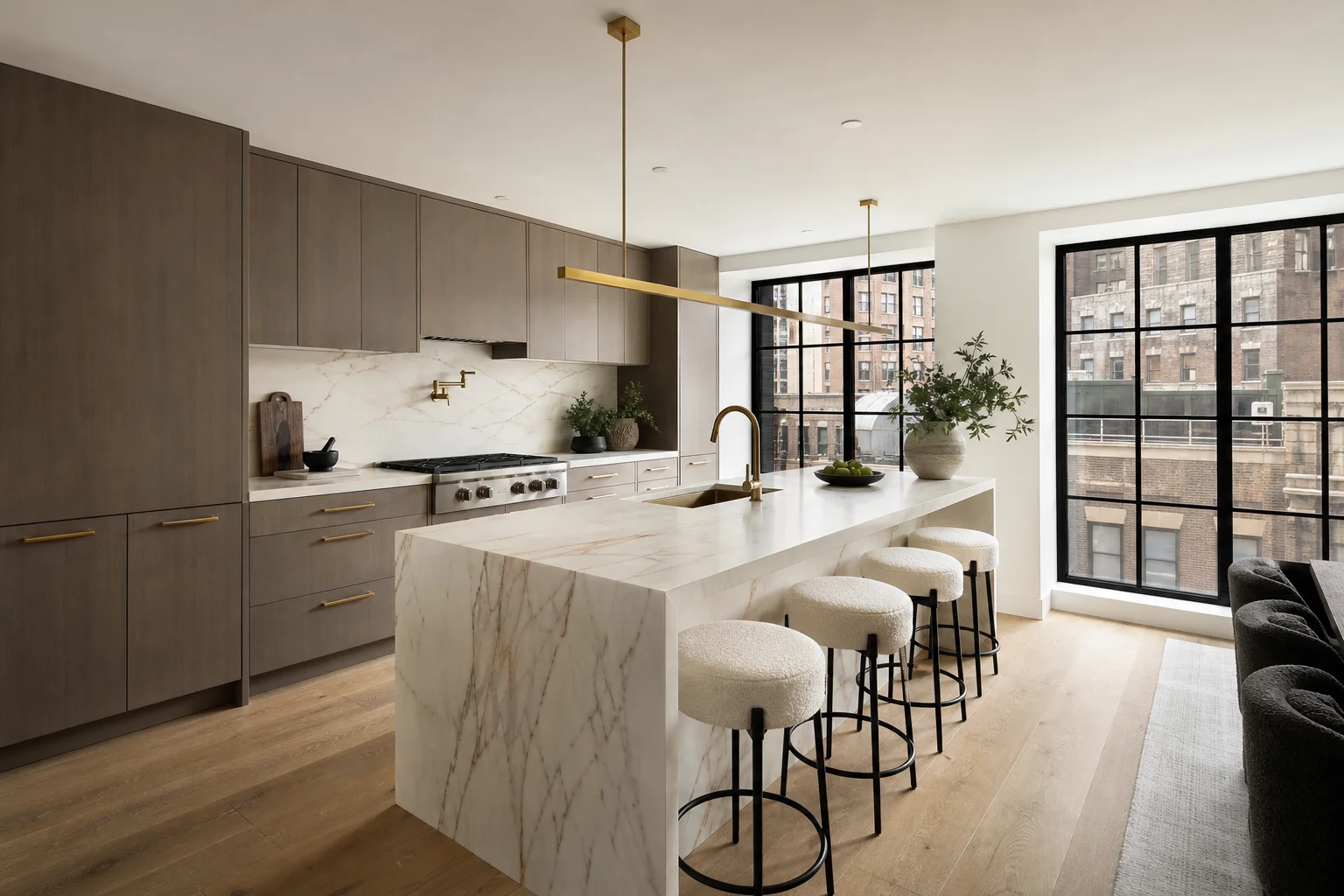
Custom Cabinet Design: Kitchen Layouts and Corner Plans
A cabinet run in a Manhattan apartment is designed against three fixed things: where the stack sits,

Future-Proofing Your Renovation: Materials That Will Still Look Great in 20 Years
The difference between a renovation that dates and one that doesn’t usually comes down to mate

Sustainable Sourcing: Finding Eco-Friendly Materials That Don’t Compromise on Style
The conversation around sustainable building materials has shifted considerably over the past decade