
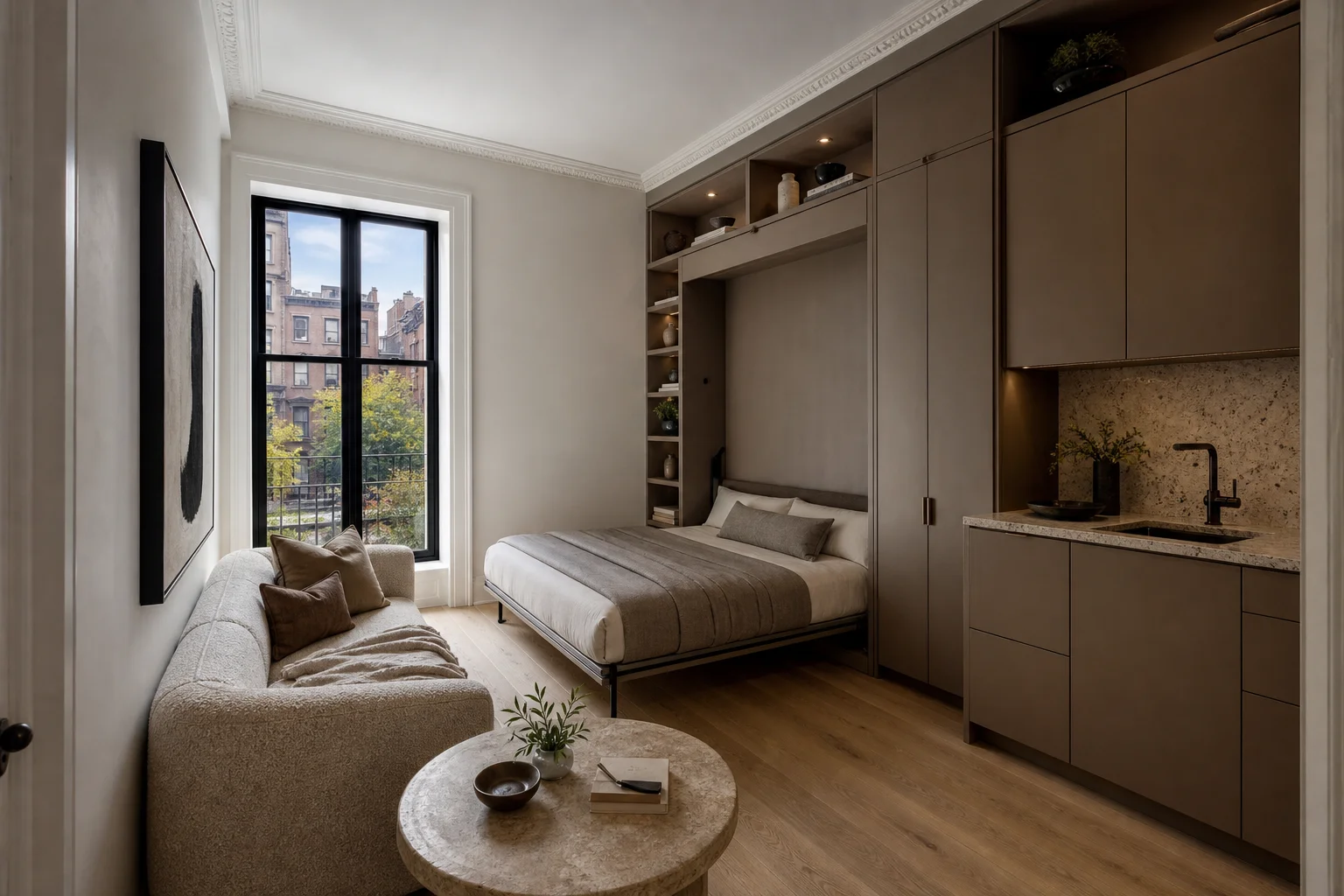
Studio Apartment Decorating for Tight Square Footage
A studio comes down to three decisions: how you zone the single room, how you scale the furniture, and how you layer the light. The goal is not to cram every function into a corner but to make each one feel intentional and keep the floor and sightlines open.
How do I make a studio feel larger?
Use vertical zoning and open sightlines. Floor-to-ceiling open shelving, a low-profile sofa, and a narrow console behind it separate the living and sleeping areas while keeping the view across the room clear. Use mirrors sparingly: one full-height mirror opposite a window, not a wall of them. Hold the palette to two neutrals and one accent so the eye travels the room without stopping.
What furniture works in one room?
Choose multi-function pieces at honest scale. A small sofa around 68 to 72 inches, or a compact daybed, doubles for guests. A nesting or drop-leaf table saves space. Armless and folding chairs stack away when not in use. A narrow media console beats a bulky entertainment unit.
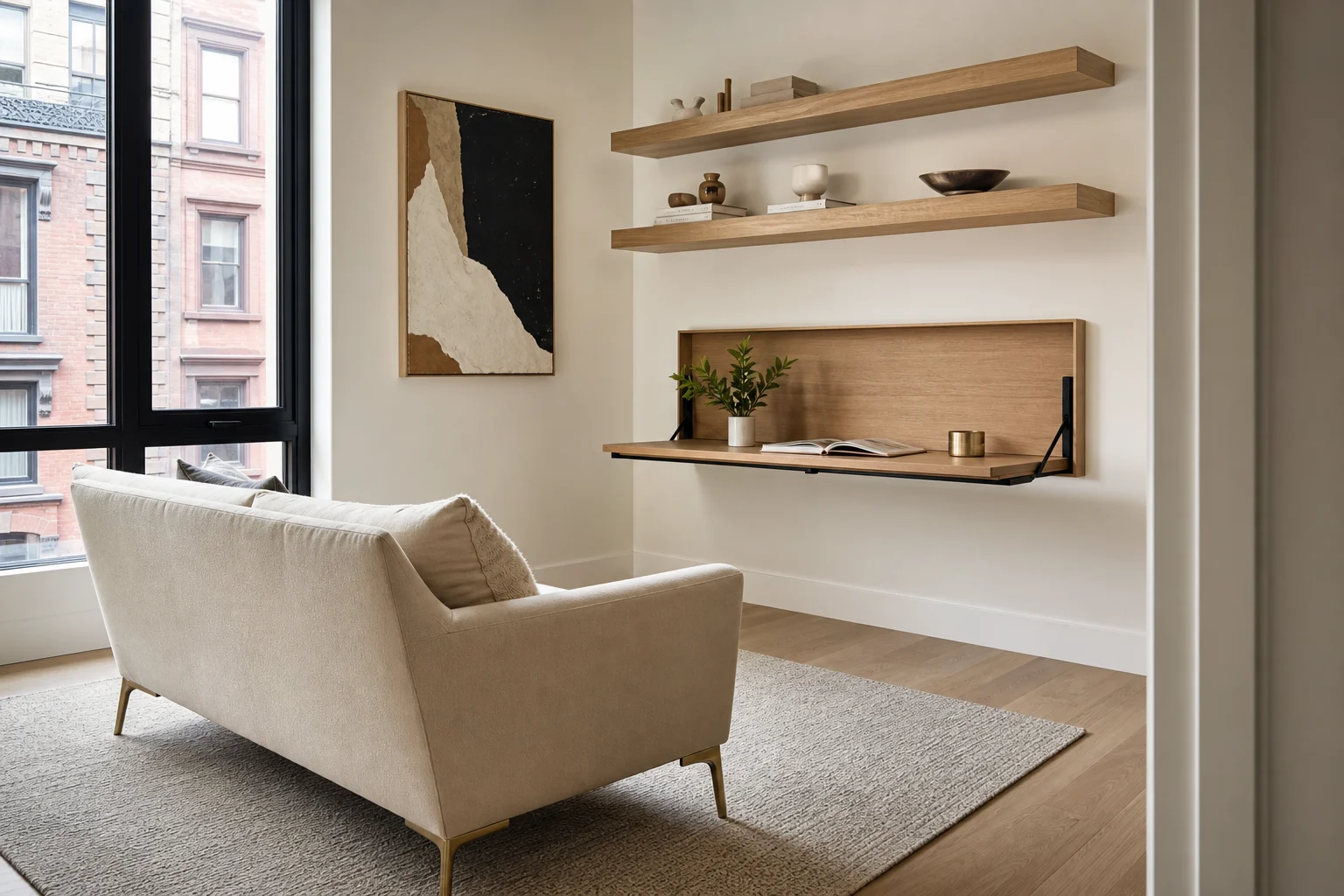
Dividing the space without walls
Open shelving, a ceiling-track curtain, and furniture placement do most of the work. A sofa set with its back to the sleeping area screens the bed without blocking light. For renters, a ceiling-mounted curtain or a freestanding slatted wood screen adds privacy and still breathes. Keep walkways 30 to 36 inches wide where you can.
Where storage goes
Think up and under first. Over-door organizers, closet systems with drawers, and storage ottomans hide clutter. Under a raised platform bed, add drawers or bins if the height allows. Keep everyday items in baskets on low shelves, and seasonal things up high or in a wardrobe.
Lighting a studio
Layer three types: ambient (recessed or a simple ceiling fixture), task (a desk lamp, under-cabinet LED), and accent (a picture light or a small floor lamp). Use warm 3000K bulbs for evening and neutral 5000K for a daytime work zone, and put it all on dimmers, which are cheap and change how the whole room reads.
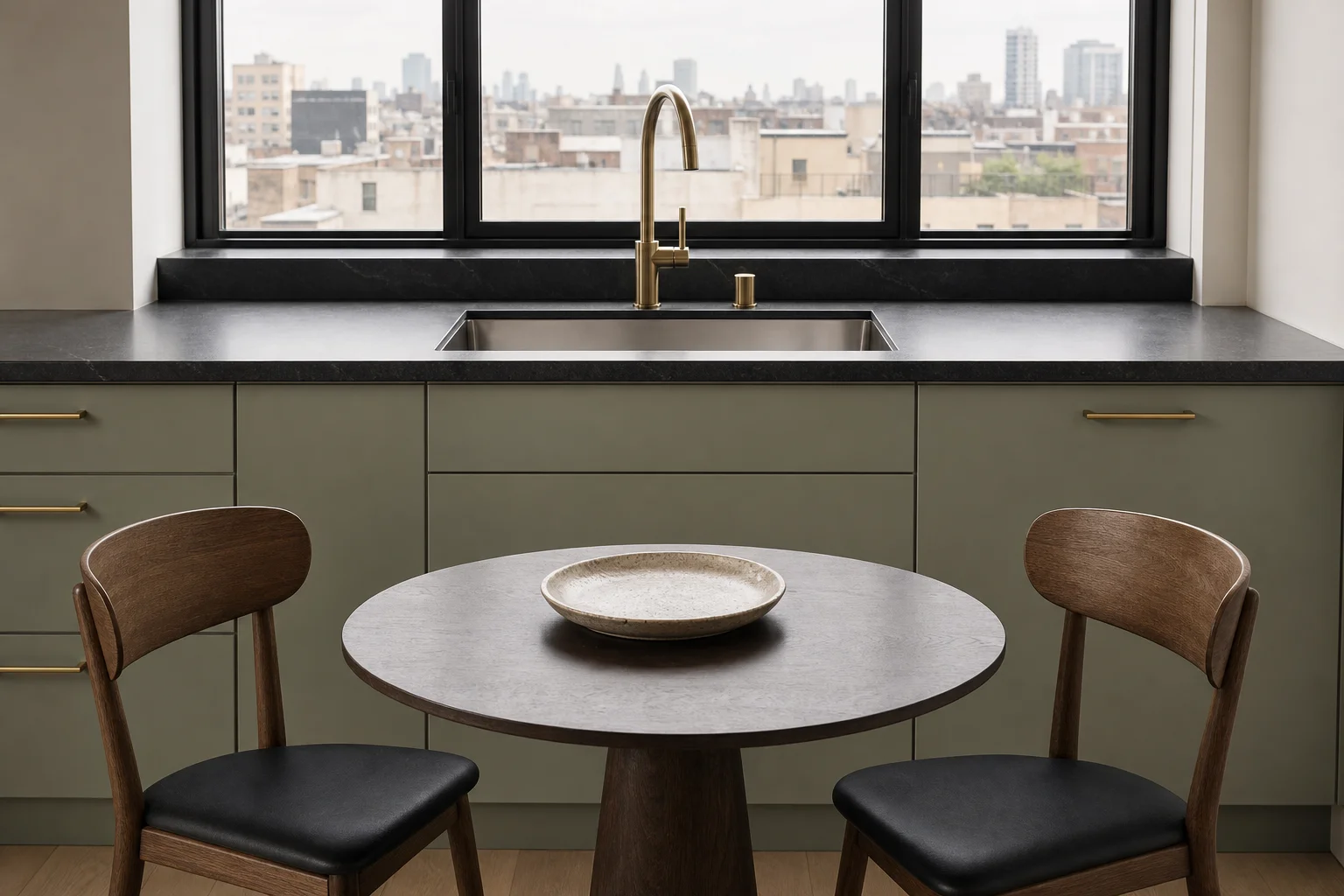
Materials and pieces that help
- Sofa: a compact two-seater from a maker like Article or Floyd.
- Guest sleeping: a slim daybed or sofa bed.
- Storage: IKEA IVAR or PAX for modular closets.
- Lighting: tunable bulbs such as Philips Hue to shift the color temperature through the day.
- Rug: a 5 by 8 or 6 by 9 low-pile rug to define the living zone without overwhelming it.
| Layout move | Best for | Footprint |
|---|---|---|
| Sofa-back divider | separating living and sleeping | small, uses the sofa depth |
| Murphy or wall bed | occasional guests, frees the floor | bed stores vertical, needs a full wall |
| Raised platform with drawers | storage plus visual division | uses height, needs a generous ceiling |
| Ceiling-track curtain | renter-friendly privacy | minimal, flexible |
Tatiana Chechina, the firm’s interior designer, lengthens a narrow studio with a single running rug and a low headboard: pick one statement textile and let everything else recede.
Permits and building rules
Cosmetic decorating needs no DOB filing, but altering plumbing, electrical, or a load-bearing wall requires an NYC DOB permit and often co-op or condo board approval. File through the DOB portal if you plan to move plumbing, change gas, or touch structure.
A quick staging checklist
- Measure windows, door swings, and the main walkway widths.
- Buy the sofa first, then the rug; the sofa sets the scale.
- Install a ceiling curtain track before the big furniture arrives.
- Label storage boxes and keep the counters clear.

The Home Spa Bathroom: How to Design a Space That Actually Feels Like an Escape
A bathroom renovation in Manhattan doesn’t have to mean months of construction and a contracto

The Manhattan Palette: Timeless Color Combinations for Urban Interiors
Manhattan has always been a canvas for design: a vertical gallery of glass, steel, and stone that re
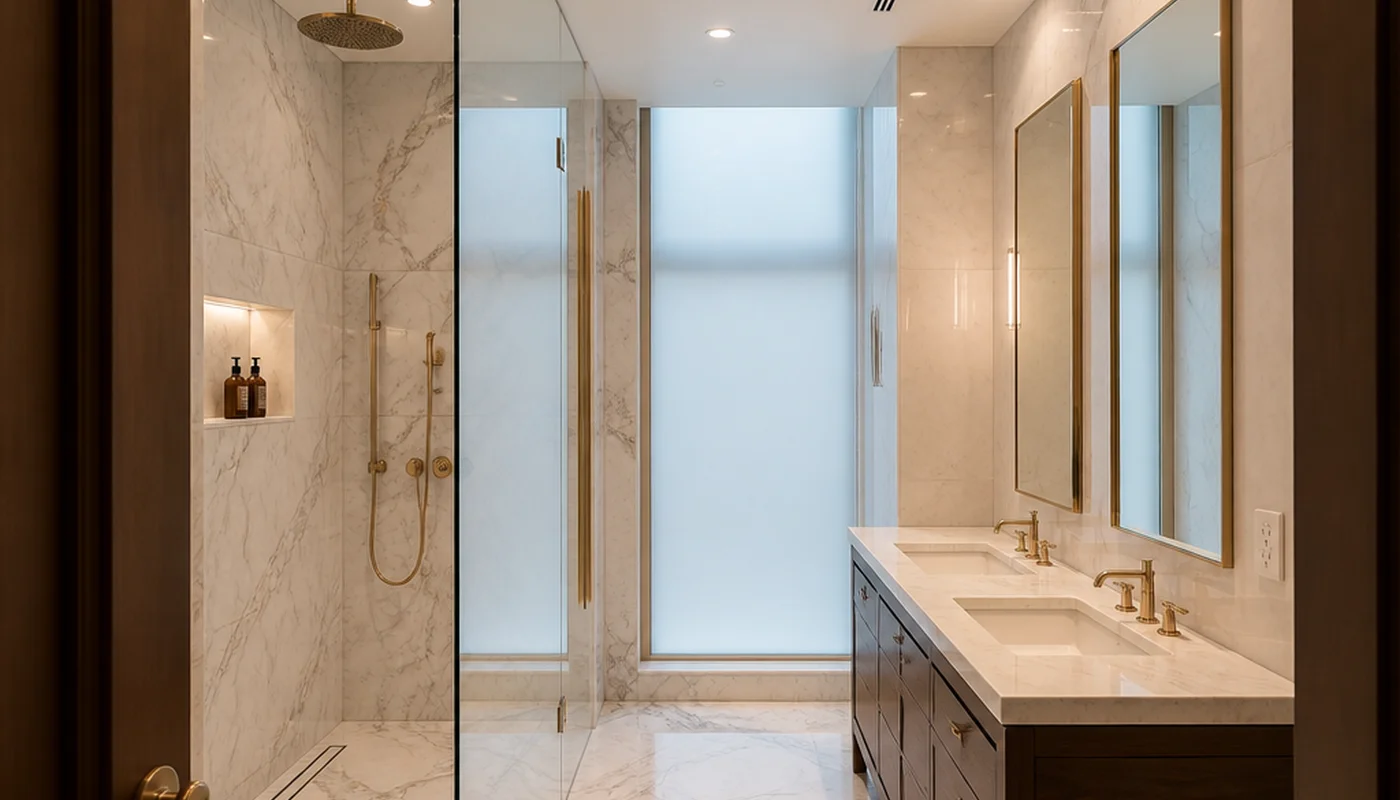
Walk-In Shower Ideas for Small Bathrooms: Layouts, Tile, and What Actually Works
The starting point in a pre-war Manhattan bathroom is usually a 4×7 or 5×8 room built arou