

The Home Spa Bathroom: How to Design a Space That Actually Feels Like an Escape
A bathroom renovation in Manhattan doesn’t have to mean months of construction and a contractor invoice that derails everything else. Some of the most meaningful changes come from knowing which details actually affect the daily experience of a room. The goal is a space so inviting that your evening bath becomes the highlight of your day.

1. Lighting for Spa Ambiance
Most bathrooms have one overhead fixture that does all the work, and it shows. Bright flat light is fine for getting ready in the morning and genuinely unpleasant for winding down at night. A dimmer switch on an existing fixture is the easiest place to start. Dropping the light level in the evening changes the feel of the room without changing anything else. LED strips behind the mirror add soft even light at face level. Wall sconces on either side of the mirror, rather than above it, eliminate the unflattering shadows that overhead vanity lighting tends to create. Candles add warmth that electric light doesn’t replicate. Scented varieties with lavender or eucalyptus bring a layer that changes how the space feels beyond just how it looks. Battery-operated versions work well in buildings where open flames require consideration.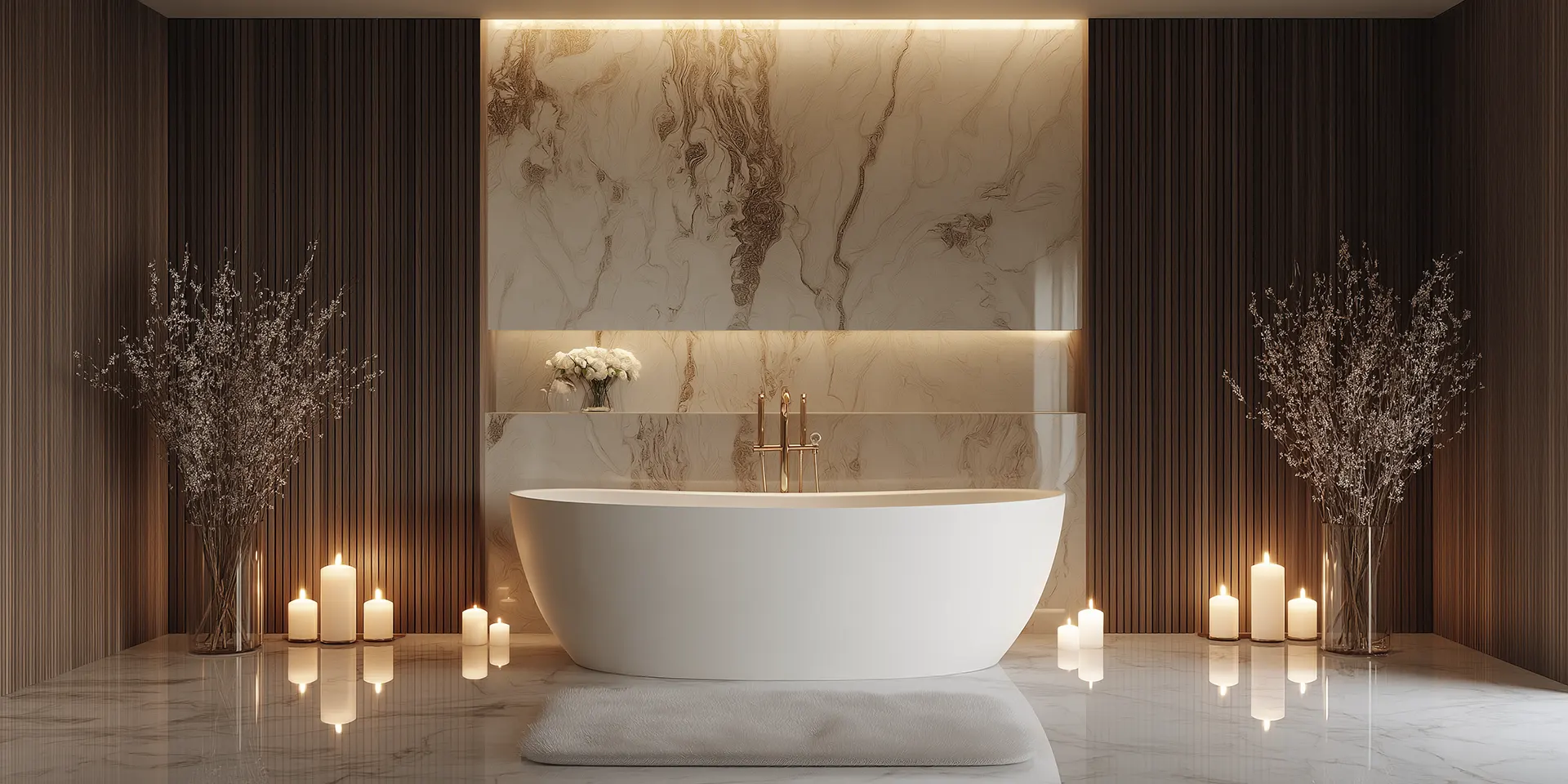
2. Water Features and Upgraded Fixtures
A rainfall showerhead changes the daily experience of a bathroom more than almost any other single upgrade. The difference from a standard fixture is real and noticeable from the first use. Thermostatic shower valves maintain consistent water temperature regardless of pressure changes in the building’s supply. Anyone who has lived in a Manhattan building where the water temperature fluctuates unpredictably will recognize immediately what that’s worth. For co-op and condo residents, any plumbing work beyond swapping a fixture requires NYC DOB permits and board approval in most buildings. This covers thermostatic valve installation, steam shower systems, and drain reconfigurations. Getting those conversations started before buying materials saves real time and frustration. For apartments with a bathtub, a waterfall faucet, a handheld attachment, or a teak bath caddy are smaller investments that shift how the fixture feels to use without touching the plumbing at all.3. Natural Materials, Soothing Colors, and Accessories
Travertine, limestone, and honed marble bring a quality that ceramic tile approaches but doesn’t match. The variation in real stone, the way it feels underfoot and under hand, is part of what makes a bathroom feel considered rather than standard. Teak and bamboo for bath mats, benches, and shelving add warmth in a room that’s otherwise all hard surfaces. One practical point on stone: anything applied to walls in significant quantity adds real weight, and in Manhattan high-rise buildings that matters. River rock walls and heavy stone cladding need a structural assessment before materials are purchased. Standard tile is straightforward. Anything beyond that is worth a conversation with a structural engineer first. Color should stay quiet in a spa bathroom. Warm whites, soft stone tones, muted sage, earthy neutrals. These let the other elements of the room do their work. Saturated colors introduce energy that works against what the space is trying to do. Plants that genuinely tolerate humidity – snake plants, pothos, certain ferns – bring something organic into a room full of hard surfaces. Plush coordinated towels, a quality soap dispenser, a small tray on the vanity, and a diffuser with eucalyptus oil add sensory layers without any installation complexity.High-Impact Sensory Upgrades:
- Touch: Plush towels and natural wood or stone textures underfoot and underhand.
- Sight: Layered lighting with dimmers and wall sconces, soothing neutral palette.
- Sound: Rainfall showerhead or a Bluetooth speaker mounted in a cabinet.
- Scent: Scented candles or a eucalyptus diffuser for aromatherapy without installation.
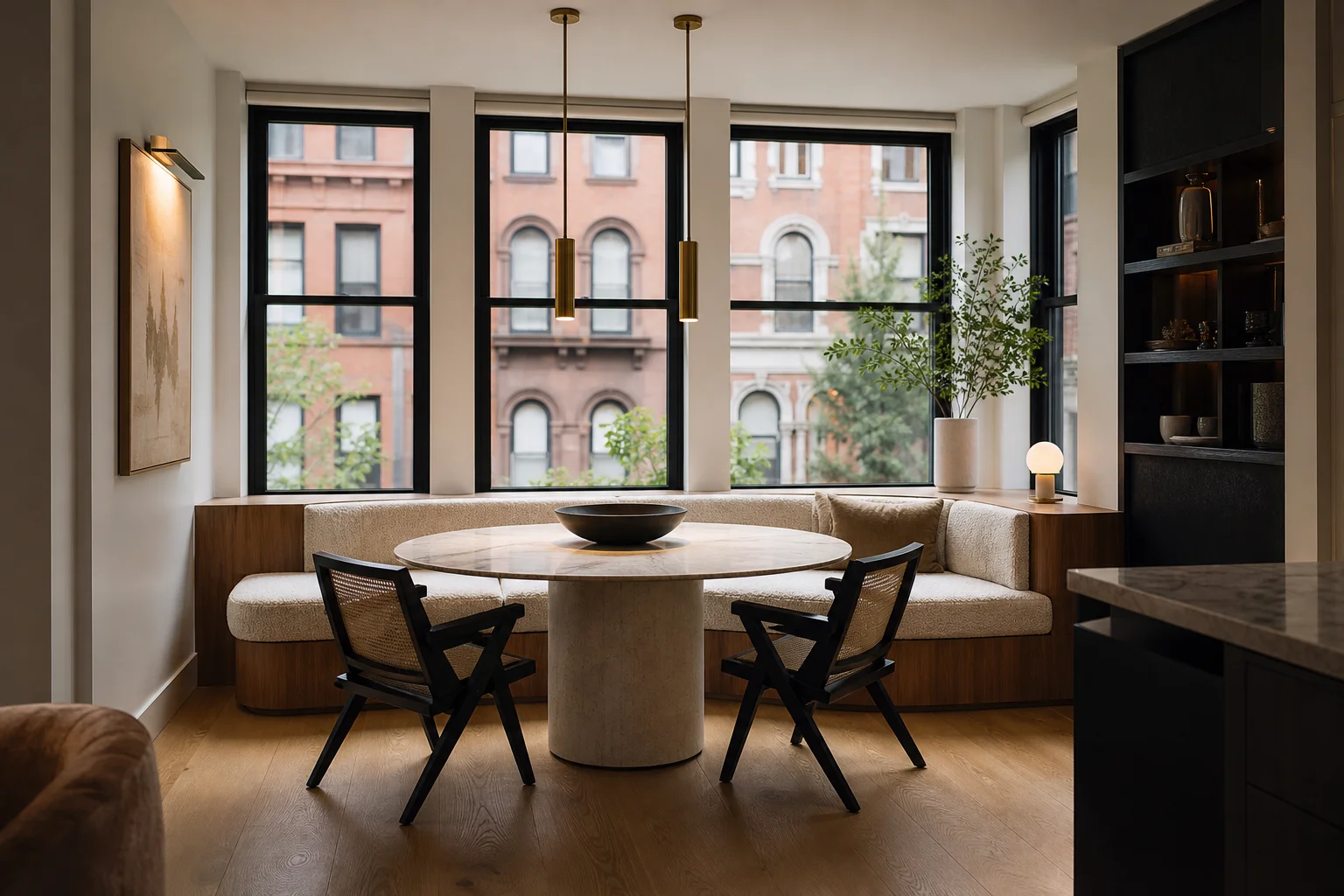
Small Dining Rooms and Breakfast Nooks in NYC Apartments
A small dining room can be comfortable and useful if the layout and the pieces fit the footprint. Th

The Art of Mixing Old and New in Interior Design
Walk into a well-designed home and you can often feel the balance before you understand it. A weathe
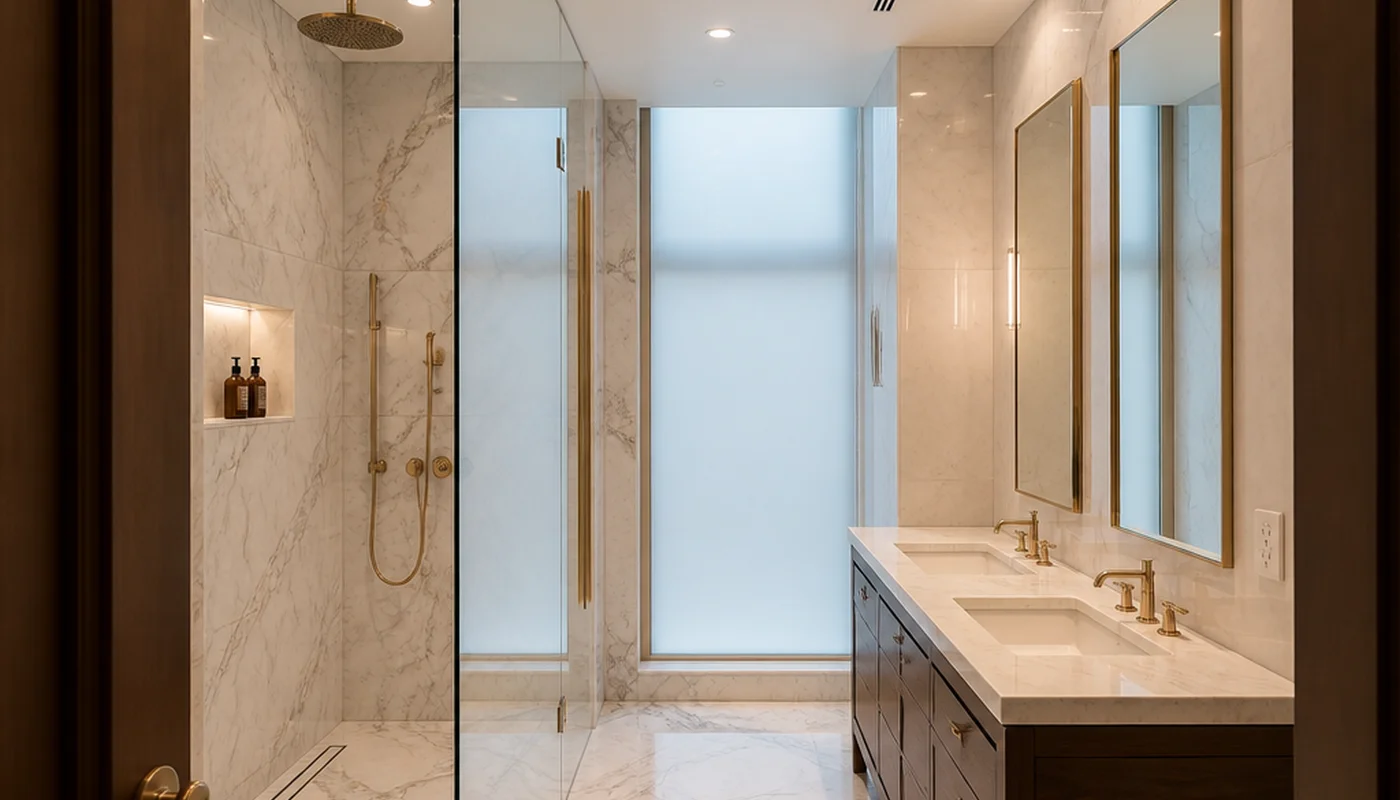
Walk-In Shower Ideas for Small Bathrooms: Layouts, Tile, and What Actually Works
The starting point in a pre-war Manhattan bathroom is usually a 4×7 or 5×8 room built arou