

Best Kitchen Layouts for Remodeling in NYC Apartments
The kitchen is the operational hub of a home, the place where function and aesthetics have to meet without either one giving way. Choosing a layout isn’t really a matter of preference, though. It’s a calculated decision driven by available square footage, structural constraints, and the ergonomic flow of the work triangle, the path connecting the stove, the sink, and the refrigerator.
Whether you’re renovating a compact apartment or planning a larger family residence, understanding how the standard layouts actually behave is what separates a kitchen that works from one that merely photographs well. What follows covers the most effective configurations, U-shaped, L-shaped, galley, and open concept, along with the New York constraints that shape which of them is genuinely available to you.
A quick comparison
The U-shaped kitchen suits separate, medium-to-large rooms of at least ten feet in width, and its workflow efficiency is high because the layout creates a dead-end zone that household traffic never crosses. It delivers the most storage and counter space of any configuration, though it can feel boxed in without open shelving or a window to relieve it.
The L-shaped kitchen is the natural choice for open floor plans and multi-use living areas, and it performs especially well when paired with an island. Its great advantage is that it removes barriers and leaves room for a dining table or island, but its deep corner cabinets can be awkward to reach without proper organizers.
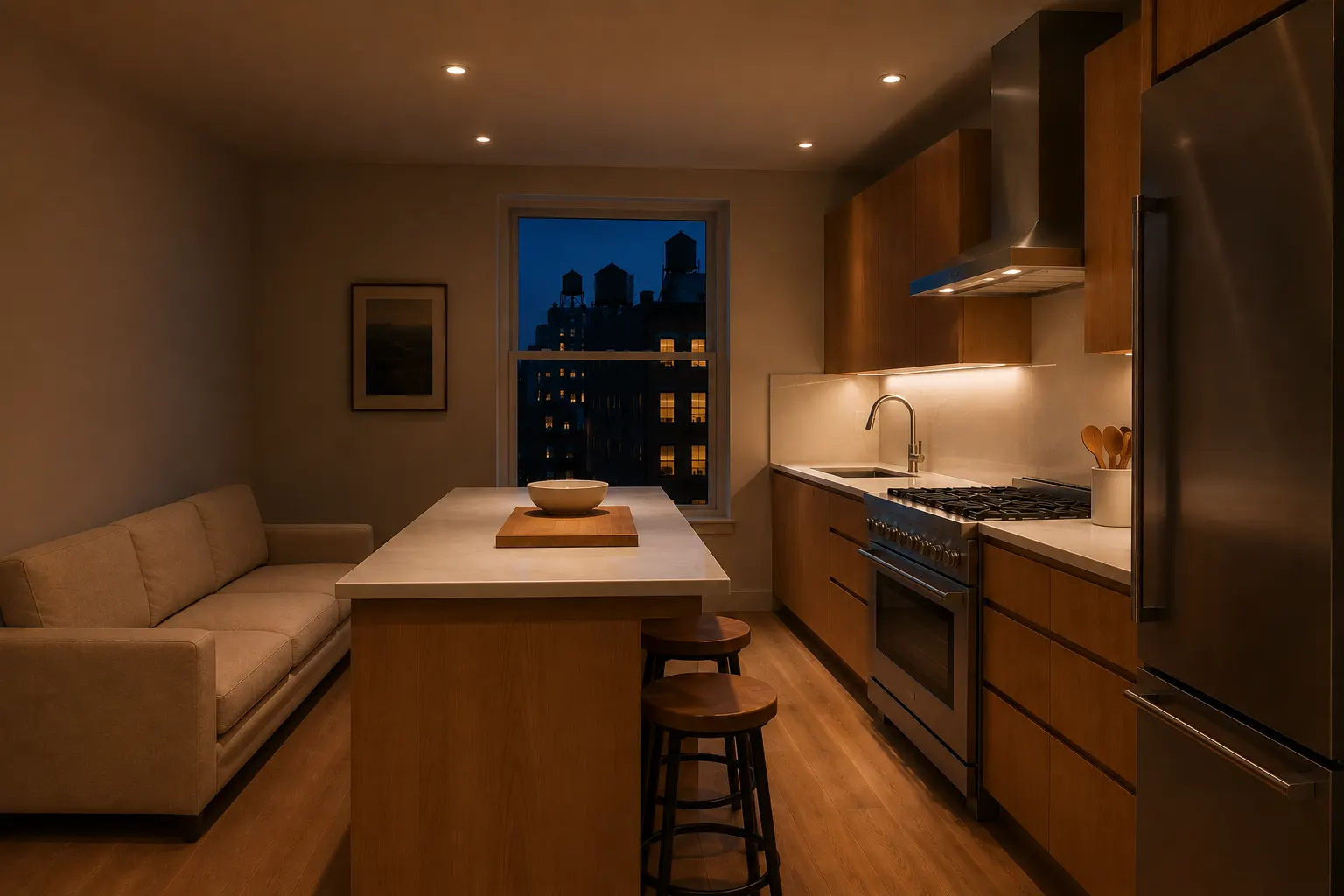
The galley with an island works best in long, rectangular spaces, or as a way of converting a corridor kitchen into something more social. It keeps the linear efficiency of a traditional galley while letting the cook face guests, though it needs generous aisles of roughly 42 to 48 inches to avoid congestion behind the island.
A small kitchen floor plan, common in apartments and studios, relies on verticality and careful appliance selection. It’s extremely space-efficient and enforces a useful discipline about clutter, at the cost of limited counter space and a reliance on apartment-sized appliances.
| Layout Type | Best Suited For | Key Advantage | Potential Drawback |
|---|---|---|---|
| U-Shaped Kitchen | Separate, medium-to-large rooms, at least ten feet in width | Most storage and counter space of any configuration | Can feel boxed in without open shelving or a window |
| L-Shaped Kitchen | Open floor plans and multi-use living areas, especially paired with an island | Removes barriers and leaves room for a dining table or island | Deep corner cabinets can be awkward to reach without proper organizers |
| Galley with Island | Long, rectangular spaces, or converting a corridor kitchen | Keeps linear efficiency while letting the cook face guests | Needs generous aisles of roughly 42 to 48 inches to avoid congestion |
| Small Kitchen Floor Plan | Apartments and studios, relying on verticality and careful appliance selection | Extremely space-efficient, enforces discipline about clutter | Limited counter space and reliance on apartment-sized appliances |
The U-shaped kitchen
Chefs and designers tend to regard the U-shape as the most efficient layout for actual food preparation. Occupying three adjacent walls, it produces a dead-end workflow that keeps foot traffic from cutting through the cook’s path.
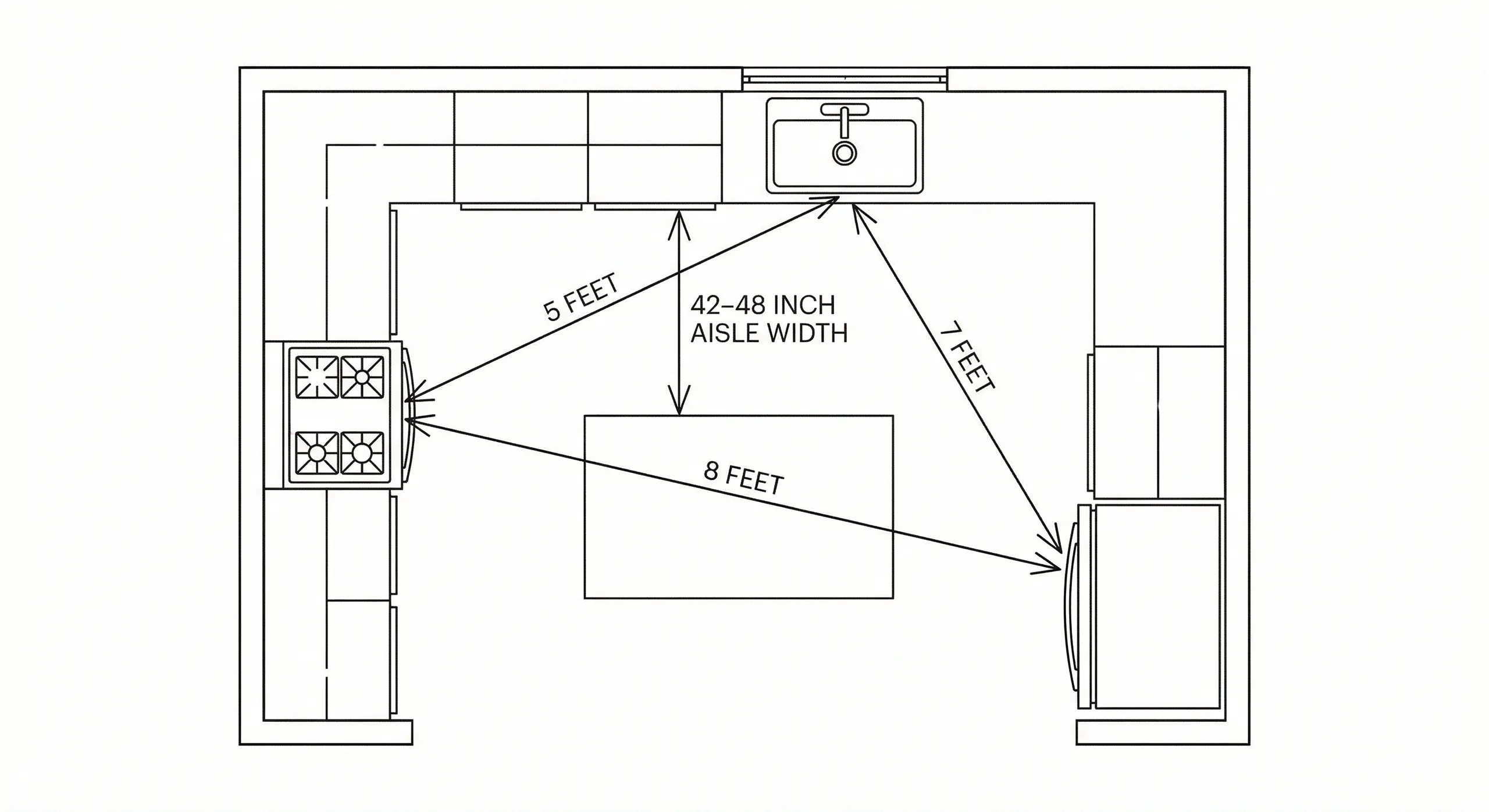
The shape naturally distributes the three key work zones, prep, cook, and wash, across three different walls, creating a tight and efficient pivot between them. It also offers more wall and floor cabinet space than any other configuration, which is why it remains the default recommendation for medium to large separate rooms. Ten feet of width is roughly the minimum for a comfortable central workspace.
If you’re worried about the layout feeling enclosed, one effective approach is to replace the upper cabinets on a single wall with open shelving or, where the building allows, a window. You keep the storage capacity that makes the U-shape worthwhile while opening up the visual field considerably.
The L-shaped kitchen
Formed by two adjoining walls meeting at a right angle, the L-shape is the most adaptable of the standard layouts and the usual standard for open-plan living, since it opens naturally onto a dining area or living room.
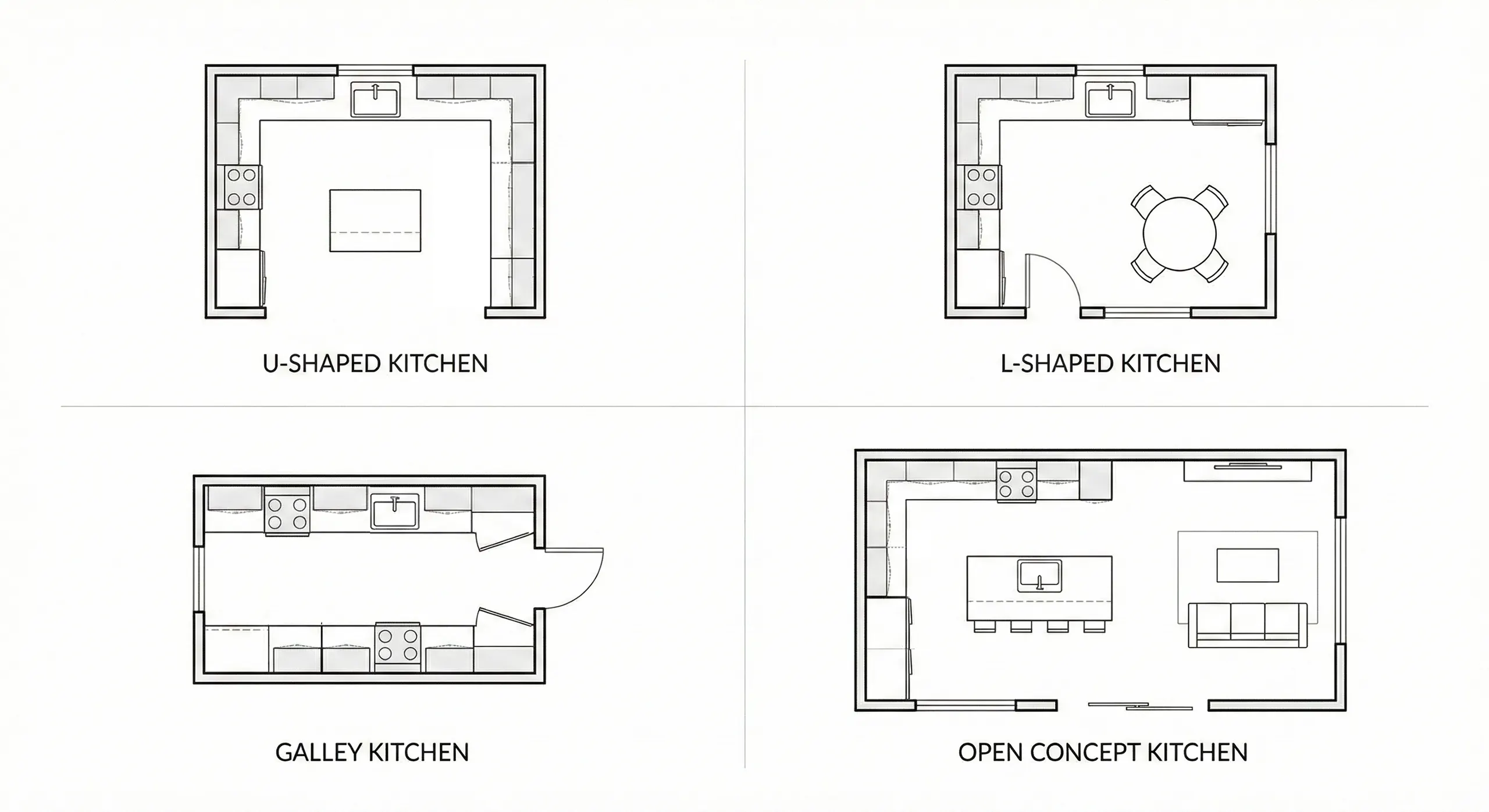
Its defining challenge is the deep corner, where cabinet space disappears into a void that’s hard to reach. Modern hardware solves most of this, whether through magic corner pull-outs, Le Mans mechanisms, or a well-chosen lazy Susan. The layout also pairs more easily with a central island than any other, and placing the sink or cooktop on that island effectively converts an L into a working U while keeping the room open. Zoning tends to follow logically, with one leg of the L handling cleanup through the sink and dishwasher while the other carries the cooking.
The galley with an island
A traditional galley runs two parallel banks of cabinetry with a walkway between them. It’s efficient, but it can read as a corridor. The contemporary version removes one of those runs and replaces it with an island.
The gain is social as much as spatial, since the cook now faces the living area while prepping. You keep the ergonomic advantage of the parallel layout, where everything sits within a step or a turn, without the enclosed feeling. The requirement is aisle width: plan on at least 42 to 48 inches between the back run of cabinets and the island so that appliance doors can open and people can pass.
One important caveat for New York. Removing a wall to open a galley is not a design decision you can make on your own. In a co-op or condo it requires board approval, and any structural work requires DOB permits and licensed professional drawings, with a load-bearing wall demanding engineering sign-off before anything comes down. Plan that approval time into the project from the start rather than discovering it midway.
Open concept kitchen and living room
The open concept layout remains the most requested configuration in modern real estate, largely because it lets the cook interact with guests or keep an eye on children while preparing a meal. It also introduces a specific set of problems worth solving deliberately.
Dead corner space is the most common, affecting L-shaped and U-shaped runs, and it’s best addressed with magic corner pull-outs, lazy Susans, or blind corner optimizers that make the deep voids reachable. Visual clutter is the next issue, since an open kitchen puts every appliance on display, and panel-ready integrated appliances that blend the refrigerator and dishwasher into the cabinetry go a long way toward a furniture-like result. Noise carries further without walls to buffer it, so quiet-certified dishwashers rated under about 44 decibels are worth the premium, along with good isolation materials. Traffic jams tend to occur in galley and island layouts, and placing the refrigerator at the outer edge of the kitchen keeps people grabbing snacks from crossing the cook’s working path.
Cooking odors are the challenge most often oversimplified, and in Manhattan the standard advice deserves a serious caveat. Venting a high-CFM range hood directly to the exterior is genuinely the most effective solution, but in most co-op and condo buildings it requires board approval, and in many pre-war buildings it’s simply not possible, because the building lacks a dedicated kitchen exhaust shaft of adequate size and new exterior penetrations through the façade are rarely permitted. A recirculating hood with a high-quality charcoal filtration system is frequently the only realistic option, and a well-specified one performs far better than its reputation suggests, particularly when paired with regular filter replacement. Find out what your building’s ventilation infrastructure actually allows before you specify a hood, since this single question can reshape the entire kitchen plan.
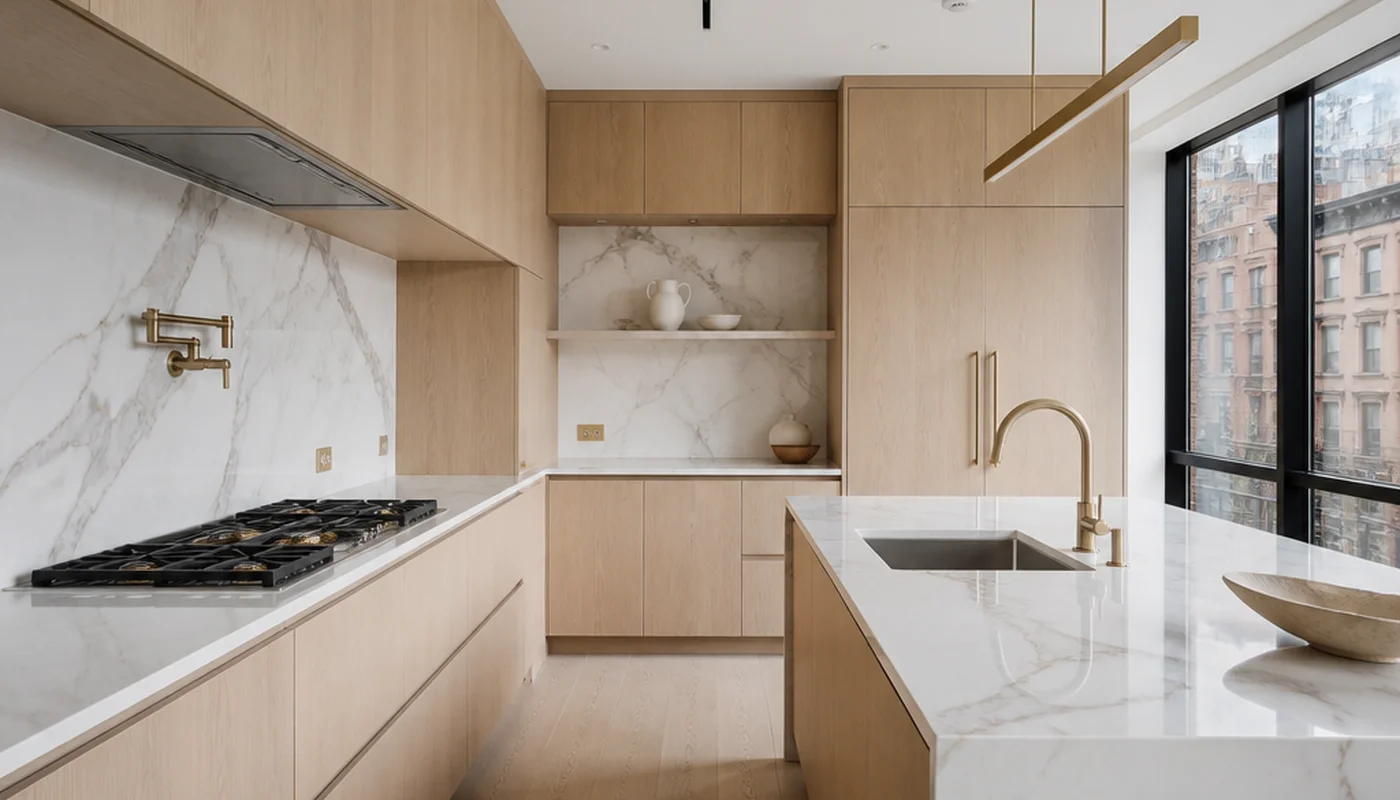
Beyond ventilation, making an open plan work visually comes down to a few consistent moves. Hiding appliances behind custom paneling, choosing cabinetry that reads as furniture, and running the same flooring through both zones creates unity, while changes in lighting, pendants over the island against recessed fixtures elsewhere, and a well-placed area rug quietly mark where the kitchen ends and the living space begins.
The small kitchen floor plan
Designing a small kitchen means shifting from what you want to what you actually need, and when floor area is limited, height becomes your most valuable resource.
- Floor-to-ceiling cabinetry uses the full volume of the room, with rarely used items living on the top shelves.
- A single-wall layout is often the strongest choice in a small apartment, running every appliance and cabinet along one wall and freeing the rest of the room for a dining table.
- Compact 24-inch appliances and under-counter refrigerators recover a surprising amount of space.
- A lighter palette with some reflective finish helps a tight plan feel more open than its dimensions suggest.
There’s a New York-specific detail worth knowing before you order those compact appliances. Equipment installed in New York City, particularly gas-fired appliances, generally has to be approved for use here, historically through the Materials and Equipment Acceptance process and its MEA numbers and more recently through the DOB’s current approval channels. Some imported European appliances, especially in smaller compact sizes, arrive without that approval, which can create problems at inspection and complicate a permitted installation. Confirm approval status with your contractor or appliance supplier before committing to a specific model, rather than discovering the issue when the inspector arrives.
The wet-over-dry rule and what it means for your layout
This is the constraint that catches more Manhattan renovations off guard than any other, and any conversation about moving a kitchen has to start here. Most co-op and many condo buildings enforce a wet-over-dry rule, which generally prohibits placing a new wet area, meaning plumbing fixtures like a sink or dishwasher, above a neighbor’s dry living space below. The rule exists to protect the apartment underneath from leaks, and it means the sink and dishwasher usually have to stay within the original wet footprint, or at least within a zone the building will accept.
The practical consequence is significant. That beautiful island with an integrated sink, or the plan to move the kitchen entirely to the other side of the room for better flow, may not be approvable in your building regardless of how well it’s designed or how much you’re willing to spend. Relocating plumbing can sometimes be done with raised floors, extensive filings, and board sign-off, but it’s expensive and never guaranteed.
The workaround is usually to design around the fixed points rather than against them. The stove and refrigerator have far more freedom of placement than the sink does, so a layout can often be reorganized substantially by moving those two while the plumbing stays put. An island can house a cooktop or simply serve as prep and seating rather than carrying a sink. Confirm what your building permits at the very beginning of the design process, because a layout drawn without that information is a layout you may have to redraw.
Planning your layout: tools and ergonomics
Before committing to anything, you need to see the space accurately, and a kitchen design layout tool is essential for testing configurations against your real measurements.
The ergonomic numbers are worth memorizing.
| Measurement Zone | Minimum | Recommended | Why It Matters |
|---|---|---|---|
| Work Aisle (1 Cook) | 36 inches | 42 inches | Enough that opening an oven or dishwasher door doesn’t feel cramped |
| Work Aisle (2 Cooks) | 42 inches | 48 inches | So that two bodies can pass without collision |
| The Work Triangle | About 13 feet (sum) | Up to 26 feet | Below that range the kitchen feels tight, above it cooking becomes tiring |
| Counter Landing Zones | 12 inches | 15+ inches | Somewhere to set down a hot pan or a bag of groceries |
| Seating Clearance | 10 inches (overhang) | 12–15 inches | Legroom for guests seated at an island |
Running the plan through design software or an online planner lets you generate 3D views and catch the collisions that don’t show up on paper, like an oven door swinging into island drawers, and it makes it much easier to compare how an L-shape and a U-shape would each behave in your specific room.
Choosing the right layout
Whether you land on the efficiency of a U-shape, the flexibility of an L, or a galley opened up with an island, success comes down to accurate measurement and respect for the ergonomic rules, applied within what your building will actually allow. Prioritize the work triangle, understand your wet-over-dry constraints before you fall in love with a plan, and think carefully about how the kitchen meets the rest of the home. Do that and the result is a space that’s both genuinely beautiful and relentlessly functional.
Tatiana Chechina
Interior Designer & 3D Visualizer

I believe great interior design is about creating spaces that are both beautiful and practical. Every project I work on is carefully planned, with close attention to materials, textures, lighting, and the way people experience the space.
One thing I often see homeowners overlook during a kitchen remodel is how lighting interacts with the layout itself. Even a highly functional kitchen can feel cramped if task lighting and sightlines aren’t planned together. In smaller apartments, I frequently use reflective materials, integrated lighting, and continuous surfaces to visually expand the space without changing its footprint.
Kitchen Layouts: U-Shape, L-Shape, Galley, and Open Concept
The layout of a kitchen decides everything that follows: where plumbing goes, how the workflow moves
Kitchen Work Aisles and Clearances: Which Numbers Are Actually Required
The number everyone repeats for a kitchen aisle is 42 inches, and in New York City that is not the m

The Art of Mixing Old and New in Interior Design
Walk into a well-designed home and you can often feel the balance before you understand it. A weathe