
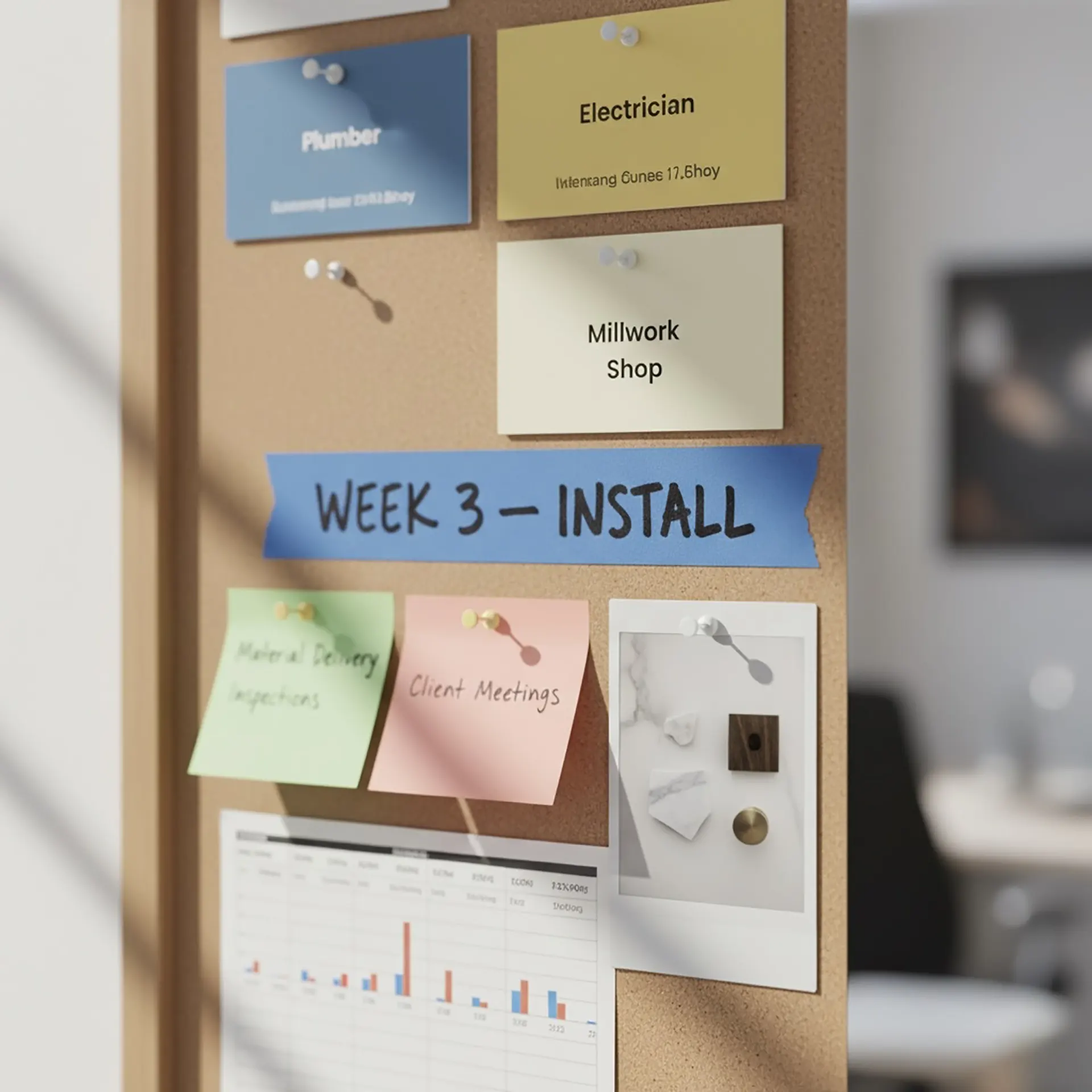
From Permit to Perfection: Why Project Management Defines the Outcome
Here is a question worth asking before you sign a contract: what costs more, a slow builder or a missing email?
Usually the missing email.
A slow builder is a visible problem. You can see it, measure it, and address it. A missing email is invisible until it surfaces as something else: custom millwork fabricated to superseded dimensions, discovered on delivery day, with the shop’s lead time starting over from zero. A plumbing fixture nobody ordered, holding up every wet trade behind it. A site that goes quiet for three weeks, not for lack of materials, but for lack of information.
In a Manhattan renovation you are not only managing construction. You are running a temporary organization with four departments that rarely talk to each other by default: design, permitting, construction, and procurement.
The person who makes them talk is the project manager, and how well that job is done shapes the outcome more than most owners expect.

In the fragmented model, the client becomes the project manager
In the traditional setup, you hold separate contracts: an architect for design, a general contractor for the build, an expediter for the filings. Each is competent. None of them is responsible for the space between them.
That space becomes yours. You are the one relaying a message from the contractor who says the plans are unbuildable to the architect who drew them. You are the one chasing an insurance certificate from the contractor to the managing agent. When something falls through, each party can point at another with a straight face, and you are the only one with nowhere to point.
This is worth understanding before you choose a structure, because it is the single biggest hidden cost in the fragmented model. Nobody quotes you for the hours you will spend doing it.

Four fronts, running at once
A project manager is holding four separate streams of information in sync, and a failure on any one of them stops the others.
| Front | Primary Focus | Key Responsibilities | What Failure Looks Like |
|---|---|---|---|
| Design and client | Translating intent | Turning drawings and client decisions into buildable instructions; securing finish approvals in time to order | Selections made too late to hit the schedule |
| Authorities: board and DOB | Documentation | Board package, expediter coordination, inspection scheduling and attendance | Permit stalls on an objection nobody answered |
| Build and subcontractors | Sequence | Getting the right trade on site with the right materials and the current drawings | A crew arrives and cannot start |
| Procurement | Timing | Tracking lead times and landing deliveries against the build sequence | Work halts waiting on one long-lead item |
Procurement deserves a word on numbers, because published lead times get repeated as though they were fixed. They are not. Cabinetry alone runs roughly 4 to 8 weeks for semi-custom and 8 to 16 for full custom, with painted doors at the longer end because of the finishing and drying stages. Appliances, stone, and specialty plumbing swing at least as widely depending on manufacturer, finish, and time of year.
The number that governs your schedule is the one on your own order confirmation, not an average from an article. A project manager’s job is to get those confirmations early enough that the critical path is built around real dates.

Inspections are where coordination gets tested
DOB inspections are the clearest example of what project management actually buys you, because the failure mode is so specific.
An inspection requires someone on site with access, the permit posted, and the approved drawings in hand. If the inspector arrives and the work is not ready, or nobody can let them in, or the drawings are not there to check the work against, the appointment is lost. It goes back into the DOB’s queue, and depending on the trade and the time of year, the next available slot can be a week or several out.
Nothing downstream moves in the meantime. Rough plumbing cannot be covered before it passes. Wiring cannot be closed in. One missed appointment can idle a site for a week over a scheduling failure that took five minutes to prevent.
What to actually ask about a firm’s project management
Every firm will tell you they communicate well. These questions get past that:
- Where does project information live, and will I have access to it? The platform matters far less than whether one exists and whether you are in it. If the answer is email threads and phone calls, decisions will be reconstructed from memory later.
- Who answers a question from the site, and how fast? When a tile setter hits an ambiguity in the drawings at 9am, the useful answer describes a route: who they ask, who decides, and how the decision gets recorded so the next person sees it.
- How are long-lead items tracked, and when do you place orders? You want ordering tied to the construction sequence, not to whenever selections happen to be finalized.
- Who handles the board and the DOB, and who attends inspections? A name, not a department.
- What do I see, and how often? Weekly progress with photographs and upcoming milestones is a reasonable standard. Silence between site visits is not.
At Hoppler Design & Build the answer to the first question is a shared system that designers, project managers, site supervisors, purchasing, and the client all work in, so that a question from the site attaches to the drawing it concerns and the answer stays attached to it. The specific software matters less than the principle: decisions live in one place, visible to everyone who needs them, and they stay findable a year later.
What you are actually paying for
In a Manhattan renovation you are buying a finished apartment. You are also buying the process that produces it, and the process is where the money quietly goes when it goes wrong.
Good design and skilled construction are both necessary. Neither survives a broken information chain between them: drawings that reach the site out of date, an order placed against a superseded dimension, a decision made twice and differently. Project management is what keeps those from happening, which is why it deserves as much scrutiny during hiring as the portfolio does.
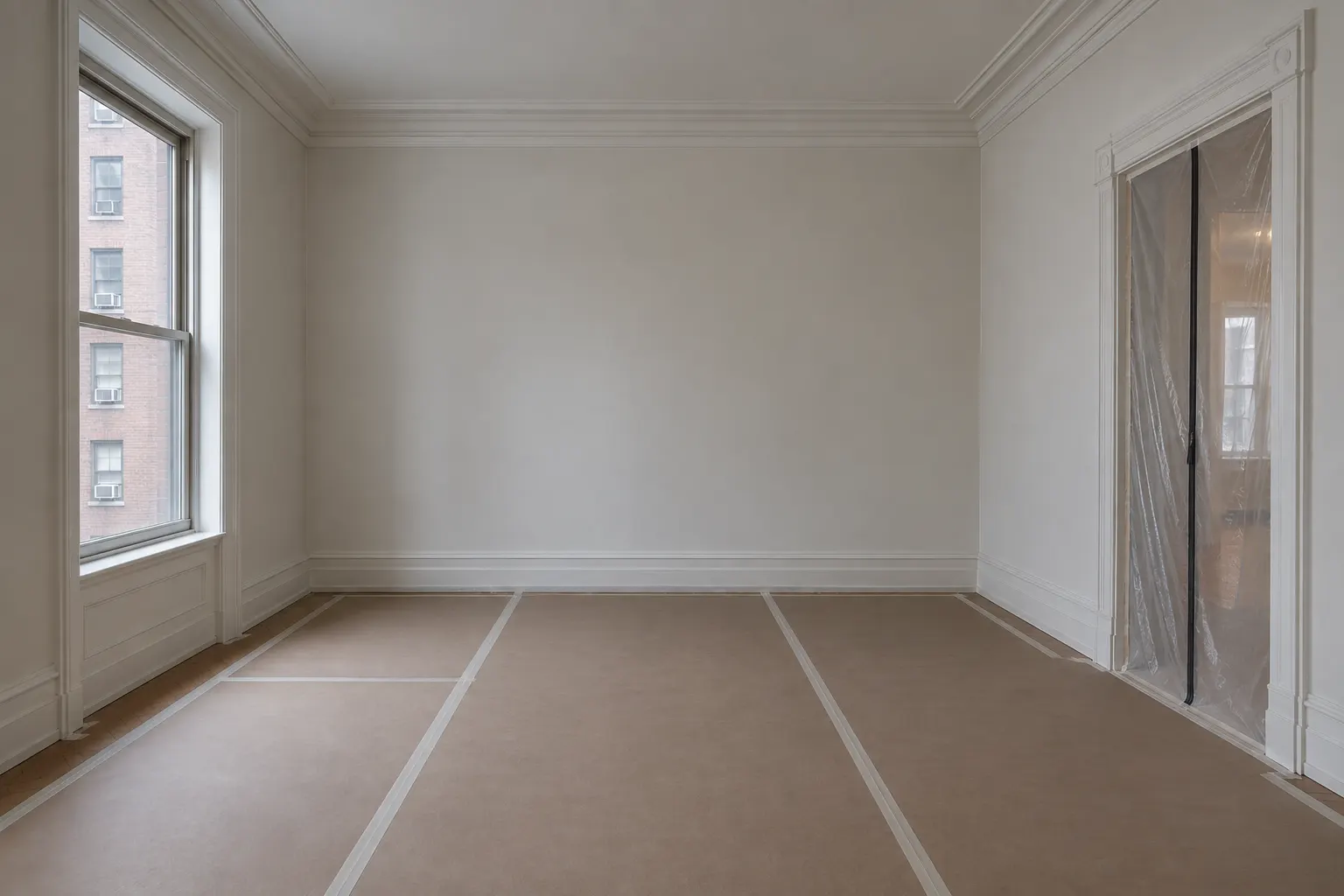
What Your Building Asks of a Contractor, Beyond the License
Anyone who has renovated a New York apartment knows the moment: before a single wall is touched, the

Red Flags and Green Lights: Reading Between the Lines of Contractor Proposals
The most expensive mistakes in renovation usually trace back to choosing a contractor on price alone
How to Interview a Contractor Before You Hand Over the Keys to Your Home
How to Interview a Contractor Before You Hand Over the Keys to Your Home What separates a reliable c