

Elevating the Daily Routine: Shower Design That Actually Works
A shower is one of the most intensively used areas in any bathroom, which means its design has to solve practical problems before aesthetic ones. Water has to be controlled, surfaces have to withstand daily moisture, cleaning should be straightforward, and the whole thing has to integrate naturally into the layout of the room.
Good shower design has little to do with visual drama. It comes down to proportion, drainage, waterproofing, lighting, and material choices that keep performing years after installation. Handle those well and the result feels calm and cohesive. Handle them poorly and no amount of premium finish will compensate for the technical flaws underneath.
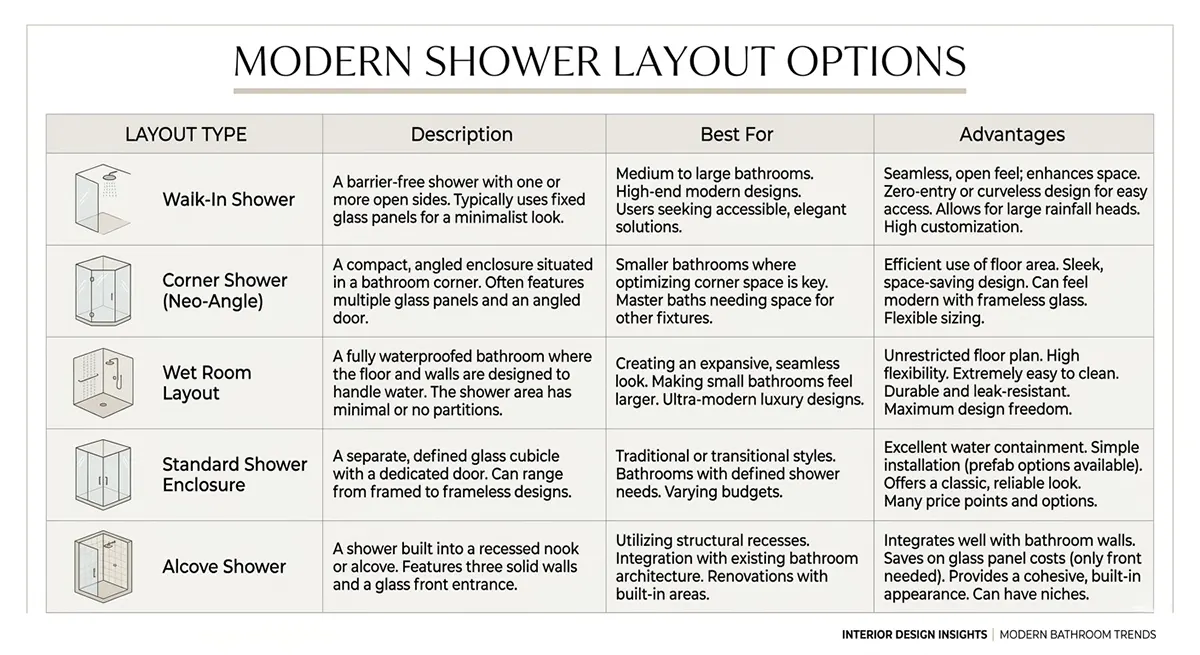
Designing showers in compact bathrooms
In a smaller bathroom, efficiency matters more than scale, and the goal isn’t to make the shower feel large so much as to make it feel properly integrated.
There is a floor below which you cannot go, and it is worth knowing before you start sketching. New York’s Plumbing Code §417.4 requires a shower compartment to have at least 900 square inches of interior area and no less than 30 inches in its minimum dimension, measured from the finished interior surfaces. Valves, showerheads, soap dishes, and grab bars don’t count toward that area. In a tight bathroom this often decides the layout on its own.
Within those limits, corner enclosures tend to be the practical choice because they preserve circulation through the room. Frameless glass maintains visual continuity and lets light move across the space without interruption. Extending tile to the ceiling keeps the shower from reading as a separate box and strengthens the vertical proportion of the room, while large-format wall tile reduces grout lines and produces a cleaner surface.
Door swing deserves genuine attention in a tight room, since a hinged glass door frequently conflicts with a vanity or toilet. A sliding panel, or fixed glass with a walk-in opening, resolves that constraint far more elegantly. A compact footprint doesn’t limit quality, but it does demand precise planning.
Wet rooms and continuous floor planes
The wet room approach removes the physical separation between the shower and the rest of the bathroom. Rather than a raised curb or an enclosed pan, the entire floor is waterproofed and gently sloped toward a drain. The result is visual continuity that can make a smaller bathroom feel considerably more open, and it allows real flexibility in placing fixtures like freestanding tubs or wall-mounted vanities.
The technical demands are correspondingly higher. The subfloor has to be leveled correctly, the slope toward the drain has to be consistent across the whole plane, and a continuous waterproof membrane has to extend beneath every tiled surface within the wet zone. Ventilation carries more weight here than in a conventional layout, because moisture isn’t confined to a small enclosure and the entire room needs to dry efficiently after use. Executed properly, a wet room is both practical and visually restrained. Executed with shortcuts, the problems surface quickly and expensively.
Walk-in and doorless showers
Doorless configurations are usually chosen for their simplicity, since removing doors and hardware cuts visual clutter and makes cleaning easier. The tradeoff is that this arrangement needs adequate depth to keep water from reaching the dry areas of the room.
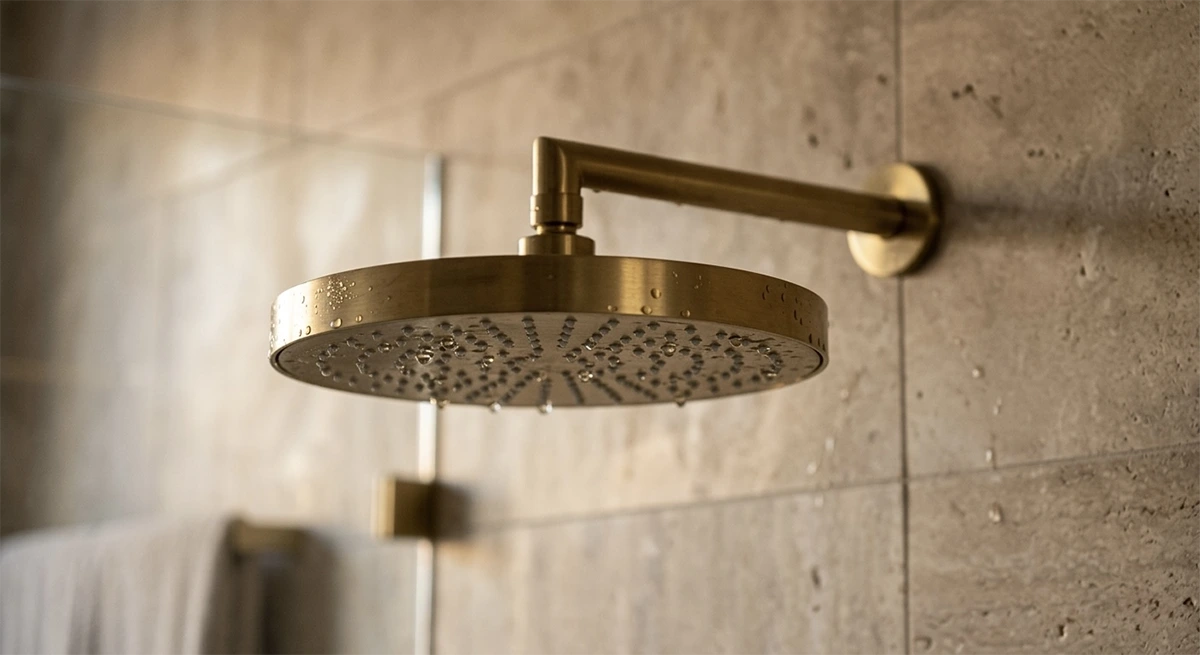
Showerhead placement becomes critical, and the direction and pressure of the water need to be worked out during planning rather than discovered afterward. Floor slope has to be precise, and drain capacity has to match the expected flow rate. In larger bathrooms, partial partitions such as solid half-walls, fluted glass panels, or subtle structural elements provide containment while preserving the openness that motivated the choice in the first place.
Integrating a tub and shower
Plenty of homeowners still want both, and the challenge is making the two feel deliberately connected rather than crammed into the same room.
In a larger layout, the tub and shower can share a defined wet zone behind glass, and running consistent tile across both areas is what reinforces the sense of unity. In a smaller bathroom, the difference comes from details: full-height tile instead of a prefabricated surround, a quality glass screen instead of a basic curtain, and carefully resolved edge transitions. The goal throughout is clarity, with each fixture reading as part of a coordinated composition.
Tile selection and surface strategy
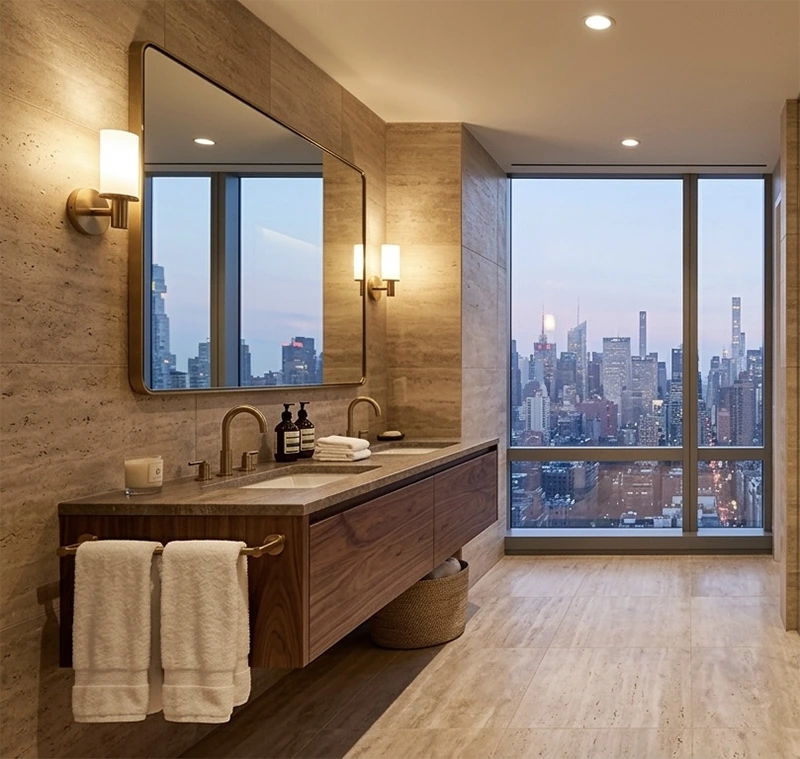
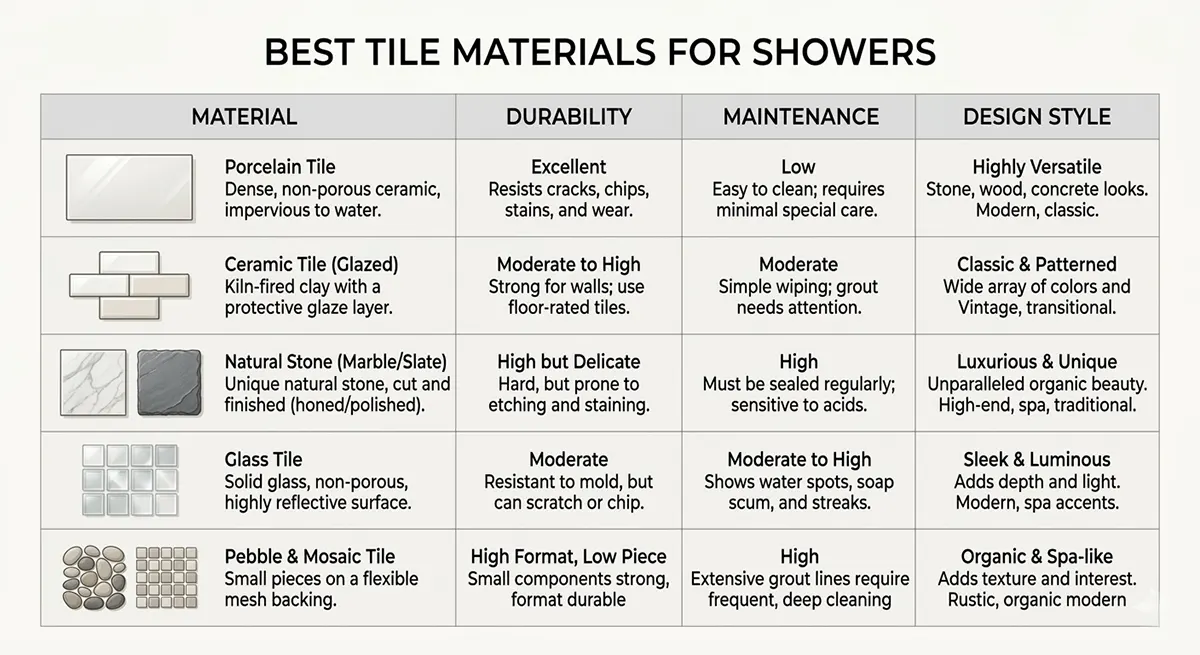
Walls generally call for large-format porcelain, which means fewer grout lines, simpler cleaning, and a more continuous surface. Floors want a small format or mosaic, since smaller pieces follow the slope more easily and the additional grout lines increase slip resistance where you need it most.
Grout color is a smaller decision with a large visual effect. Matching the tile gives a pared-back, continuous appearance, while a contrasting color emphasizes the geometry and layout of the tile itself.
Interior designer Tatiana Chechina treats the grout decision as the one clients most often underestimate: it is chosen last, in a hurry, from a small chip, and it ends up drawing more lines across the wall than the tile pattern does.
Beyond format, matte surfaces conceal water spots noticeably better than high-gloss finishes. Natural stone requires sealing and periodic maintenance, whereas porcelain asks for considerably less upkeep over its life.
Drainage and slope
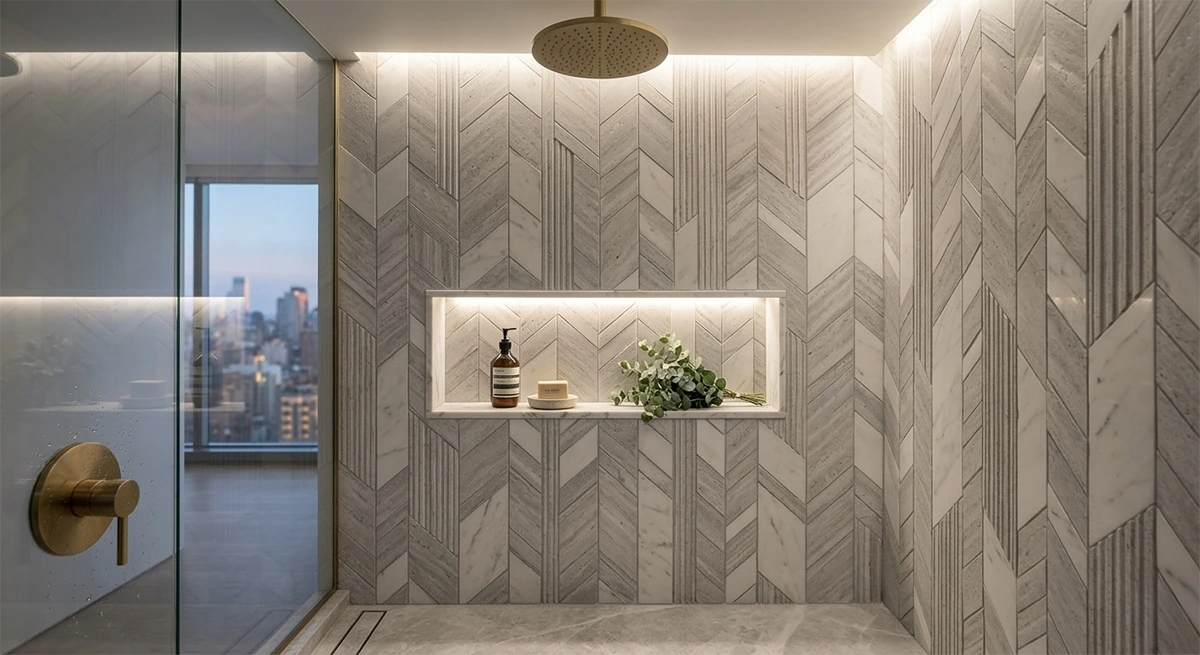
Proper drainage is fundamental. Whether you use a point drain or a linear drain, the floor has to slope consistently toward it, since insufficient slope leaves standing water while excessive slope feels uncomfortable underfoot.
A linear drain works in a single direction and suits barrier-free and wet room showers, which is why it has become the default in contemporary design. A point drain slopes multi-directionally toward a center or corner and remains standard in traditional enclosed shower pans. The choice should follow the layout rather than lead it.
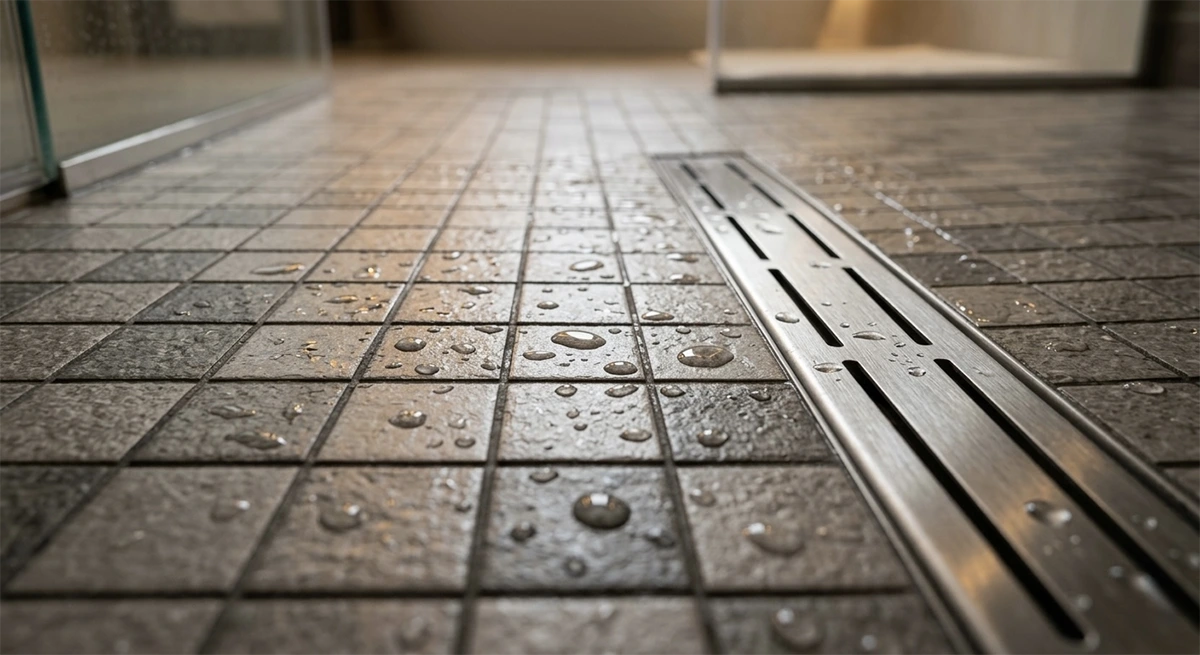
Drain capacity has to align with fixture output, and this is easy to overlook. Rain showerheads and body sprays substantially increase flow, and the drainage system has to accommodate that volume rather than merely the minimum for a single head.
There’s a New York consideration here that belongs in the conversation early. Changing drain type or position, and particularly moving from a point drain to a linear drain, means relocating the waste line and connecting into the building’s shared sanitary stack. That’s licensed plumbing work requiring a DOB plumbing permit, and in a co-op or condo it also requires board approval as part of the alteration agreement. Depending on the building, the available depth beneath the floor may limit where a linear drain can physically go, since the trough and its trap need more room than a simple point drain does. In some pre-war buildings the answer is genuinely no, or yes only with a raised floor. Establish what your building and your slab will accommodate before designing around a barrier-free shower, because this single detail can reshape the entire layout.
Waterproofing systems
Tile and grout are not waterproof barriers. A dedicated membrane system beneath the tile is what protects the structure from moisture intrusion. Sheet membranes and liquid-applied membranes are both widely used, and what matters far more than the choice between them is correct installation according to the manufacturer’s guidelines, with every seam, corner, and penetration properly sealed.
The flood test that verifies the pan is not a professional courtesy; it is a code procedure with a defined method. NYC Plumbing Code §312.9 requires the drain outlet to be plugged and the pan filled with potable water to a depth of at least 2 inches, measured at the threshold, held for at least 15 minutes with no evidence of leakage. Where there is no 2-inch threshold, a temporary one is built for the test.
That is a specific thing you can ask your contractor to perform and to document before tile goes down. Waterproofing should never be improvised, since it’s the foundation everything else depends on.
Ventilation, heating, and lighting
The exhaust fan needs to be properly sized for the room and ducted to the exterior or the building’s shaft, and humidity-sensing models perform noticeably better than timer-based ones. In a Manhattan apartment this is rarely as simple as it sounds. Running new ductwork to an exterior wall almost always requires board approval, and it’s frequently constrained or impossible depending on the building’s structure and facade rules, since new penetrations through an exterior wall are rarely permitted. Most apartments tie into an existing vent shaft instead, which means the practical question is what capacity and routing that shaft supports. Establish this before finalizing the layout, because it influences where the shower can sit.
Radiant floor heating speeds drying and adds real comfort underfoot, and heated towel bars help reduce lingering dampness. Both involve permitted electrical work, and radiant heating specifically requires board approval in co-op and condo buildings, since it builds up the floor assembly and adds electrical load. Buildings commonly want documentation of the system and its installation before approving it.
Lighting inside the shower has to be rated and listed for wet locations, which is a code requirement rather than a preference. Good lighting also does practical work here, since it keeps darker tile choices from making the enclosure feel dim and cave-like.
Plumbing controls and technology
Thermostatic valves deliver more stable temperature control than basic pressure-balancing systems, and they’re worth the upgrade in most projects.
Digital shower controls allow preset temperatures and a cleaner interface, though they need more than careful coordination. Any electrical work in New York requires a licensed electrician, and work of this kind generally requires a permit and sign-off, with board approval on top of that in a co-op or condo. Any component in the wet zone also has to carry the correct wet-location listing. Build the permitting time into your schedule rather than treating it as an afterthought once the valve is on order.
Service access should be planned deliberately from the start. Access panels integrated discreetly into an adjacent closet or hallway make future maintenance dramatically easier, and in an apartment building where a hidden leak becomes your neighbor’s problem, that access has real value.
Long-term maintenance
Fewer grout lines, reachable corners, and quality sealants all reduce ongoing upkeep more than any cleaning product will.
Keep spare tile from the original installation, since a repair years later is far easier with material from the same production batch. In a co-op or condo, check where your building permits storing it, as many restrict construction materials in common areas and storage rooms.
Clear communication with your contractor about cleaning recommendations and maintenance intervals is the last piece, and it protects the investment more effectively than most people expect.

Harmonizing Space: The Complete Guide to Feng Shui Interior Design and Decorating
What is feng shui interior design? Feng shui originated in ancient China, where “feng” m
The Ultimate Guide to Bathroom Tile Design: Ideas for Walls, Floors, and Showers
Tile is one of the design choices that stays with a bathroom for a very long time. Paint gets repain
Best Color Combinations for a Bathroom Renovation in NYC (2026 Trends)
Color is the cheapest decision in a bathroom renovation and the most expensive one to get wrong. Eve