

The New Language of Luxury: Comfort, Quiet, and the Power of Restraint
Once upon a time, luxury was loud. It sparkled, it demanded attention, and it announced itself through marble floors that echoed, chandeliers the size of small cars, and gold fixtures in rooms nobody ever actually used.
Step into a truly high-end home today, though, and the first thing you notice is what’s been left out. There’s no noise, no visual clutter, no strained effort to impress. What’s there instead is a calm precision: a heavy door that clicks shut with the reassuring weight of a bank vault, a limestone floor that feels warm underfoot, a silence deep enough that you can almost hear your own heartbeat. Luxury has learned the art of restraint, and it turns out that quiet is one of the most expensive things money can buy.
Not long ago, luxury meant visible wealth, a collection of expensive symbols arranged to be seen. Now it lives in intention you can’t immediately see. The shift makes sense once you consider how loud daily life has become. The more notifications, screens, and urban noise we absorb, the more we crave interiors that soothe rather than stimulate, and in New York, Tokyo, or London the real status symbol is no longer a gold tap but a genuinely quiet room.

The Anatomy of Quiet
Creating a space that feels quiet is, ironically, a substantial engineering challenge, and it depends on infrastructure you’ll never see.
| Quiet Design Pillar | Technical Implementation | Human Impact |
|---|---|---|
| Acoustic Shielding | Double-layer drywall with damping compound and decoupled studs | Elimination of urban vibration and external noise pollution |
| Circadian Lighting | Integrated architectural coves, toe-kicks, and recessed automated systems | Reduction of eye strain and alignment with natural rest cycles |
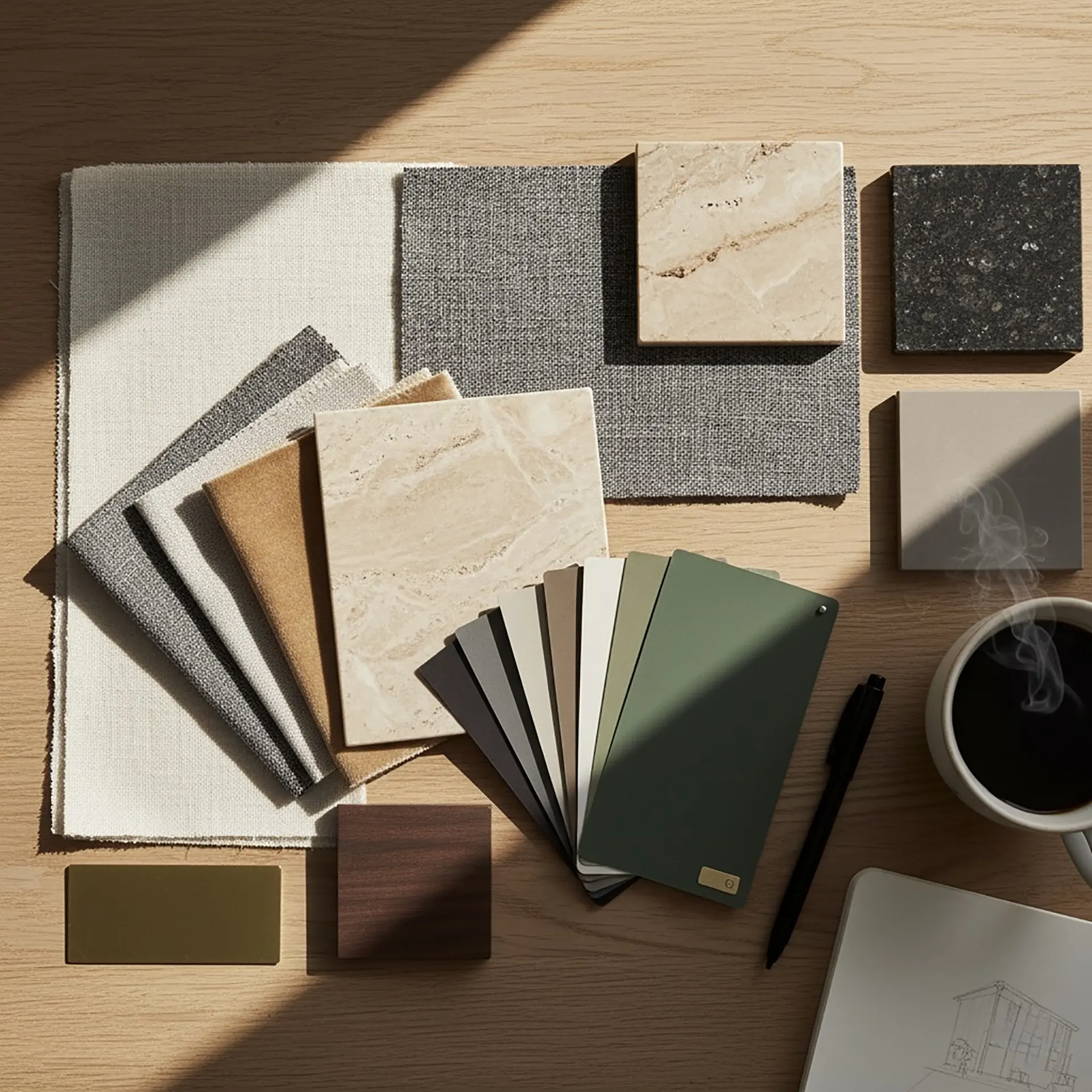
| Tactile Sourcing | Honed natural stone, unlacquered brass, and solid wood | Grounding sensory connection through honest materials |
Achieving that hushed, almost museum-like atmosphere means treating the walls as shields. We build with double-layer drywall bonded with damping compound, decouple the wall studs so vibration can’t travel through the structure, and hang solid-core doors fitted with drop-seals. You close the door and the city recedes, which registers in the body as something close to an exhale. Acoustic design has quietly become the new gold leaf.
Light as Architecture
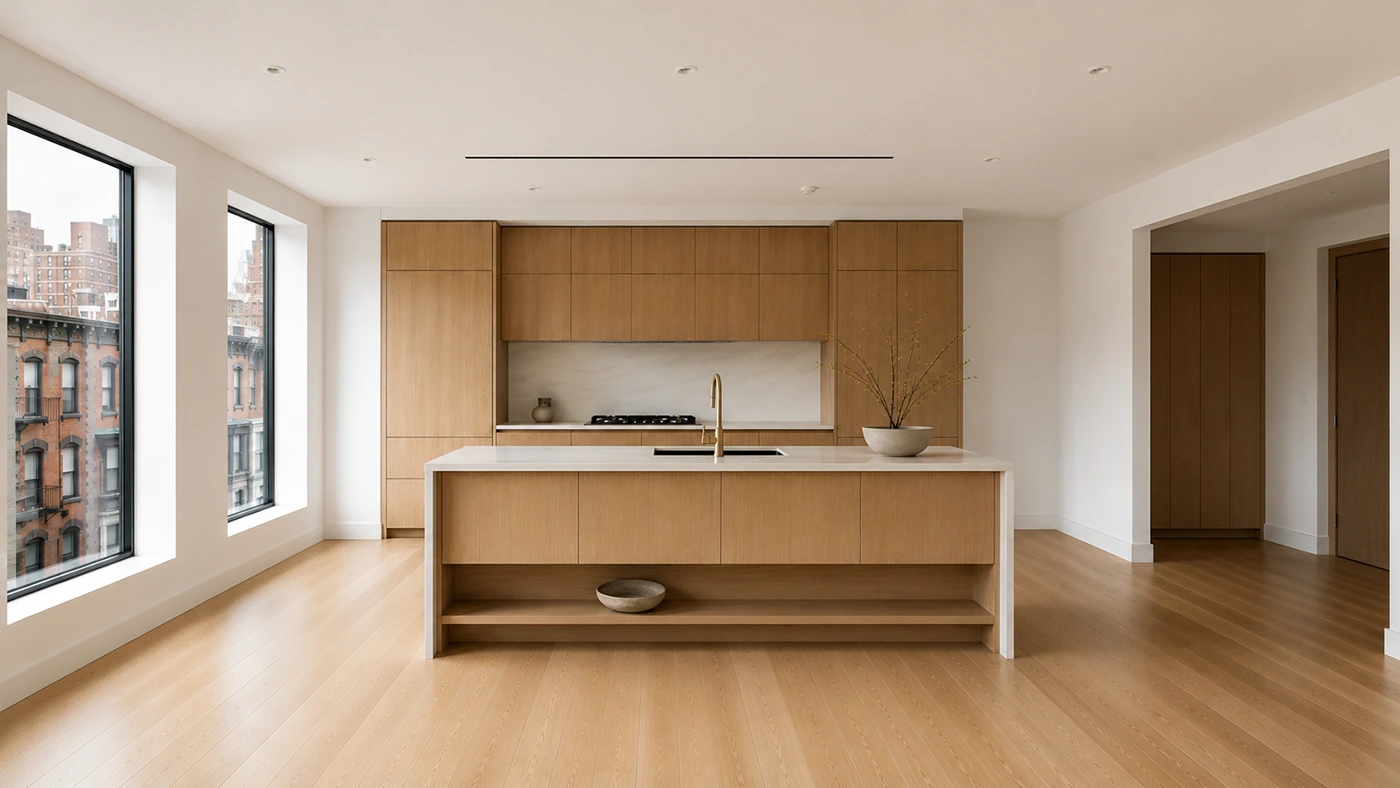
Luxury light isn’t measured in brightness so much as in balance, and it should never feel like a supermarket aisle. We integrate the fixtures into the architecture itself, into coves, toe-kicks, and recesses, so that what you see is the glow rather than the bulb producing it. The best of it shifts across the day, warmer and dimmer as evening comes on, working with your natural rest cycles rather than against them.

Material Honesty
The movement has been away from anything shiny and toward things you want to touch. Stone reads better honed and cool than glossy. Unlacquered brass earns its character by taking on a patina over the years. Wood should look like it grew rather than like it was printed onto a surface. The working rule in our studio is simple: if it looks like wood, it has to be wood, because faux finishes are the quiet enemy of this kind of restraint.
Quiet Luxury in a Manhattan Building
There’s a reason this philosophy resonates so strongly in New York specifically, and it comes down to what surrounds a typical apartment. Co-op and condo living means shared walls, ceilings, and floors, which is to say a neighbor’s footsteps, plumbing, and conversations are often only a slab away. Much of the acoustic engineering above is a direct response to that reality rather than an abstract preference for calm.
This is also where a renovation runs into the building’s own rules. Most co-op boards require a substantial percentage of floor area to be covered in rugs or carpeting, or mandate a specific acoustic underlayment beneath any new hard flooring, precisely to protect the neighbor below from impact noise. Pre-war buildings add their own wrinkle, since original construction and older assemblies don’t isolate sound the way modern ones do, so achieving quiet often means rebuilding the wall and floor systems rather than simply finishing them. A design that promises hushed serenity without accounting for the building’s structure and bylaws is promising something it may not be allowed, or able, to deliver.
The Psychology of Less
When the brain has less visual information to process, fewer competing colors, patterns, and objects, it simply has less to work through, and that ease tends to show up as a lower sense of physiological stress. Higher complexity nudges toward tension; lower complexity leaves room for calm. It’s why the strongest modern homes don’t try to overwhelm you with beauty all at once. They let it reveal itself gradually and, in doing so, give you permission to breathe.
The Paradox of Precision
Here’s the part architects understand that clients often don’t: restraint is the hardest style to build well. A traditionally busy room can hide a crooked wall behind crown molding and disguise a gap in the floor under a chunky baseboard. Strip the decoration away and there’s nowhere for a mistake to hide. The walls have to be genuinely flat, finished to the highest Level 5 standard, and the reveal lines have to be razor-sharp, because in a quiet room the craftsmanship is the design. At Hoppler Design and Build, we build these spaces the way you’d build an instrument, tuned until every element sits exactly where it should.
Luxury today is measured less by what a renovation cost than by how the home makes you feel the moment the door closes behind you. We used to decorate to impress other people, and now we design to restore ourselves. This kind of quiet luxury has nothing to do with austerity. It’s the result of editing life down to what actually matters: a warm floor, a soft light, and the rare, real luxury of peace.
Quiet Luxury Design Principles:
- Engineering Silence: Prioritize double-layer drywall, decoupled studs, and solid-core door seals.
- Light Integration: Embed fixtures into architecture to provide glow without glare.
- Authentic Sourcing: Reject faux finishes in favor of aging-ready natural materials.
- Visual Reduction: Limit color and pattern counts to lower physiological stress.
- Craftsmanship Focus: Demand Level 5 wall finishes to support minimalist detailing.
Tatiana Chechina
Interior Designer & 3D Visualizer

The Manhattan Palette: Timeless Color Combinations for Urban Interiors
Manhattan has always been a canvas for design: a vertical gallery of glass, steel, and stone that re

Best Kitchen Layouts for Remodeling in NYC Apartments
The kitchen is the operational hub of a home, the place where function and aesthetics have to meet w
Kitchen Design Styles: Japanese, Scandinavian, Mid-Century Modern, and Contemporary
Four renovation projects in the last eighteen months across the Upper West Side had almost identical