

The Art of Blending Old and New: Why Contrast Is the New Luxury
Walk into a beautifully designed home and you can often feel it before you understand it, a quiet harmony between eras, a dialogue between time-worn textures and clean modern lines. A weathered oak table beside a sculptural lamp. An antique mirror reflecting a minimalist wall. What you’re sensing isn’t nostalgia or novelty, it’s balance.
Combining old and new is one of the most rewarding approaches in design, and also one of the trickiest. Done well, it creates spaces with real depth and personality. Done carelessly, it reads as chaotic or contrived. What follows is how designers find that tension between vintage soul and modern clarity, and why a firm like Hoppler Design and Build treats the balance less as a style choice and more as a design philosophy.

1. Why Mixing Eras Works
Humans are drawn to contrast. Our brains want both familiarity and novelty at once, the comfort of what we recognize alongside the small thrill of what feels new, and a room that layers different periods delivers exactly that psychological richness. The eye moves through it, discovers something, pauses, and in doing so reads the space almost like a story. That’s why an antique desk in a minimalist room feels so captivating: it anchors us in something human and tactile. Modern design supplies the clarity, vintage design supplies the character, and the most compelling interiors tend to live somewhere between the two.2. Think of Design as Storytelling
Every object carries a past, whether it’s a patina, a maker’s mark, or simply the evidence of long use. When you combine eras, you move from decorating into something closer to curating a narrative. A 19th-century chandelier hanging above a sleek dining table isn’t an accident of taste, it’s a conversation held across centuries, and that tension between clean-lined architecture and older craftsmanship is what gives a room its emotional texture.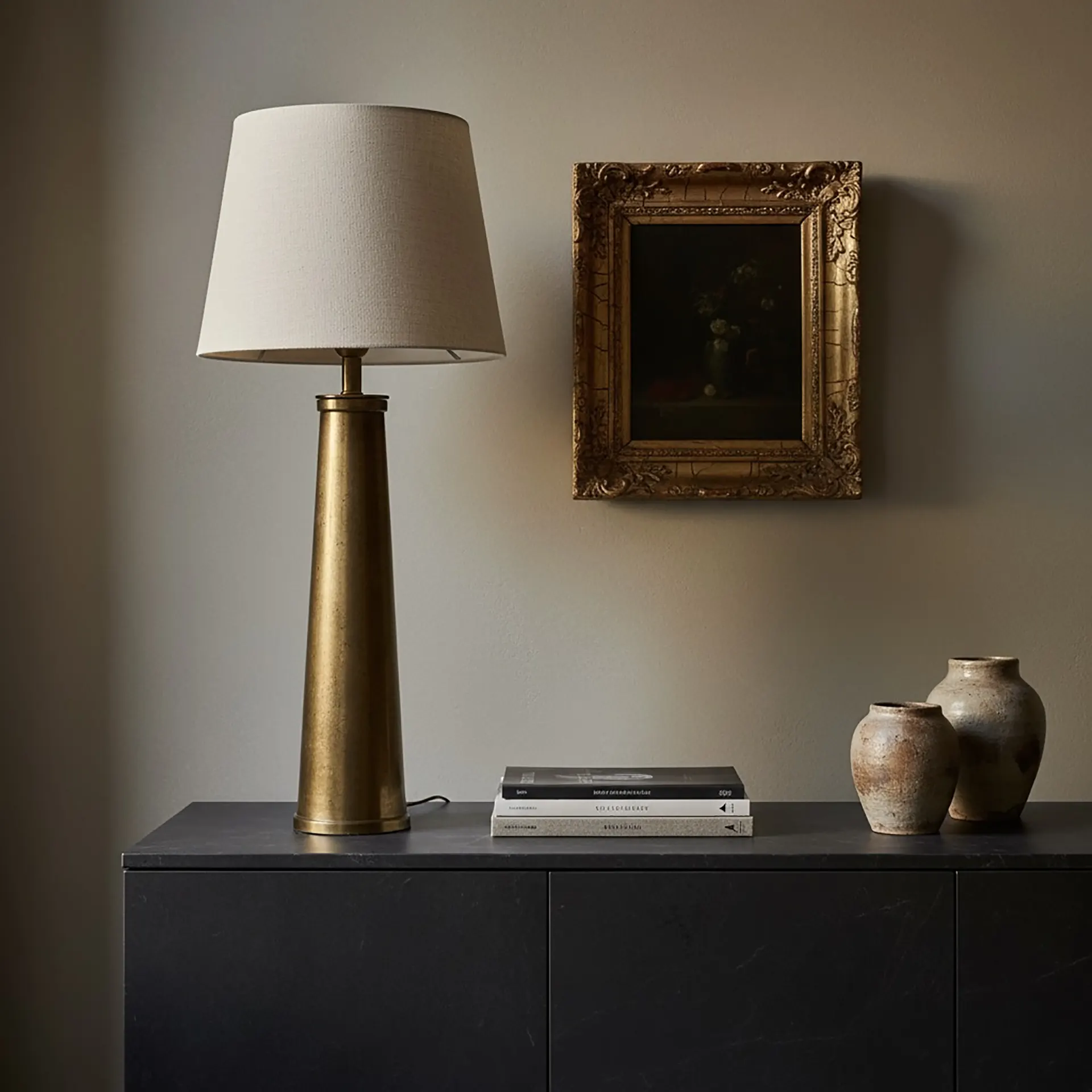
3. Find Your Anchor Piece, Then Build Around It
One of the simplest and smartest ways to start blending eras is to anchor the space with a single strong piece, either modern or antique, and let everything else orbit around it.- A vintage Persian rug beneath a modern sectional.
- A sculptural contemporary light fixture hung above a reclaimed farmhouse table.
- An antique dresser given a second life with modern hardware.
4. Balance Materials and Tones
Harmony comes largely from tonal cohesion. If a vintage piece carries a deep walnut patina, it helps to echo that warmth somewhere else in the room. If the modern side of the space leans minimalist and monochrome, a single organic texture can keep it from feeling cold. The quiet trick behind most cohesive rooms is repetition: a modern metal chair sitting beside an antique bronze lamp still reads as intentional when the two share an undertone or a shared shape language, even though their eras are a century apart.5. Use Architecture as Your Neutral Stage
When you blend styles, the architecture itself becomes the frame that holds the conversation together. Neutral walls, simple flooring, and clean lines give both vintage and modern pieces room to breathe. Hoppler refers to this as architectural silence, the practice of creating calm, minimal shells that let the furniture and art do the talking rather than competing with the walls around them.
6. Play with Scale and Placement
Mixing old and new isn’t really about alternating pieces one for one, it’s about rhythm. A room full of large modern furniture wants a few smaller vintage accents to balance it, and architecture that’s already historic and ornate benefits from being offset with bold, sculptural modern shapes. The best interiors aren’t arranged chronologically so much as choreographed.7. Don’t Match – Harmonize
Matching belongs to catalogs; harmony belongs to rooms that feel lived in. Your vintage oak table doesn’t need to match your modern chairs, it needs the overall composition to feel deliberate.| Harmonizing Factor | Rule of Thumb |
|---|---|
| Material Repetition | Three materials, each repeated at least twice across the room. |
| Tonal Balance | One dominant tone, one accent tone, one contrasting texture. |
8. Let Imperfection Do the Talking
One of the real gifts of vintage design is its imperfection: the patina, the small scratches, the gentle fading. Those marks carry stories, and set against modern minimalism they feel even more precious. It’s why Hoppler favors honest materials like stone, metal, and wood, and lets them age naturally rather than fighting to keep them pristine.Where to Find the Pieces in New York
Part of what makes this approach practical in Manhattan is how much good vintage is within reach. 1stDibs, headquartered in New York, is a natural starting point for higher-end antique and collectible furniture, and its listings are useful even as a research tool for understanding what a period piece should look like and cost. For something more tactile and unpredictable, the Hell’s Kitchen Flea Market on weekends rewards patience with genuine finds, and the city’s estate sales, auction houses, and consignment shops turn up the kind of one-off anchor pieces that give a room its center. The advantage of sourcing locally goes beyond convenience, since seeing a piece in person tells you what a photograph can’t about its scale, its wear, and how its tone will actually sit against your finishes.Blending History and Innovation
Blending vintage and modern was never about contrast for its own sake, it’s about harmony between history and innovation. When a design honors both the craftsmanship of the past and the clarity of the present, the result tends to feel timeless rather than tied to any single moment.Core Harmony Principles:
- Identify an anchor piece to serve as the room’s gravitational center.
- Use architectural silence through neutral finishes to let objects speak.
- Balance large modern volumes with intricate vintage details.
- Prioritize tonal cohesion over exact style matching.
- Embrace patina and imperfection as evidence of life, not flaws to hide.

From Drab to Fab: The Power of a Bold Accent Wall
Imagine walking into a room that feels instantly energized and welcoming, where one wall commands at

Why Do Some Homes Just Feel Right? The Science of Flow in Interior Design
Have you ever walked into a home and felt your shoulders drop almost before you’d taken it in?

The Manhattan Palette: Timeless Color Combinations for Urban Interiors
Manhattan has always shaped how its interiors look, and the limestone of its pre-war facades, the da