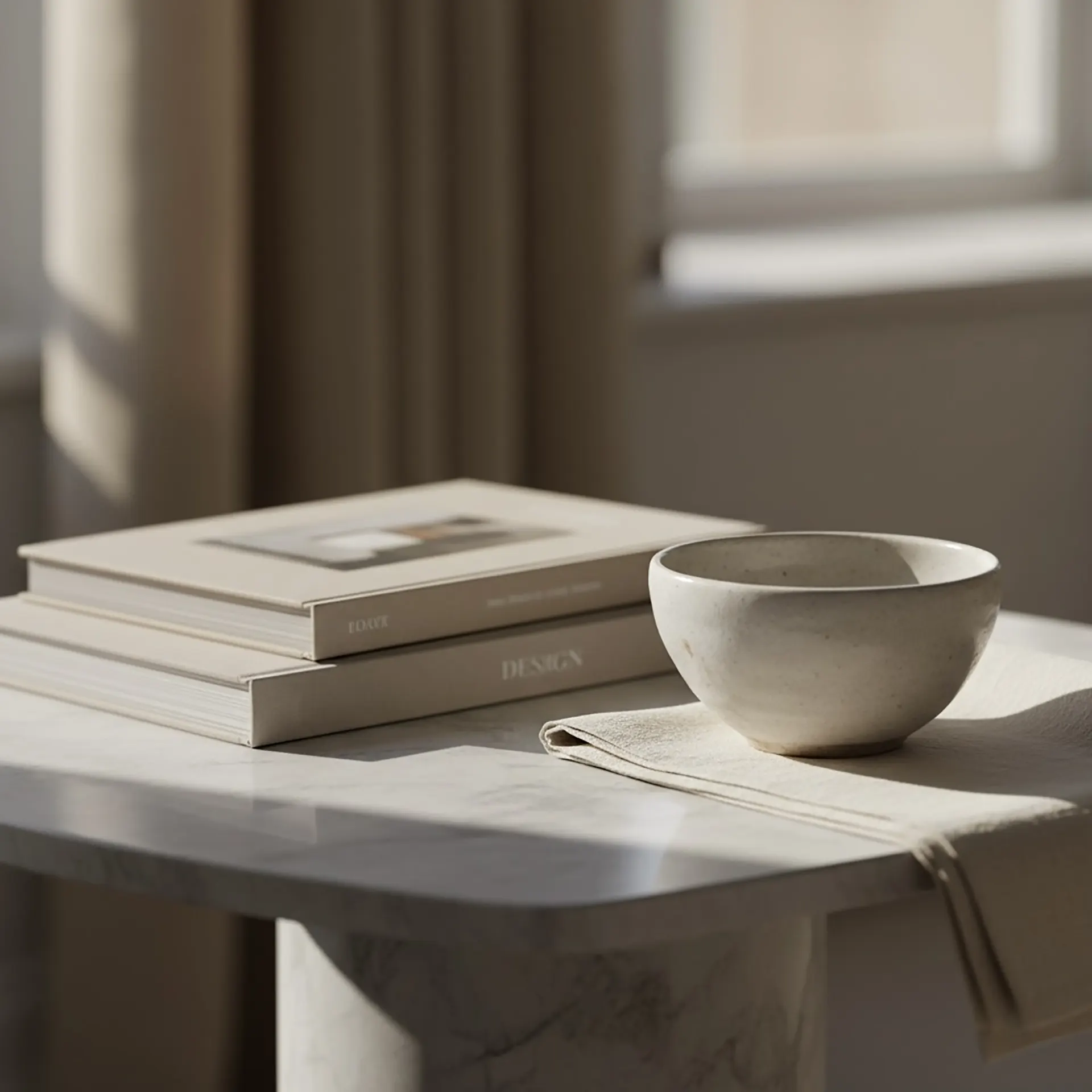
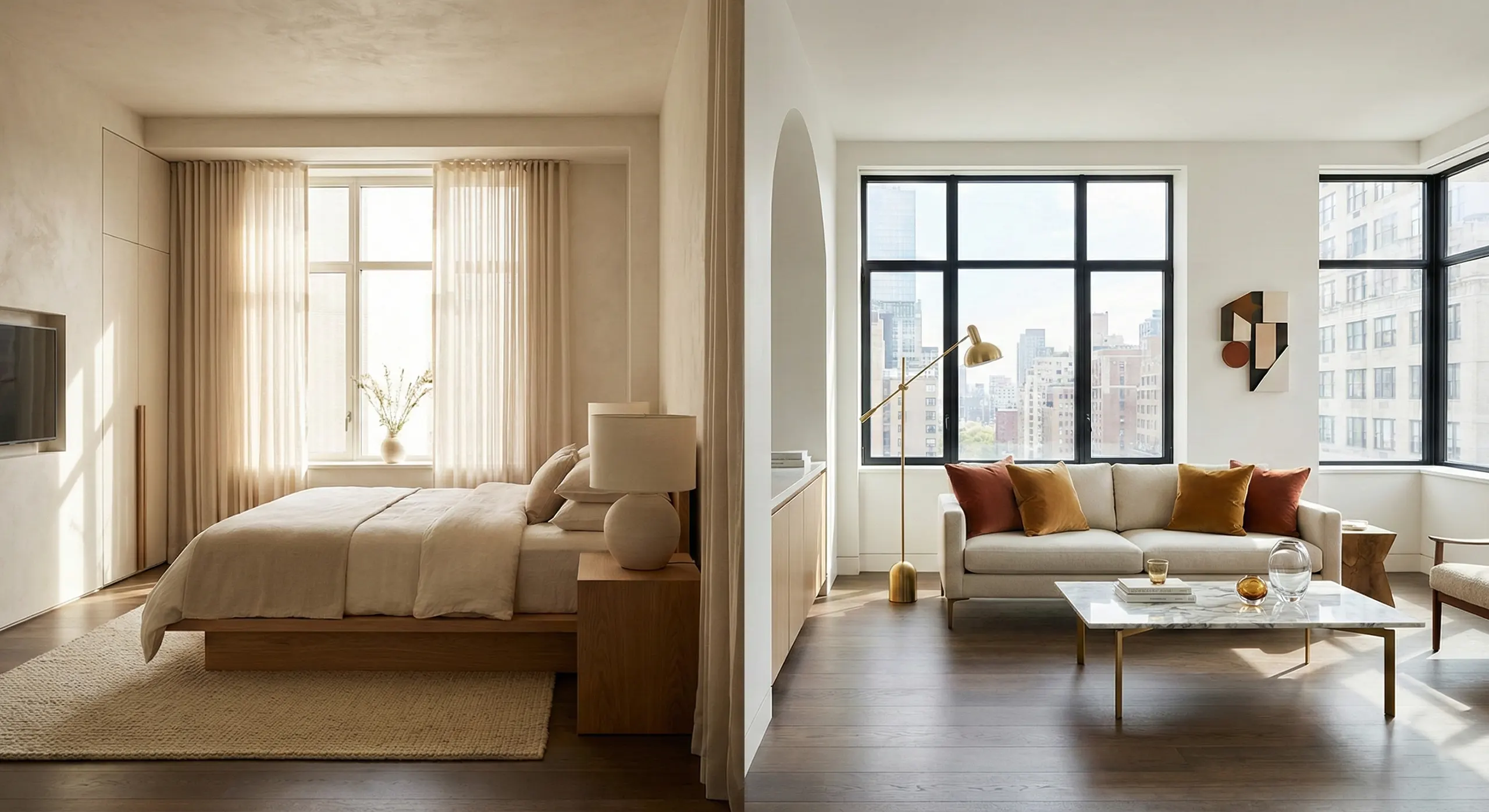
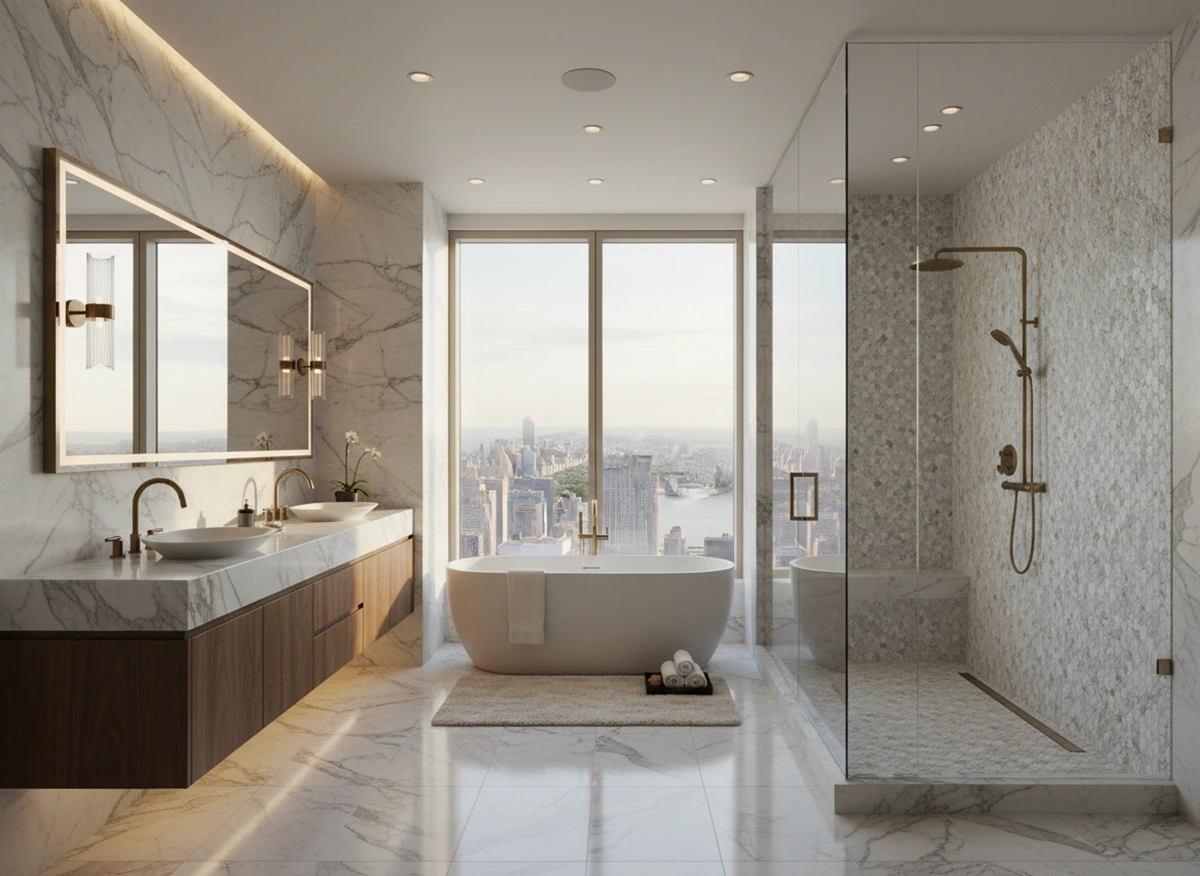
If the 2010s celebrated bold patterns, open shelves filled with collectibles, and color-saturated walls, the 2020s are whispering something entirely different. Quietly, discreetly, beautifully — a new kind of minimalism has taken over. It’s not stark, soulless, or cold. It’s warm, tactile, and profoundly intentional.
1. From “more is more” to meaning in less
For years, interior design revolved around abundance: velvet sofas, layered prints, eclectic art walls — each object competing for attention. After a decade of overstimulation — visually, digitally, emotionally — homeowners began craving something different: calm.
“Quiet luxury focuses on craftsmanship, materials, and timelessness rather than excess.” — ARCHITECTURAL DIGEST (2024)
The question shifted from How does it look? to How does it feel to live here every day? That shift marks the essence of the new minimalism: emotional functionality over visual noise.
2. The essence of quiet luxury
Quiet luxury isn’t about emptiness — it’s about clarity. Each object, color, and texture serves a purpose. The result feels curated, not clinical.
- Tactile materials. Natural stone, oak, linen, plaster, and wool — materials that age gracefully and invite touch.
- Subtle contrast. Soft tonal palettes of warm beiges, greys, and off-whites enriched with texture instead of color.
- Quality over quantity. A single handcrafted table replaces several trendy pieces.
- Architectural lighting. Concealed LEDs, indirect glow, and daylight used as the main source of warmth.
- Personal calm. The absence of clutter translates to mental peace.
“Quiet luxury is the design world’s answer to fast fashion — a long-term investment in enduring beauty.” — ELLE DECOR (2023)
3. Why we crave calm spaces now
Neuroscience backs this shift: studies show visual clutter increases cortisol and decreases focus. Clean lines and balanced compositions promote a sense of control and wellbeing. Minimalist design creates “visual silence” — allowing the brain to rest and emotions to reset.
The Japanese concept of Ma (間), the beauty of empty space, inspires architects to leave room for breathing and contemplation. In today’s overstimulated culture, quiet design isn’t boring — it’s radical self-care.
4. The craftsmanship behind simplicity
“Simple is the hardest thing to do well.” Minimalist spaces expose every joint, alignment, and finish — so precision craftsmanship defines this wave. Technology integrates invisibly: heating, lighting, and smart systems vanish behind clean lines.
Design-build studios like Hoppler Design & Build illustrate this approach with tactile surfaces, integrated lighting, and flowing layouts: every detail intentional, every surface earning its place.
5. How to bring the new minimalism home
Practical steps to infuse your space with modern restraint and emotional warmth:
- Edit before you add. Minimalism begins with subtraction.
- Invest in timeless materials. Real wood, linen, marble, plaster.
- Play with light and shadow. Let daylight be part of the design; layer warm ambient lighting at night.
- Let texture replace pattern. Matte finishes, natural fibers, subtle grain.
- Choose craftsmanship over trend. Fewer pieces, but exceptional ones.
- Embrace imperfection. Handmade ceramics, organic surfaces, uneven finishes add soul.
“Minimalism is no longer about austerity, but about the art of restraint — the discipline to do just enough.” — Dezeen (2024)
6. The future: stillness as the new status symbol
In an age of constant acceleration, stillness has become a form of luxury. The new minimalism represents maturity in design: less about statements, more about harmony. Homes that age well and breathe with you are the true markers of lasting luxury.
Minimalism isn’t the absence of personality — it’s the distillation of it. The New Minimalism honors silence, craft, and comfort. Because in the end, the most luxurious thing in a home isn’t a chandelier — it’s clarity.