
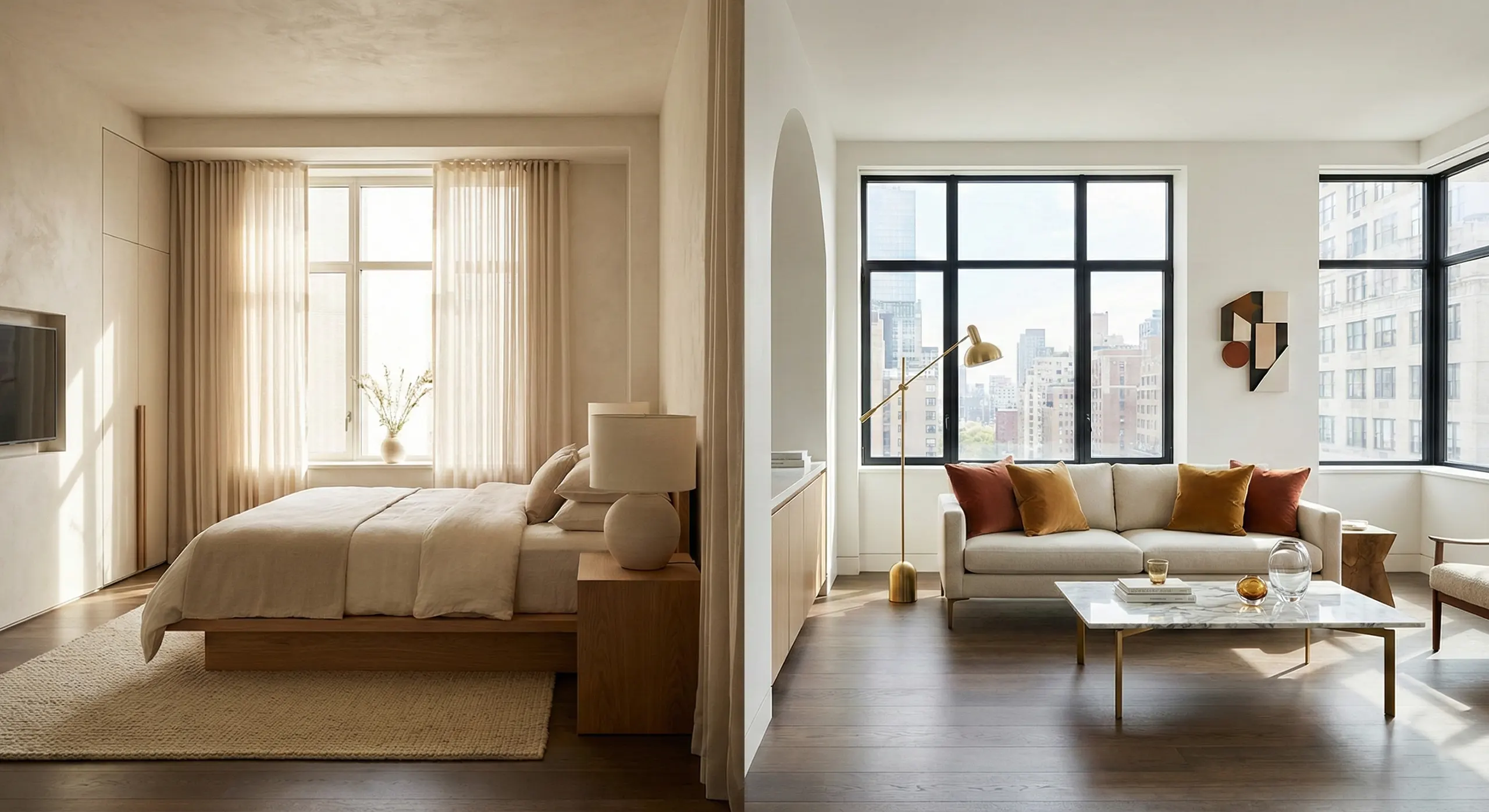
Harmonizing Space: The Complete Guide to Feng Shui Interior Design and Decorating
What is Feng Shui Interior Design?
Originating from ancient China, “Feng” means wind and “Shui” means water. In the context of interior design, it is the art and science of arranging buildings, objects, and space to achieve harmony and balance. It is not merely a superstition; it is a system based on the observation of nature. Interior feng shui operates on the premise that our surroundings influence our energy levels, mood, and luck. The goal is to optimize the flow of “Qi” (life force energy) to support the occupants’ health, wealth, and relationships.
The Philosophy: Qi, Yin, and Yang
- Qi (Chi): This is the invisible energy that flows through the universe. In a home, you want Qi to meander smoothly—like a slow-moving river—rather than rushing straight through (causing anxiety) or stagnating in corners (causing lethargy).
- Yin and Yang: These represent duality. Yin is passive, soft, and quiet (ideal for bedrooms), while Yang is active, bright, and loud (ideal for living rooms and home offices). Successful design requires a dynamic balance between these two forces.
Pillar 2: The Bagua Map (The Energy Grid)
The Bagua is the essential tool used to map the energy of a home. It divides any space (a whole house or a single room) into nine zones, each corresponding to a different life aspect.
| Wealth & Abundance (Element: Wood) Rear Left | Fame & Reputation (Element: Fire) Rear Center | Love & Marriage (Element: Earth) Rear Right |
| Family & Community (Element: Wood) Middle Left | Health & Center (Element: Earth) Center | Creativity & Children (Element: Metal) Middle Right |
| Knowledge & Wisdom (Element: Earth) Front Left (Entrance) | Career & Life Path (Element: Water) Front Center (Entrance) | Helpful People & Travel (Element: Metal) Front Right (Entrance) |
How to Orient the Map
To use the Bagua, imagine a 3 x 3 grid laid over your floor plan. The Golden Rule: Always align the bottom row of the grid with the wall containing the main entrance of the room or home.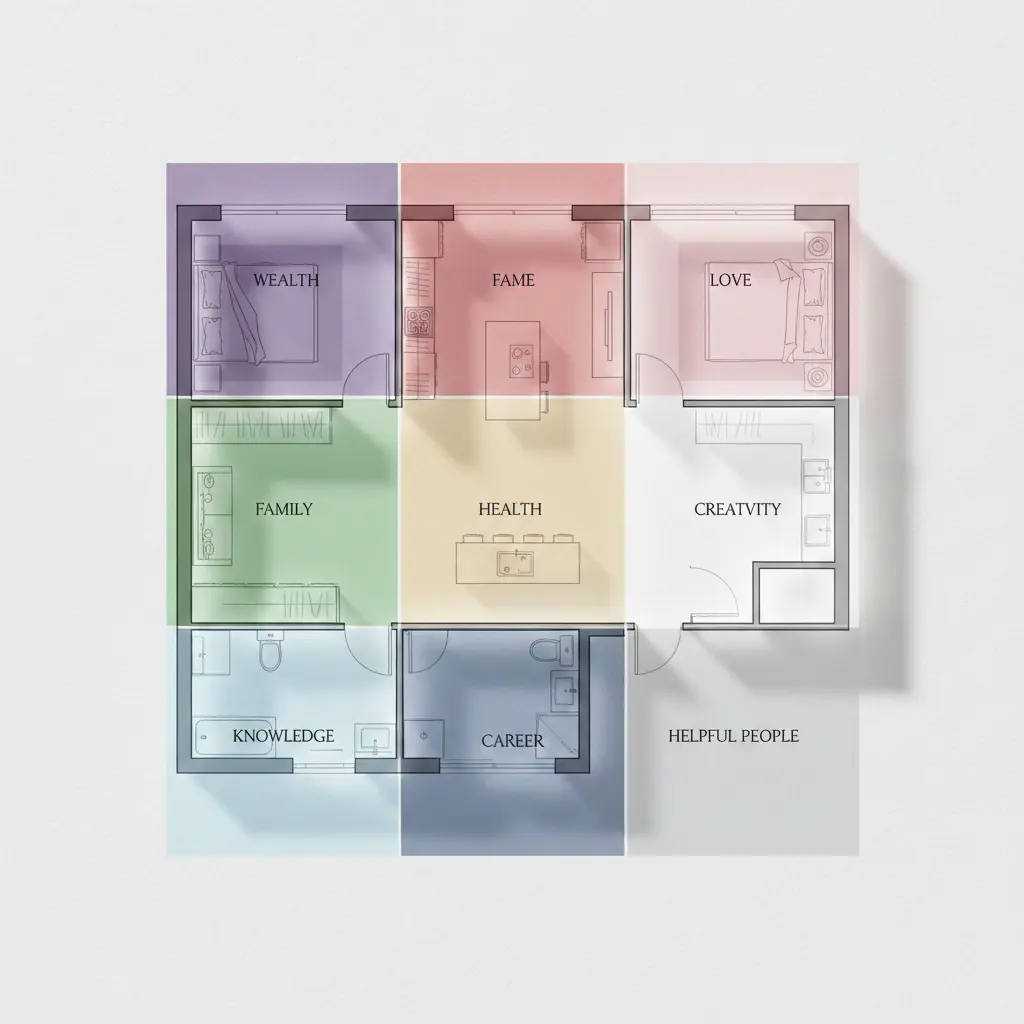
Pillar 1: The Five Elements
The five elements—Wood, Fire, Earth, Metal, and Water—are the building blocks of the physical world. Good design balances these elements to create a harmonious atmosphere.
- Wood: Represents growth, vitality, and new beginnings. Decor: Plants, green colors, wooden furniture, columnar shapes.
- Fire: Represents passion, high energy, and visibility. Decor: Lighting, candles, red/orange colors, triangular shapes.
- Earth: Represents stability, grounding, and nourishment. Decor: Earth tones (beige, sand), square shapes, ceramics, heavy furniture.
- Metal: Represents logic, clarity, precision, and efficiency. Decor: Metallic finishes, grey/white colors, round shapes, rocks/stones.
- Water: Represents wisdom, serenity, and emotional connection. Decor: Mirrors, water features, glass, black/dark blue colors, wavy shapes.
Color Alchemy: Using Color by Element
Once you have identified the zones using the Bagua map, use color to strengthen the energy of that specific area.
| Element | Best Colors | Mood/Effect | Ideal Bagua Areas |
|---|---|---|---|
| Wood | Green, Teal, Brown | Growth, Healing | Family, Wealth |
| Fire | Red, Orange, Purple | Passion, Energy | Fame |
| Earth | Beige, Sand, Yellow | Stability, Nurturing | Health, Knowledge, Love |
| Metal | White, Grey, Gold | Clarity, Precision | Creativity, Helpful People |
| Water | Black, Dark Blue | Flow, Wisdom | Career |
Universal Feng Shui Interior Design Rules
- The Commanding Position: Key furniture pieces (the bed, the desk, and the stove) should be placed where you can see the door without being directly in line with it. This provides a psychological sense of security and control.
- Clear the Clutter: Clutter stops the flow of energy. A messy space leads to a cluttered mind.
- Pathways: Ensure there are clear paths for walking. If you bump into furniture while walking across a room, the Qi is blocked.
- Verticality: Incorporate shapes and lines that draw the eye upward to lift the mood of the space.
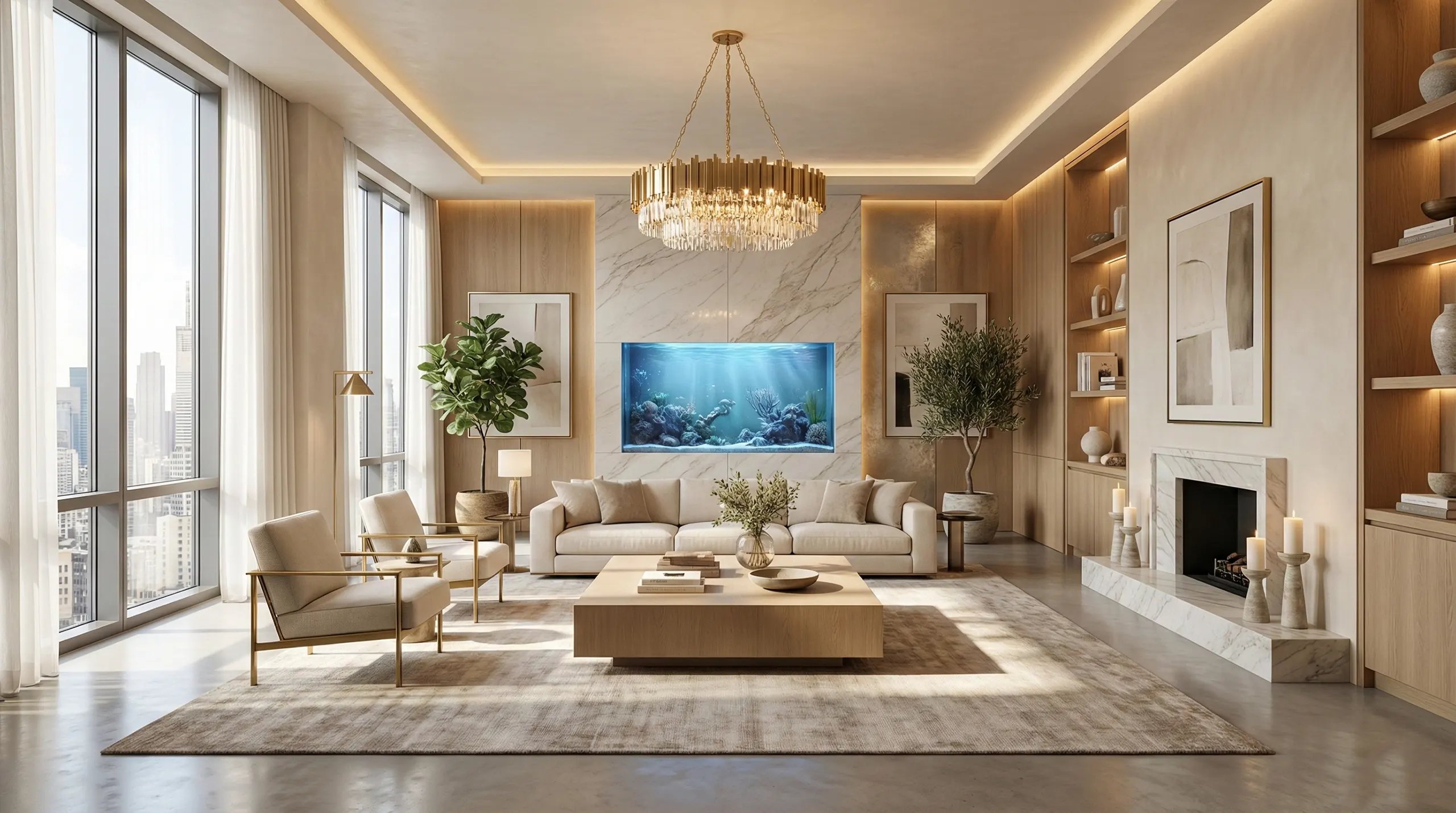
Practical Application: Room by Room
The Living Room (Yang Space)
- Arrange seating to encourage conversation.
- Avoid placing the back of the sofa toward the entrance.
- Float furniture away from walls to allow energy circulation.
- If possible, let a fireplace or artwork be the anchor rather than the TV.
- Layer overhead, floor, and table lamps to activate all corners.
The Bedroom (Yin Space)
- The bed must be in the commanding position with a solid headboard against a wall.
- Avoid large mirrors facing the bed, as they bounce energy and can disturb sleep.
- Do not store items under the bed; this blocks energy flow while you sleep.
The Kitchen (Health & Wealth)
- The Stove: Keep it clean (it represents wealth). Ideally, you should not see the front door from the stove.
- Avoid having the stove (Fire) directly opposite the sink or fridge (Water).
- If they are opposite, place a green rug (Wood) between them to bridge the elements.
Beginner’s Checklist
- Declutter: Remove broken or unused items.
- Command Position: Move your desk and bed to face the door.
- Repair: Fix squeaky doors and leaking taps (leaking water = leaking wealth).
- Balance: Add a plant or a lamp to a dark corner.
- Welcome: Place a cheerful doormat and ensure the front door opens fully.
Feng shui interior design is a powerful tool for transforming a house into a home that supports the inhabitants’ goals and well-being. By applying these principles, we create spaces that feel as good as they look.
Smart Homes, Smarter Living: Integrating Technology into Your Renovation
The concept of a “smart home” has evolved beyond the fantasy of controlling everything by voice.

When Space Tells a Story: Designing Homes with Character, Not Just Style
There is a specific feeling you get when you walk into certain homes. You know instantly—someone l

The Rise of Sustainable Renovation: A Guide to Eco-Friendly Upgrades
The construction industry is experiencing a green revolution, with homeowners increasingly prioritiz