

The Ultimate Home Spa: Creating a Luxurious Bathroom Retreat
The bathroom is one of the few spaces where we can truly escape daily demands, yet many settle for purely functional designs. Transforming your bathroom into a spa sanctuary doesn’t require a complete renovation or unlimited budget — it’s about incorporating sensory elements that create feelings of luxury, tranquility, and indulgence.
The most successful home spas engage all five senses through materials, lighting, scents, textures, and sounds. Whether working with a small powder room or a spacious master bath, the principles are the same: clean lines, soothing colors, natural materials, and a clutter-free environment. The goal is a space so inviting that your evening bath becomes the highlight of your day.
1. Lighting for Spa Ambiance
Lighting is the cornerstone of any spa-like bathroom. Harsh overhead lights should be replaced or supplemented with softer, layered illumination. Dimmer switches allow bright task lighting in the morning and warm, calming light in the evening.
LED strips behind mirrors provide gentle, shadow-free lighting, while candles — real or battery-operated — add instant ambiance. Scented varieties with lavender, eucalyptus, or chamomile enhance relaxation. Wall sconces and small lamps can also create cozy nooks for soaking and reading.
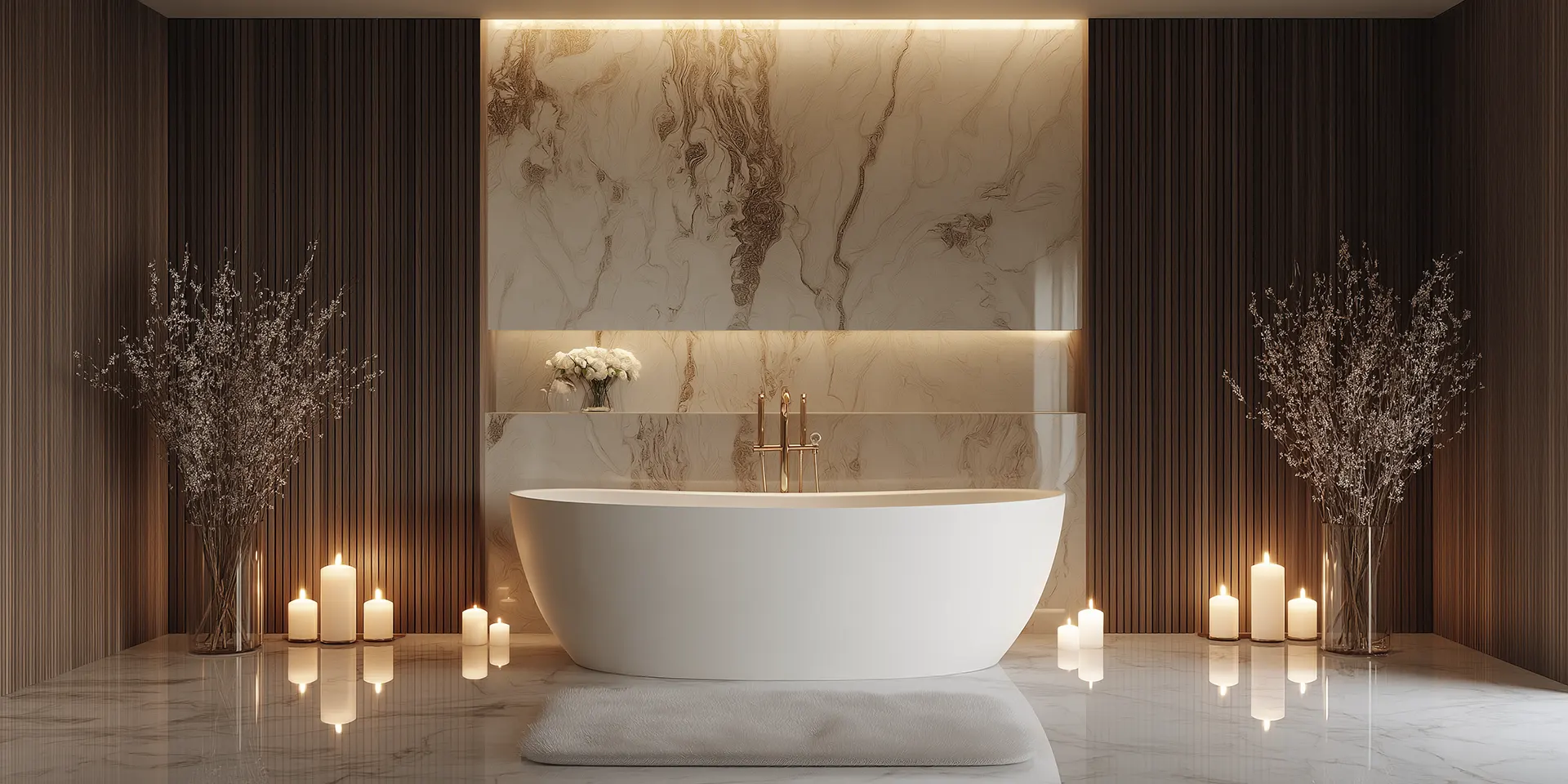
2. Water Features and Upgraded Fixtures
Luxury often lies in the quality of essentials. A rainfall showerhead offers an immersive, waterfall-like experience, while handheld attachments add versatility. Modern style bathroom vanities combine functional storage with clean, floating designs that enhance the serene spa aesthetic.
Thermostatic shower valves maintain consistent temperatures, and bathtub upgrades like waterfall faucets or jetted systems elevate the soaking experience. Even a bamboo bath caddy for wine, books, or spa products can turn routine baths into indulgent rituals.
3. Natural Materials, Soothing Colors, and Accessories
Coordinating bathroom and kitchen design can create flow throughout the home while maximizing material purchases. Stone and wood accents — bamboo mats, teak benches, river rock walls — add warmth and texture, softening typical bathroom surfaces.
Neutral palettes of white, cream, gray, and earth tones create visual calm and spaciousness. Plush matching towels upgrade the tactile experience, while plants like bamboo or snake plants thrive in bathroom humidity and improve air quality.
The most successful home spas prove that luxury isn’t about expense but about how a space makes you feel. While the cost of interior design may seem high at first, professional guidance often saves money by avoiding costly mistakes and achieving your vision efficiently.
High-Impact Sensory Upgrades:
- Touch: Plush matching towels and natural wood/stone textures.
- Sight: Layered lighting (dimmers, LEDs) and soothing neutral palettes.
- Sound: Rainfall showerhead or integrated water features.
- Scent: Scented candles or eucalyptus plants for aromatherapy.

Best Kitchen Layouts for Remodeling in NYC Apartments
The kitchen is the operational hub of the home, where function must meet aesthetic perfectly. Howeve

Why Do Some Homes Just Feel Right? The Science of Flow in Interior Design
Have you ever walked into a home and instantly felt your shoulders drop? You take a breath. You feel

From Drab to Fab: The Power of a Bold Accent Wall
Imagine walking into a room that feels instantly energized and welcoming, where one wall commands at