The Manhattan Palette: Timeless Color Combinations for Urban Interiors.
Manhattan has always been a canvas for design — a vertical gallery of glass, steel, and stone that reflects every era’s obsession with style. From the soft limestone façades of pre-war buildings to the inky reflections of modern towers, the city itself is a masterclass in color harmony.
Inside its apartments, this balance continues — muted neutrals meet bold accents, warm undertones soften industrial edges, and daylight paints walls with ever-changing hues.
This is the Manhattan Palette: a refined color philosophy built on timeless contrasts, urban textures, and emotional depth.
Why color feels different in the city
Color doesn’t exist in isolation — it interacts with light, scale, and context. In Manhattan, that context is unique:
Natural light is filtered by neighboring buildings and glass reflections
Interiors are often compact, demanding tones that expand space visually
Materials like steel, brick, and concrete influence how colors behave
“Urban interiors rely on tonal balance rather than boldness — it’s the subtle shifts in hue that make a room feel both modern and timeless.” — ARCHITECTURAL DIGEST (2024)
The secret isn’t color alone — it’s the composition. Just like a skyline, your home’s palette must find harmony between light and shadow, calm and energy.
The anatomy of the Manhattan Palette
At its core, the Manhattan Palette isn’t about trend — it’s about atmosphere. Here are the enduring combinations that have shaped New York’s most beautiful spaces:
Color Combination
Key Elements
Mood & Style
Best For
Warm Neutrals + Charcoal Accents
Taupe walls, oak floors, black steel frames
Industrial warmth with defined structure
Lofts, modern apartments
Greige + Ivory + Graphite
Grey-beige mix, ivory highlights, dark grey accents
Refined, architectural, effortlessly chic
Open-plan apartments, penthouses
Stone White + Midnight Blue
Stone white base, deep blue accents
Calm sophistication, Hudson-inspired depth
Art-forward lofts, West Village brownstones
Camel + Concrete + Black
Camel tones, concrete grey, black drama
Urban poetry, earthy elegance
Contemporary spaces, industrial conversions
White-on-White
Matte walls, silk curtains, limestone finishes
Light, expansive, dimensional
Compact apartments, minimalist spaces
1. Warm Neutrals + Charcoal Accents
Think taupe walls, oak floors, and black steel frames. The warmth keeps the industrial edge from feeling cold, while the dark accents define structure.
“Warm neutrals have become the new white — grounding, sophisticated, endlessly versatile.” — House Beautiful
2. Greige + Ivory + Graphite
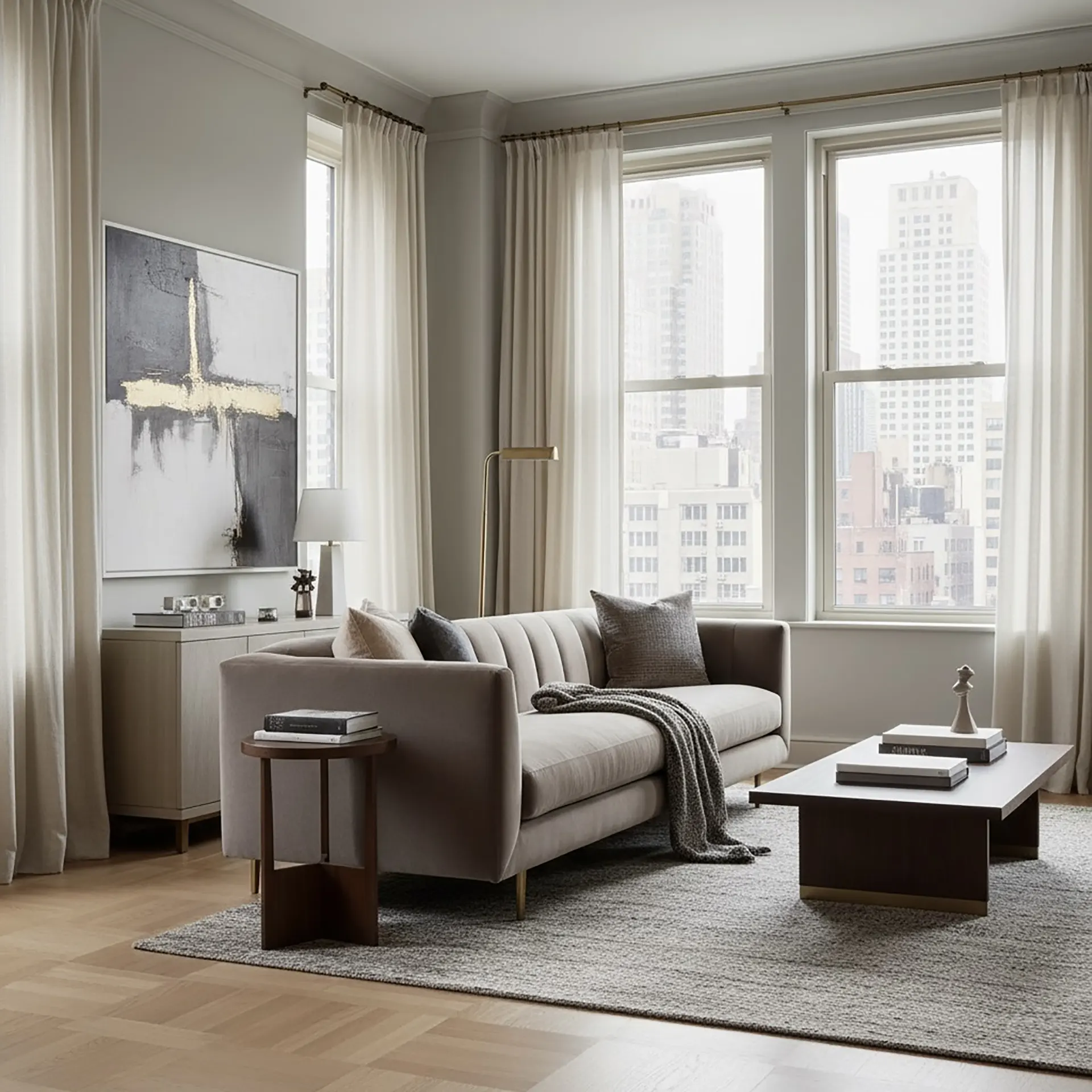
This trio embodies modern Manhattan: refined, architectural, effortlessly chic. The mix of grey and beige softens light, while ivory keeps spaces bright. It’s a favorite among designers for open-plan apartments and penthouses.
3. Stone White + Midnight Blue
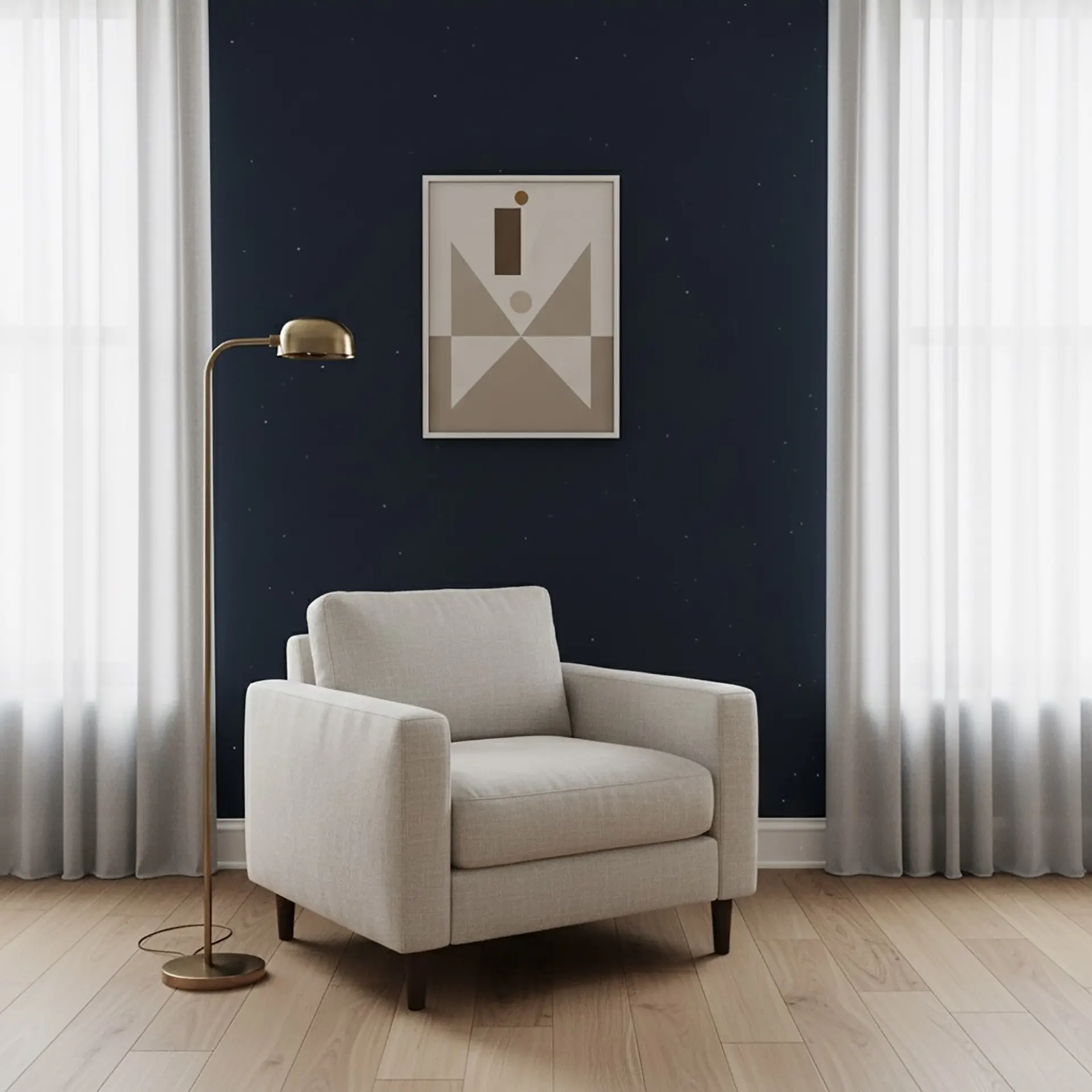
Blue mirrors the Hudson’s depth and Manhattan’s twilight. Paired with stone white, it evokes calm sophistication — a palette used in countless art-forward lofts and West Village brownstones.
4. Camel + Concrete + Black
This combination is pure urban poetry: earthy and elegant. Camel tones introduce warmth; concrete keeps it grounded; black brings drama.
“Monochrome interiors can feel sterile — but adding one organic tone transforms the atmosphere completely.” — Elle Decor
5. White-on-White, Done Right
Layering whites with texture — matte walls, silk curtains, limestone finishes — creates dimension without color. It’s light, expansive, and distinctly Manhattan.
Why do New Yorkers lean toward muted palettes and tonal depth rather than vibrancy? Because in a city that never stops, interiors must provide what the streets can’t: calm.
According to a study by The Journal of Environmental Psychology, neutral color schemes lower cognitive stress and help occupants feel grounded in high-density settings. Colors like beige, greige, and soft taupe mimic nature — sand, stone, earth — subconsciously restoring balance in overstimulating environments.
Even dark tones, when used correctly, provide a cocooning comfort — a sense of enclosure that urban dwellers crave. Hoppler Design & Build often uses this approach: balancing light oak and cream with charcoal or espresso cabinetry, crafting homes that feel peaceful yet undeniably metropolitan.
Color Psychology Benefits
Color Family
Psychological Effect
Urban Application
Beige, Greige, Taupe
Lower cognitive stress, grounding effect
Mimic natural elements (sand, stone, earth)
Dark Tones (Charcoal, Espresso)
Cocooning comfort, sense of enclosure
Create refuge from overstimulating environments
Warm Whites
Amplify daylight, enhance serenity
Expand compact spaces visually
How designers compose color like music
Color, much like sound, relies on rhythm and contrast. Too much similarity and the space feels flat; too much contrast and it feels chaotic. The Manhattan Palette succeeds because it blends soft transitions with defined accents.
Here’s how to achieve it:
Anchor the room with one deep tone — charcoal, navy, espresso — to define structure
Layer neutrals like linen, mushroom, or warm white across furniture and walls
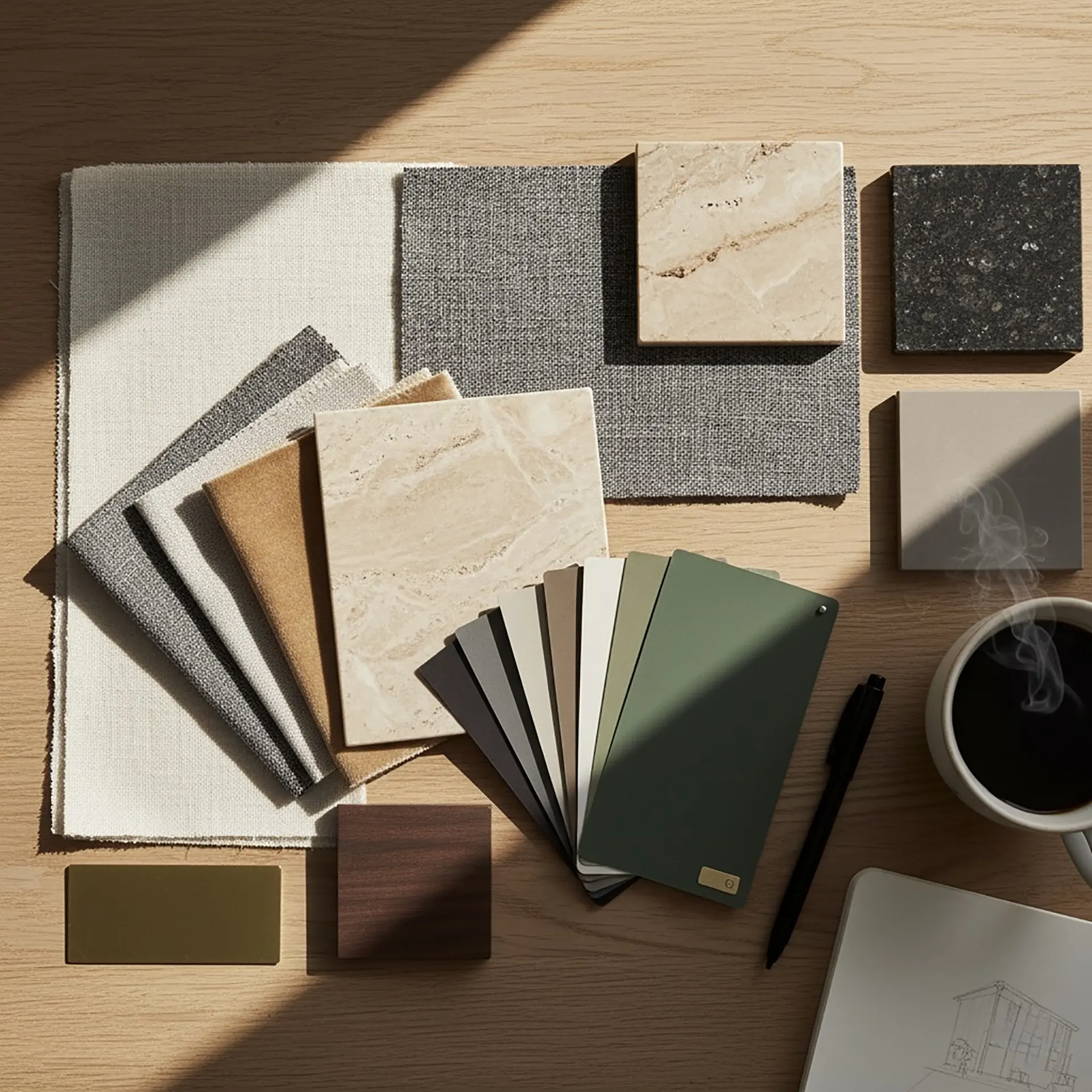
Introduce texture instead of pattern: plaster, rattan, stone, and wool create richness
Play with light temperature — warm lighting can make grey tones feel golden; cooler light enhances crisp modern edges
Use greenery strategically — a single plant or olive tree adds natural contrast without color overload
“Texture is the new color — and mastering it is the secret to timeless urban interiors.” — Vogue Living
Designer’s Composition Framework
Design Layer
Purpose
Examples
Anchor Tone
Define structure and create depth
Charcoal, navy, espresso
Neutral Layers
Build visual continuity
Linen, mushroom, warm white
Texture Elements
Add richness without visual noise
Plaster, rattan, stone, wool
Light Temperature
Transform color perception
Warm bulbs (golden grey) vs cool bulbs (crisp modern)
Natural Accents
Provide organic contrast
Single plants, olive trees
Hoppler’s approach: Color as architecture
At Hoppler Design & Build, color is never an afterthought. Their team treats hue as part of the architectural narrative, not a finishing layer. They analyze daylight patterns, surface reflectivity, and material undertones — designing color schemes that evolve naturally throughout the day.
Morning light might reveal soft amber tones; evening shadows deepen them into bronze and grey. In Hoppler’s Manhattan projects, color doesn’t decorate — it builds the mood.
The enduring appeal of restraint
Trends come and go, but quiet palettes endure because they allow materials, light, and proportion to shine. They’re timeless precisely because they don’t shout. They whisper confidence — the same kind of quiet sophistication that defines Manhattan itself.
“The ultimate luxury is calm — and color is how you design it.”
Final Thoughts
The Manhattan Palette isn’t about beige walls and safe choices — it’s about creating harmony between light, texture, and mood. It’s an approach that ages gracefully, adapts to every season, and lets the beauty of craftsmanship take center stage.
Whether it’s a downtown loft or an Upper West Side townhouse, color done right makes you feel instantly at home — balanced, serene, and elevated.
That’s the quiet power of design done the Hoppler way: timeless, tactile, and perfectly tuned to the rhythm of the city.
Which color combinations are considered timeless and help create an elegant urban interior?
Timeless urban interiors rely on balanced, restrained palettes that feel sophisticated rather than trendy. The most enduring combinations include:
Greys + warm wood tones adds structure while keeping the space inviting
Black, white & natural textures creates contrast and architectural clarity
Greige + muted earth tones (sand, clay, soft brown) — elegant and modern without feeling cold
Soft charcoal + light neutrals offers depth while maintaining brightness
These palettes age well, photograph beautifully, and allow interiors to evolve over time with minimal changes.
How should you combine neutral tones with accent colors to add depth and interest without overwhelming the space?
The key is restraint and balance — accent colors should enhance the base palette, not compete with it.
Best Practices • Use neutrals as the foundation Walls, large furniture pieces, and flooring should stay calm and consistent. • Limit accent colors to 1–2 tones This keeps the space cohesive and prevents visual clutter. • Apply accents in controlled doses Cushions, artwork, lighting fixtures, or a single feature wall work better than large saturated areas. • Repeat accents subtly Use the same color in multiple small elements to create harmony. • Choose muted or natural shades Dusty blues, olive greens, warm terracotta, or deep burgundy feel richer and more timeless than bright tones. • Balance with texture, not color Layering materials (wood, fabric, stone) adds interest without adding visual noise.