

Renovation Math: How to Calculate True Cost per Square Foot in NYC
What’s your price per square foot? It is almost always the first question I get. And I get it—honestly, I do. You are about to spend a significant amount of money, and you want a number that feels solid. You want a benchmark. You want to compare Builder A to Builder B like you’re comparing prices on a carton of milk.
But here is the uncomfortable truth most contractors won’t tell you: price per square foot is a myth.
In New York City, trying to budget a high-end renovation using a single square-foot number is like trying to price a car based on its weight. A Ferrari and a Honda Civic might weigh roughly the same—but they are entirely different machines with different materials, engineering, and purposes.
At Hoppler Design and Build, we don’t guess. We don’t throw out a safe number to get you to sign a contract. We build budgets using what we call the True Cost Formula. It’s not magic—it’s just honest math.
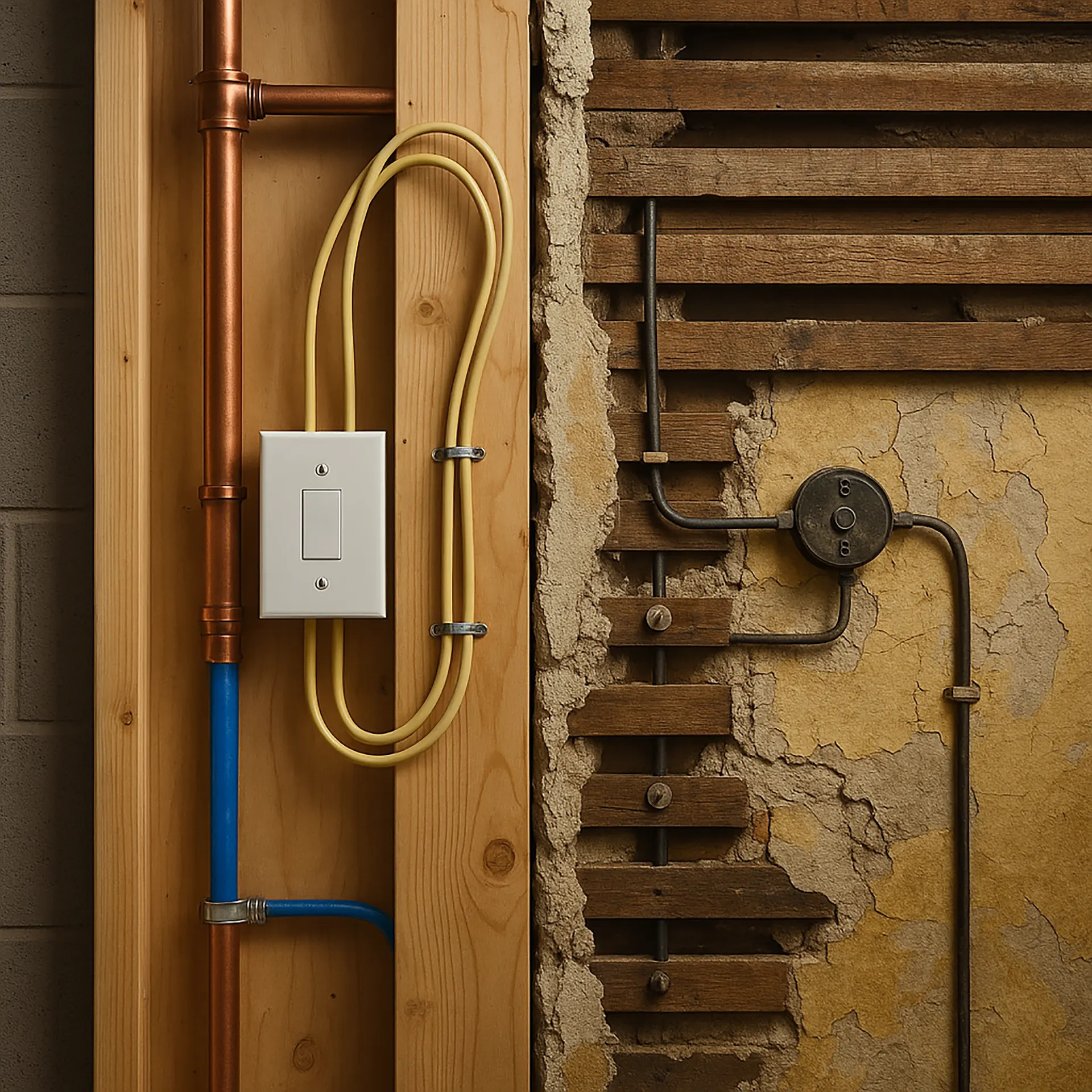
1. The Base Cost: The Canvas
Before a single tile is laid, we cover the foundational costs of doing business in NYC. This includes protecting common areas, demolition, framing, mandatory electrical and plumbing upgrades, and the insurance that protects your building and your neighbors.
The Trap: Low-ball bidders often quote only this container cost, not the cost of a finished home.
2. The Complexity: The Surgery
This is the biggest variable. Are we giving a facelift, or performing open-heart surgery?
- The Vintage: A 1980s condo is straightforward. A 1910 pre-war? We may find plaster, lath, and knob-and-tube wiring from 100 years ago.
- The Layout: Moving a wall is simple. Moving a kitchen in a co-op is a structural and regulatory operation due to wet-over-dry rules. It may require raised floors, steel, and extensive filings.
3. The Logistics: The Manhattan Tax
This is the cost of friction—physical, logistical, unavoidable.
- Working in a 40-story building with a freight elevator limited to certain hours.
- Parking trucks three blocks away.
- Craning materials through a window because the stair is too narrow.
In Manhattan, construction is a choreographed logistical operation. And time equals money.

4. Permits and Approvals: The Paper Trail
You aren’t just paying the DOB. You’re paying for the network of professionals needed to get permission to build: Architect, Structural Engineer, Expediter, Asbestos Investigator, Your co-op board’s architect, and possibly the Landmarks Preservation Commission. This invisible layer is the Bureaucracy Bill.
5. The Finishes: The Jewelry
Finally, the part you control completely. This is where budgets expand or shrink dramatically.
The difference between 15 dollar per square foot porcelain and 200 dollar per square foot hand-cut mosaic, or between stock cabinets and custom walnut millwork, or standard slabs versus imported marble, defines the final cost. Your taste—not the square footage—drives this number.

A Tale of Two Apartments
Two real projects. Both 1,500 square feet. Both in prestigious neighborhoods.
| Budget Factor | Apartment A | Apartment B |
|---|---|---|
| Era and Building Type | Post-war condo | Pre-war co-op |
| Structural Changes | No layout changes | Moved kitchen and added powder room |
| Building Logistics | Easy elevator access | 3rd-floor walk-up with limited work hours |
| Finish Level | High-end standard | Imported slabs and custom millwork |
| Investment Level | 400 dollars per sq.ft. | 1,200 dollars per sq.ft. |
Same size. Triple the cost. Both clients got exactly what they paid for.
The Bottom Line
When a contractor gives you a quick price per square foot over the phone, they aren’t giving you a real budget—they’re giving you a sales pitch. We prefer to walk the site, study the plans, and price every line honestly. It takes longer, but it means the number at the bottom of your proposal is real.
The Pillars of the True Cost Formula:
- Foundational Base: Demolition, protection, and mandatory city upgrades.
- Building Complexity: Addressing the age and structural rules of the property.
- Logistical Access: Managing elevators, parking, and time constraints.
- Regulatory Paperwork: Architect filings and board approval processes.
- Material Selections: Jewelry choices that personalize the finished space.

The Hidden Cost of Beautiful Spaces: What Instagram Doesn’t Show About Home Design
Have you ever scrolled through Instagram, paused at a stunning apartment photo, and thought — R

Transforming Manhattan Living: Your Complete Guide to Luxury Apartment Renovation
Picture this: you walk into your cramped, outdated Manhattan apartment and envision soaring ceilings

Manhattan Apartment Renovation Cost: Real Numbers, Hidden Factors, and How to Budget Correctly
Renovating an apartment in Manhattan is not simply a construction project. It is a coordinated proce