
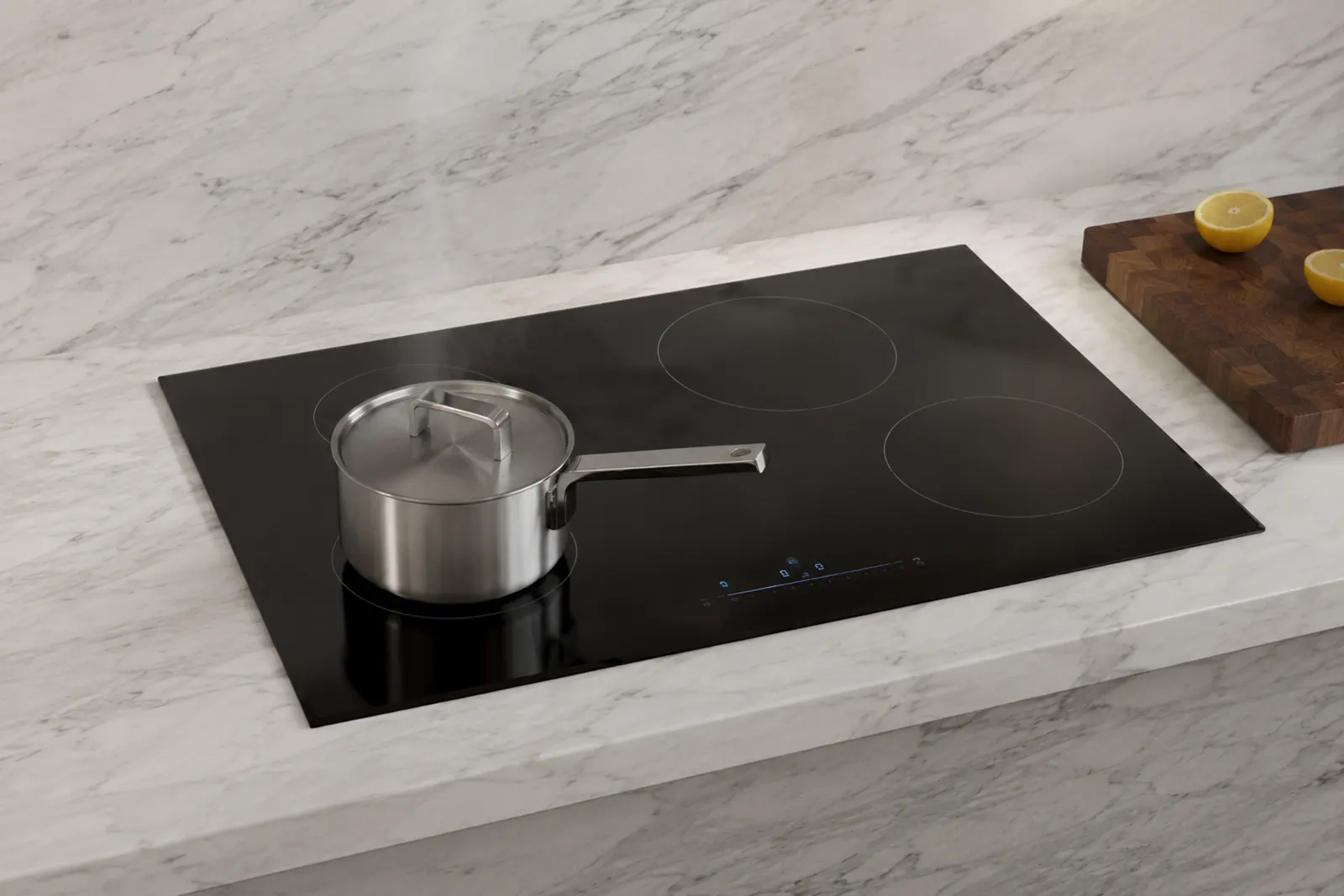
Getting Rid of the Gas Stove in a NYC Apartment: Capping the Line and Going Electric
More New York owners are asking us to take the gas range out of the kitchen and put induction in its place. Some want cleaner air at home, some like how fast induction cooks, and some live in buildings that have already had a long gas shutoff. In a house this is a one-day swap. In an apartment building, two parties have a say, your board and the city, and the building’s wiring sets the limits.
This article goes through each of them in the order they come up, and what the change costs.
Start with the building
In a co-op or condo, swapping a gas range for an electric one is an alteration, and the building decides whether and how it happens. Your alteration agreement or house rules may already address it. If they do not, the managing agent will tell you what the board wants to see before it approves.
Boards are within their rights to ask questions here. In a case described by Habitat magazine, a co-op board would not approve a shareholder’s switch until she paid for a study of what capping her gas line would mean for the building, and a co-op lawyer quoted in the piece said the board was entitled to ask. More often the request is about electricity rather than gas: a letter from a licensed electrician showing that your apartment can carry the new load.
Asking early saves time. If the board needs an engineer’s opinion or a load letter, you want to know that before you order the range.
The wiring decides more than the gas line
A gas range uses a small ordinary outlet for its igniter and clock. A built-in induction cooktop or range needs its own heavy-duty 240-volt circuit, usually 40 or 50 amps, the same kind of line an electric dryer uses. That circuit has to be filed and installed by a licensed electrician.
Whether you can add it depends on how much power comes into the apartment. Gallery KBNY, a Manhattan design-build firm, finds that most New York apartments have between 40 and 80 amps in total, and that induction alone can draw 30 to 40 of them. In an older building with limited service, adding capacity can mean an upgrade that some buildings charge heavily for and some do not allow at all.
When the wiring cannot take it, there is a newer option. Some induction ranges now plug into a standard outlet and carry a built-in battery that supplies the extra power while you cook. The Guardian described a co-op in Washington Heights where a gas leak had left residents without gas for nearly four years, cooking on hot plates. Fixing the building’s gas pipes would have cost them around $200,000. Instead, 15 apartments got plug-in induction ranges at about $6,000 each, and the whole project came to roughly $90,000, because nothing in the walls had to change.
What happens to the gas line
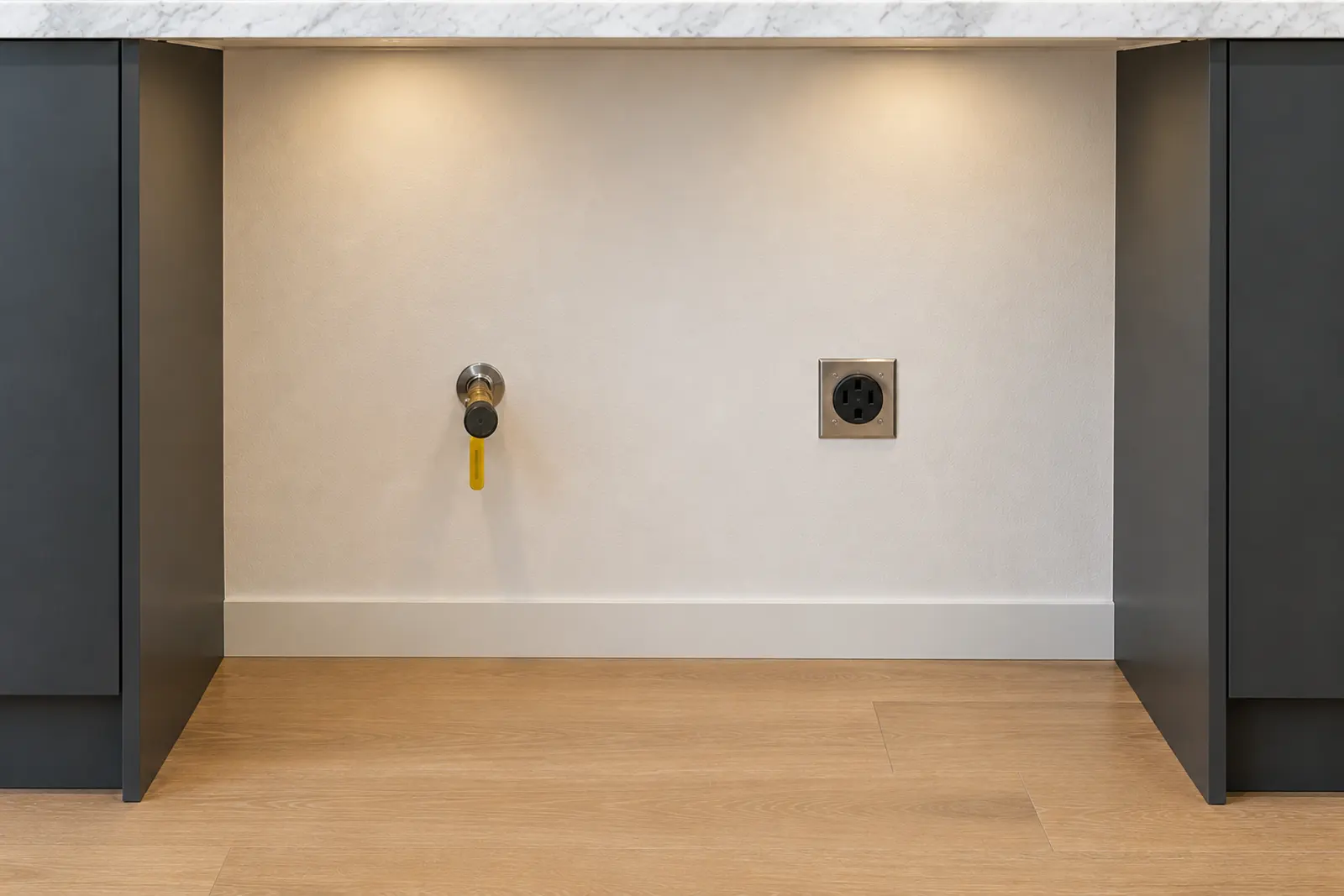
The gas pipe behind the range cannot simply be left open or disconnected by an appliance installer. In New York City, capping and removing a gas appliance line is work for a licensed master plumber, who files the permit with the Department of Buildings, caps the line and arranges the inspection that closes it out.
One practical detail is worth raising with the plumber in advance. The capped pipe can stick out of the wall far enough that the new range will not slide all the way back. Cutting it back or recessing it is usually a small extra step, but it is much easier to plan for it than to discover it on installation day.
What it costs
The range itself is the most predictable part. Brick Underground put induction and radiant electric ranges at roughly $1,500 to $3,000, and premium built-in induction runs well above that.
The gas work is usually the smallest line: a plumber’s visit to cap the line, plus the permit and inspection that New York requires.
The electrical side decides the total. A new 240-volt circuit in an apartment that already has room for it is ordinary electrical work. An apartment that needs more power coming in is a different project: Gallery KBNY notes that electrical service upgrades in some buildings cost as much as $50,000. That is why the load check comes first, before you order the range.
One thing does not change with the switch: induction still produces steam and grease, so the kitchen still needs its hood.

Waterproofing Bathrooms: Methods, Membranes, and Building Code Compliance
Tile may be the visible finish in a bathroom, but it isn’t what keeps water out. In multifamil

How to Read a Floor Plan Like a Pro
Whether you’re purchasing a new apartment, embarking on a full renovation, or simply evaluatin

The Art of Patience: Why Great Renovations Take Time
We live in a culture obsessed with speed, trained by one-click purchases, next-day deliveries, and i