
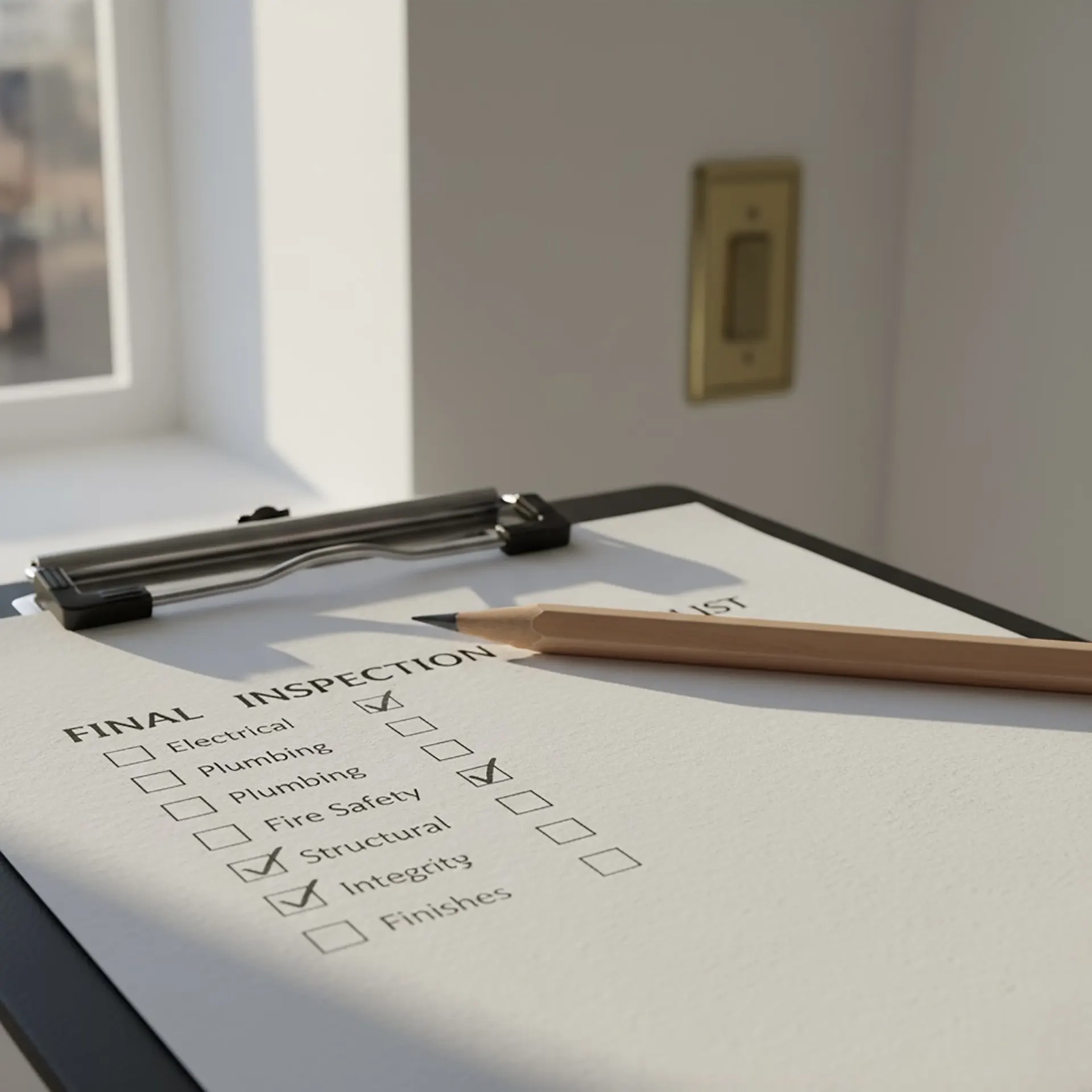
Inspections, Sign-Offs, and Surprises: What Happens After Construction Ends
The floors are polished. The painter has packed up his drop cloths. The lights are glowing, and for the first time in months, silence falls over the apartment. It looks ready. It feels ready. You are already mentally placing your furniture.
In New York City, there is a massive difference between a home that is visually finished and a home that is legally finished. For most homeowners, this feels like the finish line. Но для вашего архитектора и для нас в Hoppler Design and Build это начало нового марафона. We call this the Quiet Phase. It is where the visible chaos disappears, and the invisible war of paperwork begins.
Here is the unsexy truth about what happens after the construction ends—and why it matters more than the paint color you chose. Until the Department of Buildings (DOB) officially signs off, your beautiful new living room is legally still a construction site.

1. The Post-Construction Paradox
Every wall we closed, every wire we pulled, and every pipe we connected was done under a permit. Now, we have to prove to the city that we did it right. This is the Post-Construction Paradox: the space looks perfect, but we are technically still building the paper trail. Without this final documentation, your investment remains legally vulnerable.
2. The Choreography of Closure
Closing out a job in Manhattan is a ritual. It follows a strict choreography that cannot be rushed, moving from internal quality control to city-mandated inspections.
- The Punch List: We inspect ourselves first. We search for tiny imperfections—a door 2mm off-level or a minor scratch—to ensure the space meets the Hoppler Standard before you ever move in.
- Special Inspections: Third-party licensed agencies verify the invisible work, such as firestopping and structural steel. These inspectors sign TR1 forms, which are mandatory for DOB review.
- The DOB Inspection: A city inspector may visit to compare reality to the approved drawings. Success depends on the perfect alignment of the physical build and the filed architectural plans.
| Closeout Step | Required Documentation | Critical Outcome |
|---|---|---|
| Internal Punch List | Quality Control Log | Visual and functional perfection |
| Technical Inspections | TR1, TR8, and Special Reports | Verification of life-safety systems |
| Agency Sign-offs | Electrical and Plumbing certificates | Legal compliance of utility systems |
| Final Filing | Letter of Completion (LOC) | Legal closure of all active permits |
3. Why Projects Stall Here
You have heard stories of renovations that finished years ago but still have open permits. This usually happens because many contractors are great builders but terrible administrators. Once they get the final payment, they vanish, leaving the paperwork unfinished. At Hoppler, we run a Parallel Closeout system, chasing signatures weeks before the construction actually ends.

4. The Three Most Common Surprises
Even in a perfect build, the administrative phase can present challenges that require professional management to resolve without delaying your move-in date.
- The Field Change Trap: Even minor shifts in wall placement must be updated in the architectural filing, or the city inspector will fail the job.
- Subcontractor Documentation: We ensure all subcontractors have signed their final reports before they receive their final payment, protecting the project’s legal status.
- Bureaucratic Freezes: Unrelated building issues or neighbor complaints can occasionally freeze sign-offs, requiring direct negotiation with building management.

The True Definition of Done
At Hoppler Design and Build, a project is not done when the furniture arrives. It is done when we hand you the Project Completion Binder—your warranties, manuals, and the all-important Letter of Completion. In a city known for complexity, the ultimate luxury is the peace of mind that comes from knowing your home was built—and closed—correctly.
An open permit is a ghost that haunts you. Five years from now, when you attempt to sell or refinance, it will reappear and can kill the deal instantly. Final sign-off is your guarantee of long-term property value.

Cracking the NYC Permit Code: Your Step-by-Step Guide to DOB Approvals
Navigating New York City’s Department of Buildings feels like decoding an ancient language mix

Timeline of a Manhattan Renovation: From Offer Letter to Move-In
You just signed the offer letter. Champagne is popped. You are already mentally placing the sofa in
Landmark Living: Renovating Historic Buildings in NYC’s Protected Districts
There’s a unique romance to living in a pre-war brownstone or a historic loft in one of New Yo